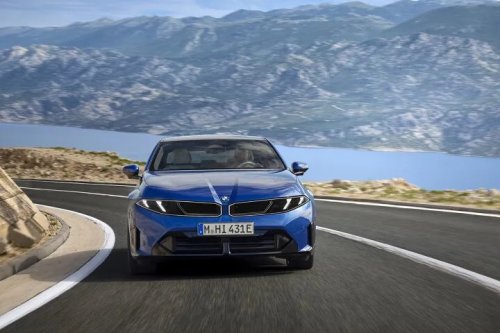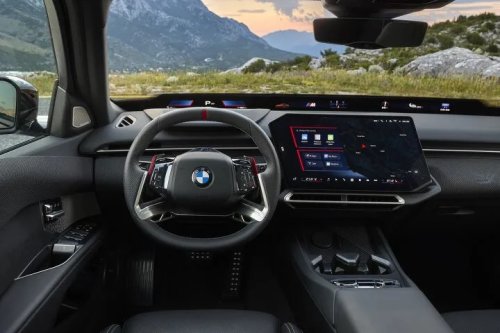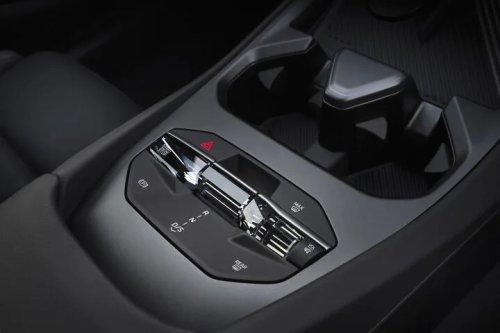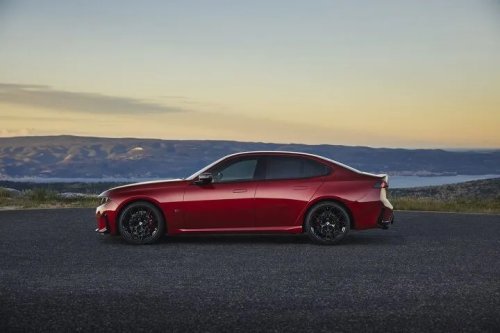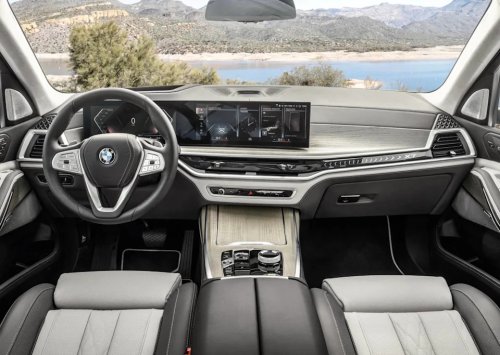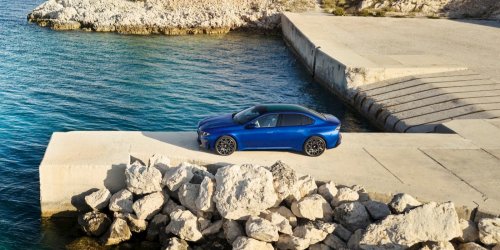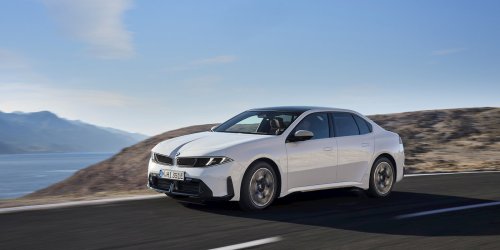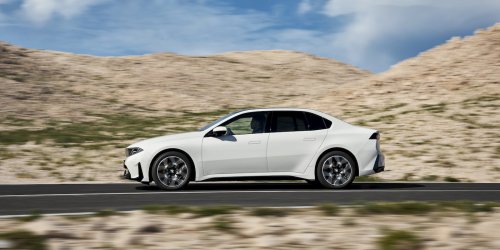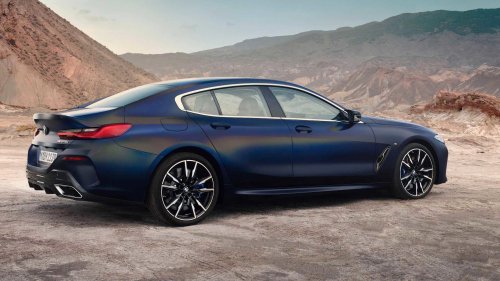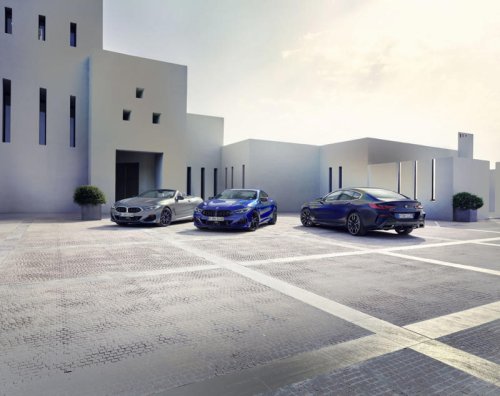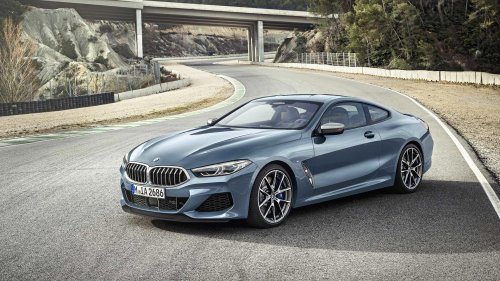
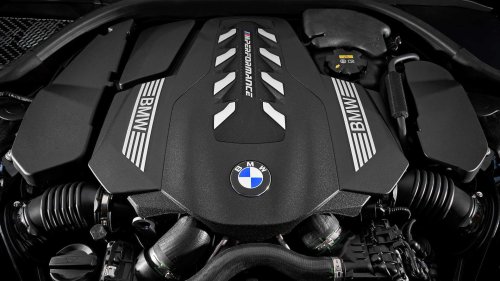
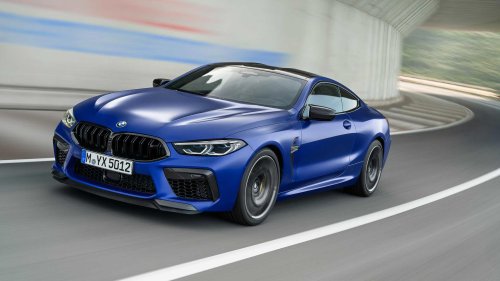
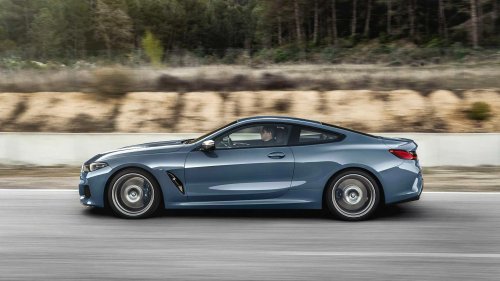
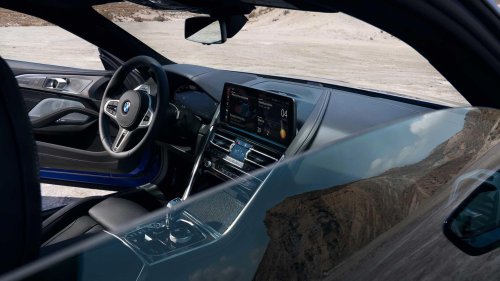
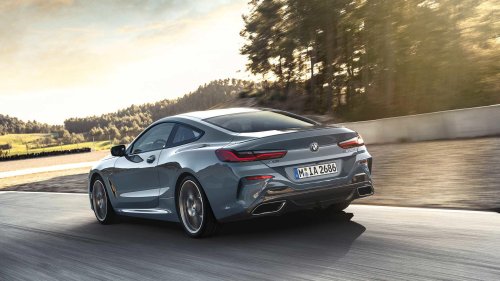
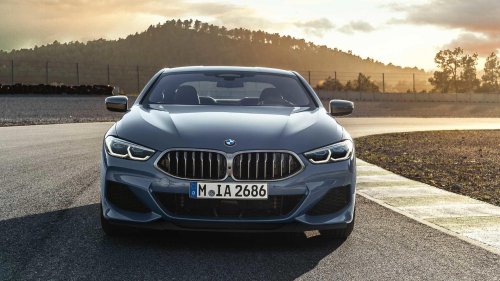
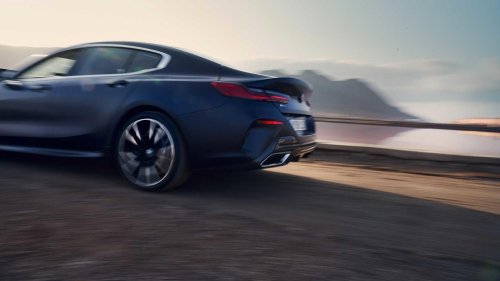



















Earlier this month, BMW bid farewell to the 8 Series after an eight-year run. Fleeting, yes, but far from underwhelming. Between 2019 and 2025, after all, BMW encouraged close to 43,000 customers in North America – each humming and hawing between BMW’s then-flagship grand tourer, a Porsche 911, and/or a ‘standard’ Aston Martin Vantage – to part with just under $88,000 for an 8 Series coupe of their own. Or $97,400 if they wanted the drop top.Of course, forking over enough money to buy two Bullitt-spec Ford Mustangs was a bit on the stiff side in 2019, and few of us got to experience, arguably, the sportiest luxury GT BMW has launched to-date. Turns out, though, that brief window of opportunity hasn’t fully closed. Indeed, if you search hard enough, you can purchase your own second-generation 8 Series for less – far less, in some cases – than the cheapest, brand-new BMW available today. The New 8 Series. Some Big Shoes To Fill BMWUnveiled, oddly, at the 24 Hours of Le Mans in 2018, the G14-gen 8 Series effectively stepped into the deep tire grooves left by the departing 6 Series, following the latter’s own two-decade run as BMW’s halo coupe. Ironically, the revived 6 Series’ arrival in 2003 helped the Bavarian brand plug a ‘high-end luxury coupe’ gap in its lineup after the vaunted, and original ‘E31’ 8 Series was discontinued in 1999. While the G14 new-boy had some enormous shoes to fill, it more than made up for that with brand awareness straight out the gate.BmwBMW was taking no chances, however. To appease its deep-pocketed target audience, the 8 Series was launched in two-door coupe (November 2018), convertible (May 2019), and four-door Gran Coupe guises (September 2019), each of which was available from the off with one of two engines. Technically three, as most European customers, keen to sidestep increasingly stringent emissions regulations, opted for the turbodiesel-engined 840D. When the car arrived Stateside, customers could choose between the 3.0-liter turbo straight-six 840i, which sent 335-horsepower to the rear wheels (or all four in the xDrive), or the 4.4-liter twin-turbo V8-powered M850i xDrive, which boasted a more robust 523 hp. The latter, incidentally, was the most explosive option until the 591 hp M8 arrived midway through 2020. Porsche Rivaling Straight-Line Performance BMW Equipped as each was with BMW’s rapid-shifting eight-speed steptronic automatic gearbox, both the 840i xDrive and the M850i only ran out of steam at an electronically limited 155 mph, and both could hit 60 mph in less than five seconds (the RWD 840i was just a shade behind at 5.2 seconds). Unsurprisingly, when the 617 hp M8 Competition arrived to complete the set in June 2019, that 0-60 mph benchmark dropped to three seconds flat, the same, quite remarkably, as Porsche’s 992-generation GT3 RS. Turns out, BMW’s luxurious GT had a dynamic edge. A Grand Tourer That Handled Like A Sports Car BMWThough it was introduced primarily to rival Mercedes’ opulent (but admittedly short-lived) S-Class Coupe, BMW’s marketing materials repeatedly promoted the 8 Series’ “inspiring performance.” Hence the Le Mans debut. Indeed, despite tipping the scales at 4,900-plus pounds (nearer 5,800 pounds for the four-door, four-wheel drive Gran Coupe), the 8 Series was actually shorter than its 6 Series forebear, and boasted a smaller wheelbase too, thus offering a surprisingly planted platform. Double wishbones and/or multi-link suspension was fitted front and rear, and finely tuned to balance supple ride quality with mid-corner agility. The ride in the BMW wasn’t quite as pillowy as in the Mercedes, critics argued, but, in fairness, few things were outside a Rolls-Royce or a literal cloud. Indeed, air suspension, a luxury GT staple, wasn’t even offered at first, so confident was BMW in the 8 Series’ ride.Moreover, alongside its vigorous firepower, and, much like its original namesake, the E31 8 Series was technologically adept. Four-wheel steering, for example, was fitted as standard for improved handling at speed. The build combined steel with aluminum, magnesium and carbon fiber-reinforced polymer to save weight where possible. The 8 Series road car was even developed in tandem with BMW’s M8 GTE FIA endurance racing car. Throw in well-weighted, responsive steering, and the luxury grand tourer, while not as adept as a 911 through the corners, was considerably nimbler than a luxury GT had any right to be. Did It Look ‘Like An 8 Series’ Should? BMWSadly, the E31’s flip-up headlamps didn’t make the jump. Nor did its svelte body-lines match BMW’s new, bolder design language either. Not that this put off too many prospective customers, of course, especially since the optional M-Sport package threw in beefier front and rear bumpers, and larger alloy wheels for a suitably ‘sporty’ stance.By contrast, the cabin was pure luxury. Mercedes-Benz, once again, just had the opulent edge when it came to material quality, while critics felt the deliberately streamlined dashboard and not-quite-so-multi-function steering wheel in the BMW was, to put it bluntly, a bit dull. In a rare move for the normally pragmatic German manufacturer, however, BMW fired back with an ostentatious (and optional) crystal gearlever and mirror-ball rotary control. The enormous center console, meanwhile, was designed, specifically, to envelope the driver. It was a design with which BMW had so much faith, it was barely touched after launch. Bar a 2023 facelift done with the faintest of brushstrokes. Why The 8 Series Fell Out Of Favor BMWThat the 8 Series’ time in production drew to an early close wasn’t much of a surprise. Even to BMW. At a time when luxury SUV popularity was on the rise, coupe sales across the board were starting to flag, doing the niche, high-end two-door segment no favors whatsoever. Indeed, despite competitive pricing from BMW (the M850i xDrive was almost $20,000 less expensive than Mercedes’ S560 coupe in 2020), the Bavarian brand struggled to attract customers who, with close to $100K already burning a hole in their Armani suit jackets, could look to high-end alternatives from Porsche, and, with considerable haggling, even Maserati and Aston Martin.High running costs didn’t help either. UK customers, for example, could comfortably expect around 44 miles per gallon from their turbodiesel straight-sixes. US customers, meanwhile, rarely did better than 33 mpg from their twin-turbo V6, or 26 mpg from the twin-turbo V8. That BMW was about to throw its lot in with the brand-new ‘Neue Klasse’ generation, thus leaving precious development revenue for an already shrinking market segment, certainly didn’t help either.Nor indeed did a run of five recalls, ranging from a glitchy rear-view camera to faulty seat belts, potential fuel leaks, and even engine bay fire concerns caused by shorting batteries. Issues that, to BMW’s credit, were quickly rectified, but which still couldn't prevent a drop in public faith in the big GT. Not that it really mattered, though. In late 2023, BMW had already decided to can the 8 Series after just one generation. What You Can Buy An 8 Series For Today BMWAmazingly, just eight years after it landed, prices for pre-owned BMW 8 Series have dropped significantly. Naturally, the fiery M8 Competition, stacked as it is with additional CFRP panels, larger air intakes, and M Division tinkered suspension, is a tantalizing prospect. Indeed, on the Carbuzz Marketplace, we found some medium-mileage examples from only $62,995, more than half its original MSRP. The still-maniac M8, meanwhile, can be sourced from almost $10,000 less than even that.Unsurprisingly, the (ahem) more ‘mainstream’ 840i and M850i xDrive give us more options, and, crucially for those of us on a strict budget, start from around the $35,000 mark. Put another way, you could buy a pre-owned 2019 M850i, with five-figure mileage, from a certified third-party dealer, and a brand-new BMW 330i sedan for less than the 8 Series set you back in 2020. And yes, that does include convertibles. Granted, Gran Coupe fans will need to fork over upwards of $12,000 more for those two extra doors.BMWAdmittedly, prices for meticulously kept examples, most of which have at least four figures on the clock, can rise rapidly, with some even dipping sarcastically close to the $80,000 mark. On the plus side, many have been pre-equipped with an abundance of optional extras. Among the most popular is the Driving Assistance Package, which added blind spot monitoring, a 360-degree camera, and self-parking to the 8 Series’ already standard lane departure and front collision warning systems. High service and maintenance costs can’t be ignored, of course, nor indeed can higher insurance costs typically associated with luxury GTs.Even eight years after its launch then, the one-time $88,000-plus BMW 8 Series remains a big investment. A solid lump of money that could instead go towards a brand-new, though admittedly less powerful, more compact, and less dynamic BMW 230i coupe. Or even, as most BMW aficionados will want to do, an original E31. In those metrics alone, a pre-owned 840i / M850i makes very little sense. Think of it this way though. Today, you could buy, arguably, the most luxurious, and surprisingly agile grand tourer BMW has ever built, and which came close to out-sprinting Porsche’s halo sports car on its day, for less than half its original MSRP. Tempting.Source: BMW.