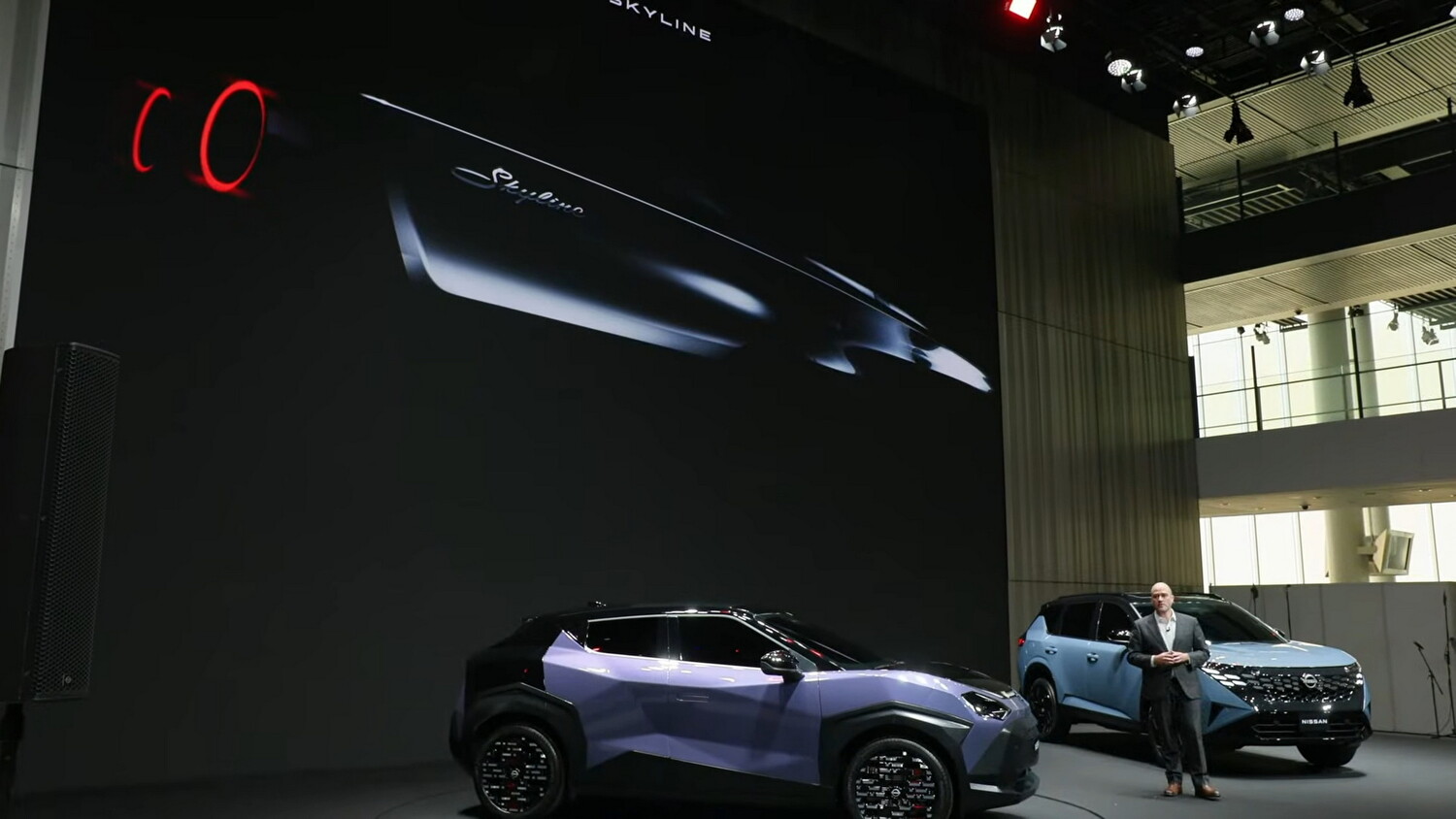
Adam Roy · 4 months ago@adamroy58Nissan Built The Next Skyline In Half The Time By Copying China Liked by+42 othersDongfengPost commentRelated PostsThis 2012 Acura TSX Sport Wagon Is As Rare As An R35 Nissan GT-R But Way More PracticalCaleb Green · 12 days agoYouTubers Turned Japan’s Smallest Car Into a Tiny R34 Skyline: “Honey, I Shrunk the GT-R!” 95 · Morgan Harris · 28 days agoGasgoo Daily | Dongfeng Nissan Unveils NX7; Leapmotor A10 Hits 100k; China Eyes 100k Robots Annual Output 28 · William Girard · 2 months agoNissan 300ZX, Exocet, Pinzgauer 710k: The Dopest Cars I Found For Sale OnlineLiam Smith · 12 days agoThe 10 Coolest Cars For Sale On Motorious Right Now Under $20,000 71 · Liam Campbell · 29 days agoDongfeng Nissan NX7 Official Images Released, Overall Style Leans More Sporty 60 · Kaitlyn Wilson · 2 months agoAmerica’s Only True Crossover Convertible Was an Absolute FlopVictoria Bouchard · 12 days agoNext-Gen Nissan Skyline Set For December Debut 29 · Parker Campbell · 1 months agoDongfeng Nissan NX7 PHEV crossover revealed specs with 225 km of EV range 42 · Thomas Walker · 2 months ago7 Used Midsize Pickup Trucks You Can Get For Under $30KLeo Côté · 13 days agoThis Mysterious Japanese Lot Is Filled With Hundreds of Nissan Skyline GT-Rs 32 · Isabelle Morgan · 1 months agoDongfeng Nissan unveils new NX7 SUV with LiDAR 56 · Evan Turner · 2 months agoHonda Will Reportedly Borrow Mitsubishi’s Truck to Take on the Hilux and RangerSophie White · 13 days agoThis Classic JDM Sedan Pushed More HP In 1990 Than A Modern Ford Maverick 78 · Oliver Harris · 1 months agoNissan’s $22K NX8 Is Getting A Cheaper Rogue-Sized Baby Brother In China 21 · Caleb Roy · 2 months agoKia Expects The Affordable EV3 To Be Its Best-Selling EV In The U.S.Jackson Gagnon · 13 days agoNext-Gen Nissan Skyline Finally Has A Set Launch Date... And It's Sooner Than You Think 85 · Madeleine Martin · 1 months agoChina's Dongfeng Vigo and Box 01 target under C$35,000 in Canada for 2027 49 · Logan Girard · 2 months ago2018 Nissan GT-R NISMO for Sale With 17,000 MilesSamuel Wright · 13 days agoNissan’s New Skyline Debuts in December With a V6 and Manual 67 · Emma Hall · 1 months ago



 +42 others