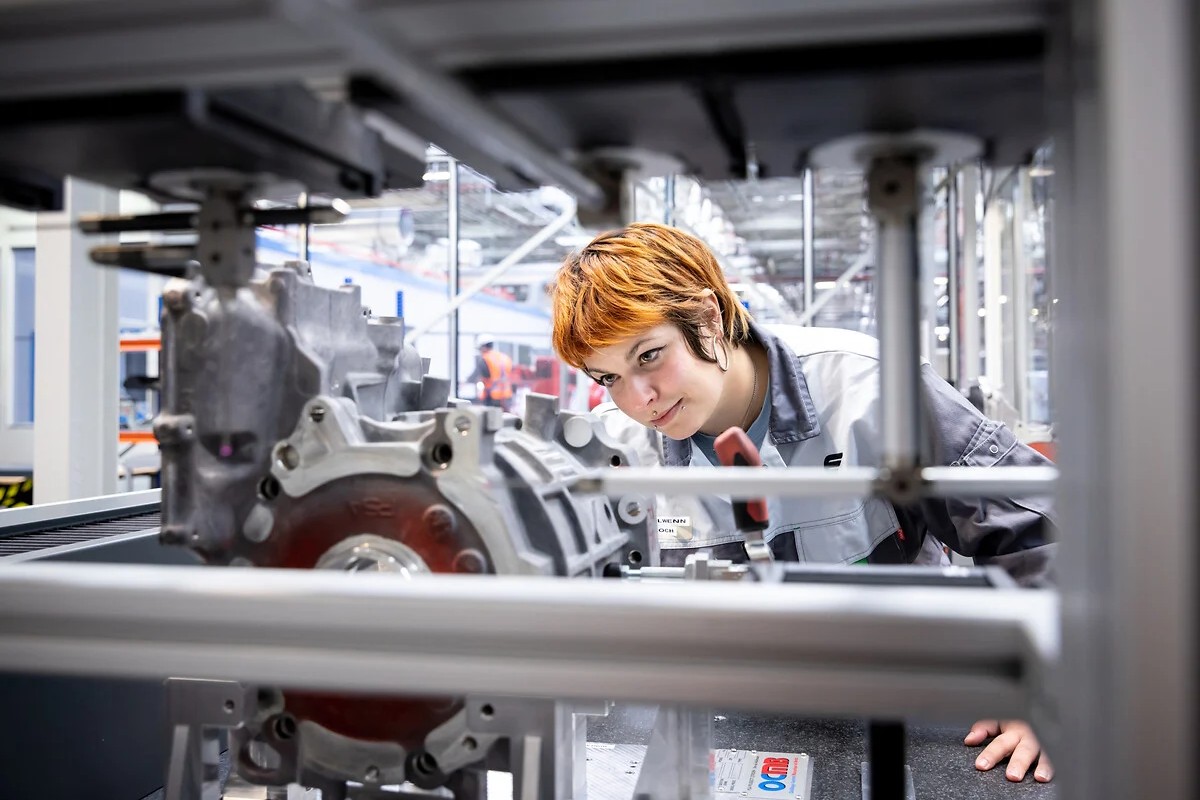



















Image: StellantisNidec’s e-axle business primarily consists of two joint ventures—one with GAC in China and another with Stellantis in Europe. In China, however, Nidec is now hitting the brakes. President and CEO Mitsuya Kishida told Nikkei Asia: “We want to withdraw from the e-axle business, which has become a red ocean.” The term ‘red ocean’ refers to an oversaturated industry characterised by fierce competition.Nidec is reportedly already in negotiations with its Chinese joint venture partner GAC regarding its exit. “Although the specific approach has not been decided, we will dissolve both joint ventures,” Kishida told Nikkei Asia. Nidec has not yet initiated discussions with its European partner Stellantis, though this appears to be only a matter of time.The Chinese joint venture, Guangzhou Nidec Auto Drive System, headquartered in Guangzhou, was founded in 2019 and is owned 51% by Nidec and 49% by GAC’s subsidiary, GAC Components. At its inception, both parties stated that the initial focus would be on producing e-axles for GAC, though they also aimed to supply third-party customers. The motors were to be developed by engineers in China, while leveraging GAC’s procurement capabilities.At the end of 2022, Stellantis added e-axle production in France by converting its factory in Trémery. In what was once the group’s largest diesel engine plant, the production of electric motors began three and a half years ago under the responsibility of Nidec’s joint venture, Emotors. By 2024, the production capacity was expected to exceed 1 million units per year, according to the announcement at the time.As Nikkei Asia reports, e-axles were once a flagship project of company founder Shigenobu Nagamori. Against this backdrop, Nidec acquired a Honda subsidiary specialising in electronic component control in 2014 and took over Omron’s automotive electronics business in 2019. The now-outlined withdrawal from this sector represents, according to Nikkei, ‘strategic shift toward structural reform.’ The division’s losses have recently been substantial: for the first half of the current fiscal year (which ended in Japan at the end of September), Nidec reported a loss of 87.7 billion yen (approximately 470 million euros) in its e-axle business. This includes provisions for impending contract losses and impairments on production facilities.asia.nikkei.com