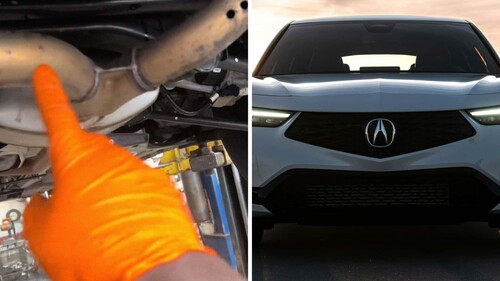
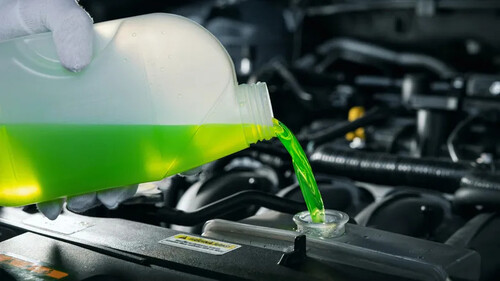
Do You Know These Terms?Taking your car to the shop can sometimes feel like you’ve accidentally wandered into a lecture on rocket science given in a language you don’t speak. Most of us just want to get from point A to point B without any strange rattling noises or scary dashboard lights, but understanding the basics can save you a lot of stress and money. You don't need to be an expert mechanic to grasp how your vehicle functions or what your technician is talking about during an oil change.1. Catalytic ConverterFound within your exhaust system underneath your vehicle, a catalytic converter cleans toxins out of exhaust before they exit the tailpipe. It works by using valuable metals to cause a chemical reaction that neutralizes harmful gases. You’ll often hear about stolen catalytic converters in the news because they are popular targets.2. MufflerHeaded to the store? Everyone around you thinks you’re driving a monster truck with your muffler turned off. Responsible for quieting the explosive noises created by the engine, a muffler is made up of various chambers and tubes.3. AlternatorWhile your battery gets the car started, this device is what actually generates electricity to keep everything running and the battery charged while you're driving. It converts mechanical energy from the engine into electrical power for your headlights, radio, and air conditioning. If your lights are flickering or your car fails shortly after starting, you're likely looking at a failing unit.4. Brake PadsThese are what create friction against your wheel rotors when you press on the brake pedal. Brake pads are designed to wear down over time, which is why they’ll eventually begin to squeal so you know it’s time to get new ones. You should replace your brake pads regularly because it’s much cheaper than buying new rotors.5. RadiatorWithout a radiator to keep things cool, your engine would melt into a huge lump of metal. The radiator is what cools off your coolant so it can continue to absorb heat from your engine. Keep an eye out for puddles of green or orange fluid under your car.6. ChassisYou can think of your chassis as the skeleton that every other part of your car hangs off of. A vehicle’s chassis is what everything from the engine to your passengers ultimately rests on. Having a straight, solid chassis is essential to keeping your car safe and properly aligned.7. TransmissionYour transmission does exactly what it sounds like: transfers power from your engine to your wheels. There are many different types of transmissions that use gears to ensure your engine doesn’t overwork itself. Jumping or “slipping” when you try to accelerate are sure signs of transmission trouble.8. Spark PlugsAs their name suggests, spark plugs help create a spark to ignite the air/fuel mixture inside your engine. They have to fire continuously and at perfect intervals in order for your engine to run properly. Spark plugs can become covered in soot or worn out over time, leading to a car that’s difficult to start or doesn’t idle well.9. Struts and ShocksThese parts work together as part of your suspension system to absorb all the bumps and dips you encounter on the road. Without them, your car would bounce uncontrollably every time you hit a pothole, making for a very uncomfortable and dangerous ride. You’ll know they’re worn out if your car feels "floaty."10. DipstickThis is a long, thin metal rod with markings on the end that allows you to manually check the level and cleanliness of your engine oil. You simply pull it out, wipe it clean, reinsert it, and pull it out again to see exactly how much oil is currently protecting your engine. It’s one of the easiest ways to stay on top of your car's health.11. Serpentine BeltThe snaking belt that powers your accessories such as the power steering pump, alternator, and AC compressor is called a serpentine belt. This belt must stay intact and free of cracks in order to work properly. If you hear a loud squealing noise when you turn your car on, chances are you’re looking at a belt in need of replacement.12. Fuel InjectorsFuel injectors spray misted gasoline into your engine’s cylinders at just the right time. Replacing old carburetors, fuel injectors allow for better fuel efficiency by using less gasoline. If debris clogs your fuel injectors, your engine may stutter or lose power.13. RotorsThese are the heavy metal discs that spin along with your wheels and are gripped by the brake pads to stop the car. They need to be perfectly flat and smooth to provide consistent stopping power and prevent your steering wheel from shaking. When you feel a pulsing sensation in the brake pedal, it often means these discs have become warped.14. CV JointA CV joint allows your drive axle to transmit power as your wheels move vertically and horizontally. CV joints are protected by rubber boots, which keep the grease in and debris out. However, these boots will wear out over time and cause your joint to fail.15. ThermostatThis small valve acts as a gatekeeper for your cooling system by staying closed until the engine reaches its ideal operating temperature. Once things get hot enough, it opens up to let the coolant flow through the radiator to prevent overheating. If it gets stuck in the closed position, your engine can overheat in minutes.16. Tread Wear IndicatorBuilt directly into your tires, tread wear indicators let you know when it’s time to buy new rubber. When the rest of your tire’s tread is worn down to your tire’s indicators, then it’s time to replace your tires. Driving on tires past their indicators is illegal and extremely unsafe.17. Air FilterCars need air to run, but they can’t run on dusty air. Air filters keep debris like dirt and bugs from getting into the engine. Not only will a dirty air filter cause your gas mileage to drop, but it can greatly affect your engine’s performance.18. Head GasketHead gaskets can save your life, but only if yours decides not to fail. Located between the upper and lower halves of your engine, a head gasket prevents oil, coolant, and combustion from mixing. One of the most obvious signs that you need a new head gasket is engine trouble or overheating.19. DifferentialAs your car turns a corner, your outside wheel needs to travel farther than your inside wheel. Instead of scraping along the ground, your differential’s job is to allow your wheels to spin at different speeds. Without a differential, your tires would wear down very quickly.20. O2 SensorYour oxygen sensor’s job is to monitor how much oxygen is left in your exhaust. This allows your car to adjust the fuel mixture and run as efficiently as possible. From reducing gas mileage to increasing emissions, a faulty oxygen sensor can have many negative effects.