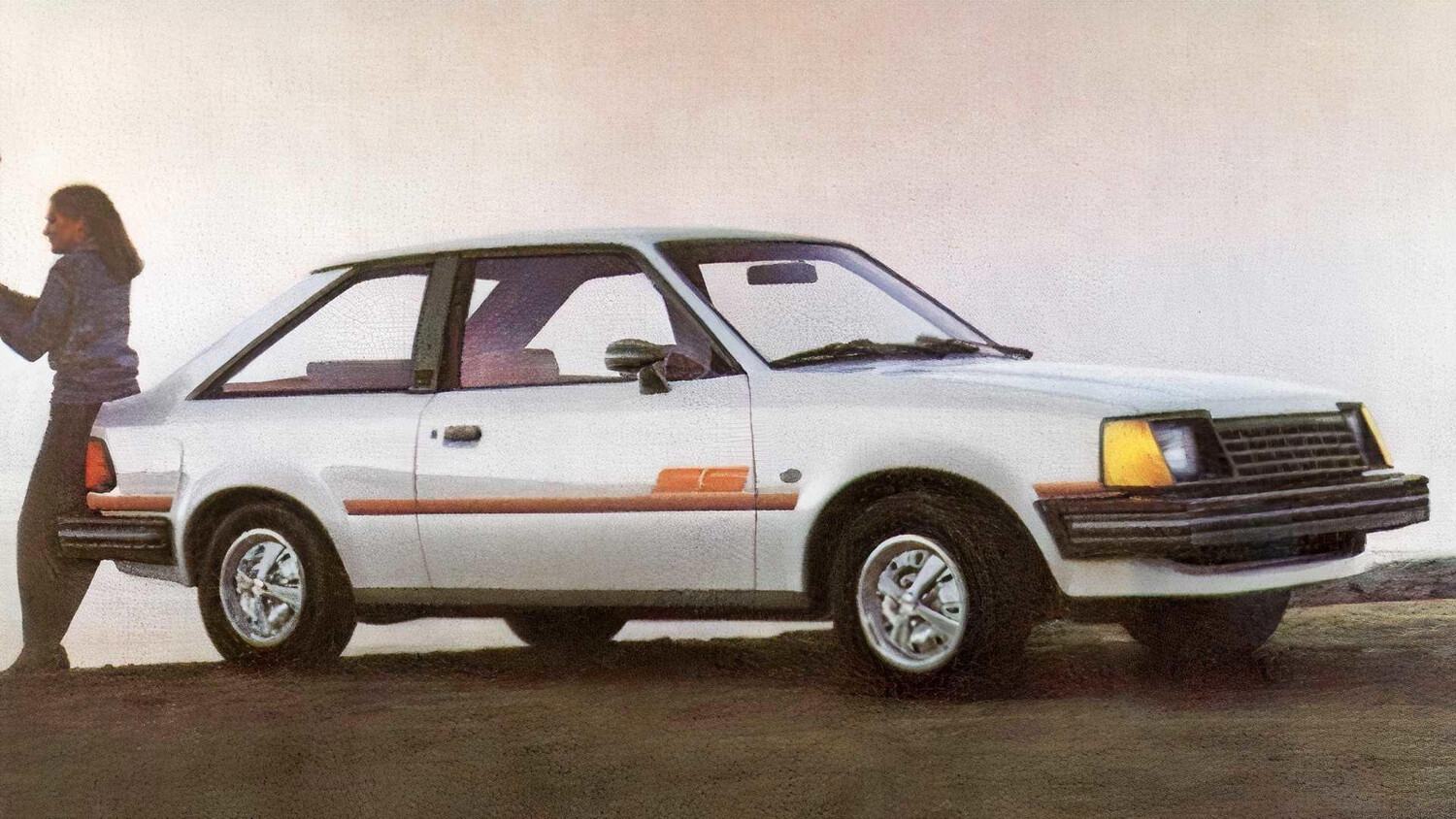
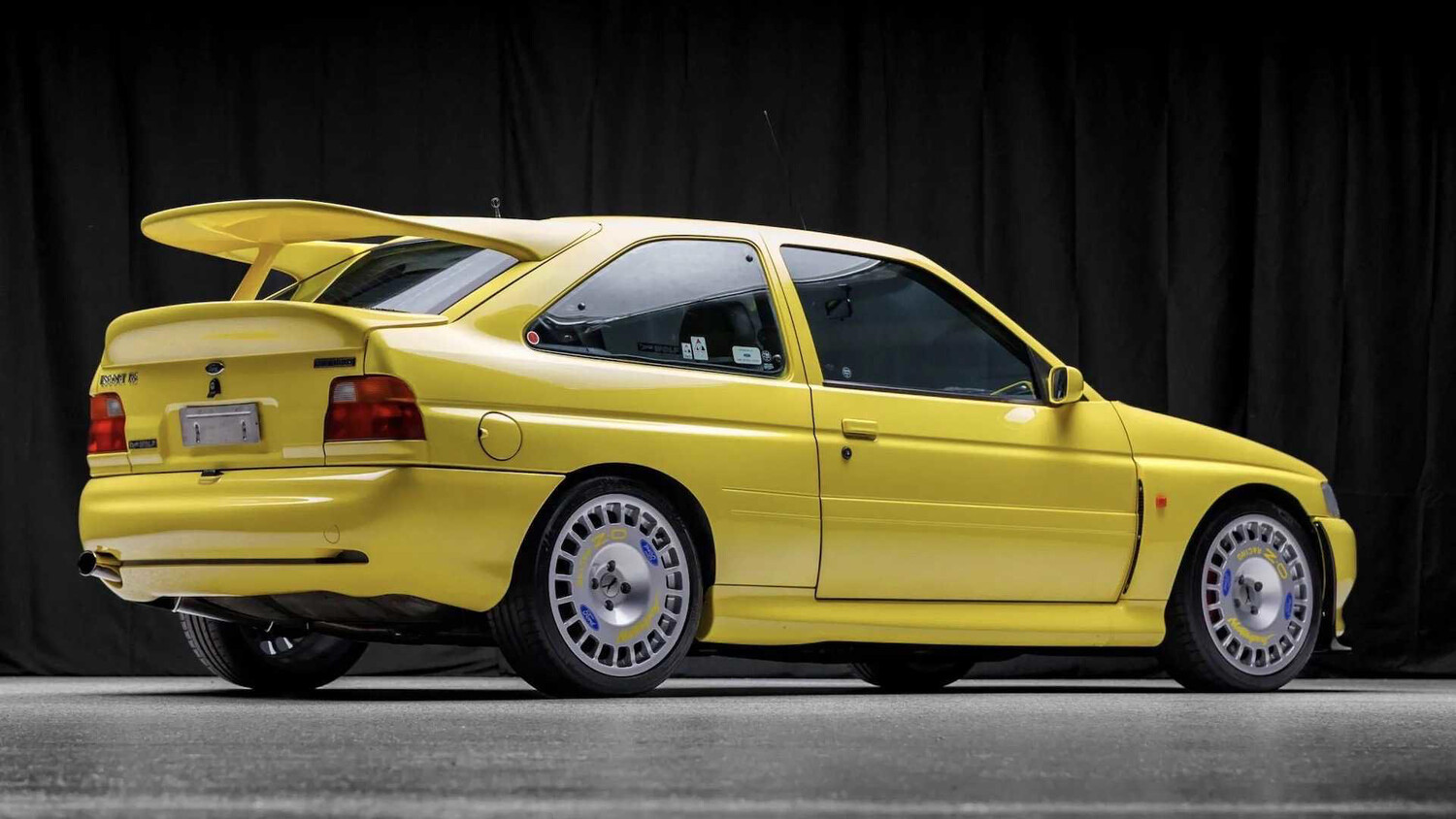
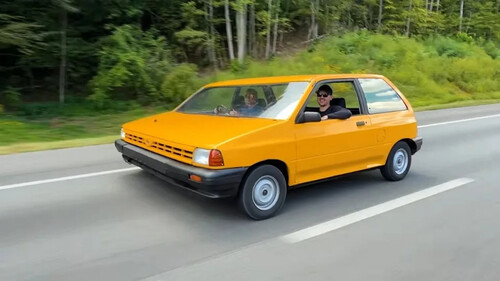
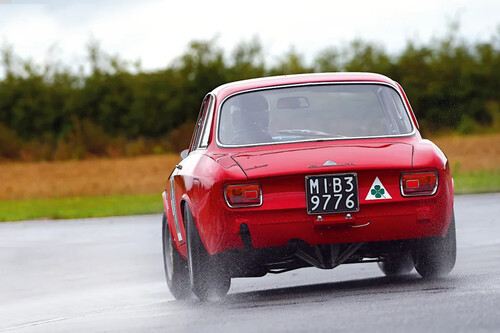
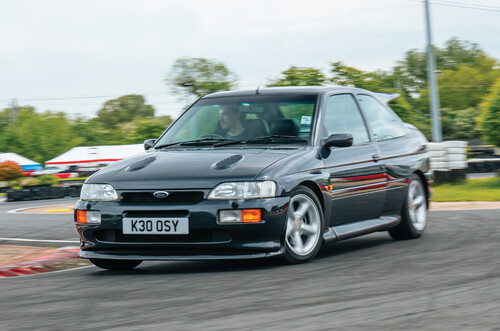
The Ford Escort Mk2. Some say it was the greatest rally car of all time. Powered by a naturally-aspirated 2.0-liter four-cylinder Cosworth BDA engine producing up to 280 hp, and revving to 9,000 rpm, the rear-wheel-drive Escort wowed crowds around Europe, with world champions like Ari Vatanen, Hannu Mikkola, and Björn Waldegård behind the wheel. It was the stuff of dreams, these Escorts, going sideways around corners, the Cosworth BDA engine screaming like a banshee, revving to nearly 10,000 rpm.And in the late seventies and early eighties, winning a race on a Saturday meant a que of customers outside a dealership on a Monday. And that was exactly the case with the Escort. Well, it was the case in Europe and other parts of the world where the Escort Mk2 was on sale. The Ford Escort 'world car' was launched in the USA in 1980, and it was essentially an Americanized Escort Mk3, with unique styling and specifications. It was slow, handled like an oil tanker, and was quite a way removed from the Escorts that ruled European rallies. But it nevertheless became a top seller for Ford, offering great value for money in an honest, no-thrills package. A 'World Car' For American Motorists? FordLet's cut to the chase. The Ford Escort that went on sale in the USA in 1980 was not the Ford Escort revered all around Europe. Instead, the American Escort was described as a true 'world car', tailor-made for American motorists with unique styling and features. It was also slow, and didn't like corners all that much. In 1980, the performance-oriented SS model packed just 65 hp of a lackluster 1.6-liter engine. The American Escort was also as bland as an icecream cone with no icecream in the deal.In short, it is no wonder the American Escort, despite some really impressive sales numbers, never achieved the same iconic status that its European nephews could muster. It was just a means towards an end, and a reasonably sound choice of a car to get you from point A to B.So what was the European Escort's secret, iconic sauce? It boils down to one word: motorsport. To better understand why the European Ford Escort was, and still is, such an iconic thing, we need to head back to the sixties, seventies, and eighties. Early Motorsport Success Catapulted The Escort Into Stardom FordIn 1970, the London to Mexico World Cup Rally was a 16,000-mile marathon event, covering no less than 20 countries, and with more than 100 entries. Ford's Escort R1600 and a string of Lotus Twin Cam Escorts lined up for the start. Both these cars were highly capable, but Ford suspected that reliability would trump outright speed in this marathon event. So, Ford also entered a string of Ford Escorts Mk1s, all featuring the same two-door body as the RS1600, but powered by a 140 hp, 1.8-liter version of the brand's reliable Kent four-cylinder cross-flow engine.The Ford team's premonition about the extremely tough nature of the rally proved to be spot on. As many more powerful cars fell by the wayside, the fleet of Ford Escorts with the Kent engine under the hood carried on regardless. The Escort not only famously won the grueling event at the hands of rally legends Hannu Mikkola and Gunnar Palm, the Escort clinched five of the top 10 positions. It was a victory that ignited an iconic flame that would burn high for decades to come. Ford went on to offer a 'road version of the rally winner.' It was called the Escort Mexico, and it was powered by an updated 1.6-liter Kent engine delivering 86 hp of power. That may not seem like much, but the Escort weighed just 1,800 pounds, so it was plenty fast in the early '70s, able to just about reach 100 mph. The Escort Mk2 Carries On Regardless Bring A TrailerThe second generation Escort made its European debut in 1974. It was available in various formats, ranging from the sporty two-door, to four-door versions, to an estate and a panel van. The Mk2 was also rear-wheel-driven, weighed next to nothing, and came with a bunch of reliable Ford engines. The perfect recipe for some more motorsport glory, and what a motorsport legacy the Mk2 would earn.Besides a long string of successes on tracks around Europe that continues to this day with hill climb specials making 600 hp, it was the Mk2's performance in the World Rally Championship (WRC) that really drew the crowds. The Blue Oval was a real spectacle, with iconic drivers like Ari Vatanen driving the Escort so sideways, the crew complained about bugs on the side windows, and not on the windscreen!Vatanen won the 1981 WRC series in the Ford Escort RS, a magnificent rally weapon powered by a two-liter Cosworth BDG engine, delivering around 290 hp, and revving to 9,500 rpm. A five-speed, close-ratio competition gearbox sends the power to the rear wheels. Drivers like Vatanen could make the Ford do the tango, waltz, and foxtrot on a rally stage, throwing the car around at will. The Escorts enthralled millions of European fans, with especially British motorsport fans considering the Escort Mk2 as their own, further cementing the legacy of this Ford. Meanwhile, in the USA, the Escort 'world car' variant was selling up a storm, but did not have the same performance clout among Ford enthusiasts.Ford Europe continued to churn out the great stuff. Like the Ford Escort RS1800, of which only 109 cars were ever made. Joe Public could buy this Ford (for a pretty penny, of course), and take RS racing.Iconic AuctioneersMost of the 109 cars made have been either modified or upgraded with different running gear, and only a handful of original, standard RS 1800s survive today. A prime example sold for a record amount of around $380,000 in 2025. Yep, that's how iconic cars roll. The Iconic-ness Just Kept On Going... Iconic Auctioneers While American customers had to be content with some okay performance models like the 1984 Escort Turbo GT, powered by a turbocharged 1.6-liter engine delivering 120 hp, Ford in Europe continued to churn out great performance cars. Like the legendary Ford Escort RS2000, a fast Ford that combined a 100 hp two-liter engine with light weight, rear-wheel-drive and a close-ratio manual gearbox. And the 1985 Ford Escort RS Turbo S1, a rare 132 hp performance Escort.The S1 is the first front-wheel-drive car to get a limited slip differential with a viscous coupling, which greatly improved grip and handling. This system uses a silicon-based fluid and internal plates to regulate the speed between the two front wheels, ensuring optimal grip. This rare Escort was even made more famous because the late Princess Diana of Britain used to own an RS Turbo S1.Bring A Trailer By the mid-nineties, the Ford Escort RS Cosworth arrived on the European hot hatch scene. This RS has an advanced four-wheel-drive system, as well as a 224 hp, turbocharged two-liter four-cylinder engine. The Cossy, as fans often refer to it, has also become a highly collectible Ford Escort.The American version of the Ford Escort was not a bad car. On the contrary, it offered excellent value for money, it was well-made, and it proved very reliable, getting a lot of folks from point A to B with minimal fuss. The second generation Escort, developed in partnership with Mazda, was launched in the USA in 1991. It continued to sell well, offering customers a good deal, a good drive, and a good means of transport between two points. There were some performance highlights too. Like the 143 hp Ford Escort ZX2 X/R, introduced in 1999.But was the American version of the Escort truly iconic? Well, not as iconic as its British cousin. In 2018, Ford discontinued the production of all but its line-up of SUVs, trucks and high-performance cars like the Mustang, and models like the Escort were no more.Ford In the USA, the Escort was a great, practical car, and millions were sold. In Europe, on the back of the Escort's extensive motorsport exploits, it was not just a car. In Britain, especially, it remains a national institution and icon, with generations of gearheads growing up watching the sideways antics of a 600 hp Escort Mk2 on a rally track. And they continue to do it to this very day.