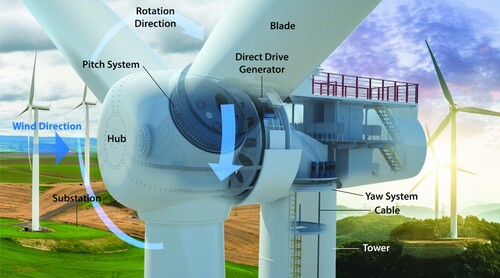
For all the damage US President Donald Trump has done to the domestic wind and solar industries, they just keep persisting. The latest example is the massive, 550-mile, 3-gigawatt SunZia SouthWest Transmission Project linking renewable energy assets in sunny (and windy) New Mexico with Arizona and California. Construction began less than three years ago and the project is already beginning to deliver electricity from a wind farm in New Mexico. The Long Road To A Massive Renewable Energy Project To be clear, behind the swift pace from start of construction to delivery of electricity is a planning and permitting process that began twenty years ago. The project initially surfaced as a $2 billion transmission line proposed in 2006 by the firm SouthWestern Power Group, aimed at harvesting renewable energy in New Mexico and shooting it over to California through Arizona. SouthWestern outlined the project in 2008, describing it as twin 500-kilovolt lines traversing federal, state, and private land for more than 500 miles, alongside a proposed wind farm in New Mexico supported by Energy Capital Partners, Shell WindEnergy Inc., and the Arizona utilities Salt River Project and Tucson Electric Power. The proposal touched off a lengthy review process beginning in 2009, and the project seemingly crossed a big hurdle in 2014 when the US Department of Defense proposed burying parts of the new transmission line to prevent interference with operations at its White Sands missile range in New Mexico. Or not, as the case may be. In 2018 the Arizona Public Service Commission intervened to mothball the project. However, that proved to be a temporary glitch. In 2020 the Albuquerque Journal reported on a new route that avoided the missile range altogether. Two years later the project emerged again under the ownership of the leading renewable energy developer Pattern Energy, now sporting a price tag of $8 billion for the transmission line and the 3-gigawatt Sunzia Wind project in New Mexico. “SunZia Transmission and SunZia Wind together comprise the largest renewable energy infrastructure project in U.S. history with a total investment of over $8 billion,” Pattern Energy enthused in a press statement. “Both projects are privately funded and will deliver widespread economic benefits across New Mexico and Arizona,” Pattern added. More Clean Kilowatts For The USA, Finally With just a few loose ends to tie up, Pattern projected that the transmission line would be completed in 2025 followed by the wind farm this year, both supported by a new $11 billion financing package. That finally brings us to the official groundbreaking in September of 2023, just 2-1/2 years ago. Pattern Energy has been relatively mum on the day-to-day progress since then, but this week word dropped that electricity has begun to trickle from the wind farm into the transmission line. “SunZia Wind has begun testing its 916 turbines as it nears the start of commercial operations later this quarter, according to a person familiar with the project,” reported Benjamin Storrow for E&E News on April 16. “The impact is already evident: California broke its record for wind generation eight times in the last four weeks, according to Grid Status, a website that tracks power flows,” Storrow added. Over the past four years, Grid Status has recorded a record high of 6,429 megawatts in wind generation ascribed to California. That figure crept up to 6,654 on March 25 and hit 7,193 on April 13, an upward swoop concurrent with startup activity at the SunZia Wind project. Storrow also indicated that Pattern has refrained from tooting its own horn in order to “avoid provoking the president.” That’s no surprise. President Snowflake’s notoriously tender temperament helps explain why neither Pattern nor CAISO (California’s grid operator) formally announced the milestone, leaving the job up to the online power tracker Grid Status. Don’t Poke The Renewable Energy Bear Other interstate renewable energy transmission projects are still encountering years of delay (looking at you, Grain Belt Express), but the ultimate payoff of the SunZia project builds the case for persistence. The picture is brighter for intrastate transmission projects, where jurisdictional issues are less complex. Progress is moving apace on the new 550-mile, 5.5 gigawatt Power Pathway transmission project in renewables-friendly Colorado, for example. The new line will loop around 12 counties, collecting new wind and solar power assets along the way. Circling back around to that idea of not poking the Trump bear on renewable energy, Sunzia is not the only new transmission line to begin delivering clean kilowatts in the US this year. The other newcomer is the New England Clean Energy Connect, a 145-mile, 1.2-gigawatt project linking hydropower from Quebec to Massachusetts through Maine. It began operating in January to little fanfare and it slipped right under the CleanTechnica radar, though the developer, Avangrid, did post a press release celebrating the milestone. “The NECEC stands as one of the region’s largest sources of baseload energy, strengthening grid reliability and lowering energy costs,” Avangrid announced when the new transmission line commenced operation on January 16. Avangrid further noted that the project obtained the required federal approvals from the Trump administration. The project also enjoyed bipartisan support at the state level, including former Maine Governor Paul Lepage (Republican) as well as current Maine Governor Janet Mills (Democrat), and the current and former Democratic governors of Massachusetts Maura Healy and Charlie Baker, respectively. “The Massachusetts Department of Public Utilities found that the NECEC will save New England rate payers $3.38 billion over the 20-year of the life of the current contracts,” Avangrid noted. The project did encounter a hiccup early on, when Winter Storm Fern upset the applecart and took the NECEC offline for a period. As a result, the New England grid operator ISO-NE ended up exporting more electricity than it received from Canada for two days. An analysis by the US Energy Information Agency indicates that fossil-fueled power plants in New England enabled ISO-NE to take on the role of exporter. All the more reason for coastal states in New England to pursue their renewable energy opportunities. That’s going to be a tough row to hoe while Trump is in office, particularly in the case of offshore wind. However, as capably demonstrated by the SunZia project, persistence pays off. After all, the wind and the sun are forever but US Presidents come and go, and the current occupant of the White House is scheduled to go on January 20, 2029 — peacefully this time, one hopes. Photo: The colossal SunZia renewable energy project is finally beginning to deliver clean electricity from New Mexico to California (cropped, courtesy of Pattern Energy).