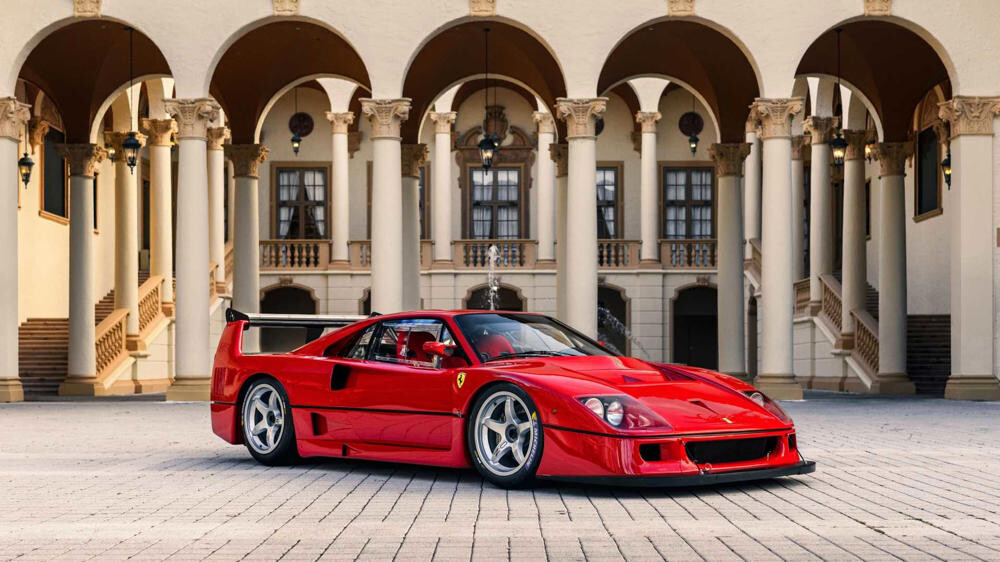
The Lotus Carlton could top 176 mph, which put a big Vauxhall family saloon into supercar territory when it went on sale in 1990. Lotus had planned to build 1,100 of them. Instead, production stopped at car number 950 in 1992. The idea came from inside General Motors. GM had owned Lotus since January 1986, and Lotus boss Mike Kimberley wanted to prove what his engineers could do with a GM car. So he pitched a fast version of the Carlton, Vauxhall’s large rear-drive saloon. In other European markets, the same car went on sale as the Lotus Omega. Kimberley’s goal was never subtle. “I wanted supercar performance to push the performance envelope,” he later told Hagerty. He also called the finished car “a real wolf in sheep’s clothing,” and that is still the best short description of it. How Lotus built the Lotus Carlton at Hethel The work started with finished cars. According to Hagerty UK’s history of the Lotus Carlton, complete Carlton GSi saloons left Opel’s Rüsselsheim plant in Germany for Lotus at Hethel in Norfolk. There, Lotus stripped them down. Workers cut away and replaced the wheel arches and reworked the transmission tunnel. The job was slow by mass-production standards. Hagerty says the full installation, build and retrim took 130 man-hours per car. Assembly ran in Lotus’s Factory 3, while the engines came together in the company’s own engine shop. In fact, the German tuner Irmscher had been considered for the build before Kimberley lobbied to keep it at Hethel. One detail shows how far Lotus owned the project. Opel engineer Fritz Indra worried that Opel had not done the durability testing itself. As a result, the cars carried Lotus VIN numbers. The twin-turbo six behind 176 mph The engine began as the six from the Carlton 3.0 GSi. However, Lotus changed almost everything inside it. evo’s history of the car lists a 3,615 cc straight-six with reinforced block webbing, a stronger crankshaft, and Mahle pistons and rods made to Lotus specs. Lotus also lowered the compression and fitted its own ignition and injection. Then came the boost. Two Garrett T25 turbochargers fed the six through an intercooler. evo quotes 377 bhp at 5,200 rpm and 419 lb ft of torque at 4,200 rpm. By comparison, Hagerty notes that the BMW M5 of the day made 315 bhp. The rest of the drivetrain came from GM’s wider family. evo says the six-speed ZF manual gearbox came from the Corvette ZR-1, and the rear differential came from the Holden Commodore. Meanwhile, AP supplied the brakes. Hagerty reports that the car managed 20 stops from 100 mph without fade. The headline number was 176 mph, the official quoted top speed. Even so, Hagerty says Lotus test drivers saw 180 mph with a following wind. Acceleration figures vary by source. Hagerty gives 0-60 mph in 5.2 seconds, while evo’s spec table lists 4.8 seconds. Why the Lotus Carlton ended up in Parliament A fast saloon was nothing new, but a 176-mph Vauxhall was. Hagerty traces the row to an Autocar cover story. After that, the Association of Chief Police Officers called the car “an outrageous invitation to speed.” The Daily Mail campaigned to have it banned, and Parliament asked whether such a car belonged on the road. Not everyone agreed with the critics. Writing in The Observer, Sue Baker pointed out that nobody had protested the 201-mph Ferrari F40, as Lancaster Insurance recounts. “I suspect what really inflamed the critics is the fact that this high-speed car is a Vauxhall,” she wrote. Lotus and GM chose not to answer in public. For Kimberley, the cost was real. He told Hagerty the fuss was “a tragedy from my perspective,” because the bad press hurt the marketing and sales effort. Why production stopped at car number 950 The road to car 950 began at Geneva. Lancaster says a prototype starred at the Geneva Motor Show in March 1989. Hagerty adds that Lotus planned 15 prototypes and built 11. At launch, the car cost £48,000, a figure evo, Hagerty and Lancaster all give. That price, plus the controversy, kept sales short of the plan. Hagerty says Lotus built 950 cars from 1990 to 1992, “far short of the original plan.” Of those, Lancaster counts 286 right-hand-drive Vauxhalls for Britain and 440 Omegas for Germany. Even the British count has a twist. PistonHeads’ buying guide says 285 were intended for the UK, until one extra right-hand-drive car took the tally to 286. The last car has a story too. Hagerty says the donor for car 950 “literally fell off” the Rüsselsheim line before it reached Lotus, and evo gives the total as 949 or 950 depending on how that final car is counted. What a Lotus Carlton is worth now Today, the cars sell for close to their 1990 sticker price. PistonHeads says a good one needs around £45,000. Meanwhile, the Hagerty Price Guide runs from almost £40,000 for a fair car to as much as £70,000 for a concours example. Buyers should look closely, though. PistonHeads warns that the twin turbos cook the engine bay, and aftermarket tuning chips can hurt head gaskets, pistons and the differential. A whining differential or timing chain can mean an expensive repair. Still, the launch price of £48,000 bought one of only 950 cars, and the Hagerty guide now values the best of them at up to £70,000.