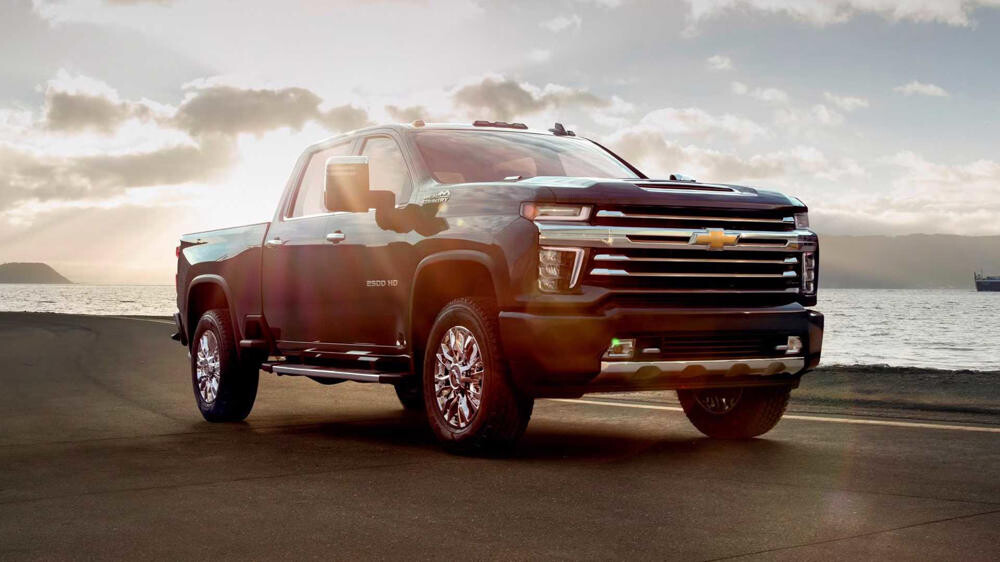
Five years after truck production returned to Oshawa, General Motors is celebrating a major Canadian manufacturing milestone while preparing the Ontario facility for another significant transformation. The automaker announced on November 18, 2026, that Oshawa Assembly has produced more than 600,000 Chevrolet Silverado pickups since reopening its truck assembly operations in November 2021. GM is also moving forward with nearly C$500 million in planned investments over three years to support next-generation heavy-duty trucks and manufacturing improvements. For a community that experienced the shutdown of vehicle assembly in 2019, the announcement carries considerable significance. It reinforces Oshawa's continuing importance within GM's North American operations, even as changing production priorities, employment pressures and uncertainty surrounding the automotive industry create new challenges. A Comeback Measured in 600,000 Trucks The milestone represents an extraordinary turnaround for a manufacturing operation that appeared to have lost its future only a few years earlier. GM ended vehicle assembly at Oshawa in December 2019, leaving approximately 2,300 employees facing layoffs and creating uncertainty for businesses connected to the factory. However, a subsequent agreement with Unifor helped secure the plant's reopening. On November 10, 2021, GM officially celebrated the return of Chevrolet Silverado production, initially supporting approximately 1,800 jobs across two shifts. The reopening followed one of the fastest plant retooling efforts in GM's history. The production figures illustrate how extensively Oshawa has recovered. In June 2026, GM celebrated its 500,000th Silverado, a grey Silverado HD equipped with the Z71 off-road package. By November, the cumulative total had exceeded 600,000 pickups. Averaged across five years, that represents more than 120,000 trucks annually, although actual production varied as staffing and schedules changed. For the employees who helped rebuild operations after the shutdown, the achievement demonstrates how dramatically the factory's circumstances have changed since 2019. What GM's Nearly $500 Million Investment Actually Covers General Motors' investment commitment is substantial, but the financial details are important. The nearly C$500 million represents a combination of previously announced spending and additional funding secured during 2026 labour negotiations. The company had already committed C$343 million toward next-generation truck manufacturing and facility improvements. In August 2026, GM added another C$144 million specifically to introduce production of the next-generation GMC Sierra HD at Oshawa. Together, these commitments total C$487 million, explaining the nearly C$500 million figure highlighted in the latest announcement. The earlier C$343 million package includes C$280 million announced in June 2023 and an additional C$63 million committed in February 2026 for stamping upgrades and aftermarket parts manufacturing capabilities. GM describes the combined investment as planned spending over three years, rather than money already fully spent. The company also reports approximately C$1.5 billion in announced Oshawa investments since 2020. These figures reflect overlapping investment programs and should not simply be added together. What matters for the plant's future is that GM continues allocating substantial capital toward Canadian truck manufacturing instead of withdrawing from the facility. Refreshed 2027 Silverado HD Production Begins in December The next major milestone for Oshawa is already approaching. GM confirmed that the assembly plant will transition to production of the refreshed 2027 Chevrolet Silverado HD in December 2026. The move will introduce updated heavy-duty pickups with significant mechanical and technological improvements. It also represents an important step toward the company's longer-term manufacturing strategy, which includes preparing Oshawa to produce future generations of both the Silverado HD and GMC Sierra HD. There is an important distinction between these programs. The refreshed 2027 Silverado HD is scheduled to enter production at Oshawa this December, while the next-generation heavy-duty vehicles represent a separate future production commitment. GM has not announced an identical December launch date for the next-generation Sierra HD. For the employees responsible for maintaining production quality, even the immediate model-year transition requires careful coordination. Manufacturing teams must accommodate updated components, equipment settings and vehicle specifications while keeping assembly operations running efficiently. The December changeover will therefore provide an early indication of how effectively Oshawa can manage the next stage of its manufacturing transformation. A Powerful New Diesel Engine Raises the Stakes One of the most significant changes arriving with the 2027 Silverado HD is an entirely new Duramax 8.3-litre turbo-diesel V8 engine. GM says the available engine produces 555 horsepower and 1,230 pound-feet of torque, representing a major improvement in heavy-duty pickup performance. Properly equipped Silverado HD models can tow up to 38,000 pounds using a gooseneck trailer configuration. The truck also introduces electric power steering, electronic brake-boost technology and improvements to trailer-management systems intended to provide greater control under demanding conditions. Those capabilities matter to customers whose vehicles are essential to their livelihoods. Construction contractors, agricultural operators and commercial fleet owners frequently rely on heavy-duty trucks to move machinery, materials and large trailers. GM has reported that nearly 65% of Canadian heavy-duty truck customers choose diesel engines, highlighting the importance of the new powertrain. The Duramax engine itself will be manufactured at GM's expanded DMAX facility in Brookville, Ohio, rather than Oshawa. That distinction illustrates how Canadian vehicle assembly remains connected to a broader North American manufacturing network, with specialized factories supplying components for trucks assembled elsewhere. Oshawa Shifts Away From Light-Duty Trucks to Focus on Heavy-Duty Production General Motors is making a significant change to Oshawa's vehicle lineup. The automaker has confirmed that production of the light-duty Chevrolet Silverado 1500 will end at the facility during November 2026. Until now, Oshawa has occupied a distinctive position within GM's North American manufacturing network because it produced both light-duty and heavy-duty Silverados on the same assembly line. The revised strategy concentrates the Ontario operation on the Silverado HD while preparing to introduce the next-generation GMC Sierra HD. GM has indicated that it expects employment levels to remain unchanged through the light-duty production transition. The change represents more than simply replacing one model with another. The Silverado 1500 serves a broad consumer and commercial market, while heavy-duty pickups are designed for more demanding towing and hauling applications. Removing the light-duty truck makes future heavy-duty production volumes increasingly important. Unifor negotiated for the Sierra HD addition partly to help sustain Oshawa's two-shift operation. Local union officials have suggested that Sierra HD production could begin by late 2028, although GM has not confirmed a precise launch date for that program. Workers Have Already Experienced the Difficult Side of Restructuring While the investment announcement provides encouraging news, Oshawa employees have already experienced significant workforce adjustments during 2026. GM reduced production from three shifts to two beginning February 2, placing approximately 500 employees on layoff. The decision followed an earlier announcement about adjusting production capacity. For affected workers, reduced operations created immediate financial and professional uncertainty, particularly after the community had already experienced the plant's previous shutdown. GM outlined support measures, including supplemental unemployment benefits that, combined with Employment Insurance, could provide eligible employees with 70% of their regular weekly earnings. The latest collective agreement offers additional reassurance about the company's Canadian manufacturing commitments. In August, Unifor members ratified three-year contracts covering more than 4,600 workers across several Ontario GM facilities. The agreements included wage increases, new product commitments and measures intended to mitigate layoffs. Members covered by the GMCC agreement voted 80.5% in favour. Nevertheless, nearly C$500 million in planned investment does not automatically mean hundreds of additional positions or the restoration of a third production shift. The longer-term employment benefit will depend on whether the new heavy-duty programs generate enough sustained work for Oshawa's existing workforce. A Veteran Leader Takes Charge During a Critical Transition Oshawa's next manufacturing chapter will unfold under new leadership. Jacqueline Thomson officially became plant director on November 1, 2026, bringing more than 26 years of experience at GM's Oshawa operations. Her appointment comes at a particularly important moment, as the facility prepares to launch an updated Silverado HD and undertake preparations for future heavy-duty models. GM has emphasized Thomson's extensive operational experience and longstanding connection to the plant. In the November announcement, Thomson pointed to the employees' dedication and established production record as reasons for confidence in the factory's future. Her career also provides a personal connection to Oshawa's revival. When GM announced the addition of a second production shift in January 2022, Thomson was among five women employees the company highlighted, serving at the time as a general assembly area manager. GM also reported that more than half its new production hires were women. Four years later, Thomson is responsible for directing the entire assembly operation through another major transformation. Her challenge will extend beyond production targets to include maintaining quality, adapting manufacturing processes and guiding employees who have experienced both the rewards and uncertainties of working in Canada's automotive industry. Oshawa's Manufacturing Role Extends Beyond Building Pickups Finished vehicles attract most of the attention, but Oshawa's contribution to General Motors goes beyond producing Silverado trucks. In June 2026, the company announced that the plant had manufactured more than one million aftermarket parts since November 2021. Those components support dealers and customers across North America, helping maintain vehicles after they leave assembly plants. Oshawa continues to perform stamping, related sub-assembly and other manufacturing activities alongside truck production. This additional work demonstrates that the facility's industrial importance cannot be measured exclusively through the number of pickups leaving its production lines. The importance of those activities is reflected in GM's investment decisions. The company announced C$63 million in February 2026 to upgrade stamping operations and strengthen capabilities supporting its service-parts business. These improvements also contribute to preparations for future full-size pickup production. For a vehicle owner requiring replacement components after years of use, aftermarket parts manufacturing remains an essential part of the automotive supply chain. Maintaining that capability gives Oshawa responsibilities extending beyond new-vehicle assembly. However, GM has not provided a separate employment forecast showing exactly how much future work or how many positions will be supported by the upgraded parts operations. GM's Broader Ontario Investments Strengthen Its Truck Manufacturing Network Oshawa's investment is part of a much larger manufacturing strategy extending across Ontario. GM says its St. Catharines Propulsion facility is supported by more than C$900 million in planned investments to produce sixth-generation V8 engines and a next-generation transmission. The commitments include C$691 million for engine production and an additional C$215 million announced during the 2026 collective bargaining process. Together, the planned investments in Oshawa and St. Catharines amount to approximately C$1.4 billion over three years. According to Unifor, production work related to the new St. Catharines transmission program is anticipated to begin in late 2029. These programs highlight the different roles Canadian facilities play within GM's manufacturing system. Oshawa will assemble heavy-duty trucks, while St. Catharines will produce propulsion components supporting GM's broader truck and SUV portfolio. The new 8.3-litre Duramax diesel for the 2027 Silverado HD is a separate program manufactured in Ohio. Beyond its factories, GM Canada reports having more than 1,000 engineers, developers and technical experts working through its Canadian Technical Centre. The company also maintains approximately 450 dealerships employing more than 20,000 Canadians. Together, these operations illustrate the economic reach of automotive manufacturing beyond individual assembly plants. The Investment Offers Optimism, but Canada's Auto Industry Still Faces Challenges GM's commitment arrives during a complicated period for Canadian automotive manufacturing. The federal government reported that Canada produced more than 1.2 million vehicles in 2025, with more than 90% of Canadian-made vehicles exported to the United States. That dependence has become increasingly consequential amid U.S. automotive tariffs and changing North American trade policies. Since April 2025, eligible Canadian-made vehicles have faced a 25% U.S. tariff on their non-U.S. content. The situation adds uncertainty to investment planning, supply chains and future vehicle production allocations across the Canadian automotive industry. Against that backdrop, Oshawa's next milestones will matter as much as the financial announcement itself. GM must complete the December 2026 Silverado HD transition, deliver planned manufacturing improvements and prepare for the eventual addition of the next-generation GMC Sierra HD. The company has not announced a new hiring target or a confirmed production launch date for that future Sierra program in its November 18 update. For Oshawa, the achievement of building more than 600,000 Silverados demonstrates its proven manufacturing capabilities. The nearly C$500 million investment signals continued confidence, but sustained production, competitive operations and dependable employment will ultimately determine how successful the next chapter becomes.


 Liked by Mia Fortin, Mia Hall
 Liked by Mia Fortin, Mia Hall