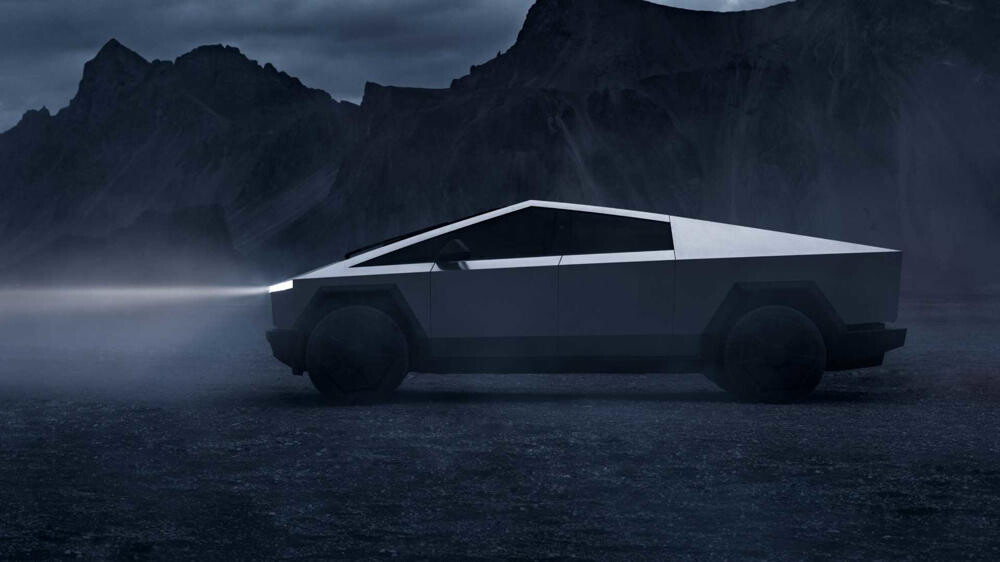
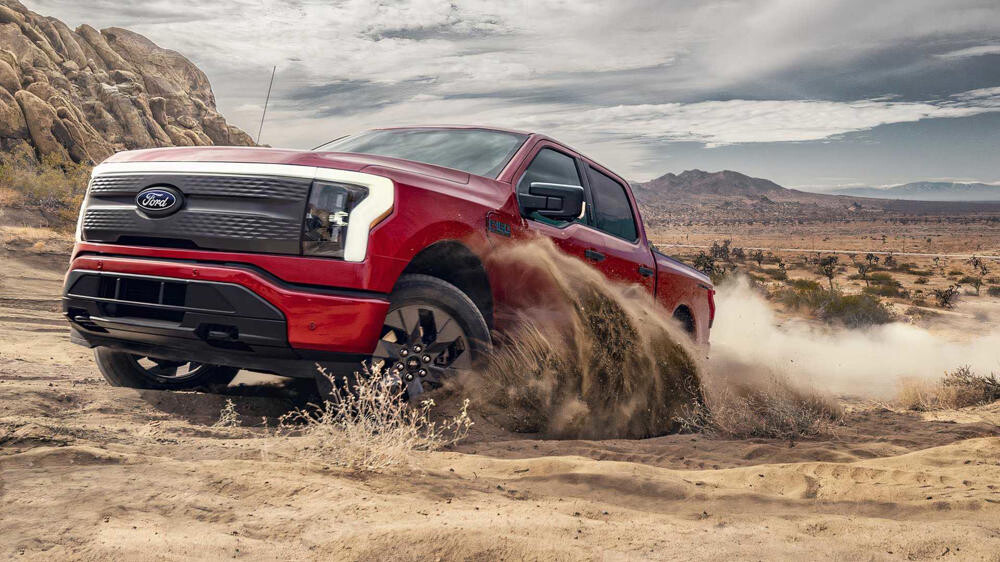
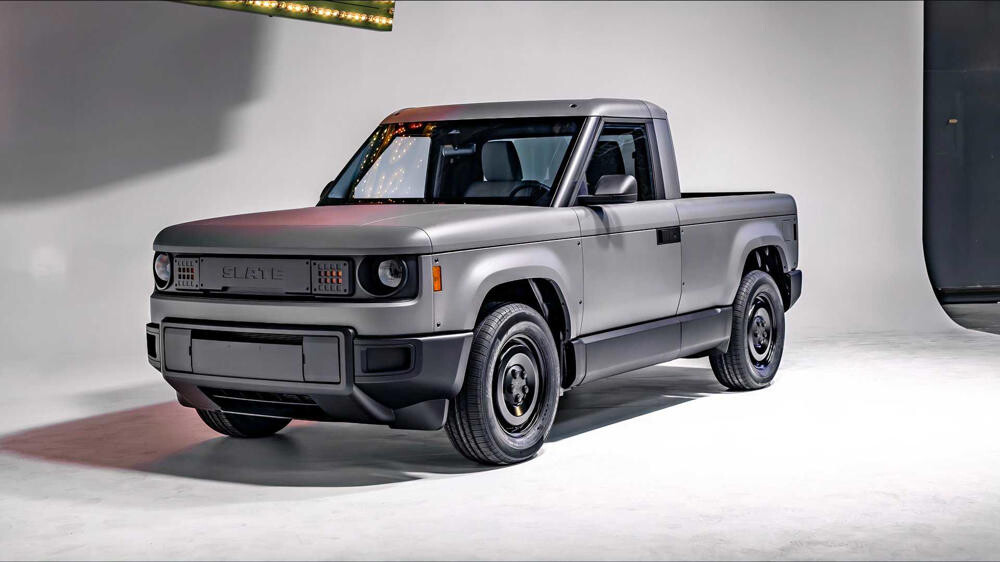
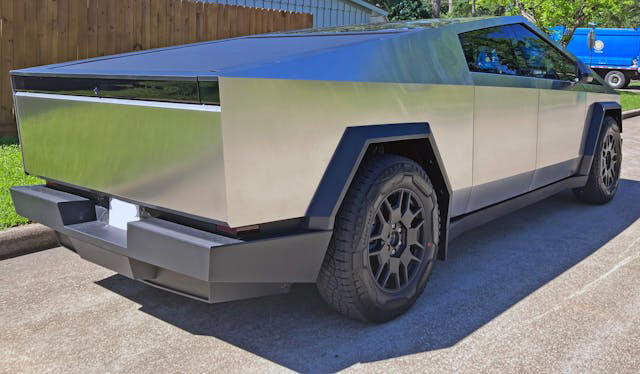
When it comes to all-electric-powered trucks, let's just say things are in flux. And it's not hyperbole to call the present grouping of EV haulers the most eclectic bunch of vehicles we've seen in recent memory. One is probably the most controversial vehicle of modern times; another's the cheapest EV going, truck or otherwise, but it's just barely getting its wheels on the ground. Then there are three hugely heavy behemoths from one brand and another from an EV startup that's as good as any truck on sale regardless of powertrain, but that one isn't burning up the sales charts. In fact, none of them is. Part of the problem here is trucks are mission-based models, and all-electric trucks, while offering effortless power and other advantages, are compromised in several of the areas that make trucks what they are, in particular towing. But sometimes flaws can be overlooked if the product excels in other areas or it becomes a cultural phenomenon. It remains to be seen how the EV truck market shakes out, but for now at least, this weird and wild pack of eclectic electric haulers listed below is where things are at for the time being. 1) Slate Truck Not only is the Slate Truck the cheapest all-electric-powered truck by a country mile, but it's also the cheapest EV in America, full stop. At just $26,400 to start, the Slate is one of the most intriguing vehicles we've seen in years, truck or no. For that price, you get roll-up windows, a 4.0-inch touchscreen with a smartphone holder, and what would best be described as a spartan cabin, with manual everything. It's also a true compact truck, a size that we haven't seen in the market for decades. As for how it works, the Slate uses a single rear motor (AWD is not offered at present) good for 181 hp and is reportedly capable of a range of 205 miles. Although we've driven it, we've yet to test the Slate, so we're not able to tell you how it performs at the track or how fast it charges when a plug is attached to juice it up, but Slate estimates a 0–60-mph time of 8.0 seconds and a top speed of 90 mph. When it comes to doing truck things, the Slate reportedly has a 1,550-pound max payload and 2,000 pounds of towing capacity. There will be an SUV conversion kit for the truck, part of Slate's plan to offer a dizzying array of customization options (more than 200 and counting), many of which are do-it-yourself style in nature. We'll wait to see how things go once the Slate is fully clean and on the road in 2027 and we get one in to test. 2) Rivian R1T The Rivian R1T is the gold standard for electric trucks in our opinion, a status earned thanks to being not only an incredible plaything but also a truck with impressive overall practicality. It's so good it earned our 2022 Truck of the Year award, and we also took it on an ultimate Trans-America Trail torture test for good measure, which it passed with flying colors. Its acceleration and handling are up there with high-end sports cars, even on dirt, with times as quick as a blistering 2.5 seconds to 60 mph in our testing for the full-boat quad-motor version. Then there are the large frunk, the gear tunnel, and up to 11,000 pounds of towing capacity, all contributing to functionality and versatility that let you do more with the R1T than with conventional pickups in just about every way, save long-distance towing. An update in 2025 gained NACS charging capability, so it's able to use Tesla's Supercharger stations, and thanks to constant software updates, older Rivian trucks continue to improve as they age. It's not perfect, as we'd like to see it perform a bit better in the fast-charging department, and its bed isn't the biggest out there, but on balance, the R1T isn't just the gold standard for electric-powered pickup trucks. It's one of the best trucks on the market regardless of powertrain. 3) Tesla Cybertruck Few vehicles in automotive history have been as controversial as the Tesla Cybertruck. It's been largely savaged for its awkwardly angular, in-your-face, stainless-steel-clad exterior, and it arrived right as Tesla CEO Elon Musk became a hugely polarizing figure in American politics, further amplifying the angst surrounding it. So it should come as little surprise that Tesla will be winding down production of the Cybertruck in 2027. However you feel about it, other than its compromised visibility due to said styling, the Cybertruck is pretty good at doing truck things, and it has some genuine innovations, most notably its highly impressive drive-by-wire steering setup. It's also massively powerful in its highest spec, the triple-motor Cyberbeast powertrain arrangement. In our testing, that model tied the Rivian R1T among electric pickups with a supercarlike 0–60-mph time of 2.5 seconds, though the Rivian beat it handily in the quarter mile. Of course, the Cybertruck also benefits from the Supercharger network (which is good because it's not the quickest-charging vehicle), and it's available with Tesla's Full Self Driving (Supervised) driver assist. Although it's more likely to go down as a modern-day Edsel than the pioneering EV truck it in many ways is, you're never, ever going to mistake it for anything else. 4) GMC Sierra EV The trio of giant and heavy EV trucks produced by General Motors continue to soldier along, all of which are built using the same platform. Similar to its Hummer EV and Silverado EV siblings, the GMC Sierra EV gets four-wheel steering and Super Cruise hands-free driving tech, it can tow up to 12,000 pounds, and it has a 0–60-mph number that will shove you back into the seat. We recorded a time of 4.3 seconds for an AT4 Max Range model we tested—properly quick for a truck that weighed 8,844 pounds on our scales. That same model is EPA-rated at a massively impressive 478 miles of range, and we recorded 368 miles in our Road-Trip Range test. That said, we found the AT4 wasn't the greatest at doing off-road things. There are multiple grades of Sierra EV (Elevation, Denali, and the AT4), ranging from the mid-$60,000 range for the Elevation truck with the Standard battery up to six figures for the fully equipped trucks with the Max range option. The native charging port recently moved to a NACS setup, which allows easy access to Tesla's Supercharger network, and as is the case with other GMC trucks, you get a little more luxury than the Chevy version, especially in the fully decked out Denali trim. And the bed's MultiPro Midgate system allows for more cargo flexibility into the cab, though it's only available on higher-spec models. 5) Chevrolet Silverado EV The Chevrolet Silverado EV is similar in scope to its higher-end GMC Sierra EV sibling, and it carries largely the same set of features, though it starts around $10,000 cheaper on balance than the GMC. Like the rest of the GM EV trucks, the Silverado EV is huge and heavy, and it has an equally huge 205-kWh battery pack capable of delivering more than 400 miles of range. In our testing of a top-spec Silverado EV RST, it ran to 60 mph in 4.0 seconds flat, which is a couple of ticks quicker than the Sierra and blazingly fast for such a large machine. It also charges quickly and, like the GMC, now has a NACS charging port for easy access to the Tesla Supercharger network. Also like the Sierra EV, the Silverado EV is available in Standard (286 miles), Extended (410 miles), and Max (478 miles) range configurations, with Chevy-only trims including the base Custom, the LT, and the Trail Boss off-road model. (We haven't been thrilled with the off-pavement capabilities of the Trail Boss or the GMC AT4.) For 2027, Chevy added a highest-spec RST Stars and Steel Edition, and it made the Multi-Flex Midgate, Chevy's name for the flexible bed that can extend into the cabin, available on more trims. One of the downsides is that the Chevy, like the GMC, isn't available with Apple CarPlay or Android Auto, but you do get a 17.7-inch infotainment screen with Google Built-In among other features. 6) GMC Hummer EV Truck Perched at the top of the General Motors electric truck lineup is the properly bonkers GMC Hummer EV Truck, which can accelerate from a dead stop to 60 mph in just 3.1 seconds in its 3X, tri-motor trim with up to 1,160 hp, thanks in part to its Watts to Freedom launch mode. Did we mention it weighs 9,000 freaking pounds? It's also available in a tamer 2X, two-motor trim with 570 horsepower. Overall range is down some compared to its GM EV truck stablemates, with 363 estimated miles for the 3X and 316 miles for the 2X. The Hummer is capable of party tricks like its special side-stepping CrabWalk four-wheel steer mode, which gives it a diagonal-drive functionality at low speeds. Even better, it now has King Crab mode, which allows the rear wheels to turn two times more to better reposition it on a trail. It also comes with a height-adjustable suspension, and unlike its GM EV truck siblings, its 4x4 capability is also duly impressive, with optional off-road tires, lockers, and armoring that help it tackle trails with confidence. The Hummer also looks the part, with a wide, aggressive stance that cribs elements from its Humvee ancestor, along with neat features like its T-top setup. All in all, it's a massive and massively fun all-electric monster and a fitting capstone model for GM's EV trucks. 7) Telo MT1 This startup hasn't gotten nearly as much play as Slate, and we're more than a bit skeptical that it succeeds as a series production manufacturer, but we've been intrigued by Telo's super-tiny pickup truck—it's much shorter overall than the Slate but has a slightly longer wheelbase—with as much as 500 horsepower. The Telo MT1 will reportedly be available in rear- or all-wheel-drive configurations, and unlike the Slate, this trucklet will be far more luxurious and tech-forward in its approach, with a starting price hovering around $40,000. Oh, and it comes with four doors; the Slate has two. We've had a chance to drive an MT1 prototype and came away impressed with its overall operation and feature set for what it is. But it also left us with several lingering questions and notable areas for improvement. Telo has said it would start delivering trucks by the end of 2026.