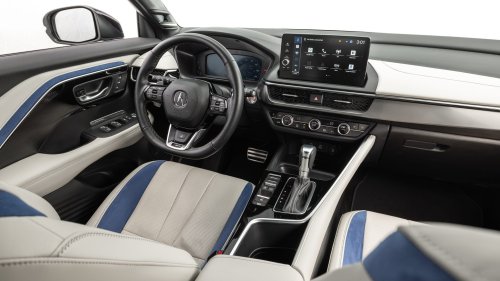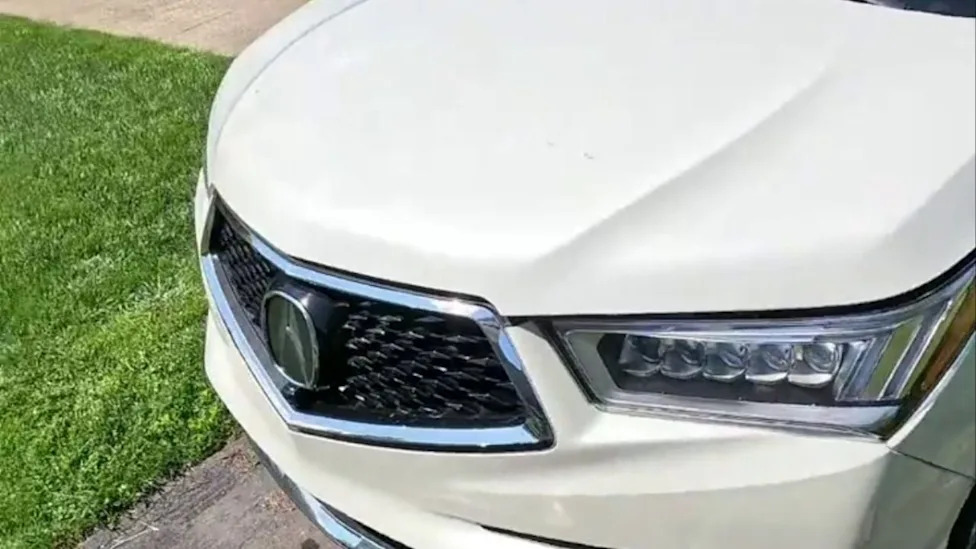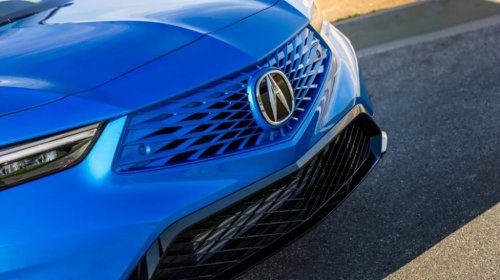






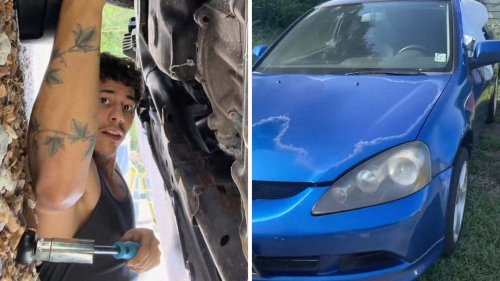



















He slid under his freshly purchased Acura RSX, expecting a routine oil change. But when the drain plug came loose, what poured out looked less like motor oil and more like a Starbucks latte gone bad. The viral clip from can-do car owner Caleb (@calebcurls) shows him handling a routine oil change on his newly purchased car. But he recoils when the oil that should be dark brown and translucent is instead somewhere between milky tan and light brown. "Blown head gasket on my Acura RSX. Luckily I prepared for this," he writes in the caption of the TikTok that’s been viewed more than 13 million times. “Chocolate Milk” Means Coolant In Your Crankcase The beige "latte" color is the telltale sign that coolant and engine oil have mixed, a failure mode commonly associated with a blown head gasket, a cracked head, or, in some powertrains, a failed oil cooler. When coolant contaminates oil, the lubricant’s film strength collapses, and bearings can wear quickly, which is why technicians warn against running the engine once "milky oil" appears. On TikTok, the moment triggered an odd mix of comedy and competent diagnosis. While some viewers focused on the clip’s vibe, others correctly called the failure. "That’s chocolate milk, bro," one wrote. The shorthand isn’t wrong; many trade guides literally describe failed head-gasket oil as looking like a "chocolate milkshake," and they pair it with other classic symptoms: overheating, white exhaust smoke with a sweet odor, and bubbling in the coolant reservoir. Mechanically, the pathway is straightforward. The head gasket is the sealing layer between the aluminum cylinder head and the block. Overheating, detonation from poor fuel or tuning, or simple age can distort sealing surfaces and open a leak path between coolant and oil galleries. Once that happens, tan froth replaces clear amber oil on the dipstick or under the filler cap, and continued operation risks spun bearings or cam journal damage. Industry how-tos advise immediate diagnosis with a cooling-system pressure test, a block tester that sniffs for combustion gases in the coolant, and, if needed, compression and leak-down tests to localize the breach. What Does "Chocolate Milk" Oil Cost to Fix? On a four-cylinder engine like an RSX’s K-series, a proper head-gasket job typically lands in the low-to-mid four figures once you include machine-shop work to check flatness, new head bolts, fluids, and incidentals. National estimators put typical head-gasket replacement between roughly $1,500 and $3,200, with make, region, and scope driving the spread. If the engine overheated long enough to scuff bearings—or if the head or block is cracked—the bill can climb quickly or justify a replacement long block. OWNERSHIP STORIES Viral stories from across the web Our team of experts tracks what owners are saying about car-shopping, repairs, the daily driving experience and more on social media. Gallery: Acura RSX EV Prototype: First Look Acura’s Mishap Teaches Used-Car Buyers The platform context matters here. The 2002–2006 Acura RSX has a deserved following thanks to a sweet-revving K20 and stout Honda bones; clean, stock examples are increasingly prized. But that popularity also means many cars have lived hard lives and been modified, tracked, or neglected, so a careful mechanical baseline matters more than ever for buyers. Guides aimed at enthusiasts and mainstream shoppers alike tell the same story: favor stock, well-documented cars, and scrutinize maintenance history. For anyone hunting for a used sport compact on Facebook (FB) Marketplace or elsewhere, the teachable moments in this video are simple. Never skip a pre-purchase inspection (PPI) from an independent shop; it’s the cheapest insurance against surprises like coolant-in-oil. Reputable buyer’s guides recommend a full PPI and, when condition or seller history is uncertain, inexpensive tests like a compression or leak-down test to catch sealing problems before money changes hands. And check the basics yourself at first glance. Pull the dipstick and oil cap; you want clean oil, not tan froth. Look for unexplained coolant loss, residue, or white smoke on a fully warmed engine. If anything looks off or if the seller resists a PPI, walk. Multiple consumer resources and technical references all flag “milky oil” as a do-not-drive condition and a reason to halt the sale until a professional diagnosis is complete. Finally, be realistic about the risks of private parties on social platforms. Most FB Marketplace transactions are uneventful, but law enforcement advisories around have highlighted everything from title irregularities to VIN-cloning schemes and urge buyers to meet at tax assessor offices or police “safe exchange” zones, verify titles, and run VIN checks through state DMV tools or NICB before paying. As for our TikTok wrencher, his caption—"Luckily I prepared for this"—suggests he expected to do significant work. That’s the mindset seasoned shoppers adopt with older sport compacts: assume nothing, budget for the worst, and let inspection results decide the deal. Because sometimes the most expensive part of a used car isn’t the paint or the parts you can see, but it’s the milky mess you only discover when you crack the drain plug. Motor1 reached out to Caleb via direct message and comment on the post. We’ll be sure to update this if he responds. We want your opinion! What would you like to see on Motor1.com? Take our 3 minute survey. - The Motor1.com Team