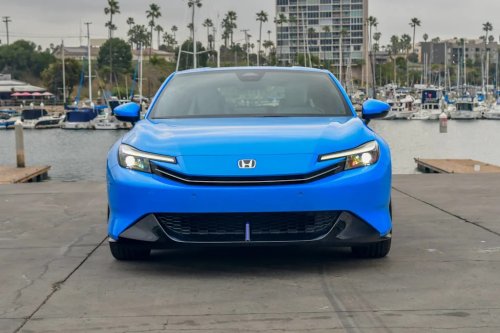
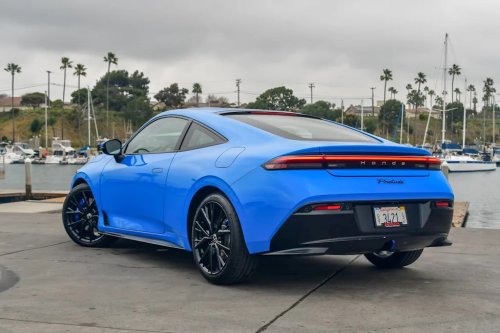
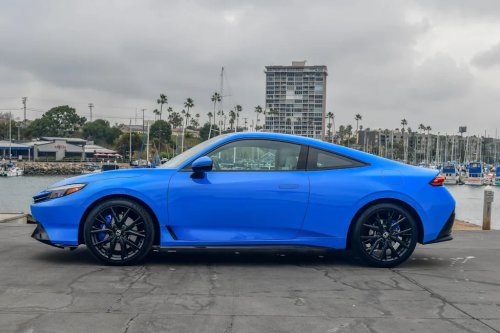
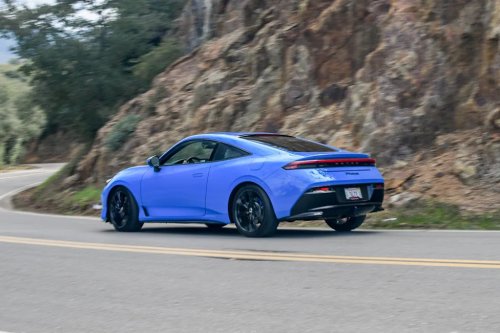
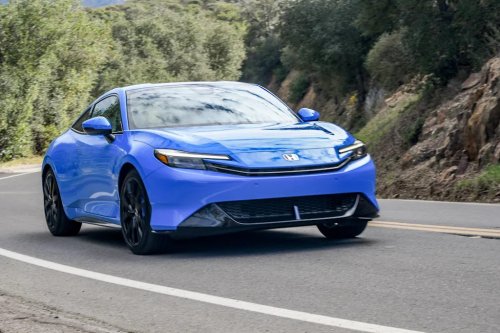
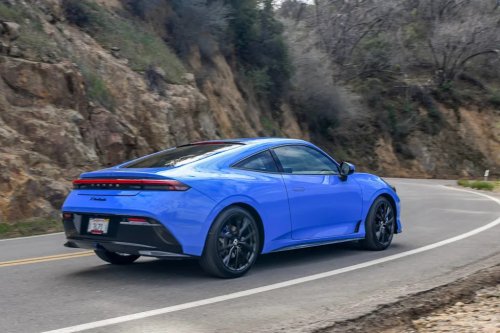
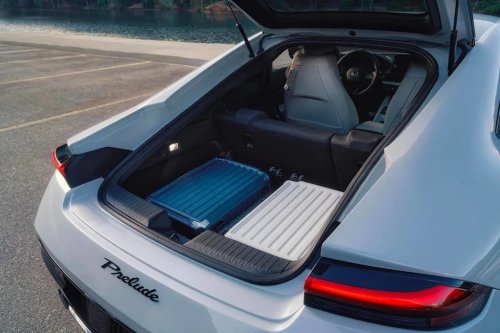
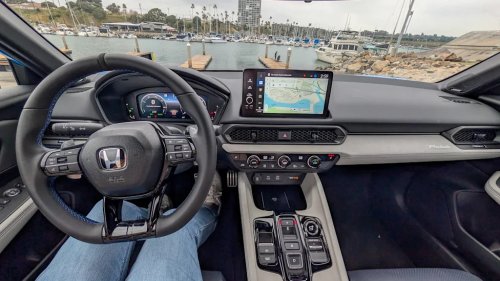
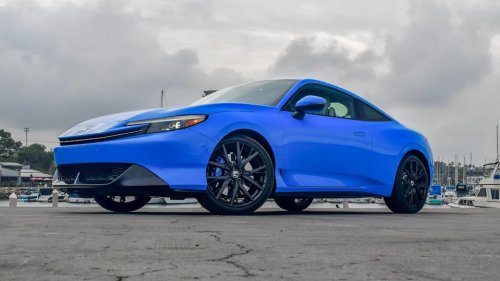
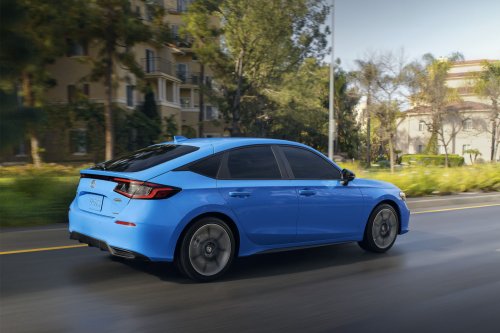
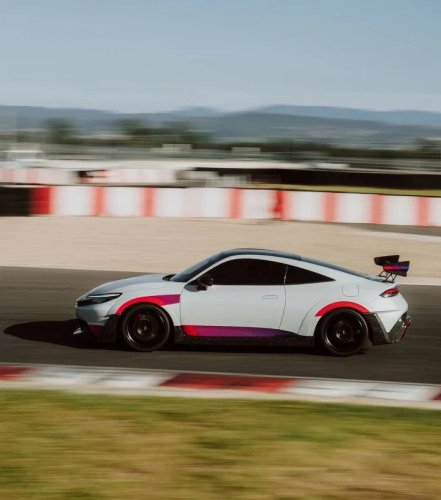
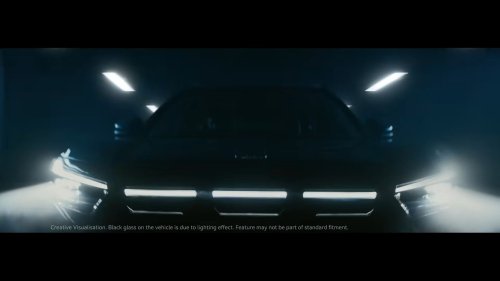
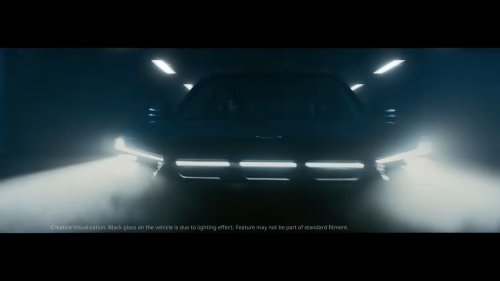
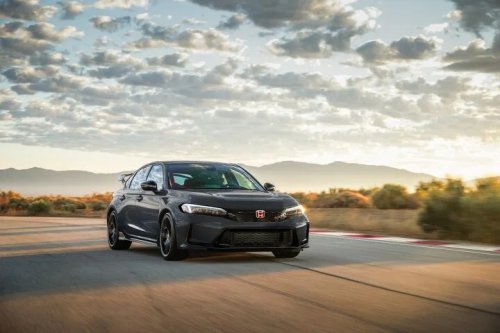
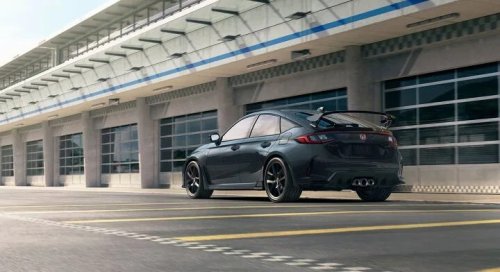
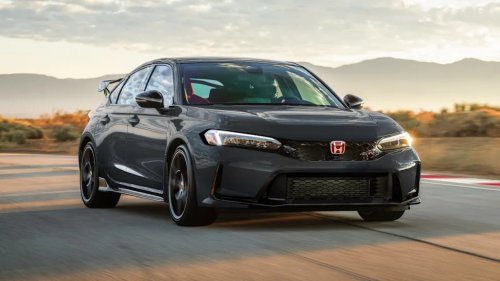
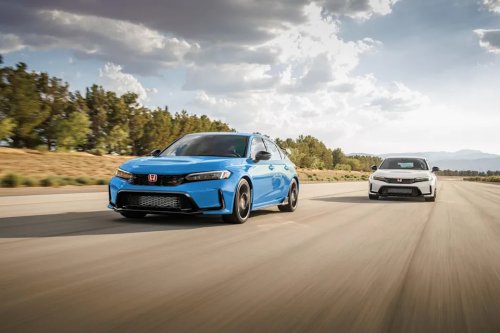
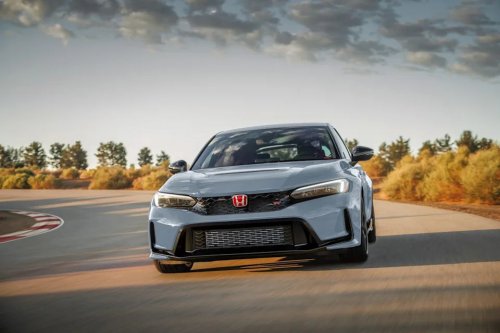
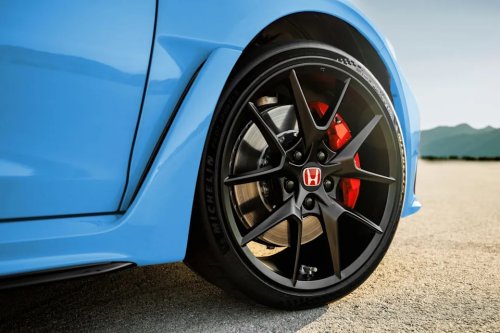
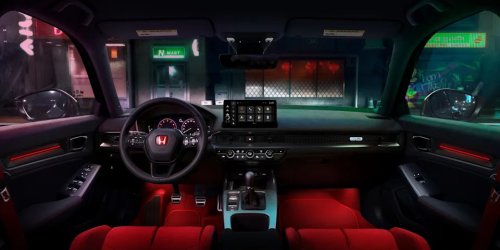
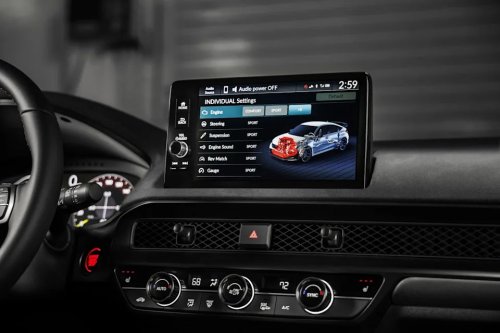
Autoblog and Yahoo may earn commission from links in this article.Before the 2027 model year's debut, the Prelude moniker had been collecting dust on Honda's archive shelves since 2001. Much like other beloved nameplates that faced the chopping block due to industry shifts, it was cherished despite slowing sales as buyers moved toward four-door sedans and crossovers. There wasn't much competition for it, either, aside from the Toyota Celica, Mitsubishi Eclipse, and Acura Integra. In fact, the Integra is largely to blame for Honda's decision to axe the Prelude. It cannibalized Prelude sales and made it feel redundant, and the market agreed.Then, in 2025, Honda announced it was bringing the Prelude back into the sunlight. Fans adored it as a concept during the Japan Mobility Show in 2023, and after it took off in Europe, Honda confirmed it was coming to the U.S. The company maintained the two-door coupe personality it was known for and made it a performance hybrid this time around, to appeal to fans of efficiency (like myself) and help utilize the torque of the Civic's two-motor hybrid system. Kristen Brown/AutoblogThe result was something fun, efficient, and distinct—something that isn't all that common in today's landscape. One thing that may hinder its popularity, though, is the price. It starts at $42,400 and goes up to $42,900 for the Two-Tone version. Is nostalgia and novelty worth that much? I have some thoughts. AdvertisementAdvertisementRelated: Road Ethos Launches: The New Automotive Lifestyle Site You Should ReadFirst, this is not a car for introvertsWhen I attended the first-drive event in San Diego in March, the first thing I noticed was how well it stood out from the crowd, especially in Boost Blue Pearl. As I put my camera and filming gear in the rear seats, I had two women approach me, two separate times, to ask me about the "cute little sports car" that "looks like a Porsche." The Honda reps were grinning from ear to ear. They knew they achieved something most automakers have yet to master: capturing the die-hard Prelude lovers while bringing in new buyers interested in the design and size. Kristen BrownWhen it was delivered to me as a tester, people were asking me about it. I drove it to the gym, and as I approached the Prelude to head home, two men were standing by waiting to ask me about it. They asked the same questions as the others: Is that the new Prelude? Does it have a turbocharger? Oh, it's a hybrid? What kind of mileage does it get? Can you get it in a manual? Is it available now?Kristen BrownLuckily for them, I am always happy to talk about cars, even after leg day and cardio. But if you're an introvert, like my husband, the Prelude's mystique is guaranteed to start a conversation. So, if you're wary of strangers, this is not the hybrid for you.Two-hundred horsepower AND 40 MPG? YupThere are four standard drive modes: Comfort, GT, Sport, and Individual. Pressing the S+ button near the gear selector toggles the dual-clutch simulation I mentioned earlier, and in combination with the Sport drive mode, tells the Prelude to use its electric motors for maximum torque—not efficiency. When using the S+ Shift mode while in Sport mode, I didn't miss a manual transmission at all. Every time I thought to myself, "I need to downshift before this corner," it felt like the Prelude read my mind, and it'd raise the RPMs and hold them there until I was out of the corner. It was like magic. Seriously. AdvertisementAdvertisementGT mode, standing for Grand Touring, is a "balanced" drive mode that mixes a comfortable ride with a sporty personality, without compromising mileage. This is the drive mode you use for cruising on the PCH, on road trips, or when you're in the mood to remind yourself that you're driving a sports coupe. It's also, according to Honda, the Prelude's "Normal" mode. Kristen BrownWhen I rolled into town, I put the Prelude in Comfort, which programs the suspension to soften dramatically, loosen up the steering, and relax the throttle response to tame it for in-town driving. This was how I was able to average 40 MPG around town. The e-CVT is told to do what it does best: keep the RPMs as low as possible, so mileage is high. That was another highlight I enjoyed telling people—it looks and drives like a sports coupe, but it sips gas like the Civic hybrid. It's, quite literally, the best of both worlds. The handling felt familiar—and that's a good thingKristen BrownBecause the Prelude uses the same two-motor hybrid system that everyone (including me) loves in the Civic hybrid, it produces 200 horsepower and 232 lb-ft of torque, with the gas-only engine providing 141 horsepower and the electric motor supplying the other 181. It's a perfect marriage in a car that weighs 3,261 pounds. During my conversations with strangers, nearly all of them were disappointed to learn that there isn't a turbocharger factored into the equation. And I felt a bit let down, too (at first, anyway). I got the sense that Honda knew the enthusiasts would be disappointed, so they implemented the S+ Shifting system. For the powertrain nerds, here's how it works:It's essentially a reprogramming of Honda's existing Linear Shift Control that we see in the company's other hybrids, like the CR-V, Accord, and of course, the Civic. It synchronizes the engine speed and the electric motor's output to simulate a dual-clutch automatic transmission with rev-matching and "blips" when it downshifts. In practice, it keeps the revs, and therefore torque and horsepower, at their peak, so it drives and feels like a true, well-rounded sports car. Through the snaky hills of San Diego, I didn't miss the turbocharger at all. It was ready for action, grippy, and so much fun. It feels similar to a Mazda Miata in the sense that its simplicity is what makes it so good. Kristen BrownThe Honda Prelude doesn't just borrow the hybrid system from the Civic. The suspension system up front, which kept the Prelude steady and centered through the San Diego hills, is directly adapted from the setup on the Civic Type-R. Honda's website says that the setup separates the steering axis from the damper axis using "extra rigid components." It isolates the steering wheel from harsh forces when accelerating hard, minimizing torque steer for sharper cornering and high-performance control. Because the Prelude has Honda's Adaptive Damper System, the dampers adjust automatically, depending on the road's surface quality, lateral forces, or steering inputs. AdvertisementAdvertisementA multi-link system is used in the rear that pairs with the front struts to keep the rear where it needs to be, and I definitely noticed it. Even though it's front-wheel drive, it felt as confident as an all-wheel drive car—especially in Sport and GT mode. I promise you, I was smiling every time I got to throw it around a tight corner, but I enjoyed it just as much heading to the grocery store or to the gym. Related: 2026 Honda Prelude vs. 2026 Mazda MX-5 RF: I Drove Both Small Sports Cars—Here's My Honest Comparison ReviewIt's no family car, and that's okay. It's still roomy for two.I normally review cars with my kids, but now and then I get a two-seater or a coupe that doesn't get to see my daughters' car seats. And, honestly, I live for those reviews. It reminds me why my husband and I both agreed not to sell the WRX after we had kids: driving doesn't have to be boring. It should be fun and engaging. It should pull you in. And that's kind of hard to do when your toddler is whining and sniveling because they dropped their water bottle or Paw Patrol toy for the fourth time. Every time I got behind the wheel of the Prelude and didn't have to worry about screaming tots, I felt myself connecting with the Prelude, and it revived me. Epiphanies aside, even for a coupe it's surprisingly practical. Honda's website says that there's 15.1 cubic feet os space in the Prelude. That doesn't seem like much on paper, but because the "trunk" is more of a hatchback, there's plenty of space for groceries, a carry-on bag (or two), and everything you'd need for a fun road trip along the coast. Interestingly enough, Honda doesn't publish official measurements for when you fold the rear seats down, but it expands dramatically, thanks to the seats folding flat. Legroom is plentiful in the front, too. And I appreciated the open visibility as both a driver and a passenger. The rear seats have basically no room at all for a normal-sized adult, so I called them "purse seats." The rear window is directly over those seats, too, so whoever did sit back there would have the sun bearing down on them for the entire drive. If I owned one, I'd just fold those seats and pay a little extra for the rear cargo cover. After all, if you ever need to remove it, you can store it in a dedicated spot under the floor (classic Honda move).The interior is incredibly fancy for a HondaI will be the first person to say that Honda interiors are usually practical and intuitive, but they're not known for being handsome. The Prelude puts that notion to the test. My tester, both times, had off-white leather seats with blue leather accenting, with alcantara in the same colors on the door panels and dashboard. The moniker, "Prelude," was embroidered just over the glovebox, which made the little Honda feel like the sports coupe it's dressed up as. Technology-wise, this is where its Honda-ness started to show. The driver information display was fully digital, and it did have a touchscreen—and neither was too large or too complicated. Just like every other Honda I've driven (and I mean that as a compliment). Kristen BrownAnd, despite it being the third most expensive Honda in the entire lineup, it's pretty noisy. Not unlike the Civic hybrid it borrows the engine from. There's not a lot of sound dampening, so unless you're thoroughly enjoying the Bose sound system, you'll have a lot more road noise translated to you than you'd probably expect. I admit, too, that both times, I drove it on some of California's most dilapidated roads. So, it could just be my experience with it. But if you're eyeing it because you want a quiet little coupe to take on longer, windy drives, make sure you test drive one first. AdvertisementAdvertisementRelated: The New Honda Prelude's Biggest Problem Is Everything Else You Can BuyIs it worth the money? It dependsIn case you haven't noticed, there wasn't much I didn't like about the Prelude. It's fun, peppy, and came at the right time to prove that an entertaining drive doesn't require a luxury-brand budget. The fuel economy is fantastic, the chassis tuning is genuinely engaging, and there isn't much else offering this exact formula. That said, value is where the conversation gets tricky. Especially when we look at its biggest threat, the Miata.A base Mazda MX-5 Miata starts nearly $12,000 less ($30,430), and even a loaded Grand Touring rings in at $35,730 with a six-speed manual for the purists. It offers a similar driving dynamic, equally handsome looks, and a minimalistic but versatile interior. What the Prelude offers in exchange for that price premium is 40+ mpg efficiency, an extra 19 hp, and actual daily-driver usability with its 2+2 layout and rear hatchback utility. Kristen Brown/AutoblogIf you have around $43,000 to spend and want a distinct, no-nonsense hybrid coupe that nails everyday livability without sacrificing driving character, the Prelude delivers. It's an ideal second car for a multi-vehicle garage, or a commuter that stands out for singles and couples who want great mileage without driving something more… Generic. But for those who adored the previous generations, it's a price that may be a bit tough to justify. I know a lot of people who've already said it's a bit expensive "for a Honda."AdvertisementAdvertisementThis story was originally published by Autoblog on Aug 27, 2026, where it first appeared in the Reviews section. Add Autoblog as a Preferred Source by clicking here.