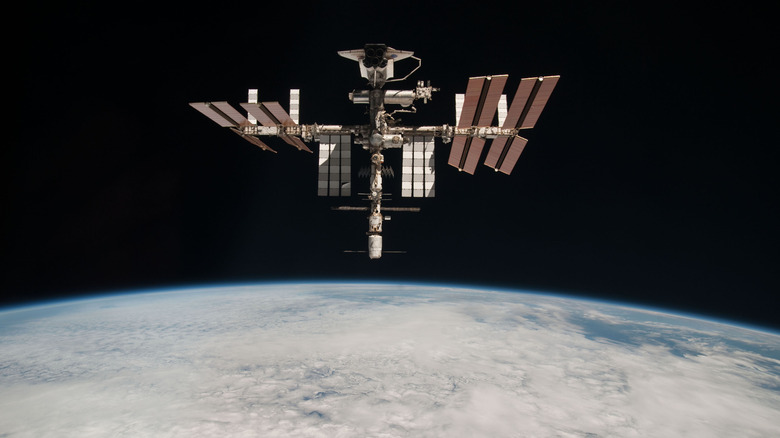
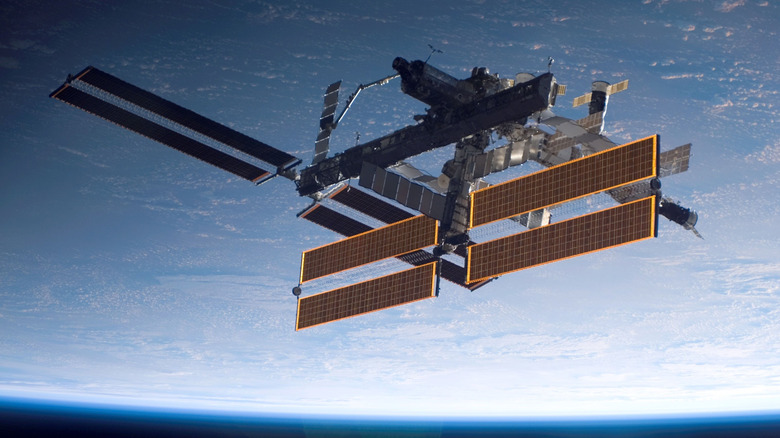
Handout/Getty Images If you're claustrophobic, you probably can't imagine a worse place to be than the International Space Station — 356 feet of interior space in which you're meant to live, work, and maintain the thin shell separating you from the cold vacuum of space. It seems your fears are warranted, because NASA astronauts aboard the station just had to huddle up in their transit spaceship and prepare for an emergency evacuation. The prepare-to-evacuate order is a result of the ISS's air leak issue, according to the Guardian, which recently doubled in size — the station had been losing a pound of air per day to leaks in the decaying Russian half of the station, but those leaks recently increased to two pounds of air each day. In the interest of not suffocating, the crew of NASA's latest mission was ordered to shelter in its SpaceX capsule, ready to get out of Dodge at a moment's notice. Evacuating Florida when a hurricane comes is bad enough, can you imagine being ordered to evacuate the only island of habitability in an otherwise cold and unwelcoming infinite expanse? A harrowing situation Nasa/Getty Images The order came as Russian cosmonauts worked to diagnose and repair the air leaks, according to Reuters, which are located in a service tunnel connecting the Russian Zvezda module to a docking module. Luckily for all aboard the ISS, that tunnel can be hidden away behind airtight doors when not in use — that protection is what allowed the crew to return to normal operation when cosmonauts ended their repair work and closed the tunnel back up just minutes ago. While things have returned to normal aboard the ISS by now, it's still a reminder to all aboard that they're not exactly protected up there. The risk of losing air is real, made all the worse by these Zvezda cracks that still have no confirmed cause. While it's not yet clear whether this Russian repair operation was able to figure out where exactly the air is leaking from — and how to repair it — hopefully the cosmonauts involved got a little more information as to what's hurting the ISS.



















 +45 others