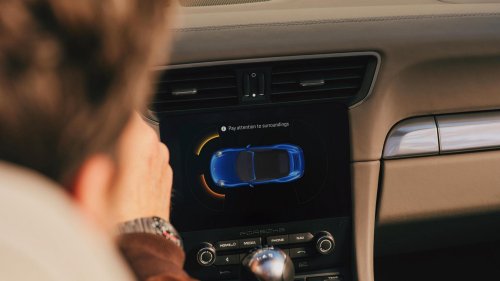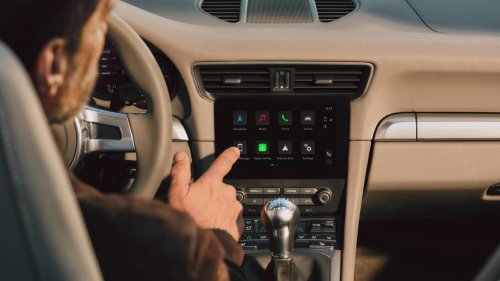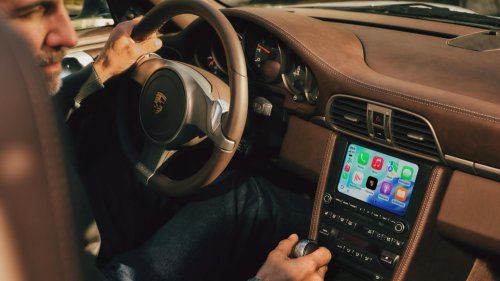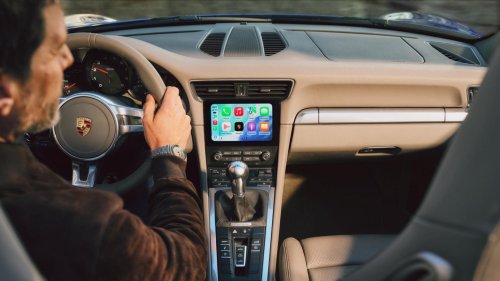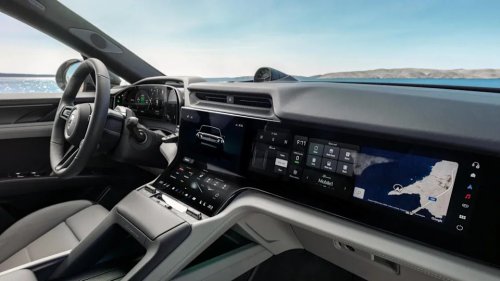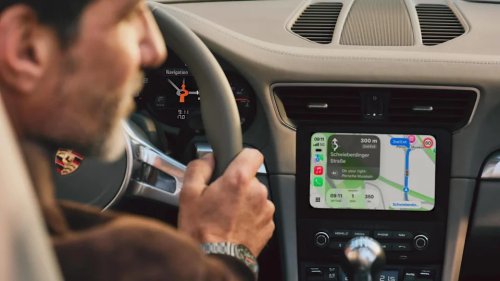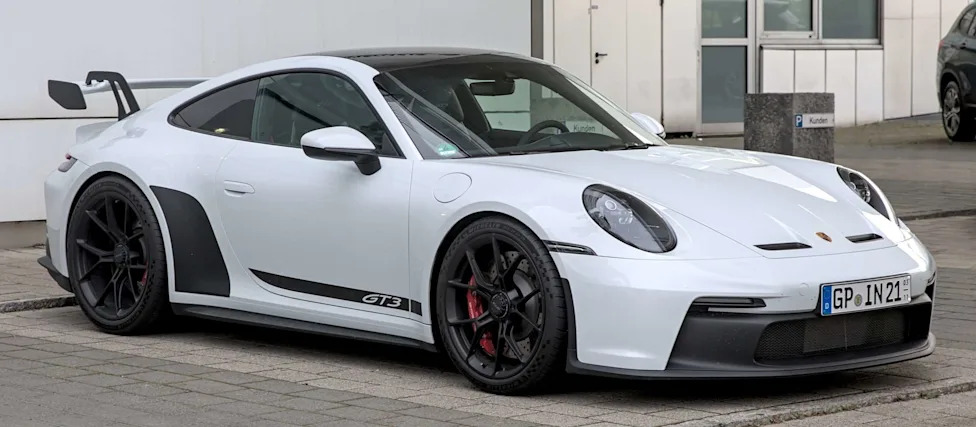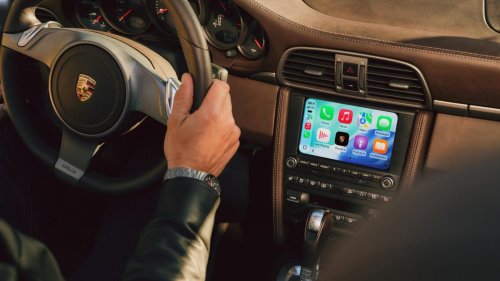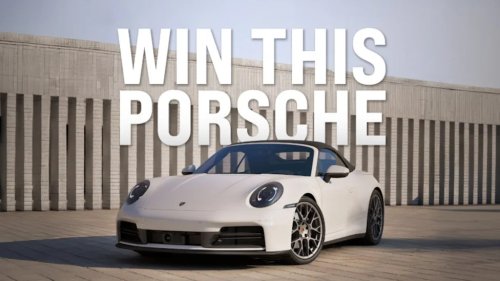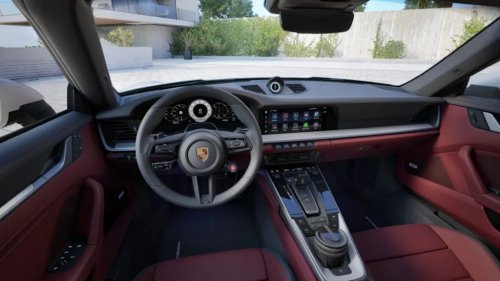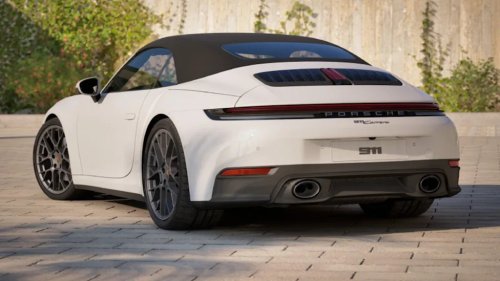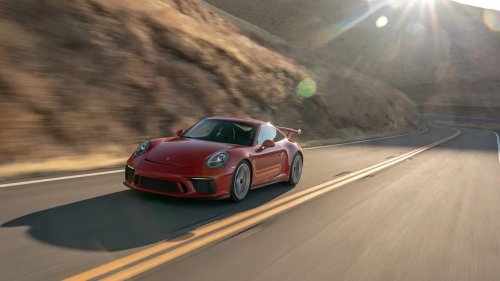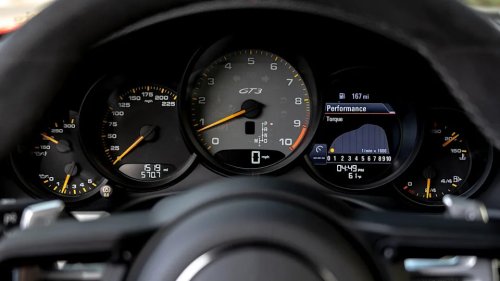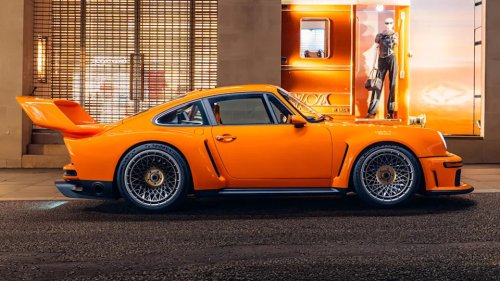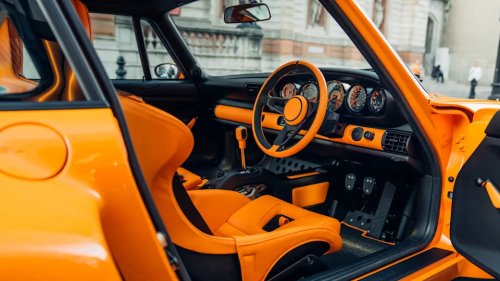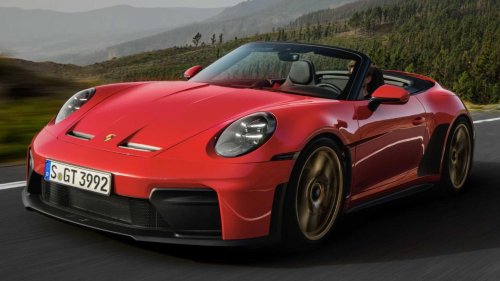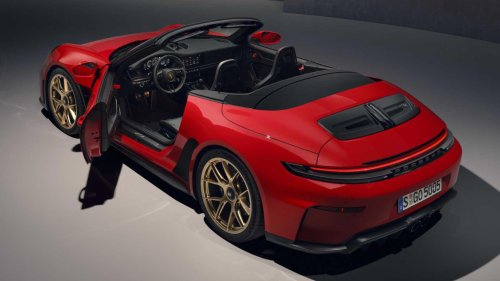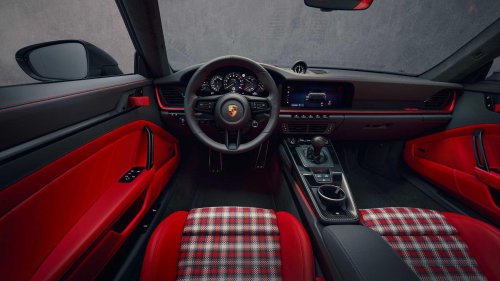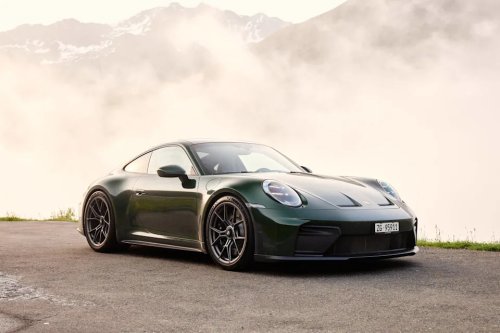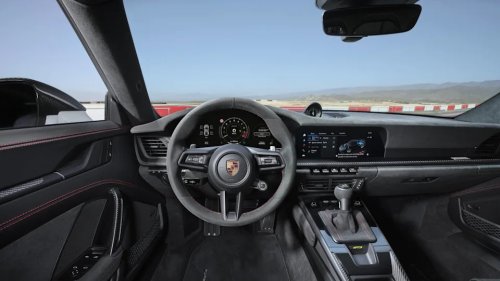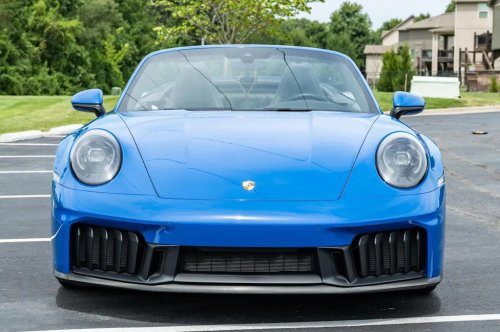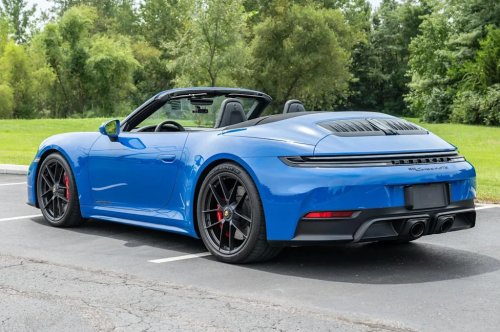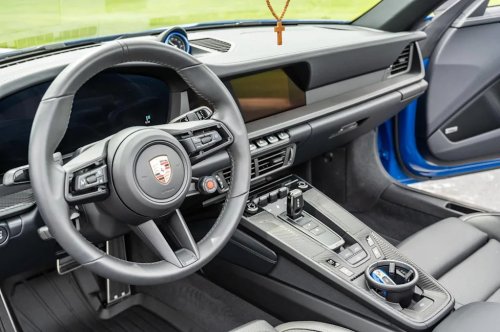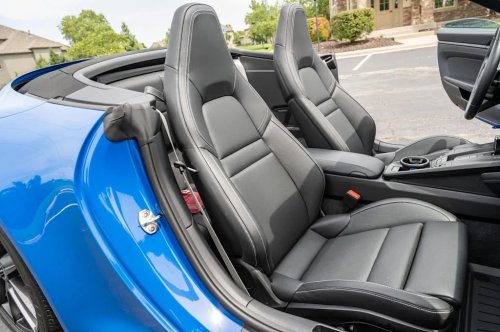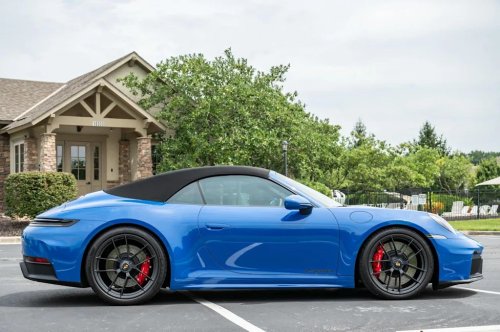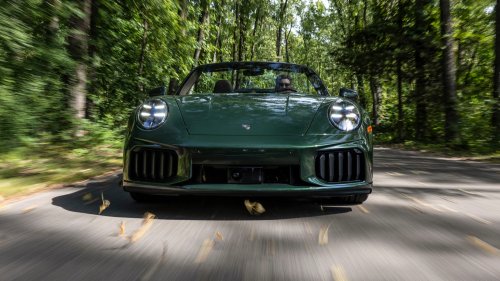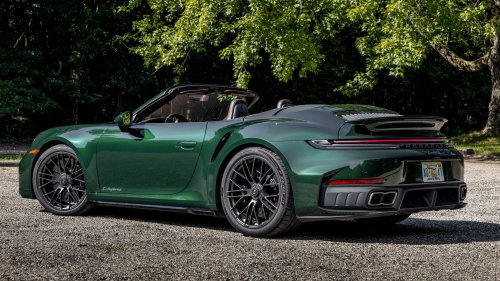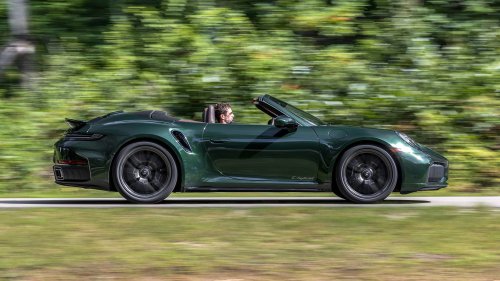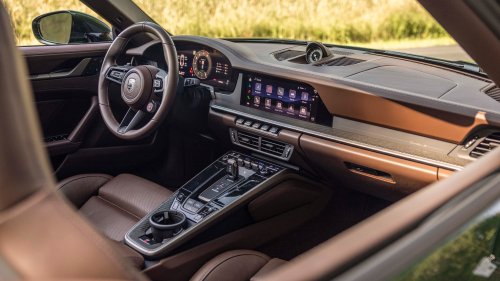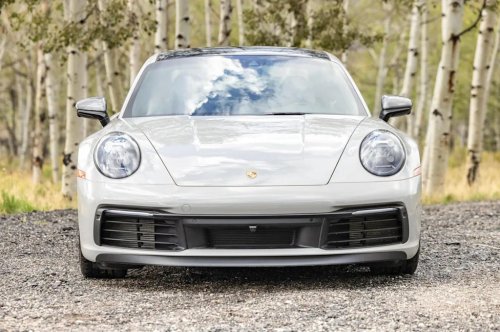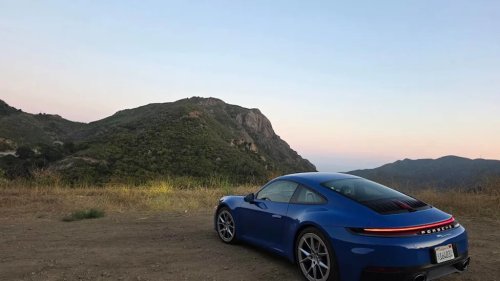
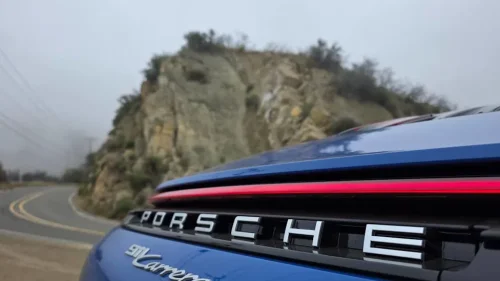
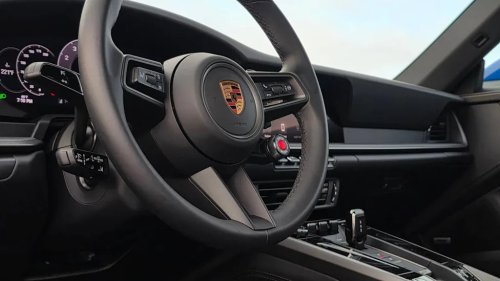
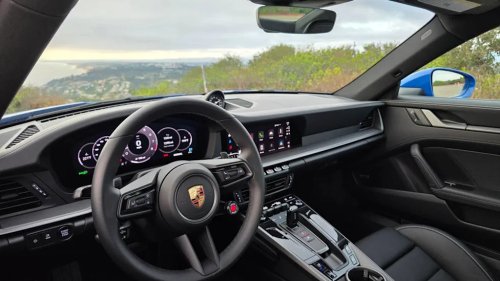
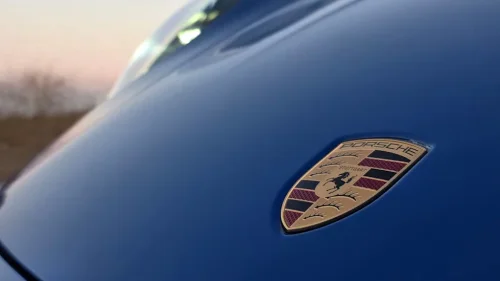

















Autoblog and Yahoo may earn commission from links in this article.There's a moment, mid-corner, in third gear, maybe 5,500 rpm, with the Sport Chrono mode selector twisted to Sport Plus, when the 2025 Porsche 911 Carrera stops being a car and becomes a machine connected to you. The flat-six is singing behind your shoulders. The rear tires are loaded and working. The steering is telling you, with real specificity, exactly how much grip remains at the front axle. And the critical thing, the thing that separates this car from every faster 911 above it in the lineup, is that you're using all of it. Not 40 percent of the available power. Not tiptoeing around a tidal wave of torque that would put you at felony speeds in second gear. All of it. The base Carrera is the 911 that gives you permission to drive it the way the engineers intended, on a public road, without a lawyer on retainer.Kyle EdwardWhere It SitsThe 992.2-generation 911 lineup is the broadest and most stratified in the model's 60-year history. At the bottom sits the Carrera coupe at $120,100. At the summit, the Turbo S and GT3 RS inhabit different corners of the same rarefied atmosphere. In between, Porsche has inserted the Carrera T ($134,000, manual only), the Carrera S ($146,400, 473 hp), the Carrera GTS ($164,900, the first hybrid 911 with 532 hp from a new 3.6-liter T-Hybrid system), the Turbo ($197,200), and a constellation of all-wheel-drive, Targa, and cabriolet derivatives. It's an eleven-figure lineup that spans well over $140,000 from floor to ceiling.AdvertisementAdvertisementThe base Carrera occupies a unique position in this hierarchy. It's the only 911 variant (besides the Carrera T, which shares its powertrain) that runs the traditional twin-turbo 3.0-liter flat-six without any hybrid assistance. It's rear-wheel drive. It comes exclusively with the eight-speed PDK; if you want a manual, the Carrera T is where you go. And at 388 hp, it is, on paper, the least compelling performance argument in a lineup where the GTS makes 532 hp and the Turbo S pushes past 640. However, on paper is not where you drive a car.The Hardware UnderneathThe 992.2 update brought meaningful mechanical changes to the base Carrera, even if the headline power figure only crept up by 9 hp. The 3.0-liter twin-turbo flat-six now breathes through larger turbochargers borrowed from the outgoing 992.1 GTS, paired with an intercooler layout adapted from the 911 Turbo. The result isn't a dramatic peak-power increase, but rather a broader, more accessible torque curve: 221 lb-ft is available from just 1,500 rpm, and the full 331 lb-ft arrives by 2,000 rpm and holds through 5,000.What that means in practice is an engine that feels strong everywhere, not just at the top of the tachometer. The flat-six pulls cleanly from low revs with zero turbo lag perceptible to human senses, and it keeps pulling with increasing enthusiasm as the needle climbs past 6,000 toward the 7,500-rpm redline. The PDK is an eight-speed unit that, in Sport or Sport Plus mode with manual paddle control, executes shifts with the kind of precision that makes you forget you ever wanted a clutch pedal. (In Normal mode, the transmission is a bit too eager to upshift for efficiency, so leave it in Sport and use the paddles. You'll be happier.Kyle EdwardThe chassis is classic rear-engine 911: MacPherson struts up front, a multi-link arrangement at the rear, with passive PASM dampers standard on the base car. Porsche updated the damper internals for the 992.2 with revised hydraulics that improve both ride compliance and body control, a small change that pays dividends on real roads. Optional rear-axle steering ($2,150) shortens the turning circle at low speeds and adds stability at high ones, and the Sport Chrono Package ($2,400) adds the mode selector on the steering wheel, the Sport Plus and Individual drive modes, launch control, and a dashboard timer. At 3,342 pounds, the base Carrera coupe is 85 pounds lighter than the Carrera S, 100 pounds lighter than the hybrid GTS, and dramatically lighter than anything electric in this performance tier.AdvertisementAdvertisementThe brakes are steel, not ceramic, with black calipers. They're sized appropriately for the car's weight and speed, and on the road, they're more than sufficient. The standard 20-inch front and 21-inch rear staggered wheels wear Pirelli P Zero tires that provide a massive contact patch relative to the car's mass.Behind the WheelThe 911 Carrera is a 3.7-second car to 60 mph with Sport Chrono. That's supercar territory from just a decade ago. But the number itself is almost beside the point, because what makes the base Carrera so deeply satisfying isn't the peak acceleration; it's the bandwidth of usable performance that the car makes available to you at every moment.In a Turbo S, you would be approaching license-suspension speeds by the time third gear hits the redline. The power is so immense, so relentless, that on a public road, you spend most of your time managing the car, knowing that the full capability of the machine is locked behind a door you can only open on a racetrack.Kyle EdwardThe base Carrera reverses that equation entirely. You can ring the flat-six to redline in second, grab third, and do it again without immediately needing to worry about your license. The car rewards full commitment at fast, genuinely fast speeds, but not reckless ones. You can explore the entire rev band, feel the engine's character shift from low-rpm torque to the top-end howl, and do it corner after corner without running out of road. That's the purity argument.AdvertisementAdvertisementThe steering deserves its own paragraph because it's that good. Porsche's electric power steering has been the industry benchmark for years, and the base Carrera exemplifies why. The rack is quick without being nervous, weighted perfectly in the Sport modes, and loaded with a quality of feedback that most competitors simply cannot replicate. You can feel the texture of the road surface through the rim. You can sense the moment the front tires begin to approach their adhesion limit. Turn-in is immediate, the nose rotates with a precision that belies the engine hanging behind the rear axle, and the car tracks through a corner with the kind of stability that makes you trust it completely. There's a directness to the connection between your inputs and the car's response that feels mechanical even though it's electrically assisted.The ride quality, even with the standard dampers, threads the 911's traditional needle between sports-car firmness and daily-driver comfort. On the highway, the Carrera settles into a genuinely relaxed cruising gait. The engine hums quietly at low revs. Road noise is well-managed. The car is, improbably for something this capable, a perfectly pleasant daily commuter. Then you turn off the highway onto a two-lane road, twist the mode selector, and it transforms.Inside the CabinThe 992.2 interior represents a careful evolution rather than a revolution. The most significant change is the shift from a physical tachometer to a digital instrument cluster, which Porsche has executed with enough restraint that it doesn't feel like a loss. The central tachometer graphic dominates the display, the fonts are clean, and the information hierarchy is logical. Purists mourned the analog gauge's departure, but in practice, the new screen is excellent.The driving position is low, tight, and perfectly offset: you sit close to the floor with the wheel directly ahead and the pedals ideally placed for heel-toe work (even though the PDK doesn't technically require it). The seats, standard four-way power units or the optional 18-way Adaptive Sport Seats Plus ($3,470), are narrow enough to hold you during hard cornering and comfortable enough for a cross-country drive. Standard leather covers the seats, with optional two-tone treatments and extended leather packages available for those who want to personalize.The 10.9-inch Porsche Communication Management touchscreen handles infotainment duties with Apple CarPlay and Android Auto. It's responsive and reasonably intuitive, though Porsche's climate controls remain integrated into the touchscreen, requiring a moment of eyes-off-road attention that physical buttons wouldn't. The passenger side gets its own optional display ($1,180), and the standard Bose audio system is good enough that most buyers won't feel compelled to upgrade to the Burmester.AdvertisementAdvertisementRear seats are a no-cost option on the coupe (they're not technically standard), and calling them "seats" is generous. They're useful for bags, a jacket, or very small children. The front trunk adds 4.8 cubic feet of storage, which is enough for a weekend bag.The CompetitionThe Carrera's competitive set is unusual because its most direct rivals sit within Porsche's own showroom. Its most relevant competition is the Carrera T, which has the same engine but pairs it with a six-speed manual and stripped-back insulation for a rawer experience. The Carrera S ($146,400) adds 85 hp, GTS-spec brakes, and a standard sport exhaust for $26,300 more. The Carrera GTS ($164,900) introduces the T-Hybrid system, delivering 532 hp and adding complexity and weight. Each step up the ladder is faster on paper.Outside of Stuttgart, the Chevrolet Corvette Z06 ($115,800) offers a screaming flat-plane-crank V-8 and mid-engine grip, but it lacks the 911's dual-personality refinement as a daily driver. The Aston Martin Vantage occupies similar price territory but doesn't match the Porsche's breadth of talent or long-term reliability. Nothing in this segment combines the 911 Carrera's precision, usability, and sheer driving satisfaction in a single package.VerdictThe base Carrera leaves you with a feeling you didn't expect: you don't want more. Not more power, not more noise, not a wider body or a bigger turbo. The car feels complete in a way that faster, more expensive 911s sometimes don't, because every ounce of its capability is available on every drive. The steering talks. The flat-six rewards the full sweep of the tachometer. This is the 911 distilled to its essence, and nothing about it feels like a compromise.AdvertisementAdvertisementThis story was originally published by Autoblog on Jun 23, 2026, where it first appeared in the Reviews section. Add Autoblog as a Preferred Source by clicking here.