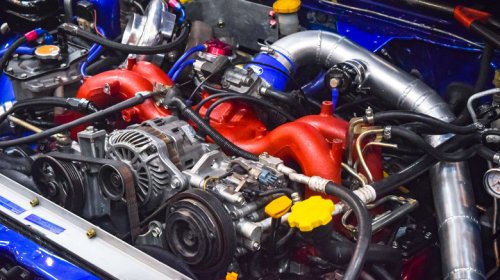
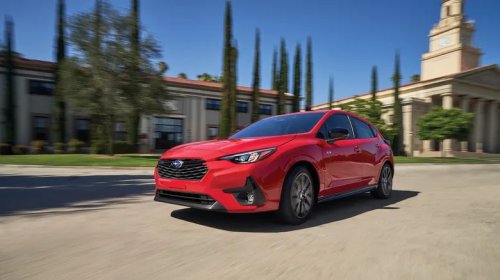
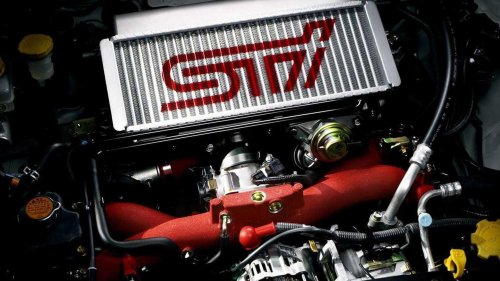
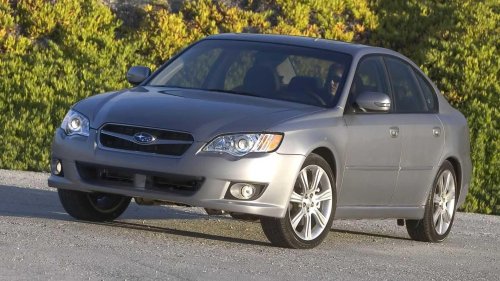
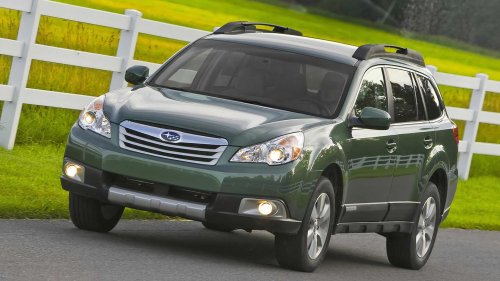
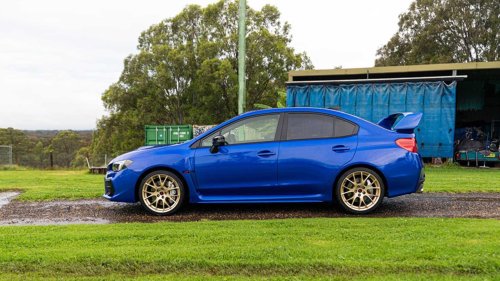
“If it’s still leaking, it’s not empty."I’ll never forget the words of my mechanic when my very first Subaru, a trusty 2010 Subaru Forester, began dribbling coolant all over my driveway. I, a used car expert, should have known better. I even bought the extended warranty, in case the head gaskets needed replacing. They started leaking less than an oil change after that warranty expired. I should have saved my money: the head gasket replacement cost about as much as the $1,100 Canadian dollar extended warranty package that I had otherwise wasted at the time.Subaru head gaskets in this era had a reputation for being made of tissue paper (not really), but I fell for the trope anyway, rolling the dice and assuming it wouldn’t happen to me. My beloved base-model manual Forester had about 60,000 miles on it when the dribbling commenced.Subaru “Is it really that common?” I asked my mechanic, dismayed. He put his hand on my shoulder, looked me in the eye, and said “Justin, there comes a time in every Subaru’s life….” and I don’t remember the rest.That was a bit of an exaggeration, but for a time, Subaru was having a lot of trouble keeping their 2.5-liter engines sealed properly. The ordeal affected models from the WRX STI to the Forester to the Outback XT and became so widely memed within the enthusiast space that Subaru became known for a time as a manufacturer of engines that might leak, smoke, overheat, or turn themselves into coleslaw at a moment’s notice. Some owners called head gaskets a maintenance item, and others said that ringlands were a suggestion, not a feature. Will The Used Subaru You’re Considering Have Engine Trouble? SubaruThat depends. Over time, owners, technicians and tuners learned about the engine issues and how to fix them. Today, it’s widely held that certain design elements, components, electronic controls, and structural weaknesses in the day’s famous EJ engine series were to blame for frequent, sometimes repeated, failures experienced by owners.The reputation for Subaru engines to eat head gaskets and ringlands was pervasive enough that second-hand Subaru shoppers today still wonder how cautious they should be. If you’re one of them, your knowledge might be outdated, which could keep you out of a perfectly good vehicle, or conversely, land you in one with a higher risk level than you're comfortable with. Let's get you up to speed about what you need to know about head gasket and ringland failure, and how to protect yourself when buying a used Subaru in 2026.Please note that while every attempt has been made to give accurate information, it is impossible to predict which engines will fail (and which will last) with absolute certainty. This article makes use of historical data to draw conclusions but there will always be exceptions to a rule. We suggest having a vehicle checked by professionals before you purchase. The Pressure Cooker: The Anatomy Of A Blown Gasket SubaruA head gasket is a thin piece of material used to seal the space between an engine’s cylinder block and cylinder head. It’s the engine’s equivalent of the rubber seal on your pressure cooker: a slim barrier that keeps extreme heat, pressure, liquids, and gases contained and separated so things can function properly without blowing apart. If the gasket on your pressure cooker gets damaged, you can probably replace it for a few bucks.Stakes are higher with an engine’s head gasket, which is exposed to tremendous amounts of heat and pressure at all times while the engine is running. The head gasket seals passageways where coolant, oil, combustion gases, and thousands of PSI of cylinder pressure all flow in close proximity to one another, but must never be allowed to mix.Head gaskets have a very difficult life. Their job is demanding, but automakers have had this gasket mastered for decades. Factory engines generally run with their original head gasket for life. There aren’t a lot of modern engines known for head gasket failure.When shopping for a used Subaru, context is important. Various online owner communities have documented and timelined head gasket issues carefully. Their primary advice for used shoppers is to avoid lumping all Subaru engines together. In 2026, Subaru’s famous head-gasket issues are historical, and affect naturally aspirated (non-turbo) 2.5-liter Boxer engines from about 1996 to around 2010, depending on the model you're considering. Over nearly 30 years, this EJ25 engine was installed in just about every Subaru, built as the base, default engine for most of the brand’s lineup. This Was A Base Model Problem Subaru The first issues appeared around 1996 and were tackled around 1999 with a revised, stronger head gasket and redesigned engine block as a fix. It didn’t work very well, and head gasket troubles continued for years. Early engines could suffer internal gasket failure, causing internal leaks that could result in sudden, dramatic overheating and engine damage. Coolant could mix with engine oil, wiping out sensitive engine internals that were no longer being properly lubricated.The revised engine and gasket design that ran from 1999 to 2011 sorted out many of the serios problems, but made less serious external leaks (like on my Forester) more likely. Now, engine coolant would dribble out of the engine, often puddling on the ground below, or burning off on the exhaust. What Happens When A Head Gasket Fails SubaruWhen a head gasket fails, drivers may experience all, some, or none of the following: external coolant leaks, external oil leaks, unwelcome smoke from the exhaust, poor performance, mixing of oil and engine coolant, overheating, or even immediate destruction of the engine. Various factors are at play, including where the gasket physically fails. All Subaru engines have two head gaskets, one per cylinder bank.Note that turbocharged 2.5-liter Subaru engines of the era were largely exempt from head gasket failure, since these higher-performing engines used a stronger head gasket from the factory. That stronger head gasket happens to fit the non-turbo 2.5-liter engine as well, making it a popular pre-emptive fix for some owners looking to solve non-turbo head gasket leaks before they happen. Still, some turbo models had a major pain point of their own. Brittle Pistons Under Boost: Ringland Failure Subaru A similar saga plays out with the issue of ringland failure in Subaru engines. A ringland is a little groove in each of an engine’s pistons, within which a piston ring sits. Like a head gasket, a piston ring also deals with extreme heat and pressure, sealing off one area of an engine from another to contain violent forces within. Since piston rings and their ringlands work as a team, when a ringland breaks, the piston ring no longer works, and your engine is basically chop suey.Subaru engines also earned a well-memed reputation for ringland failure during a specific period of time that overlaps the head gasket issues, though the two issues primarily affected two different engines, and that has implications if you’re buying used.Remember earlier when I mentioned it was important not to lump all Subaru engines together? Here’s why: while head gasket failures plagued non-turbocharged 2.5-liter engines from about 1996 to 2011, the "danger zone" for ringland failure on Subaru’s turbo engines overlapped from about 2004 to 2021. If you’re following, that makes many Subarus built from 2004 to 2021 potential candidates for one major engine problem or another. Ringland Failure Affected The Quickest Subarus, Especially Those With Mods Collecting CarsTurbocharged 2.5-liter Boxer engines found in the WRX STI, WRX and Forester XT (or Legacy GT models from that era) were often in the spotlight on owner forums for ringland failure after ringland failure. At the time, it was held that factory-equipped pistons were relatively "brittle" for the application, eventually fracturing and failing at the thin ringland surface in the face of repeated heat cycling, pressure and engine knock events.Subaru drivers who buy the turbocharged engine tend to enjoy driving the pants off it. This isn’t great for the longevity of less-than-reputable pistons. Turbocharged engines in this era were prime candidates for non-factory ECU chips, tunes, and aftermarket upgrades designed to turn up the boost pressure. This, in turn, makes life even harder on the brittle pistons within this specific engine, speeding up their failure rate. Navigating The Landmines As A Used Subaru Shopper In 2026 SubaruWe know now that ringland failure and head gasket failure are two separate problems that mainly affected two separate engines in the bulk of Subaru’s model range for specific periods of time. If you’re shopping for a second-hand Subie, here’s how you can use that to your advantage, as simply as possible. The Head Gasket Danger Years Subaru If the Subaru you’re considering has the 2.5 liter engine, it might be at risk. The Forester switched to a new engine that solved the gasket problem for 2011. The Impreza made the switch in 2012. The Outback and Legacy followed in 2013. The Subaru Crosstrek arrived in 2013 with a 2-liter engine, not known for head gasket problems. A 2.5-liter engine was added to the Crosstrek for 2019, with head gasket problems nearly a decade behind it.Translation? You don't need to worry much about head gasket trouble on a Subaru Crosstrek at all.On other models, you can protect yourself by adjusting your budget or selected engine to move out of the danger zone, possibly skipping it altogether. You could also seek out a model with documentation proving the head gaskets were already replaced, or by budgeting to have the factory head gasket (if equipped) upgraded before it has a chance to cause you any trouble.With that out of the way, you’ve got a pretty bulletproof engine. The pre-emptive gasket work could cost you a few thousand dollars at an independent shop, or a few pizzas and some beverages if you and your buddies can spin your own wrenches on weekends.Subaru Signs of head gasket failure include visible coolant leaks beneath the vehicle or on the bottom of the engine, as well as low coolant levels, overheating, or a check engine light. If any of these are apparent on your test drive, proceed with extreme caution and have a professional assess the vehicle before you purchase.When the engine on the car you're considering is cold, check the engine coolant in the overflow tank. If the level is low, and especially if the liquid is milky or opaque in appearance, move to another unit. Coolant should be green or red and relatively clear. Milky-looking coolant has likely been mixed with engine oil, a key sign of gasket failure. The Ringland Danger Years Collecting CarsIf you’re considering the 2.5-liter turbo engine instead, and especially one from the 2004–2021 model years, put your guard up for ringland trouble. You’ll find this engine in the higher-performing variants of the Outback and Forester, wearing the ‘XT’ badge. Derivatives were also used in the Subaru WRX and WRX STI of the era.To protect yourself, the key is to avoid a model that’s ever been fitted with non-factory performance upgrades that weren’t backed up by a professional ECU tune. Stick to completely stock for best results. As reported by Subiemods.com, the larger-displacement 2.5-liter engine wasn’t an ideal candidate for turbocharging upgrades from the get-go, and a leading cause of trouble is the use of bolt-on tuning upgrades (downpipes, exhaust systems) without a proper recalibration of the engine computer."The trouble starts when the EJ25 is treated like a purpose-built performance motor and pushed past the boundaries Subaru originally designed around, particularly without proper tuning, fueling, and supporting modifications." –Subiemods.comFrom 2014 and onwards, the Forester XT switched to a new 2-liter turbo engine. The WRX got the next-generation engine for the 2015 model year, though the WRX STI stuck with the potentially problematic engine all the way until 2021. The Outback XT carried this potentially problematic engine until 2009, when it was removed from the options list. The 3.6-liter flat-six – not affected by either issue we’ve discussed – became the up-level engine until the Outback XT model grade returned again for 2020, with earlier issues in the past.Subaru Though many owners enjoy modified Subarus on the daily, the average shopper is best to stick to stock when it comes to turbo engines. Consistent use of high-octane fuel can help fend off dangerous knock in these same engines. Budgeting for some extra work during a Pre-Purchase Inspection (PPI) for a compression and leakdown test can reveal potential trouble in quick order if you have any concerns.


























 +5 others