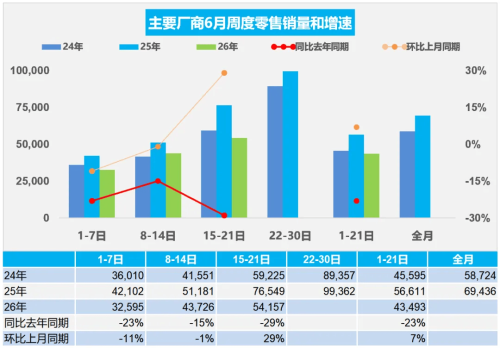
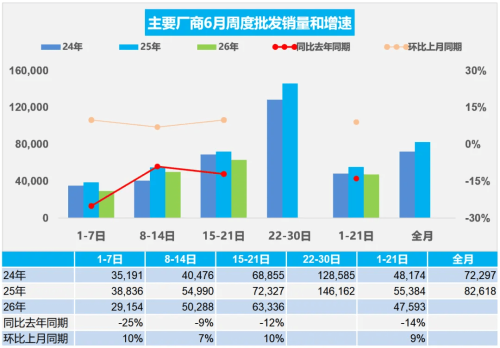
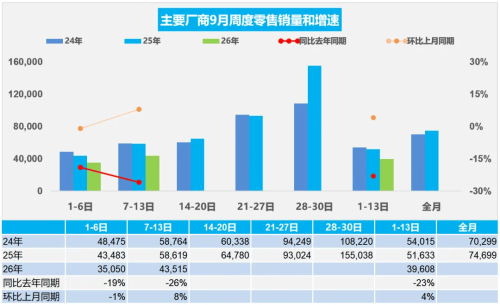
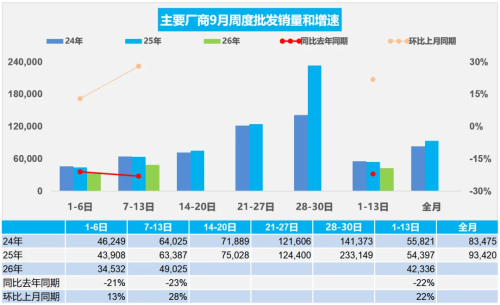
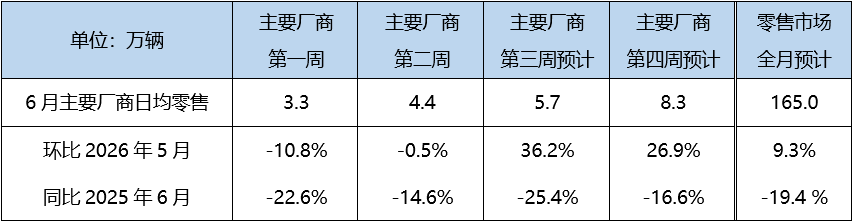
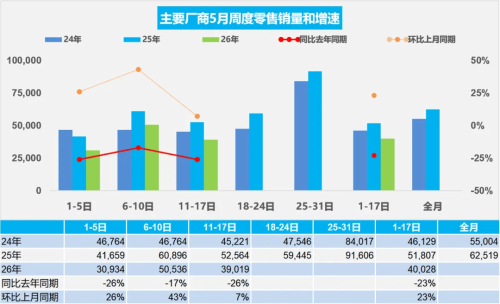
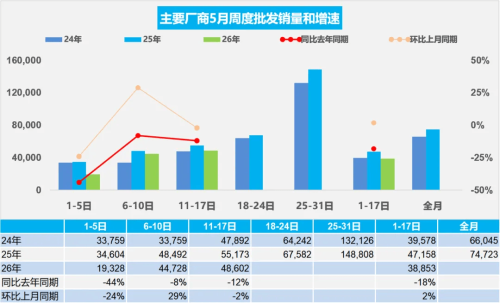
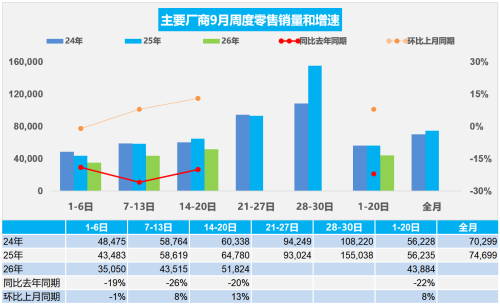
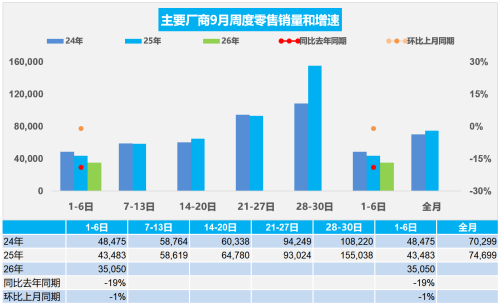
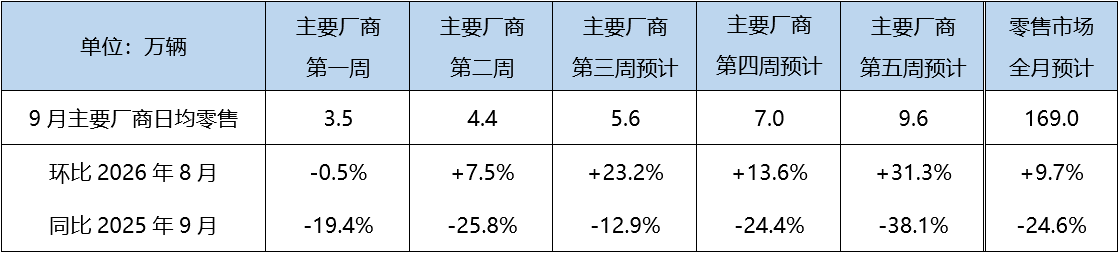
Gasgoo Munich- The "Golden September, Silver October" sales season has arrived as scheduled, yet the auto market is treading carefully against a high statistical base.The latest forecast from the China Passenger Car Association (CPCA) puts September retail sales for passenger vehicles at roughly 1.69 million — a 9.7% monthly increase. However, compared to last year's towering base of 2.241 million units, sales are expected to slide 24.6% year-on-year. Despite the pressure on total volume, structural shifts remain striking. New energy vehicle (NEV) retail sales are projected to reach 1.11 million, pushing the penetration rate to 65.7% — a potential new high following August's record.With 1.69 Million Units Expected, Sales Climb Week by WeekFirst, a look back at August. CPCA data shows retail sales reached 1.541 million units — a 23.6% year-on-year drop but a 5.5% monthly gain. While domestic retail saw a modest rebound at the tail end of the slow season, the market remains in a consolidation phase. As the industry enters the traditional peak season, showroom traffic is poised to recover. Ongoing trade-in incentives and local subsidies are expected to underpin the "Golden September" performance.Manufacturers, however, are not betting on an aggressive surge. Recent surveys indicate that leading automakers — which account for over 70% of total sales — have set monthly retail targets growing by less than 10% from August. That lags behind the typical seasonal boost seen at quarter's end, suggesting manufacturers have rationalized their expectations and are less eager to push for volume than in previous years.The consensus forecast puts September's passenger car retail market at 1.69 million units, up 9.7% month-over-month. Yet, measured against last year's massive base of 2.241 million, the year-on-year decline is expected to widen to 24.6%. With consumer sentiment and economic fundamentals yet to see a fundamental turnaround, this peak season is shaping up to be a "mild recovery" rather than a "strong rebound."Image source: CPCAViewed week by week, the market is set to trace a clear upward trajectory.The first week served as a stabilization phase, with major manufacturers averaging 35,000 daily retail sales — a 19.4% year-on-year drop and a slight 0.5% slip from August. By the second week, as brands launched peak-season promotions, showroom traffic improved, lifting daily retail to roughly 44,000 units, a 7.5% weekly gain. The third week saw a full rollout of promotions and the start of deliveries for recently launched models. Coupled with pre-Mid-Autumn Festival demand, both traffic and orders improved, pushing daily retail sales to an estimated 56,000 units — a sharp 23.2% weekly jump.In the fourth week, the Mid-Autumn holiday falls mid-week. While orders are likely to improve further, fewer working days will push delivery schedules back, resulting in an estimated 70,000 daily sales. The fifth week should see a concentrated release of demand ahead of the National Day holiday, compounded by quarter-end sales pushes. Daily retail is expected to surge to 96,000 units — a 31.3% weekly spike — marking the quarter's high point.Beneath the bustle, concerns linger. The year-on-year declines in daily retail sales for the five weeks stand at 19.4%, 25.8%, 12.9%, 24.4%, and 38.1%, respectively. The pressure from last year's high base persists throughout the month, hitting hardest in the fifth week.On the macro level, data from the National Bureau of Statistics shows total retail sales of consumer goods rose 1.1% from January to August, indicating overall stability. Yet, retail sales of automobiles fell 13.9% — a widening decline. Dragged down by the macroeconomic environment and muted consumer expectations, passenger car consumption continues to slide, remaining a significant drag on big-ticket spending as a wait-and-see mood prevails.With the Mid-Autumn Festival and National Day holidays approaching, some demand may be released early. Supported by policy backstops and aggressive promotions, the market continues its recovery — but replicating the glory of past "Golden Septembers" will be no easy feat.NEVs Sprint to 1.11 Million as Penetration Rate Hits 65.7%If the overall figures feel cool, the new energy sector is heating up. The CPCA projects September NEV retail sales will reach around 1.11 million, bringing the retail penetration rate to 65.7% — a 0.5 percentage-point increase over August's historic high of 65.2%.Based on these forecasts, NEV retail sales are climbing about 10.4% from August. Subtracting 1.11 million NEV units from the total 1.69 million leaves roughly 580,000 internal combustion engine (ICE) vehicles sold in September — a modest 7.4% monthly increase. Even as the peak season warms up, NEVs remain the faster-growing segment.Image source: Chery AutomobileIn terms of incremental volume, September is expected to sell roughly 149,000 more units than August. NEVs account for about 105,000 of that increase — over 70% — meaning new energy vehicles are claiming the lion's share of the season's growth.The seeds of this divergence were sown in August. That month, NEV retail sales hit 1.005 million — nearly double the 540,000 ICE vehicles sold — pushing the penetration rate to a record 65.2%. Meanwhile, ICE sales plummeted 40.5% year-on-year as their market share continued to shrink. The structural split in the auto market is intensifying: NEVs are constantly raising the ceiling while ICE vehicles retreat to defend their shrinking base. A market of "fire and ice" has become the new normal.NEV momentum is fueled by strong order books and delivery volumes. September marks a peak for new model deliveries and coincides with the quarter-end sales push. Driven by these dual forces, the substantial backlog of NEV orders is expected to convert quickly. A combination of fresh demand and the clearing of prior delivery backlogs should propel the penetration rate higher on its accelerated upward trajectory.In terms of weekly rhythm, intensive deliveries starting in the third week and the quarter-end push in the fifth week will serve as critical windows for NEV volume growth. This explains why, even within the cautious forecast of 1.69 million total units, NEVs remain the primary source of incremental growth that manufacturers are banking on.The situation for ICE vehicles is far more precarious. Over the past two months, driven by geopolitical uncertainty, oil prices have fluctuated upward, severely squeezing the room for recovery in ICE demand. While there is some seasonal improvement, the pace lags far behind the "Golden September" peaks of previous years. Long-term volatility in fuel prices has not only reshaped consumer expectations about ownership costs but also invisibly reinforced the logic of replacing ICE vehicles with NEVs.Authorities have already weighed in on the next step for penetration rates. Cui Dongshu, secretary general of the CPCA, recently stated that the domestic retail penetration rate for NEVs has already breached 65.2%. Reaching 70% within five years is a realistic goal, he noted, aligning with the Ministry of Industry and Information Technology's target for NEVs to account for 70% of sales by 2030.Looking ahead to "Golden September, Silver October," trade-in policies, sustained local subsidies, and a wave of new model deliveries all point to NEVs remaining the critical variable defining the season's success. For automakers, the test of "Golden September" is no longer just about selling more units; it is about securing their position in the race toward electrification. The 65.7% mark is not the finish line, but another milestone in the shifting of China's automotive growth engine.




















 +58 others