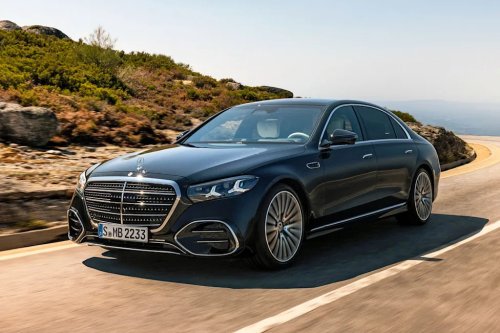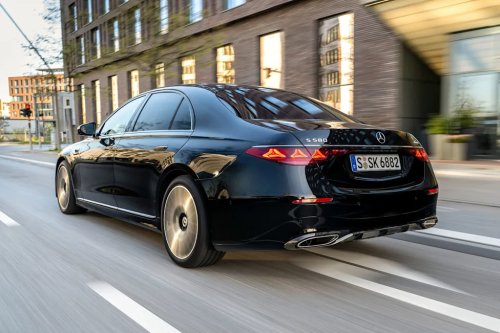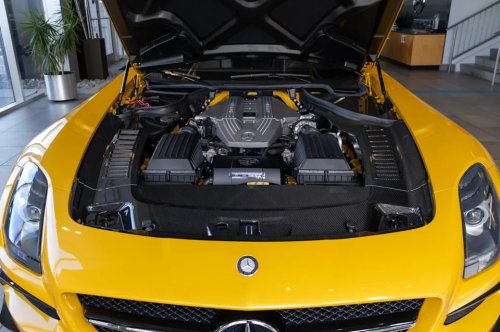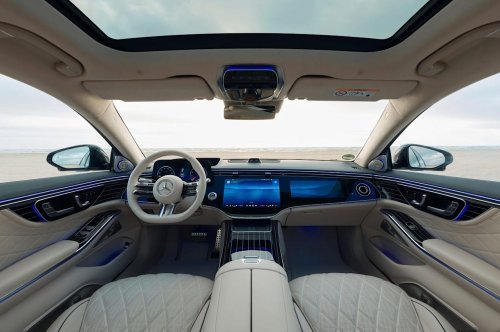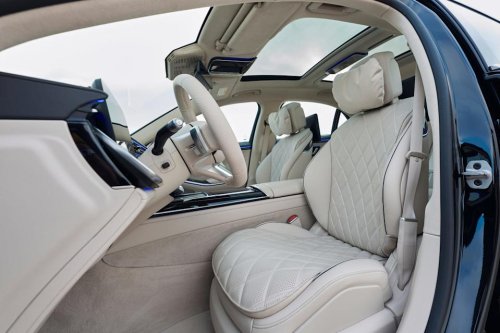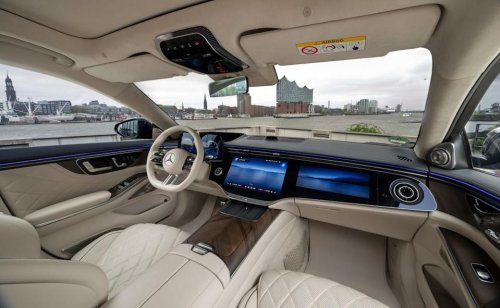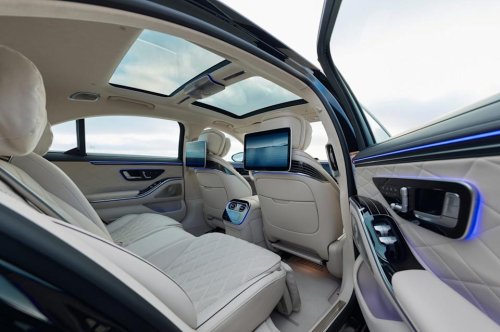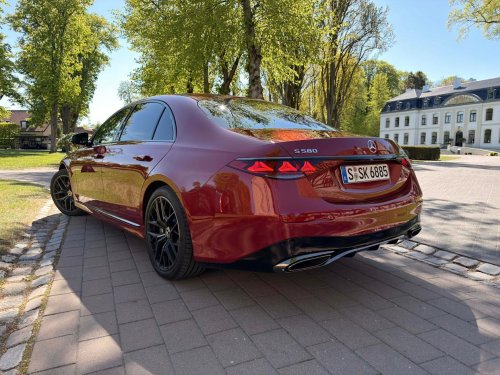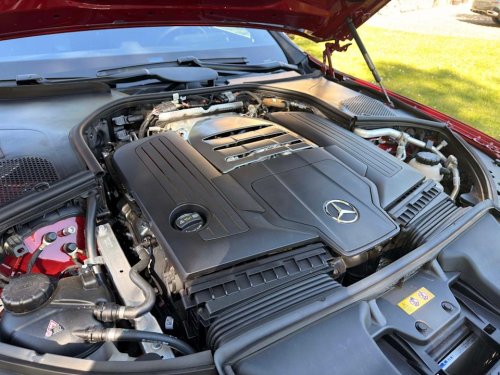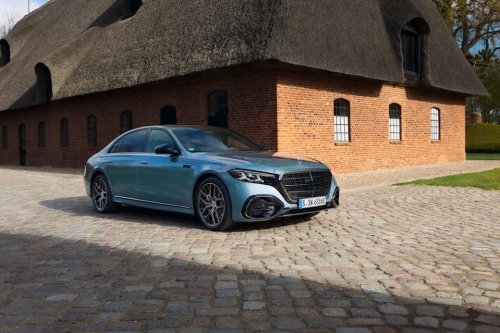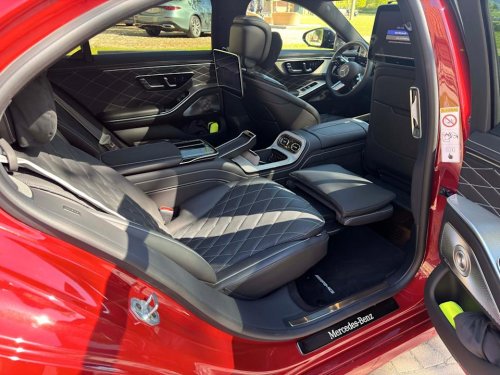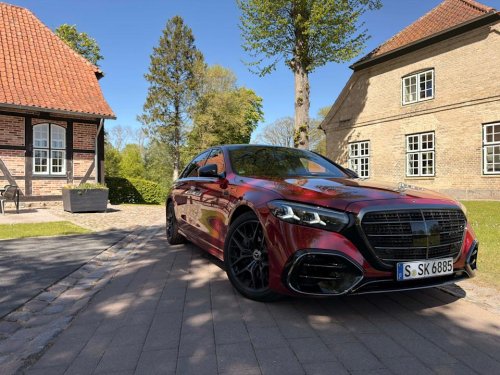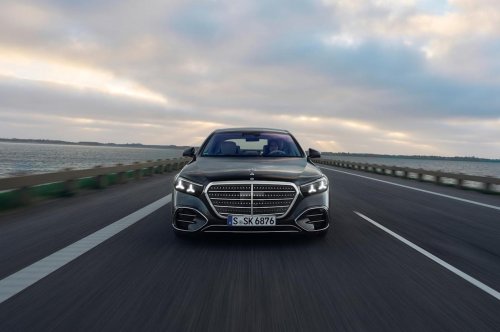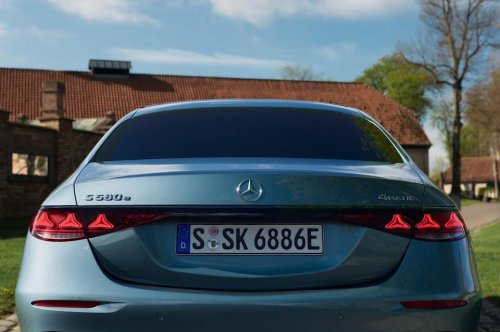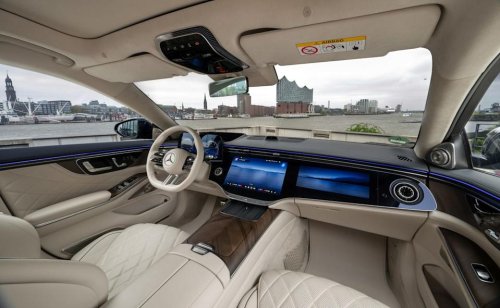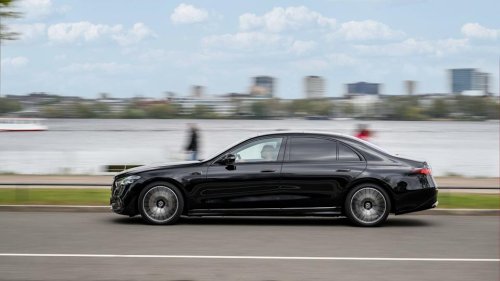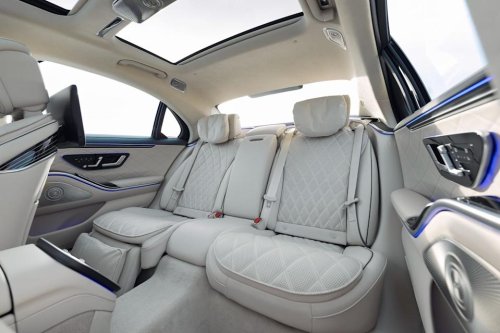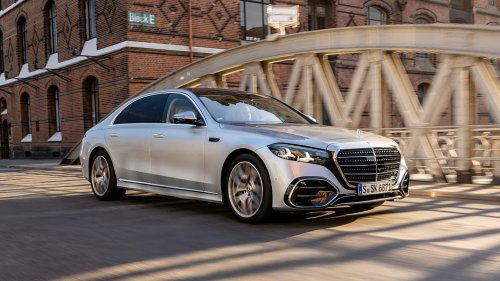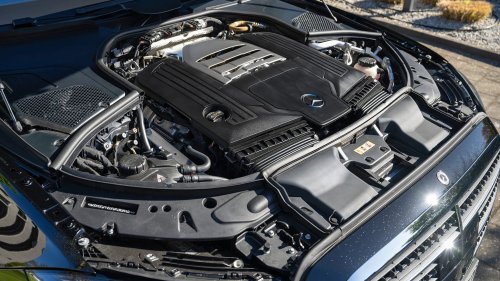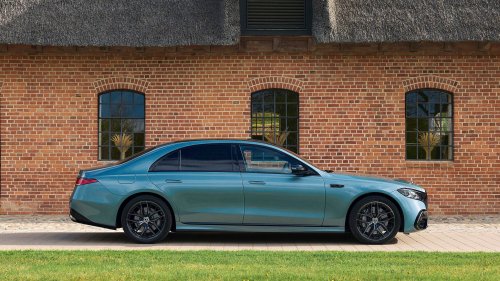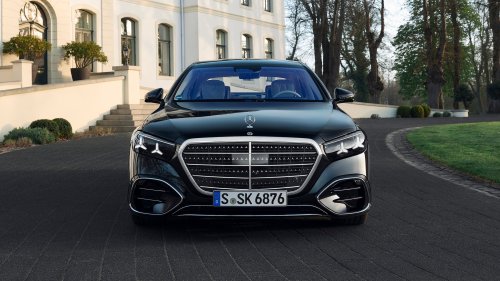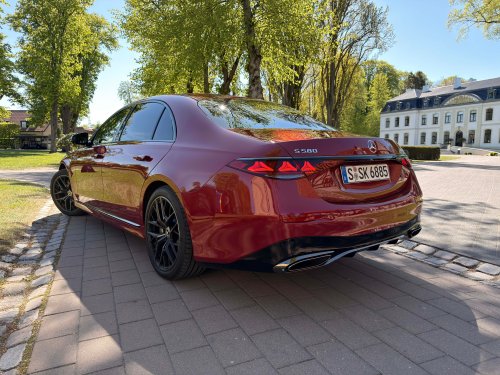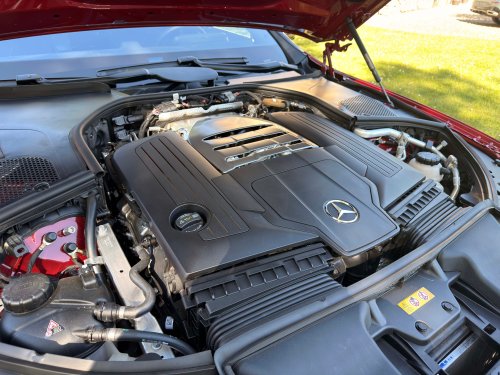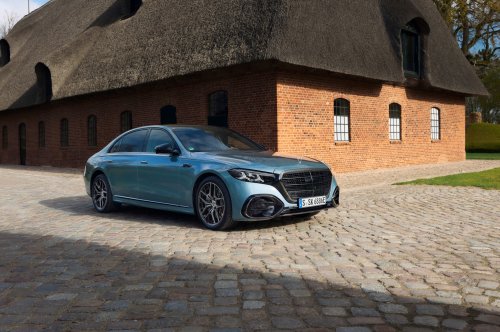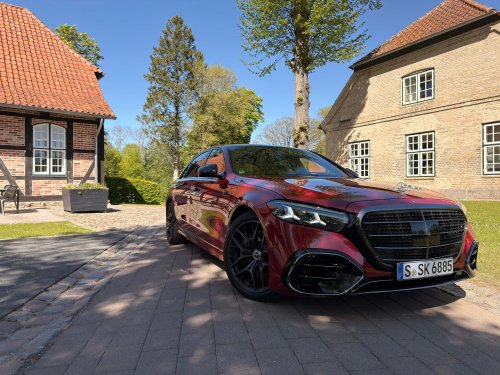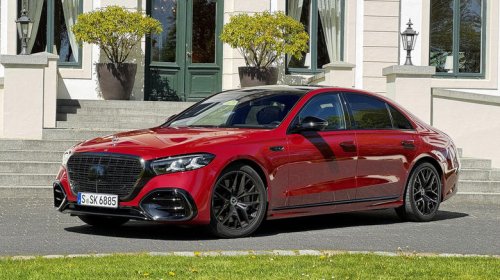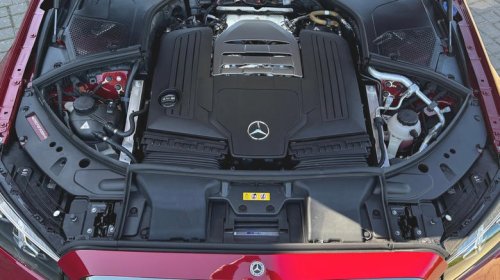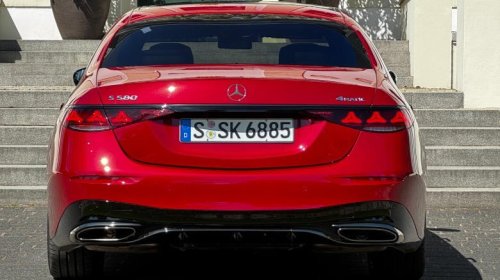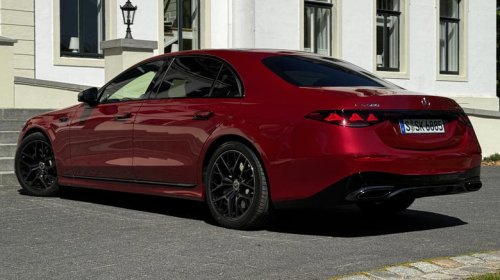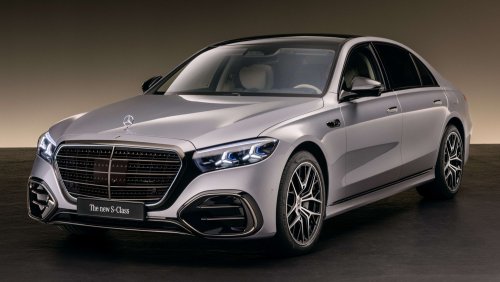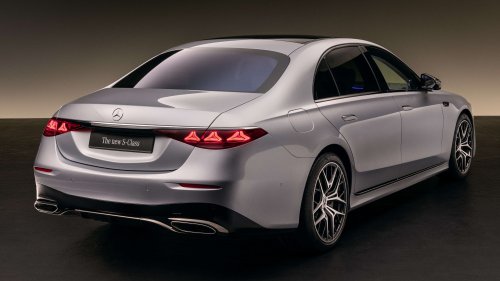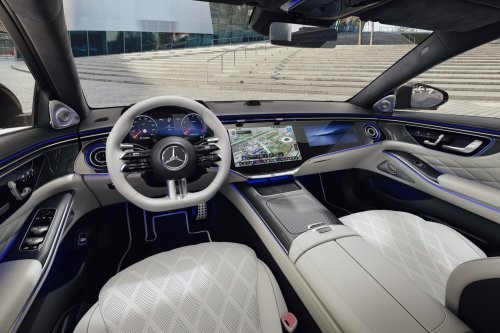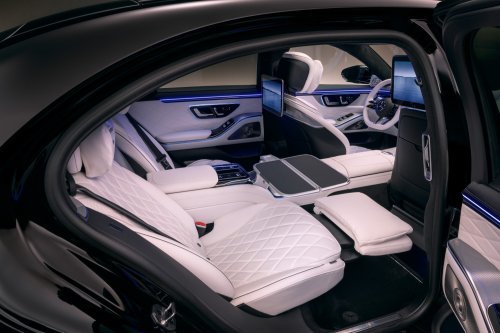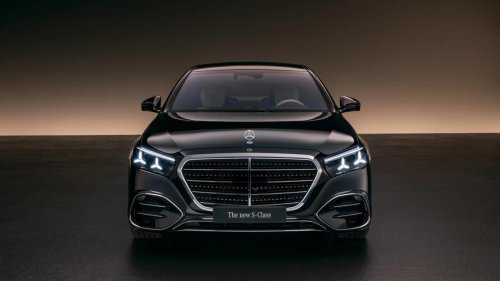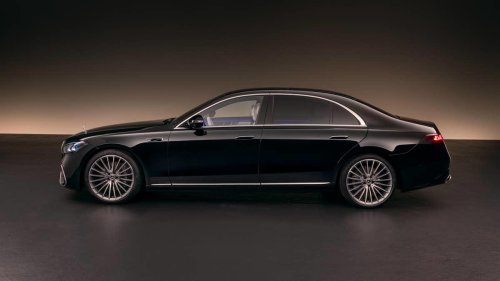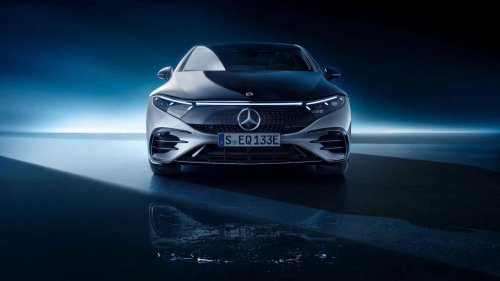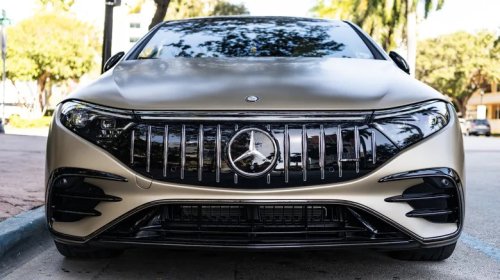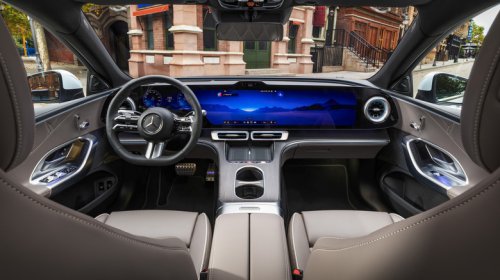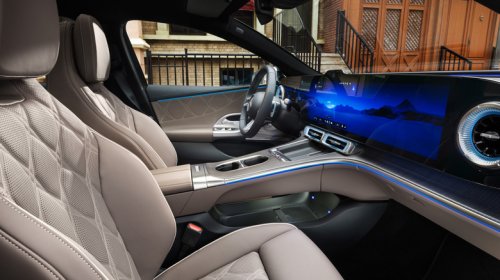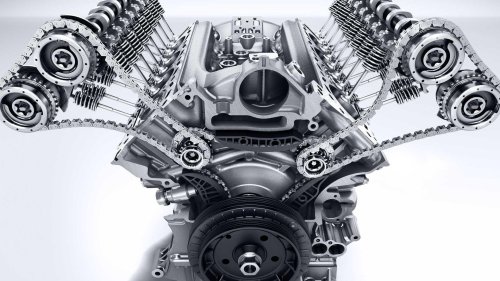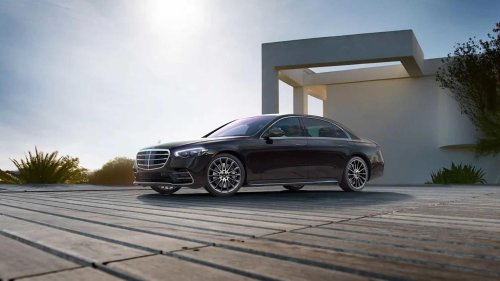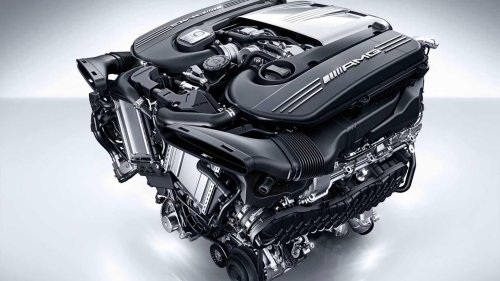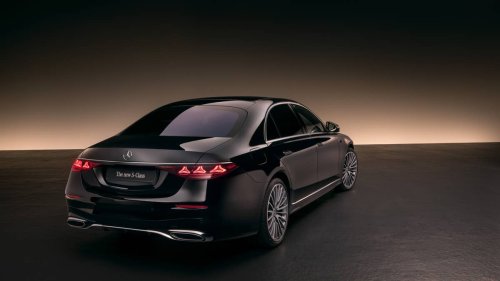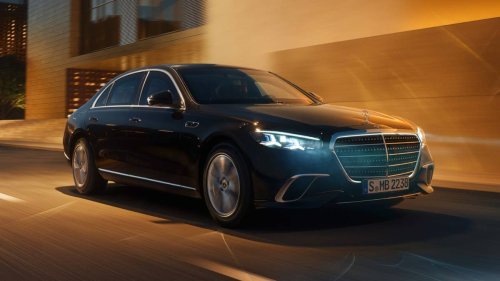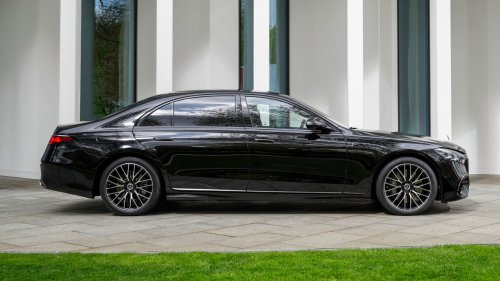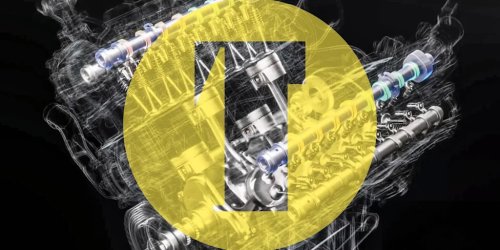
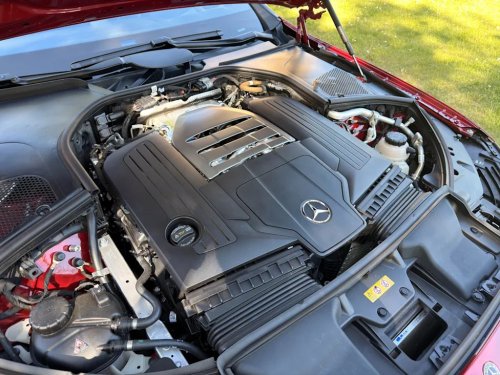
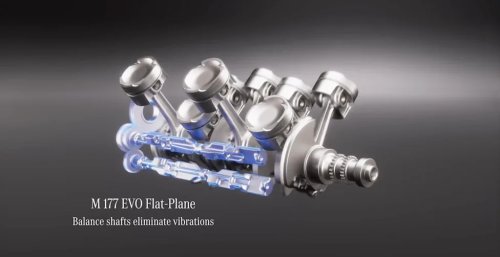
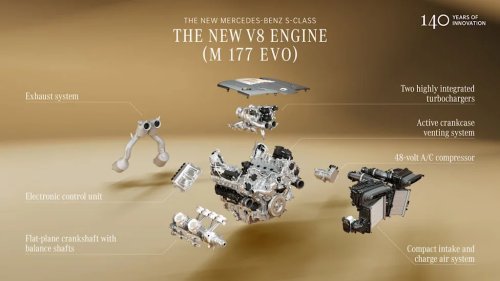
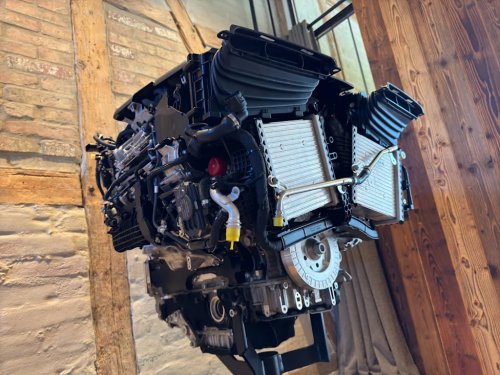
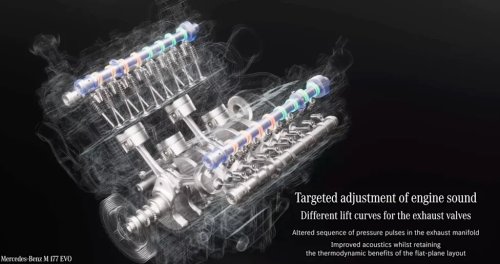



















How Mercedes Made a Flat-Plane Crank V-8 LuxuriousMercedes-Benz (Mercedes-Benz)One of the more interesting byproducts of Europe’s stringent Euro 7 emissions regulations going into effect is a small flurry of internal combustion innovation. Porsche introduced its new T-Hybrid powertrain; now, Mercedes has a new flat-plane crank V-8, the M177 Evo.This isn’t the only V-8 engine Mercedes has released recently with a flat-plane crankshaft. You might recall the previous-generation AMG GT Black Series and its high-power, motorsports-inspired M178 4.0-liter twin-turbo flat-plane-crank engine. This new motor is not that. The M177 Evo’s first home is the heavily refreshed S-Class, which is one of the last places I’d expect to find such an engine.As you likely already know, the most common applications for a V-8 featuring a flat-plane crank design are in high-end sports cars and supercars. Exotics from Ferrari, McLaren, and others are the usual suspects, but Ford broke new ground last decade by implementing the design in the Ford Mustang GT350, and the C8 Corvette Z06 followed in its American footsteps. You might get slightly different answers as to why each automaker decided on a flat-plane crank, but the benefits are consistent across the board.Aaron Brown (Aaron Brown)For one, they have excellent primary balance properties, eliminating the need for the heavy crankshaft counterweights needed in a cross-plane crank design. This naturally reduces the weight of the rotating assembly, allowing the engine to rev faster and higher. The flat-plane crank arrangement also comes with exhaust benefits: since combustion happens every 180 degrees with the firing order alternating bank-to-bank, exhaust gases exit at the same intervals, allowing for improved flow. The sound emanating from those exhaust pipes is also quite distinctive in a great way, allowing you to easily identify when a Ferrari or C8 Z06 is coming at you.AdvertisementAdvertisementBut the natural goals and benefits of the flat-plane crank design are in direct conflict with the priorities of an S-Class powertrain, where refinement and effortless low-end torque are crucial. After hearing from digital director Aaron Brown about his experience driving the new S-Class’s V-8, though, it sounds like Mercedes has managed to retain its classic, cross-plane V-8 experience despite the huge design change. It’s quiet, has plenty of low-end torque, doesn’t feature any of the annoying secondary vibrations inherent to flat-plane designs, and otherwise melts into the background. Speaking with Mercedes engine powertrain development engineer Roman Hasselkuss, I found out how.“That's why we added two balance shafts, and they are compensating for all the vibrations,” Hasselkuss said. “So basically, what you get now with adding these features to the engine—you're getting the benefits of that harmonic, symmetric behavior of the flat plane without the vibrations that you would cause by this mass movement; that's already eliminated.”Mercedes-Benz (Mercedes-Benz)The two balance shafts, pointed out in the graphic above, are offset from the crankshaft and rotate in opposite directions, effectively cancelling out vibrations. The presence of these balance shafts is really what sets this Mercedes flat-plane crank V-8 apart from all the others on the market; supercar makers are less concerned with the rough, secondary vibrations the flat-plane crank design naturally results in, so they choose to omit balance shafts to save weight.The penalty for Mercedes adding weight is similar to the penalty for crankshaft counterweights. This engine doesn’t rev as high or as quickly as flat-plane crank V-8s in cars without balance shafts; that said, such a compromise is almost exactly what Mercedes desires in an S-Class, where the engine will live in the lower half of its tachometer most of the time. Peak horsepower arrives at 5500 rpm, exactly the same as the previous V-8. However, peak torque is shifted upwards, as all 553 pound-feet are available from 2500-4500 rpm as opposed to 2000-4000 rpm on the old cross-plane V-8. The difference is likely difficult to discern, especially since overall torque is up by 37 pound-feet for 2027. Plus, all Benz's new V-8s have an integrated mild-hybrid system to provide additional torque at low speeds, filling in any deficiencies.Mercedes-Benz (Mercedes-Benz)Hasselkuss explained that with the balance shafts, the key point is greater symmetry to the combustion and exhaust process. The “harmonic, symmetric” exhaust flow is a big help to the turbos. Hasselkuss said the exhaust flow is steadier with this flat-plane design, helping Mercedes to create the shape of power it desires. Not only does it improve charge (boost) pressure, but a huge part of this decision to go with a flat-plane crank was to improve efficiency and emissions. (Yes, you can probably thank Euro 7 for Mercedes going to these lengths to keep a V-8 around.)AdvertisementAdvertisement“You can see that harmony, that symmetry, which is very, very beneficial in terms of efficiency,” Hasselkuss said. “So you have here on both sides, both the cylinder banks basically nearly the same behavior, so the turbos are running basically very similar, and that's the benefit of your ability to optimize your power ... you can use that short distances in a perfect way—because it's again, efficiency. You have very high symmetry from the combustion from the flat plane, and you have very short distances because the total charge is very highly integrated.”Aaron Brown (Aaron Brown)Another first for Mercedes V-8s in this engine is its use of the Miller cycle. This closes the intake valves earlier, reducing the mass of air entering the combustion chamber. However, Mercedes makes up for this by increasing boost pressure and using a “high-tumble” intake method for greater velocity and a more complete combustion process/fuel burn.If you’re following along here, everything begets the next. The flat-plane crank’s exhaust pulses greatly improve exhaust flow, yielding greater turbo performance, allowing Mercedes to run the more efficient Miller cycle and high-tumble intake/fuel burn strategy to make up for the inherently less potent Miller combustion cycle. The result is a V-8 engine that passes Euro 7 emissions, but makes more power and torque than the one before it.There is one big, important caveat to this whole flat-plane crank strategy, though: sound. Mercedes wants its big body sedan to have that rumbling V-8 exhaust note it’s always had, and the uniform firing order of a flat-plane crank design simply isn’t conducive to producing such notes. Just like the other roadblocks to this idea, however, Mercedes has a solution for this one. Depicted in the image below, you can see how Mercedes alters the sequence of pressure pulses in the exhaust manifold to produce the throaty V-8 sound it's known for.Mercedes-Benz (Mercedes-Benz)"So the [exhaust valve] lift curves are adapted in a way that though normally you have, by alternating in the combustion, you get a pulsing that leads to that V-8 sound. And that is now done by adjusting the lift curves on the exhaust valve that we get there, the alternating, by opening and closing the valves in a way that you still get the V-8 sound with all the benefits I explained earlier,” Hasselkuss said.AdvertisementAdvertisementThis engine is one we should get used to from Mercedes. Earlier this decade, it would’ve been surprising to hear the automaker was developing such a radical new V-8 powertrain, but the people demanded it, and Stuttgart is intent on delivering. Hasselkuss admits it carried over much of the architecture from the M177 engine before it. For those wondering, that was the hand-built AMG version of the 4.0-liter twin-turbo V-8, installed in cars like the GLE63 S or E63 S Wagon. Of course, there's a whole lot that's new, hence the "Evo" name.If you're curious what is next, Hasselkuss remained cryptic when queried. “Maybe,” he tells us when broached about the potential for a spicier AMG version of this flat-plane crank V-8. We have to assume it’s coming, especially now that the four-cylinder AMG experiment from the last couple of years is ending.You Might Also LikeIf You Can Only Own One Car, Make It One of TheseThese Are the Most Popular Cars by State