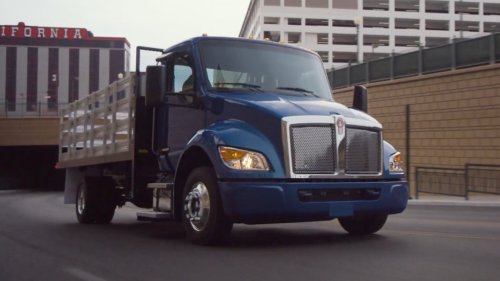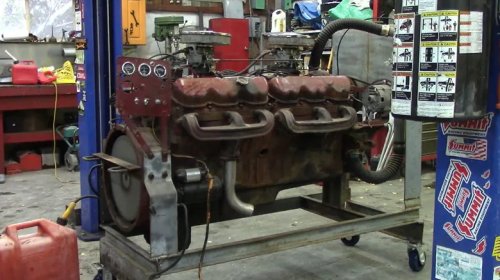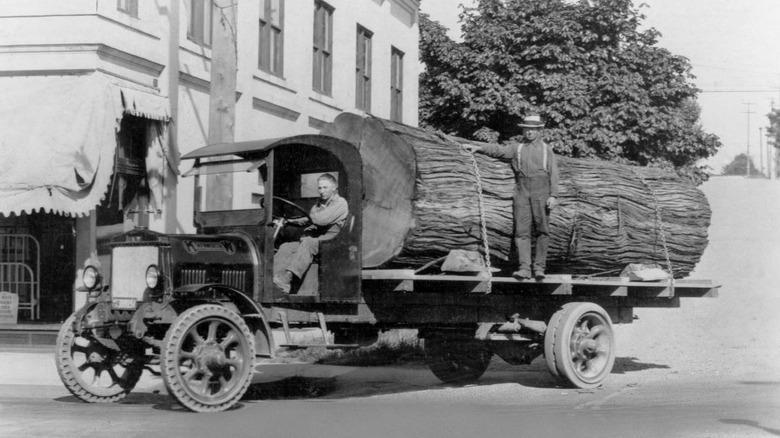
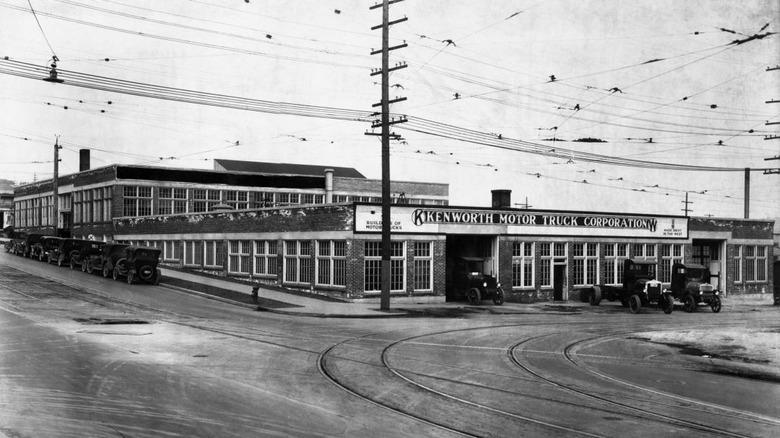





















Before Kenworth there was GersixThe Kenworth story starts not with the two men who founded the company – Edgar K. Worthington and Captain Frederick Kent — but with two brothers, George and Louis Gerlinger, Jr. These siblings owned a car and truck dealership in Seattle, Washington, called Gerlinger Motor Car Works.In 1914, they decided to purpose-build a truck of their own design, powered by a six-cylinder engine, at a time when most "truck" engines had only four cylinders. What's more, the cab was made from steel instead of wood framing. The vehicle was known as the "Gersix," a combination of the brother's last name and the number "six" to designate that it had six cylinders, and was released in 1915. It proved to be the ideal truck for the logging industry, which dominated the Pacific Northwest. The following year (1916) the Gerlingers moved their company to Tacoma, Washington, where it was purchased by Edgar K. Worthington and his business partner Captain Frederick Kent in 1917. They were also interested in providing trucks capable of moving loads of heavy timber over the abysmally muddy and rutted "roads" used by the logging companies. Gearsix continued to build their six-cylinder gasoline trucks, and when the Captain retired in 1919, his son Harry stepped in and replaced him. The men decided to reincorporate the company and move it to Seattle, Washington, and in a nod to the Gerlingers, they combined their last names to create Kenworth Motor Truck Company.Customization and innovation became keyA mere two months after becoming Kenworth in January 1923, the company was producing newly badged trucks, and in that first year it made 78 gasoline-powered trucks. By 1925, they had become so popular, they were making almost two complete trucks every week. In addition to adding five new models to their lineup — powered by a Buda four-cylinder gas engine with varying hauling capabilities between 1- and 5 tons — customization and innovation became an integral part of the "Kenworth way." The ability to integrate a customer's specific needs wherever possible allowed Kenworth to prosper more. In 1927, Harry Kent became President of the company, and built a new factory in Seattle (a building they would stay in until 1946) and Canada (to avoid import duties), and the first Canadian-built 3-ton J-6 rolled off the line later that same year. Meanwhile, the Seattle plant, which was only 120 feet by 240 feet (including office space, service department, and showroom), allowed them to build three new trucks a week with a capacity of 50 per month. The top-of-the-line trucks leaving this plant were powered by a 78 hp six-cylinder gas engine with a seven-speed transmission.Then, on a Thursday in October 1929, the stock market crashed, which subsequently sent the world into the Great Depression. Kenworth managed to avoid the ultimate fate of going out of business, but production was impacted. By the early 1930s, the company was making just 250 trucks a year.