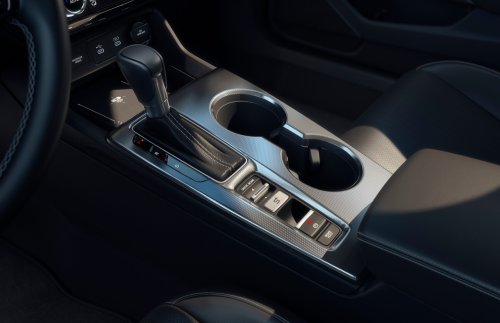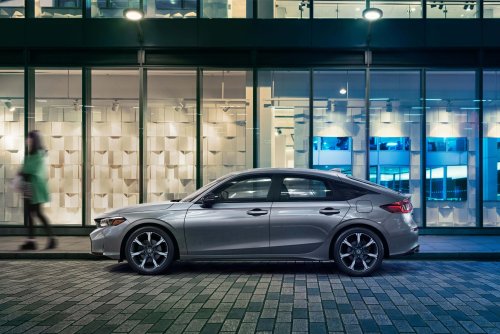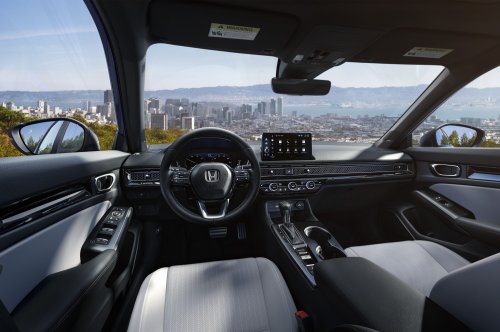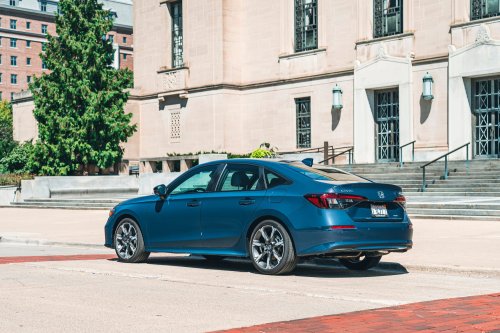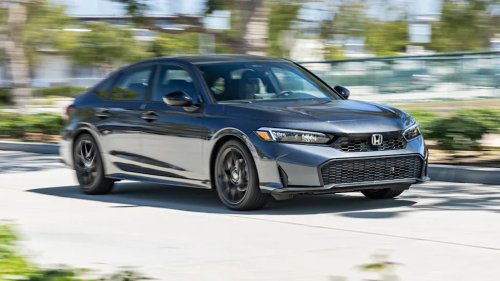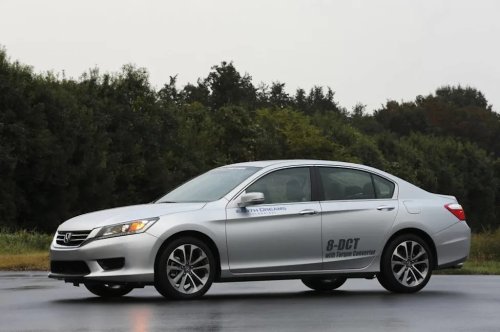
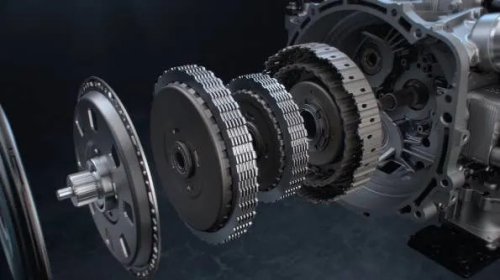
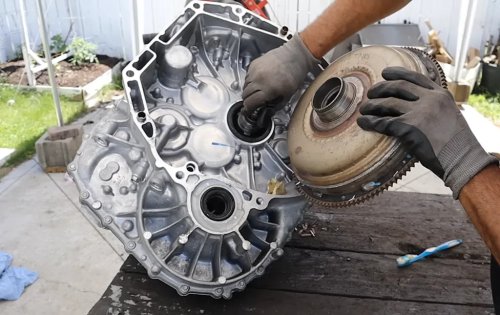
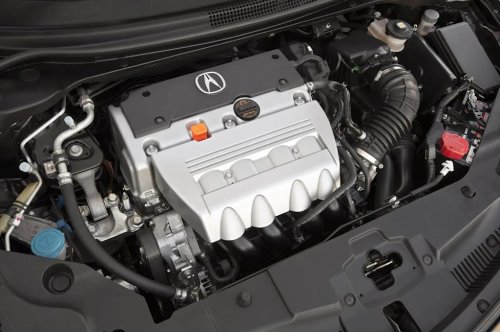
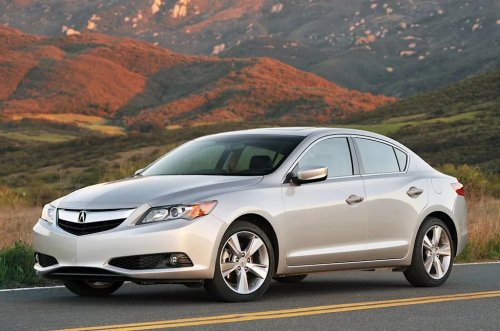



















Autoblog and Yahoo may earn commission from links in this article. Honda tried to solve the DCT's biggest problemAsk most enthusiasts what they think of Honda automatics from the 2010s and you'll probably get a wince at the mere mention of the infamous 9-speed, which is fair enough. But buried in Honda and Acura's lineup was a DCT that never got much of a reputation at all, mostly because almost nobody actually drove one.It's the Honda 8-speed dual-clutch transmission that found its way into just a handful of cars like the ILX and TSX. And unlike many automatics on offer from various manufacturers, this wasn't an off-the-shelf gearbox with a Honda calibration. Honda designed and built this 8-speed dual-clutch gearbox in-house, which is exactly the kind of over-engineering flex you'd expect from Honda.HondaView the 1 images of this gallery on the original articleWhat's Actually Inside This Honda DCTA recent teardown from speedkar99, a channel that makes a habit of taking apart mechanical curiosities and finding what's genuinely clever about them, pulled a 56,000 mile example apart to see how the thing works. What they found looks less like a modern automatic and more like a manual transmission that got a computer implant. There are real synchronizers inside, steel ones rather than the softer brass items you'd find elsewhere, plus actual shift forks. Four shift shafts handle the eight gears between them, two wet clutches take care of the actual power delivery, and hydraulics to smoothen out the in-between.Why Add A Torque Converter To A DCT?The torque converter let Honda combine some of the best characteristics of two transmission designs. You got the efficiency and quick shifts of a DCT once you were moving, while the torque converter helped make the car behave more like a conventional automatic at low speeds. A DCT is mechanically closer to a manual transmission than a traditional automatic, which is part of the reason it can shift quickly and operate efficiently. But it still has to get a car moving smoothly from a standstill, where its clutches have to slip. The torque converter could absorb some of that work while making creeping, parking and low-speed launches feel more natural.HyundaiThat compromise also helps explain why Honda's approach was so unusual. A conventional automatic already had the torque converter but gave up some of the directness and efficiency of a DCT, while a typical DCT did the opposite. Honda's gearbox effectively tried to occupy the middle ground, using the torque converter where it mattered most and letting the dual-clutch hardware handle the rest.The Perfect Automatic… On Paperspeedkar99/YouTubeAdvertisementAdvertisementThe teardown also offers some encouraging news about durability, although it's hardly a lifetime guarantee. The clutches on this particular example, at 56,000 miles, were reportedly still in solid shape, and the teardown makes a decent case that they're really the only significant wear item in the whole unit. That's not a guarantee of long-term reliability, though, and the maintenance schedule still matters a lot with something this hydraulically complex. Some owners have complained of clutch slippage and whining sounds on their cars, but that could just be down to maintenance. AcuraThe gearbox's limited application is part of the reason it's so easy to forget. Honda never made it widely available, instead confining it to a relatively small number of four-cylinder engine applications. Its complexity and cost likely didn't help, but the result was the same: a transmission Honda had spent years engineering never got much of a chance to build a reputation.A Transmission That Was Almost Too HondaView the 2 images of this gallery on the original articleThere is something very Honda about this transmission's existence. Rather than simply accepting the compromises of a conventional DCT, Honda tried to engineer its way around them. It wasn't revolutionary, and the extra hardware certainly didn't make the transmission simpler or cheaper. But it was an interesting solution to a genuine problem, and one that shows just how much engineering went into some of Honda's less celebrated powertrain technologies.AdvertisementAdvertisementThe irony is that Honda didn't stick with it long enough for the transmission to become a defining part of the company's identity. Instead, it became something much more obscure: an unusually complicated answer to a very specific problem, hidden in a handful of Honda and Acura models before the company moved on. That's what makes the gearbox so interesting today. Honda didn't just build a DCT. It built a DCT, identified one of its biggest weaknesses, engineered around it, and then barely gave it legs to stand on.This story was originally published by Autoblog on Aug 29, 2026, where it first appeared in the Features section. Add Autoblog as a Preferred Source by clicking here.