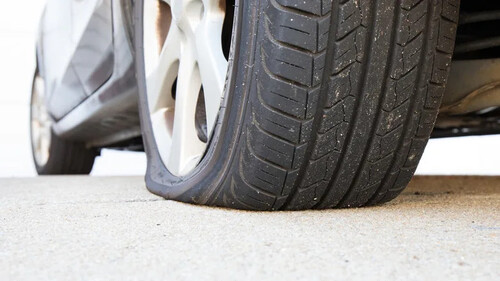
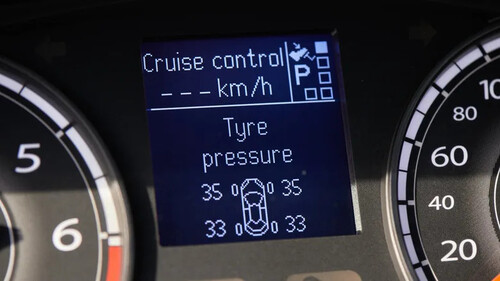
here s why you really shouldn t drive on a flat tire Getting a flat tire on the road can be a scary experience, but what you do in the moments after a tire loses pressure is very important. Here's why you really shouldn't drive on a flat tire. When a tire loses a significant amount of air pressure, it's what is referred to as flat. This can occur for many different reasons, such as a defect, improper air pressure, a puncture, or over use. Although it is rare, some tires do have built-in defects that may be visible as bumps or bulges on the sidewall of the tire. If you ever see these types of abnormalities, do not drive on the tire and have a certified tire mechanic inspect it right away. Another sign that your tire may soon fail are cracks in the surface. If you spot cracks in the surface of your tire, it's very likely the tire is too old and should not be driven on. here s why you really shouldn t drive on a flat tire A tire that is at the end of its life cycle can also show signs it may rupture if it's not replaced. Any tire under 2/32nds of tread depth should be replaced as soon as possible and any tire with the steel belts showing through the tread should not be driven at all. It's important to always check your air pressure as well to ensure it's at the correct level. Driving on under-inflated tires causes increased wear, damage and heat that can lead to a tire prematurely failing. Remember that fluctuations in temperature can also affect your tire pressures. A puncture is much harder to prevent and can occur on a seemingly clear stretch of roadway. Regardless of what causes a tire to go flat, when it does happen, it's imperative to minimize the amount of time spent driving on it. here s why you really shouldn t drive on a flat tire Pull Over Immediately We've all seen it before; some of you may have even done it. A vehicle has had a tire go flat and the driver is slowly driving on the shoulder on of the road. Instead of waiting on a tow truck or taking the time to install the spare tire, drivers sometimes try to ‘limp' their cars to a nearby service center. This is not the right response to a flat tire. As Goodyear states: "Maintaining proper air pressure is an important factor in tire safety and performance. If a driver experiences a flat tire or loss of air pressure, they should slow the vehicle gradually and carefully pull off to the side of the road as soon as possible. Driving on a flat tire can cause internal structural damage to the tire, may lead to wheel and vehicle damage and may result in poor vehicle handling and control - which could lead to an accident, injury or death." Cooper Tire reiterates this point, pointing out that "Flat or underinflated tires can do harm very quickly. According to Cooper, tires driven even a short distance while under-inflated may be damaged beyond repair. Running a tire under inflated is like running the vehicle's engine without enough oil or coolant. It may seem to work fine for a time, but serious permanent damage has occurred. Adding oil or coolant won't repair engine damage, and adding inflation pressure won't fix tire damage." here s why you really shouldn t drive on a flat tire A Flat Doesn't Always Mean a New Tire 2027 Subaru Getaway: All The Details here s why you really shouldn t drive on a flat tire Not Just the Tire is at Risk If a tire degrades enough when being driven while flat, it can start to break apart and cause damage to several important components on a car. Brake lines, rotors, calipers, suspension components, wheels and fenders can get serious damage from a flat tire that begins to flail around in the tire well. What starts off as a simple $30 tire patch can end up costing thousands of dollars if a flat tire is driven on for an extended period of time. But more of a concern is occupant safety. If any of the braking or suspension components do get damaged, the car may behave unexpectedly, that could result in a crashing injury or, in a worst case scenario, death. here s why you really shouldn t drive on a flat tire What to Do When You Do Have a Flat? If a flat does occur, it best not to panic and DO NOT drive on it. Safely maneuver to the side of the road and either installed the spare tire (if one is supplied) or get a tow to a local tire shop. Although this means a minor inconvenience and/or cost in the short term, it's worth it in the long run. You can do massive damage to your vehicle if you continue to drive and more importantly, you will be putting you and other motorists at risk. How to Avoid a Flat The best way to deal with a flat tire is to never have one in the first place. Cooper Tire has tips and advice regarding the most important factors when it comes to tire care: Proper tire size, type and load capacity (or load range) Proper inflation pressure Proper vehicle loading Regular tire rotation Regular inspection Proper tire repair Vehicle condition, alignment and maintenance Good driving habits Be sure to inspect your tires frequently – especially if you commute far distances often. Tires can become damaged quite easily while out on the road. Potholes and other rough bits of road and asphalt can cause your tire to bubble or cause the sidewall to tear. Extreme heat or extreme cold temperatures can also cause the tire pressures to fluctuate, so you will want to keep an eye on your tire pressures year-round as well. In short, you should always keep a close eye on your tire tread wear and tire condition, as this is critical to your safety when out on the road. When you Can't Plug a Tire As mentioned above, plugging a punctured tire is often a simple and affordable alternative to buying an entirely new tire. But it's not always possible. As a general rule, if you have a nail or other object stuck in your tire, it can be patched if it's closer to the center of the tire (either in the tread or in the void between the tread). If the nail or other object is near the outside of the tire, in the "shoulder" tread block or in the actual sidewall of the tire, it cannot be plugged. 2027 Porsche 911 GT3 S/C: All the Details