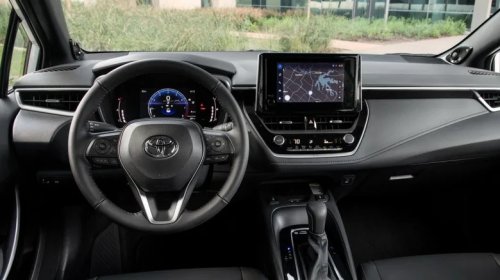
Adding fake gears and shifts is a gimmick, but it's also a fun way to help make electric vehicles more involving for those used to such things. Features like the Hyundai Ioniq 5 N's virtual redline and rev limiter can make a near-silent car feel more interesting, but can a car company take it too far?That answer might be a qualified yes, based on the patent recently uncovered by the CarBuzz researchers. It seems Toyota wants to make your fake shifting experience all too real, right down to the embarrassing consequences of not being good at driving stick. Making EVs More Involving To Drive, For Better Or Worse Lexus Turn on all the N modes in one of Hyundai's performance EVs, and the strangest thing can happen. If you don't hit the paddle to change to the next fake gear, the car will slam into a completely artificial redline. The computer limits power in an on-off way that makes it feel even more severe than hitting the rev limiter in a gas car. Of course, there's no real point other than to mimic something with a combustion engine. It sounds silly, but admittedly, it can be kind of fun.Toyota's new patent takes that idea and runs it like that awkward friend who doesn't know when to end a joke. They have engineered a system that would let you stall your EV, mimicking the behavior of stalling a combustion-engined car. It will also decide if you're a skilled driver or not, and change that stall behavior accordingly.The accelerator pedal in a modern vehicle generally doesn't change acceleration directly, EV or not. Instead, it's connected to a computer that opens the throttle, or on an EV, sends more electricity to the motor. Toyota's proposed system has a "virtual torque transmitting capacity changing device" that is designed to imitate how you'd operate a clutch in a stick shift, as well as a "virtual engine speed calculator" that decides what gear and RPM you'd be at in a gas car under the same driving conditions.It works with a simulated manual transmission system. Toyota says it has been working on this for several years now, so much that it will even let you roll back from a hill stop. Naturally, it will have an actual shift lever and a clutch pedal. Stalling A Car That Doesn't Have An Engine Or Transmission Toyota With this invention, if you're using the manual mode and are ham-footed on the clutch, the EV will stall. Stalling, in this case, means a sudden cut of all torque from the motor and the application of the brakes. Yes, that means you can get that same jerky motion as if you had stalled a real gas car. Put it in too high of a gear, and the same thing can happen.If that's not enough, Toyota's invention proposes that the computer will decide if you're a good driver or not. If you're not, it will turn on hill hold assist automatically. If you're a good driver, it might only turn on if there's someone behind you. It can also be programmed to have a launch control mode, so dumping the fake clutch launches you more aggressively than a smooth release.We're not sure how much we like the idea of stalling an EV. Then again, it would be hilarious to watch someone else do it. And, frankly, it's whimsical. Something you don't see much of from Toyota.The best part is that it's all software, so other than some development, this isn't adding much to the cost of a vehicle. The patent describes simply adding virtual features that shouldn't exist. If you hate EVs, this probably won't change your mind. If you like them and also like gimmicks, it's perfect. CarBuzz Insight – Why This Matters: Automakers understand that one of the toughest parts of EV adoption is winning over enthusiasts. If the "car person" in your life hates them, they'll tell you to avoid them, and flood the internet with negative comments. If enthusiasts say one of the things they miss is involvement, then adding involvement to an EV can help win people over.ToyotaDo fake rev limiters, shifters connected to nothing, and now a clutch pedal that can stall your clutchless car give electrics more of that emotional involvement petrolheads want? There's only one way to find out, and that's to invent them and put them in vehicles. Even if it all seems a little silly.Patent filings do not guarantee the use of such technology in future vehicles and are often used exclusively as a means of protecting intellectual property. Such a filing cannot be construed as confirmation of production intent.Source: US Patent and Trademark Office