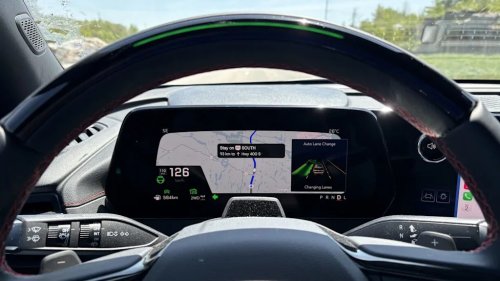
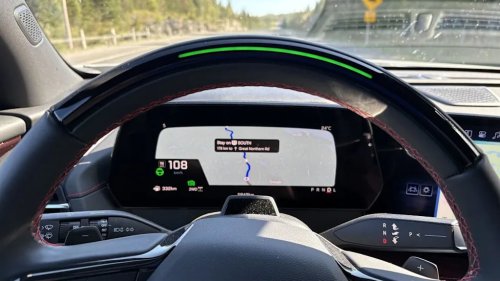
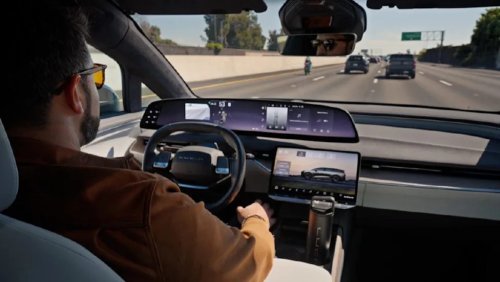
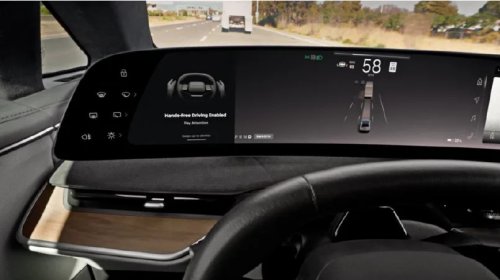
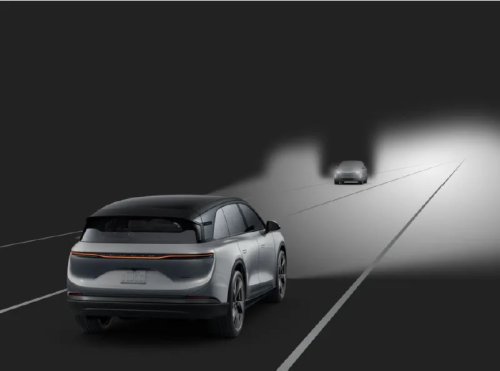
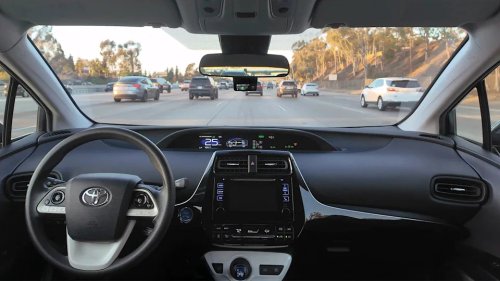
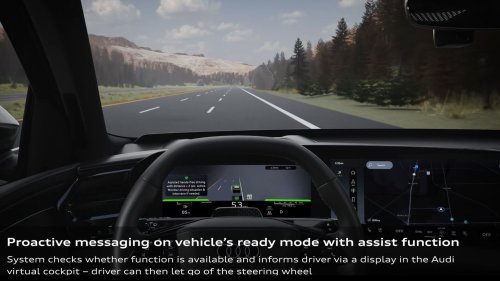
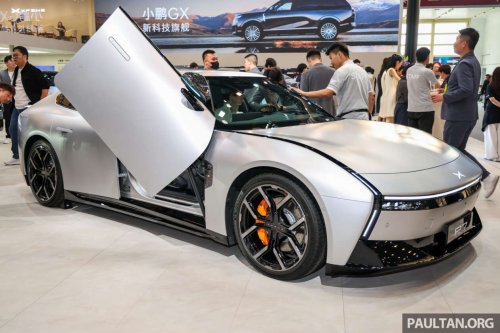
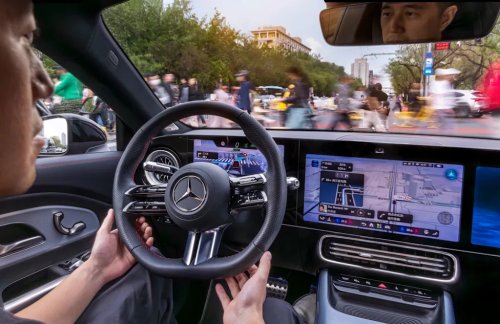
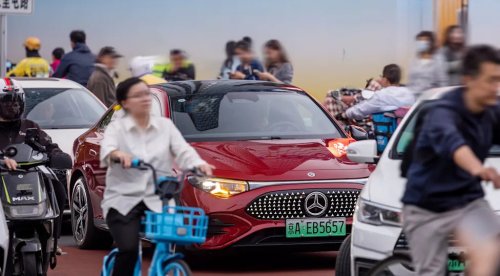
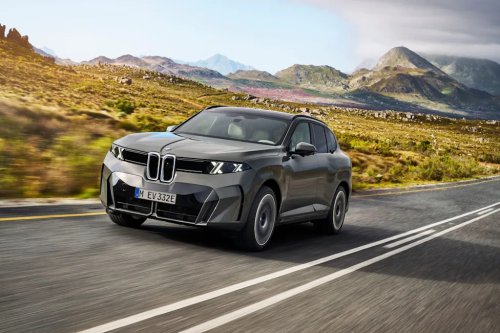
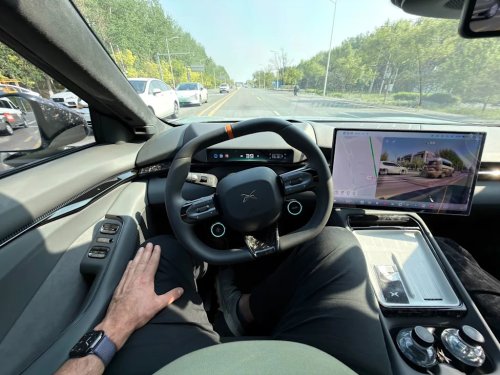
Self-driving cars can do ever more, as a trip in the streets of Beijing showed recently. But you still need to concentrate, drivers. Mercedes-Benz AG/dpa-tmnThe working day has just ended and all hell has broken loose in the Beijing district of Sanlitun.It seems that half of the Chinese capital's population is out and about. The shopping and entertainment district is buzzing.The pavements are packed, as are the cycle lanes while on the road, cars and buses pile up during the lengthy red stop phases of the traffic lights. When the lights go green, everyone surges forward at once, creating utter chaos.AdvertisementAdvertisementDespite the mayhem, Bernd Woltermann sits completely relaxed in his Mercedes CLA, unfazed by the hustle and bustle.He often folds his hands in his lap and becomes a passenger in his own car. As soon as he has activated the sat-nav and instructed the car to take over, the electronics guide him through the city maze.The tech makes the car change lanes, stop at red lights and set off again when the lights turn green. It even cheekily uses the cycle lane when traffic is at a standstill.Woltermann is keen to point out that the driver is in charge at all times and that using a mobile phone at the wheel remains strictly forbidden. Having said that, the driver only needs to touch the steering wheel now and again.AdvertisementAdvertisementThe head of driver assistance systems development at Mercedes in China describes this "point-to-point navigation" as the next step towards an autopilot, for which the term "Level 2++" has also become established."In fact, all new Mercedes models since the CLA are available with it in China," says Woltermann. The optional extra costs around $1,440.The tech is also heading for Europe. Development head Jörg Burzer, promises Europeans the same calm panorama amid the cut and thrust of city traffic with the next level of MB.Drive Assist Pro.In Germany, Mercedes prides itself on being a pioneer in highly automated driving technology and was the first and only manufacturer to get approval for fully hands-free driving on the motorway.AdvertisementAdvertisementHere in China, however, the German firm is a latecomer, joining a whole range of vehicles on offer which take a great deal of the work off the driver's hands.Chinese manufacturer Xpeng, for example, has equipped its entire fleet in a similar way, and has configured the systems to be less defensive.Anyone driving a Xpeng P7 through Beijing will find themselves changing lanes more often, cutting into traffic a little more, turning later or merging earlier and not being prompted to take control quite as early or as frequently.The serene journey through the dense throng is made possible by a sophisticated system comprising radar and cameras, ultra-fast chips and artificial intelligence.AdvertisementAdvertisementAfter many millions of test kilometres, the system has learned to drive like a human, says one developer.Even the more cautious assistant versions don't navigate timidly through rush-hour traffic like a novice driver. Their progress is smooth and confident, just like an driver with years of experience.Unlike in a Mercedes, deliberate breaches of the rules are possible with an Xpeng, because in Beijing you won't make any headway unless you occasionally veer onto a cycle path or cross a normally taboo solid white line.One of the biggest players in the Chinese market is electronics giant Huawei, which has formed the Hima Alliance and provides a wide range of brands with the hardware and software for very similar functions.AdvertisementAdvertisementAway from moving traffic, cars thus equipped can do much more, just like numerous Chinese cars and now even the first VW models developed in China for the Chinese market. These robot-assisted cars take complete control of parking.They do so even after the driver has left the vehicle. All you have to do is briefly select a proposed parking space on the screen, and whilst the occupants are already walking away, the cars manoeuvre themselves into the space.Until now, Europeans have had to look to China with either envy or concern when it comes to this level of driver-less sophistication. This is because Brussels and Berlin have long held back the introduction of this tech.But things are slowly starting to happen. "We'll be launching in the first cities in Germany before the end of this year," said Burzer following a meeting with the former German transport minister, Patrick Schnieder, in the spring. He plans to roll out the system across Germany and Europe next year.AdvertisementAdvertisementIn the Netherlands, rival Tesla has already been granted approval for its "Full Self-Driving" system, which despite its name still leaves the driver in charge.Unlike the vast majority of its competitors, the American company says its set-up works without lidar sensors and relies solely on cameras, yet still aims to be at least as safe.The Americans say the system is actually better than a human driver and claim to have reduced the risk of serious collisions by up to seven times compared with human driving.Now that the authorities here are increasingly setting aside their concerns, things should move quickly. Meanwhile, Tesla has already expanded into Latvia, Denmark and Belgium from the Netherlands, and is hoping for a swift roll-out across the whole of Europe this autumn.AdvertisementAdvertisementAccording to Burzer, Mercedes can also digitally retrofit and activate the Level 2++ function in many of its new models since the CLA uses an over-the-air update. "This is because the necessary hardware is already on board in the vast majority of vehicles," he says.BMW is also prepared and has introduced a similar system in the new X5. From next year, the navigation system will also assist in city centres – for example, at roundabouts and junctions or when turning – by providing steering assistance, speed control and distance control, without, however, relieving the driver of their responsibility, according to the manufacturer.The Chinese are also well geared-up for Europe. The Xpeng P7+, the European counterpart to the test car from Beijing, has all the cameras and sensors required for such systems on board and can be activated accordingly, says press spokesman Bernhard Voss. And brands such as Nio, BYD and Denza have long since implemented the technology in China and can easily transfer it to Europe.Experts are watching the developments with interest. "From a technological point of view, what's happening right now is fascinating," says Robin Horning, editor-in-chief of trade magazine Auto Bild.AdvertisementAdvertisementThe technology is not just reserved for a privileged few, either. "With moderate price premiums and rapid adoption across a wide range of segments, a large number of motorists are set to benefit from it."For all his enthusiasm, Horning is relieved that the Europeans are proceeding more cautiously than the Chinese.After all, self-driving cars are not faultless. Sometimes they come to a halt, seemingly confused and unsure what to do next and they can brake at the last second, startling passengers. "This is not dangerous, but it is sometimes irritating and annoying," says Horning.Mercedes' CLA navigates the busy streets, saving drivers from the stress of the heavy traffic. Mercedes-Benz AG/dpa-tmnAs self-driving cars develop, BMW is also prepared with the new X5. Its navigation system can assist in city centres – for example, at roundabouts and junctions or when turning – by providing steering assistance, speed control and distance control, without, however, relieving the driver of their responsibility, BMW says. Uwe Fischer/BMW AG/dpa-tmnHere in the XPeng P7. Self-driving cars are making progress though drivers should be aware that they are not faultless. Sometimes the vehicles may come to a halt, seemingly confused and unsure what to do next and they can brake at the last second, startling passengers, say experts. XPeng Motors/dpa-tmn
















 +57 others