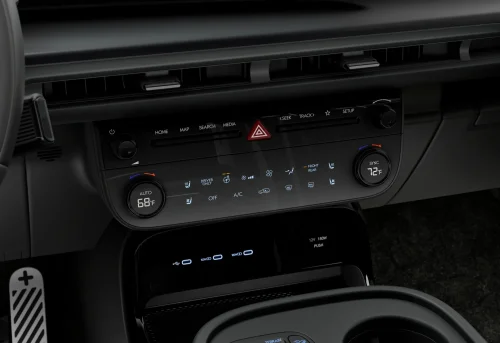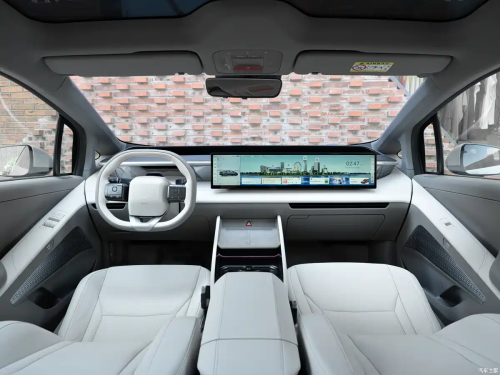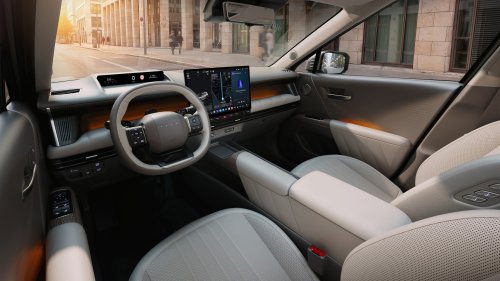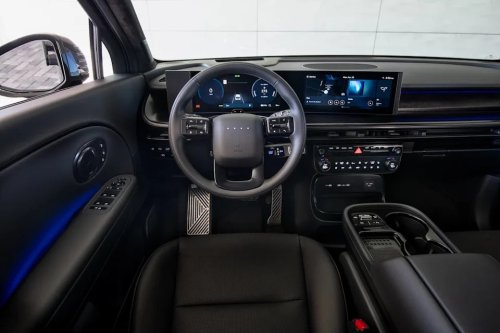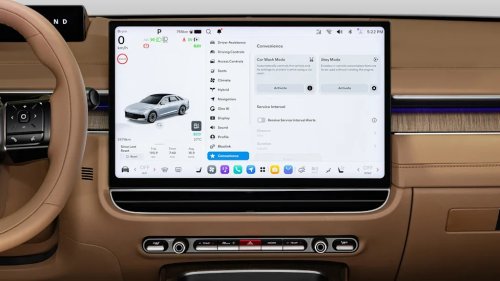
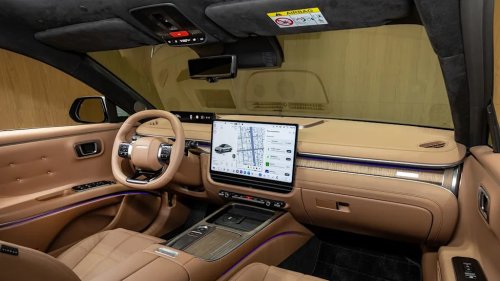
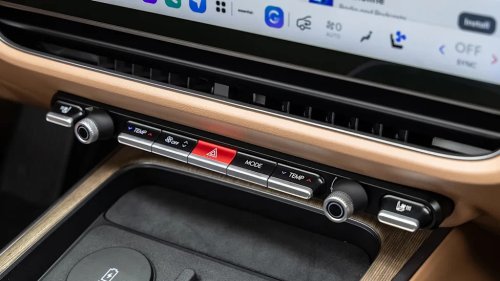
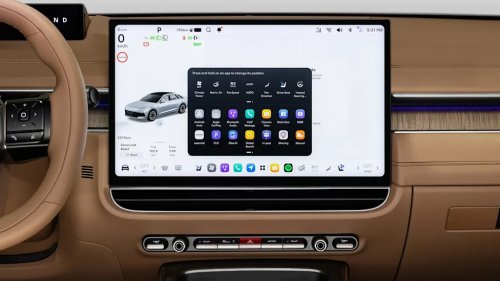

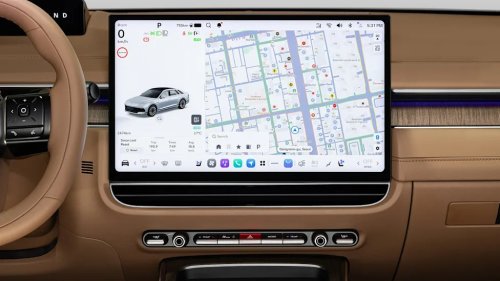
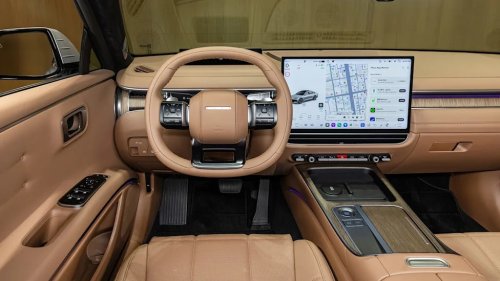
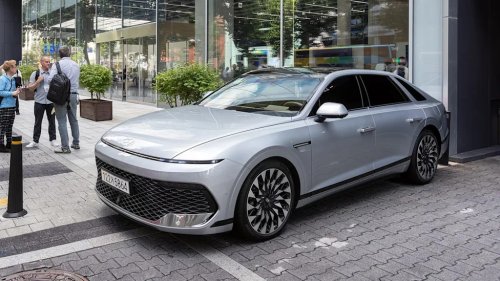
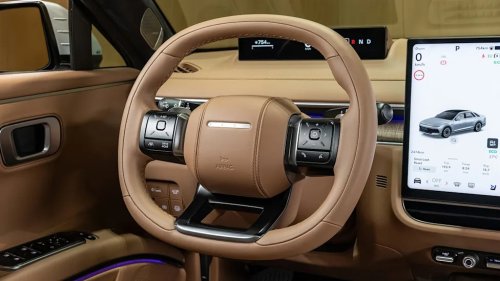
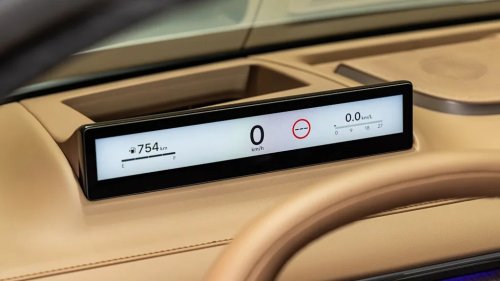
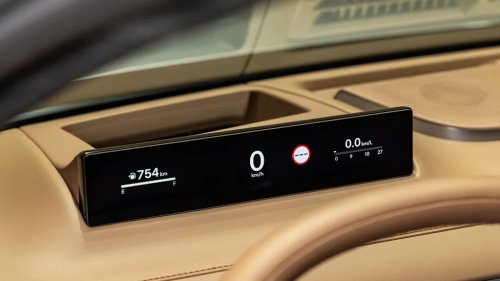
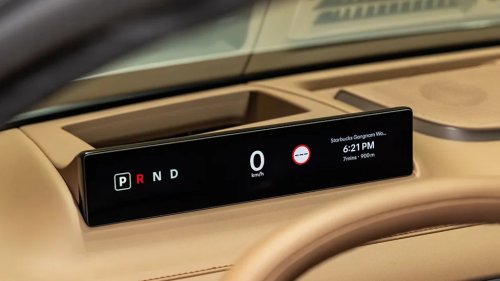
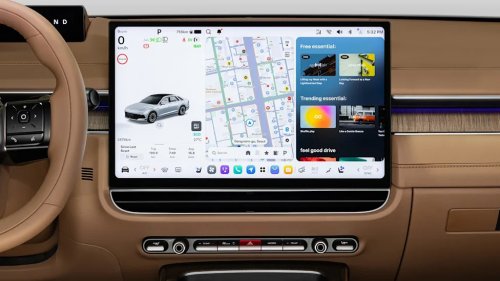
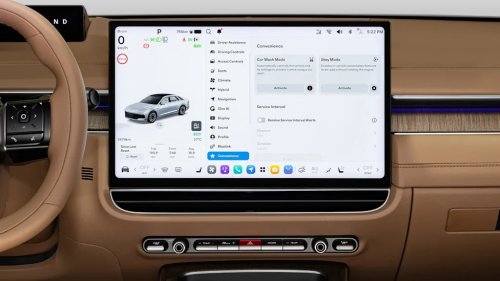
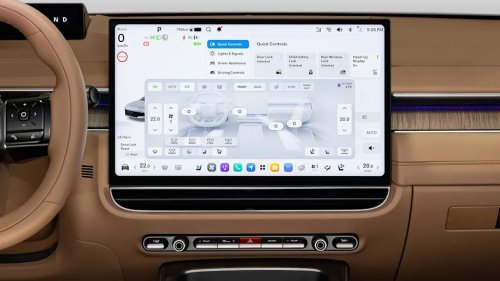
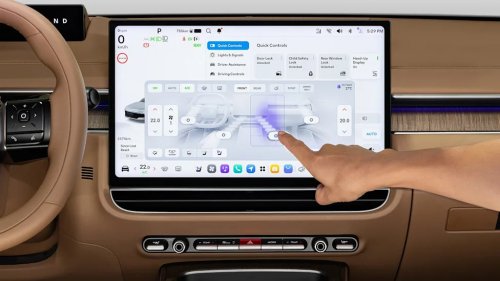
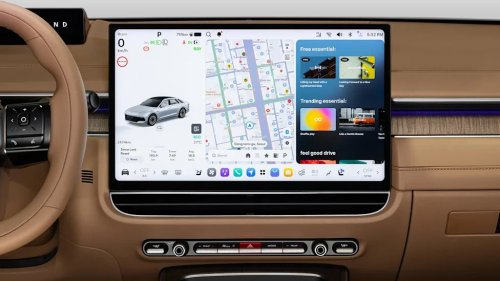
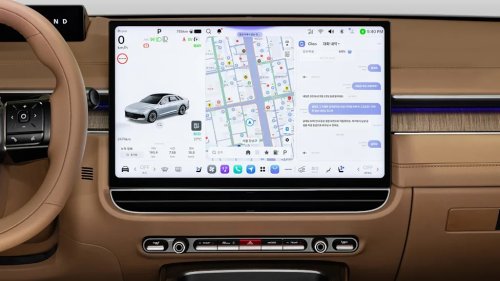
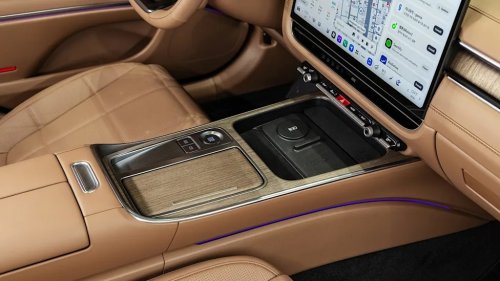
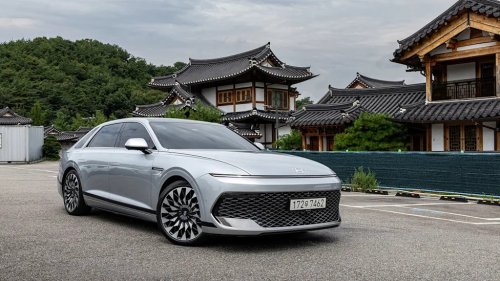
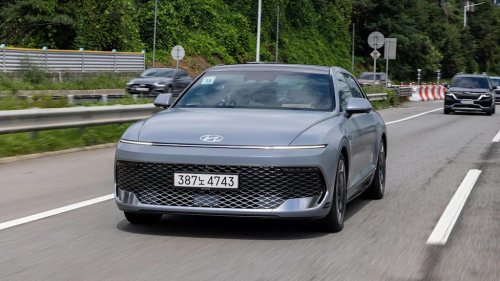
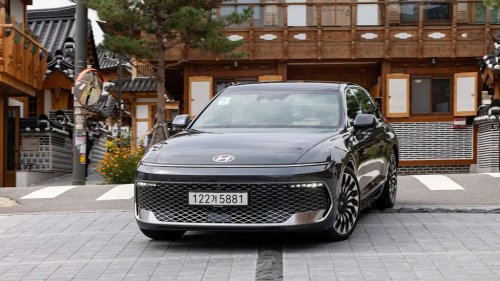



















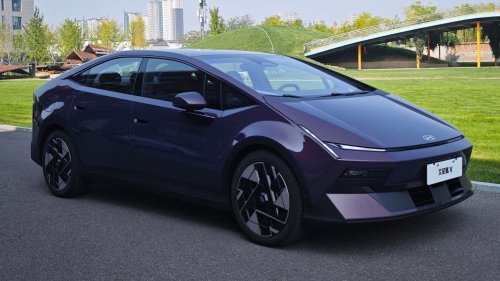

Hands-On Review: Hyundai’s New Pleos Infotainment System Could Set a New Automotive StandardMotorTrendChristian SeabaughWed, September 9, 2026 at 4:00 PM UTCAdd us on GoogleHyundai Pleos Infotainment System TestedHyundaiStartup automakers like Tesla and Rivian built their vehicles around software, replacing dense arrays of buttons and relatively rudimentary infotainment systems with responsive interfaces, phonelike features, and frequent over-the-air updates. Legacy automakers have spent years trying to catch up, but many have simply copied their appearance without mastering the fundamentals: intuitive usability, zonal architecture for full vehicle control, and a steady cadence of meaningful over-the-air updates.Hyundai Motor Group's new Pleos system suggests the gap may finally be closing. Developed by the company's 42dot software team and launched in South Korea in the new Hyundai Grandeur sedan (the car isn't sold in America), Pleos combines a flexible interface, physical controls, third-party app support, and an AI assistant in an attempt to best younger car companies. After trying it out in Seoul, we came away thinking Pleos could become a benchmark not only for Hyundai, Kia, and Genesis, but possibly for the car industry as a whole.HyundaiMeet PleosLooking at Pleos, with its large horizontally arranged center screen and slim driver instrument display, it would be easy to dismiss it as a Rivian or Tesla copycat, but there's a lot more to it than that. Devised in-house and with full control over the software stack, Pleos, according to the company, is designed around intuitiveness, safety, and openness—with a healthy dose of AI thrown in, too. Peeling back the marketing, this means Pleos is supposed to be intuitive to operate, safe to use while driving, and open to third-party applications, much like your phone is.AdvertisementAdvertisementPleos' features work hand in hand with one another to achieve that goal. Each Pleos-equipped Hyundai, Kia, or Genesis will feature a large Tesla-like central display with three main panels and a menu bar. The third of the screen closest to the driver sports relevant information such as speed, engine rpm, driving range, and a view of what the car sees around it. Below this display is a configurable "utility widget" that allows the driver to swipe between trips or tire pressure readouts. The menu bar looks like one you'd find on a Mac computer; it allows you to drag and drop your favorite and most used apps, with recently used apps appearing, as well. The menu icon brings up your apps, the car icon brings settings arranged in a Tesla-like fashion, and you can swipe up to access the HVAC controls.The remaining two panels are multifunctional. They can be split in two (and their positions swapped by a three-fingered gesture) to allow one screen to be dedicated to navigation and the other to Spotify, for example, or expanded into one giant panel—say, if you'd like the map to be larger. Pleos, which, unlike Tesla's and Rivian's systems, is Apple CarPlay- and Android Auto-friendly, also reserves this portion of the display for phone mirroring. Notably, in its present form, you can't split-screen CarPlay with the system's own apps, though that could easily change with an over-the-air update, which we're told will be a regular value added for Hyundai, Genesis, and Kia customers.HyundaiThe 42dot team views hard buttons and redundant displays as a key way to keep drivers' eyes up and on the road. Every Pleos system will feature a bank of buttons below the central display with knobs to adjust the volume or tune the radio, and rocker switches to adjust the air conditioning system for those adverse to swiping up on the display. The steering wheel, which is slightly ovoid in shape to ensure proper sightlines to the road and screens, features redundant controls for media and phone functions, and driver assist systems.Most Pleos-equipped cars, save for those in price-sensitive markets or segments, will feature at least one redundant display in front of the driver. For most vehicles, this will come in the form of a configurable slim digital instrument display where you'd typically find a dashboard, while in others it takes the form of a head-up display. The Grandeur has both. This slim cluster is customizable via the larger central display, and it can display speed, navigation, fuel economy, or media information. The head-up display works similarly, additionally showing an augmented reality view of the road ahead.AdvertisementAdvertisementPleos' open architecture is a boon for the company and designers alike. For the Hyundai Group, it allows designers at Hyundai, Kia, and Genesis to customize graphics to match their vehicles or add unique features, a common criticism of the brands' existing system. We see an example of this at work in the new 2028 Genesis GV90, which features a larger display than what's found in the Grandeurs, a movie theater mode, and the menu bar located on the left side of the display rather than on the bottom.HyundaiFor customers, this will eventually mean a full-featured app store full of third-party apps in their Hyundai, Kia, or Genesis models. 42dot says any app that meets Hyundai Motor Group's safety requirements (meaning it passes multiple cyber security tests, with only specific apps being usable while driving) will be available for owners to download. Initially these apps include YouTube, Spotify, different navigation offerings, and a web browser, but we're told productivity apps such as Zoom and email clients are already in the works. A "Pleos Playground" will provide developers with the APIs and other tools they need to create apps for the operating system.Artificial intelligence also plays a major role in Pleos, via the company's own GPT, named Gleo AI. Gleo is a Hyundai Group–developed AI built on its own large language model that is, at least initially, focused on vehicle features like adjusting temperatures or lowering windows. Very soon, Hyundai said, it will be able to search the web, process multiple commands at once, and manage navigation or answer questions about the vehicle, such as, "Do I have enough range to make it to the next gas station?" When stopped, your conversation with Gleo can even be viewed in a text-message-like thread.Gleo is also intended to be conversational, meaning drivers don't need to remember a specific wakeup word or order of commands, and it's context-aware—for instance, remembering that you might be a vegan and keeping such in mind when recommending restaurants to you, or that last spring you went to view a super bloom and reminding you of the opportunity to do it again the following year.AdvertisementAdvertisementOn the backend, Gleo will also allow Hyundai to figure out customers' usage patterns and thereby adjust features and plan for over-the-air updates around how people truly use Pleos.Hyundai North America reps said there won't be any subscription fees to use Pleos, though some apps, such as Netflix, might require the owner to pay for the in-vehicle hotspot (though that can also easily be avoided by simply pairing Pleos to your phone's hotspot).HyundaiPleos on the RoadPleos just launched this past May on the latest Grandeur, a full-size premium sedan that was called the Hyundai Azera in our market before it was discontinued in 2017, and the company gave us a few hours of driving time to see how it operates in the real world.True to 42dot's promises, Pleos is incredibly intuitive right off the bat. Part of that might be due to the fact that if you've spent any time in a Tesla or Rivian, Pleos works roughly the same way. Menu items are easy to find, the fonts are big and legible, and the screen is snappy and responsive. Multi-touch gestures—long common on smartphones—also work reliably, allowing us to pull up the HVAC controls to adjust the vents, or split the screen into thirds so that the driver can view vehicle information and navigation directions while the passenger can futz with Spotify. Also neat: Signaling a lane change brings up a blind-spot camera view on the Pleos screen, which is easily moved around the display to a spot of your choosing simply by dragging it.HyundaiSpeaking of vehicle information and navigation, we were impressed by how detailed the onboard maps app was in guiding us around an unfamiliar city in an unfamiliar country. Directions were clear and concise, and where the technology was available in local infrastructure, the car told us which "color" of lane to be in, and how long the traffic lights ahead would be red or green.AdvertisementAdvertisementWe also really liked the redundant displays. Although the ovoid steering wheel makes it easy to see the central display, the clear, crisp head-up display worked wonderfully, and we really liked having the adjustability of the driver's display up front. Positioned just at the bottom of our eyeline, we ended up customizing it to show our fuel economy, speed, and turn-by-turn directions.Problems? There are very few at this point. But for starters, the app store's selection is limited, though this makes some sense considering Pleos has only been available for just over three months in a single market. Similarly, we also weren't able to test Gleo AI yet as it only speaks Korean, though that'll be rectified by the time the first Pleos-equipped cars go on sale in the U.S. within the coming year.HyundaiA functioning Gleo might also solve this next criticism: When navigating, we attempted to add a rest stop to our route, but that particular menu was too small and low on the screen for either the driver or passenger to use confidently while on the road. If this menu were slightly larger and movable (or if Gleo spoke English and we could simply ask the car to add a waypoint), this likely wouldn't be an issue. Last, we're not fans of digital HVAC vent controls in general. Hyundai's system—to its credit—does show an accurate "vent range" box as you drag an individual vent control around, but it'll always be quicker and more intuitive to open and close vents manually.Though relatively brief, our initial Pleos experiences have us quite excited for what a fully featured version could mean for American Hyundai, Kia, and Genesis drivers: an intuitive, fully featured system from a 20th century automaker that can stand on its own against those from newer car companies. We won't have to wait too long to see if the Hyundai Group can stick the landing—Pleos is expected on the 2028 Genesis GV90 and the next-generation Hyundai Tucson, Elantra, and updated Santa Fe EREV, all of which should hit our shores by this time next year.Photo credit: HyundaiPhoto credit: HyundaiPhoto credit: HyundaiAdvertisementAdvertisementPhoto credit: HyundaiPhoto credit: HyundaiPhoto credit: HyundaiPhoto credit: HyundaiAdvertisementAdvertisementPhoto credit: HyundaiPhoto credit: HyundaiPhoto credit: HyundaiPhoto credit: HyundaiAdvertisementAdvertisementPhoto credit: HyundaiPhoto credit: HyundaiPhoto credit: HyundaiPhoto credit: HyundaiAdvertisementAdvertisementPhoto credit: HyundaiPhoto credit: HyundaiPhoto credit: HyundaiPhoto credit: HyundaiAdvertisementAdvertisementPhoto credit: HyundaiPhoto credit: HyundaiPhoto credit: HyundaiPhoto credit: Hyundai