Lear Corp. is preparing a highly automated factory in Michigan that executives say will serve as a “blueprint” for its global manufacturing process and has already helped the supplier win major contracts.
The company’s latest just-in-time seating plant will supply a new General Motors pickup and SUV factory north of Detroit and uses automation to reduce conversion cost requirements by 10 to 15 percent, Lear said on its third-quarter earnings call Oct. 30.
CEO Ray Scott said the 350,000-square-foot seating plant, scheduled to launch in early 2027, is the culmination of more than a decade of building up automation capabilities largely through acquisitions.
CategoryFROM OUR DATA CENTER
Current and historical data on manufacturing, including North America car and truck production by model and plant, manufacturing downtime and plant directories
Image
“We have been building towards this facility, which integrates the technology and talent we have compiled through our targeted acquisitions and significant internal development to deliver something that, quite frankly, doesn’t exist in the seating world outside of Lear,” Scott said on a call with investment analysts.
The company has touted its work toward “lights-out manufacturing” as a solution to the high costs and, at times, scarcity of human labor. It’s especially compelling to automakers under pressure from high tariffs to bring manufacturing back to the U.S., itself a costly proposition.
Sign up for Automotive News breaking news alerts and be the first to know when big news happens.
Lear offers details on plant automation
Lear executives invited customers and stock analysts to see the automation firsthand, but the company has not allowed media inside. Scott pulled back the curtain on some of the details during the earnings call. He said automation at the plant will include:
- Intelligent intralogistics: “the connected intelligence layer of the entire factory. It ties together inventory, material management, storage, and real-time decision-making from the moment a component arrives at our dock to the moment a finished seat leaves our facility.”
- Automated storage retrieval system: “Our 4D four-directional storage system utilizes autonomous mobile robots, or AMRs, that navigate dynamically within the racking structure itself to optimize in real time based on production demand. Our raw component automated storage and retrieval systems, or ASRS, manage foam and trim storage, while our finished goods ASRS are both continuously informed by analytics and anticipating needs before they become disruptions.”
- Smart ovens and robotic finesse
- Cycle time deviation and dynamic line scheduling
- Automated end-of-line testing and AI vision inspection
- Guided vehicles and overhead conveyors
The plant in Auburn Hills, Mich., which will feed seats to GM’s Orion Assembly Plant nearby, comes with an $87 million investment and creates up to 460 new jobs, the company disclosed this year in city planning documents.
Scott said the automation will free up workers to focus on “value-added adjustments.”
Work at plants shifted
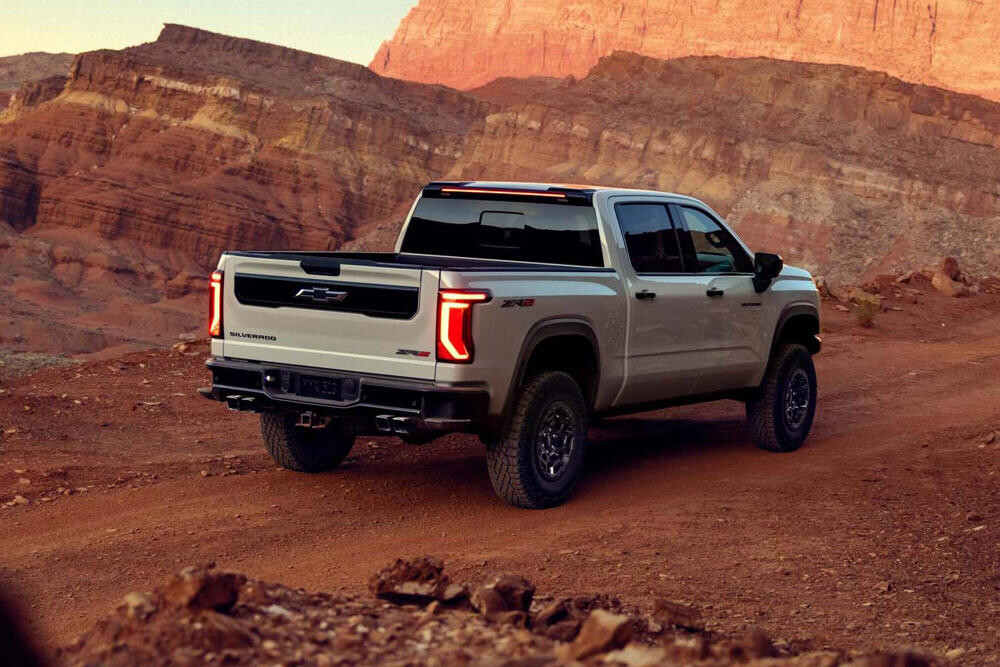
Lear’s plant is being built out in a former Dana Corp. electric vehicle parts plant doomed by lack of production and EV demand. GM originally planned to build electric trucks at its Orion plant before pivoting to the gasoline-powered Chevrolet Silverado, GMC Sierra and Escalade SUV to better match the market.
The switch caused a massive shakeup of the supply base built around the plant, with some parts makers losing business and big investments. For instance, Magna won the contract to supply seats when it was an EV plant, but Lear took over the business when GM changed course.
Scott said sophisticated automation helped seal the deal with GM as well as with Ford Motor Co. on Super Duty seating, which Lear took over from Forvia.
“Orion is the blueprint we intend to scale across our global seating footprint to support our future key programs, such as the Ford Super Duty,” he said. “The factory increasingly runs itself … interconnectedness is what is new at Orion.”