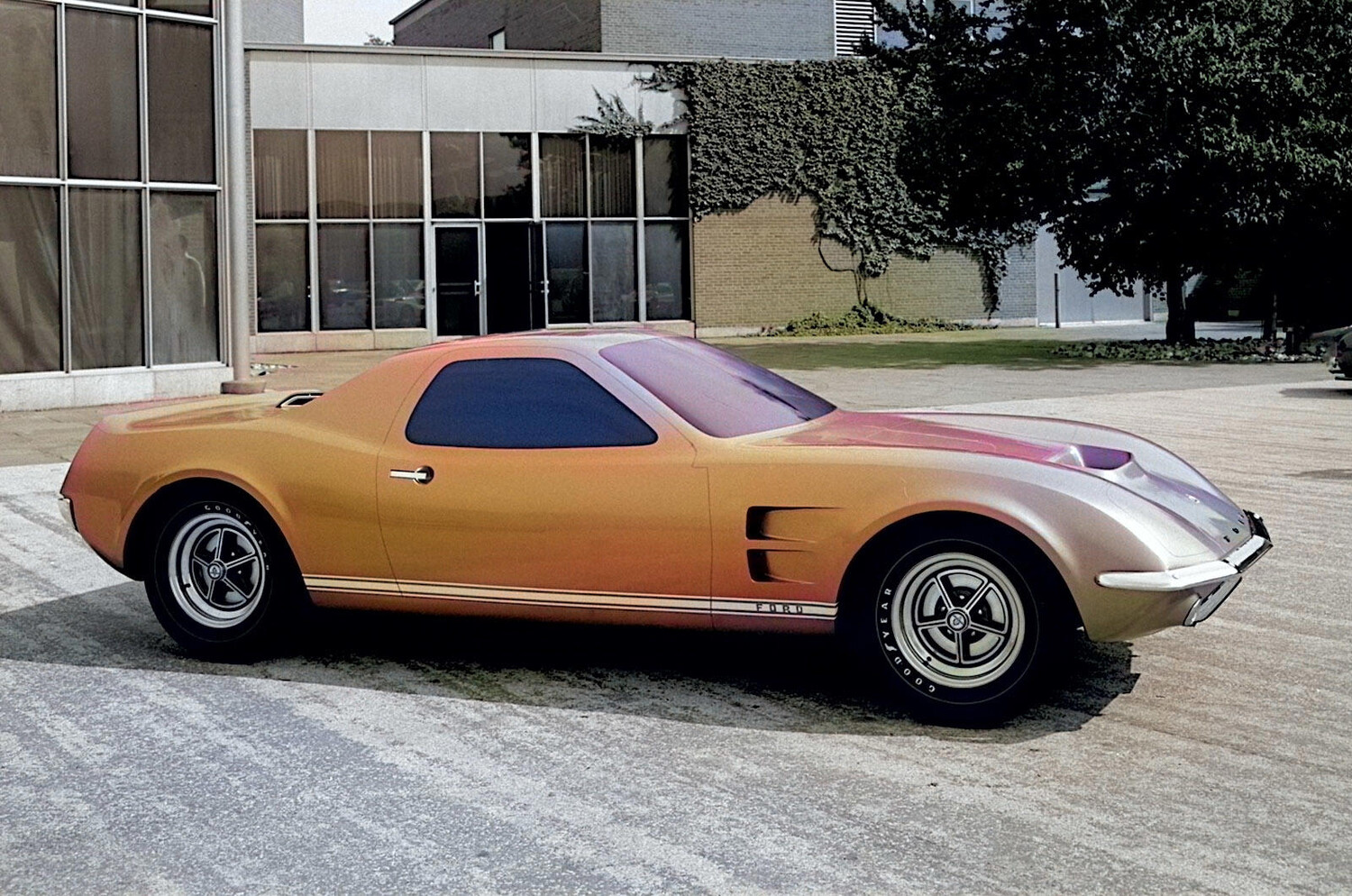
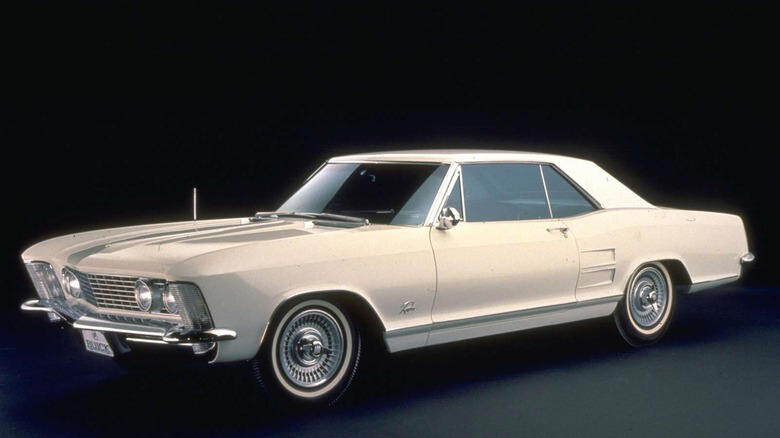
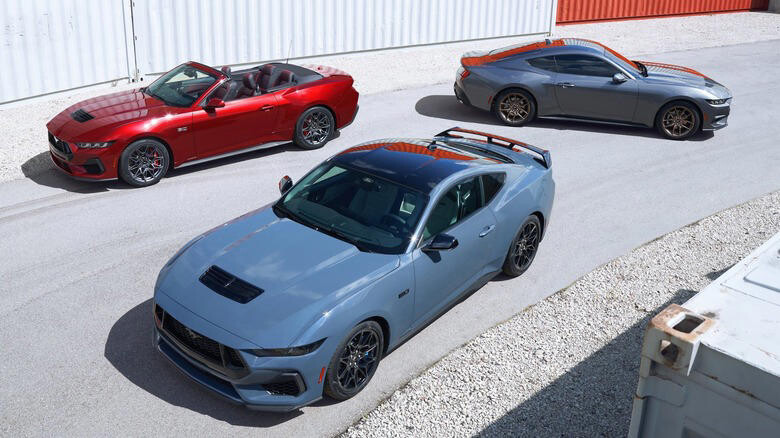
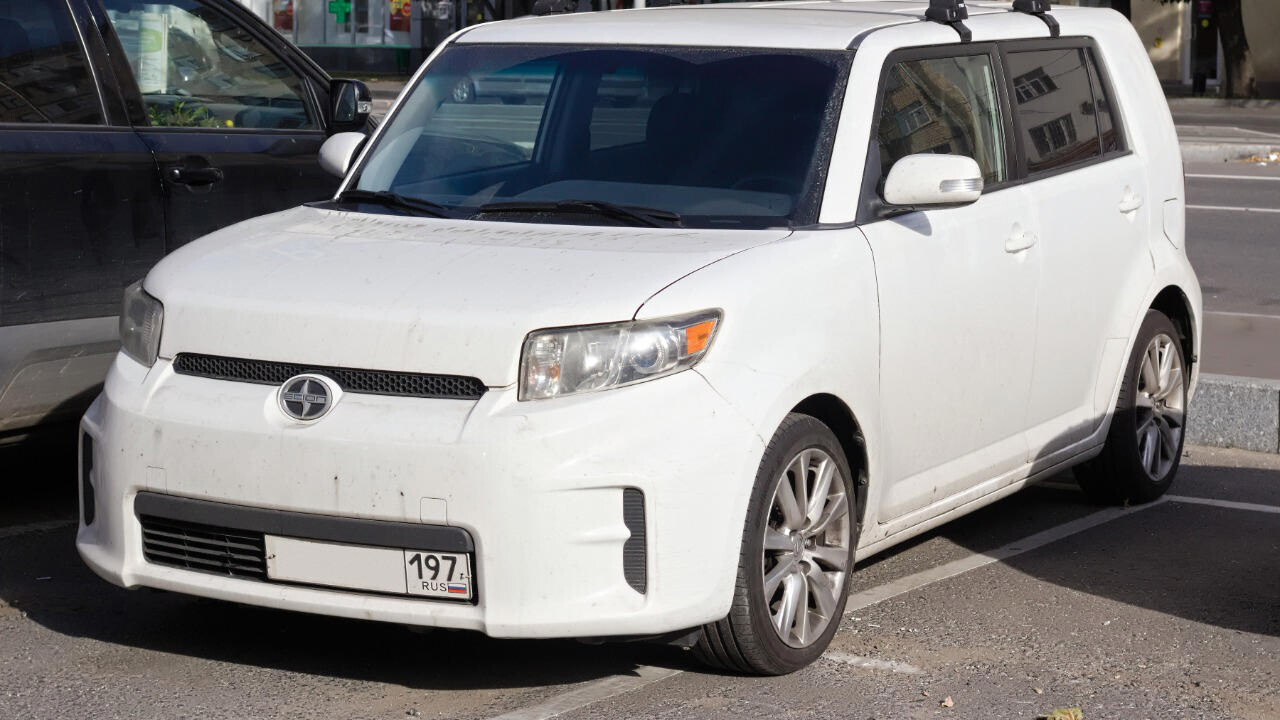
Back in March of 2025, Ford gave us a first look at its newly curated Heritage Fleet—a collection of key vehicles from Ford's history maintained in such a way as to serve as useful resources for helping Ford's brands tell their stories and for helping development engineers understand historical context of the products they're developing. That first look was in a dingy parking garage at the old Glass House headquarters, but it's recently moved into a former Amazon fulfillment center dubbed the Ford Vault, a space large enough to fully showcase the collection. Ford is still working through the permits and paperwork that will eventually allow visits from the public. While we wait for that to happen, here are some highlights of what's currently on display. The Mustang pickup of our dreams.Frank Markus - MotorTrend Mustang Ute Concept This "concept" was a training exercise, carried out by Ford's Experimental Vehicle Building Metal Shop to train apprentices in the finer points of concept-car construction techniques. The bed floor is a Ranger part, and original Mustang decklid sheetmetal is incorporated into the tailgate. The exact donor car isn't specified, but from the doors forward it appears to be a sixth-gen Mustang Shelby GT350. The had never been displayed before October 2026. Ford's AC Cobra–based Corvette-killer concept.MotorTrend 1963 Ford Cougar II Concept Back at the beginning of Ford's relationship with Carroll Shelby and AC Cars, it toyed with building a Corvette-killer based on the AC Cobra platform. Toward that end, chassis number CSX2008, with a 260 V-8 and four-speed manual was rebodied in this fetching fiberglass skin and dubbed Cougar II. Its stainless center roof section was removable, and the body featured pressure-relief gates that would open if cabin pressure exceeded 15psi above atmospheric. The stainless targa roof was removable.MotorTrend Penned by Ford VP of styling Eugene Bordinat and McKinley Thompson Jr., the car was displayed as part of Ford's X-Car group at events like the New York World's Fair and the Chicago Auto Show, but was ultimately determined to be too expensive for production. Apparently, the concept's footbox ended up too close to the engine, rendering the concept undrivable. But it did become a popular 1:25-scale model kit. This car is on loan from the Detroit Historical Society. The Convertible version of the Cougar II, a.k.a. the Bordinat Cobra.MotorTrend 1963 Ford XD Cobra Concept This convertible version of the proposed Corvette-killer was built on chassis number CSX3001, which was designated a big-block car but was shipped without an engine. Known as the Bordinat Cobra, this one was developed by Ford's Corporate Projects Design Office as a product demonstrator for lightweight Royalex, a thermoformed ABS plastic bodywork developed by Uniroyal. Evidently the intended 427 was supplanted by a hi-po 289 and automatic transmission powertrain early on in its life. Dig the Riviera taillamps.MotorTrend This one, though never licensed for road use, was driven extensively by Mr. Bordinat within the Dearborn Proving Grounds. It apparently had a novel three-piece zippered roof that could be detached and stowed neatly inside the rear deck area. Note that, for the sake of expediency, the taillamps are Buick Riviera units, flipped upside down from their original orientation. These Broncos were never meant for public consumption, but they helped make the current Bronco happen.Frank Markus - MotorTrend Sixth-Gen Bronco Design Bucks Pursuant to the Ford Heritage Vault's mission of storytelling, the "Cutting Edge Design" story area includes these two properties, which were obviously never meant for public consumption. The Red "armature" model helped seal the deal to produce the sixth-gen Bronco with upper-level management. Meanwhile, properties like the Styrofoam buck simply serve as an expedient, low-cost way to assess proportions. The roll bars are simple PVC plumbing pipe. Other Broncos on hand in the Vault are the 2004 concept and the final, nearly production-ready two-door Bronco concept, along with a Bill Stroppe Baja 1000 veteran from back in the day. Paint it black and start filming The Car 2.MotorTrend Lincoln L 100 Concept This celebration of the brand's centenary in 2022 managed to escape our notice, being quietly unveiled at Pebble Beach that year. The fully autonomous dream car featured a cinema floor onto which ambient lighting, ocean waves, poppy fields, and more could be projected. The wheels featured illuminated aero covers, but something went badly wrong with the whole wheel system, so it's on these 24-inch-ish "training wheels." Dimensions were never shared, but it seemed 7 feet wide and looks tailor-made for a modern reboot of the horror movie The Car. Sad eyes, happy fuel economy: target was between 72-80 mpg from diesel hybrid.Frank Markus - MotorTrend 2000 Ford Prodigy Concept Ah, cheer up, little concept! This car's face makes it look like it's forcing a smile through sadness, perhaps reflecting its development team's sentiment while working to deliver an 80-mpg car for our government's Partnership for a New Generation of Vehicles (PNGV). An all-aluminum body and engine dropped mass under 2,400 pounds and motivation came from a DIATA (direct-injection aluminum through-bolt assembly) diesel-electric hybrid powertrain. It was displayed at the 2000 Detroit Auto Show along with competitor diesel-hybrid PNGV projects, the GM Precept and Dodge Intrepid ESX3. We'd love any intel on these two on the left. That's the Ford GloCar on the right.MotorTrend Scale Model Head-Scratcher Concepts Nobody on hand at the Ford Heritage Vault could offer any explanation for the bizarre greenhouse designs on two scale models of Lincoln concepts, other than to note that David Woodhouse was likely calling the shots at Lincoln design at the time (he's now at McLaren). Even our inquiries with ChatGPT were at a loss, suggesting maybe they had something to do with Lincoln's Quiet Flight 2040 project in conjunction with ArtCenter College of Design, but that seems unlikely. The Ford GloCar concept from 2003 was built for a show at the Cooper-Hewitt National Design Museum's Inside Design Now exhibition. It featured translucent light-up body panels. Now that computer modeling has gotten so good, small-scale physical models like this are less frequently produced during the design process. Mary Richards' season-three finale car.MotorTrend Mary Tyler Moore Mustang Yes, the gal who could "turn the world on with her smile" drove this very car, a veteran of Ford's Minnesota press fleet back in 1973. You may recall her driving a white coupe in the opening credits, but during the finale of season three, she updated to this snazzier blue number. The car was sold in 1974 and remained in private ownership until 2025. This was the first "official" purchase made for the Heritage Fleet. The fetching, V-8-powered Lincoln Miata-fighter that never was.Frank Markus - MotorTrend 1995 Lincoln L2K Concept Of all the woulda-coulda-shoulda cars in the Vault, this one is a real heartstring-puller. Originally conceived as a two-seat Mercury when the design process began in 1992, the brief changed to make it a Lincoln a year later. The running model was built on Miata running gear, but motivation came from a 3.4-liter 250-hp DOHC 32-valve V-8 (that would end up in the 1996 Taurus SHO) mounted to a C-6 automatic transmission and mounted longitudinally. Frank Markus - MotorTrend Can you just imagine how spry that little two seater would be with that V-8 burble under the hood? It was a fetching car that took the '95 L.A. Auto Show by storm, getting better design reviews than the Mercedes-Benz SLK concept displayed elsewhere on the auto show floor that year. Might this have tempted a Scion xB buyer?Frank Markus - MotorTrend 2005 Ford SYNus Concept We're not supposed to say "sinus," rather, it's pronounced "sinuous"—though there seems nothing sinuous about the look of this bank vault on wheels. The original working title was "Armadillo"—tough on the outside, soft on the inside, but Fiat owned that name. Ford Knox and Gorilla were also considered for this obvious response to cars like the Scion xB, Honda Element, and Nissan Cube. In the end, the name sought to evoke "synthesis" (of tough exterior and soft interior) with an "urban sanctuary," or SYNus. It made its debut at the 2005 North American International Auto Show in Detroit.

 Liked by Camille Tremblay, Victoria Mitchell




 Liked by Camille Tremblay, Victoria Mitchell