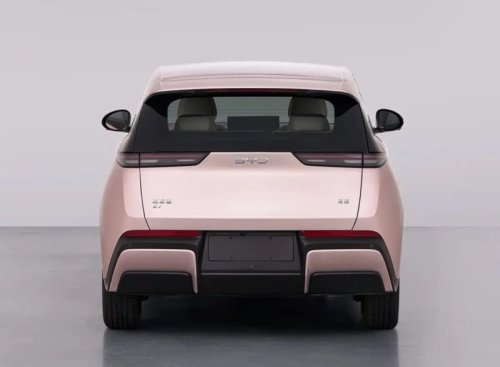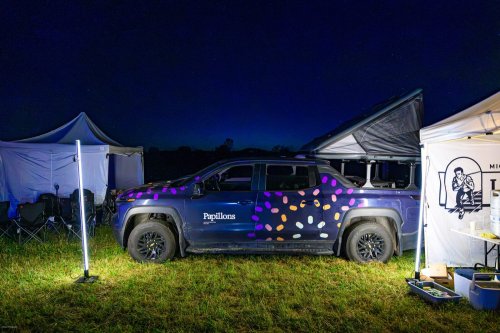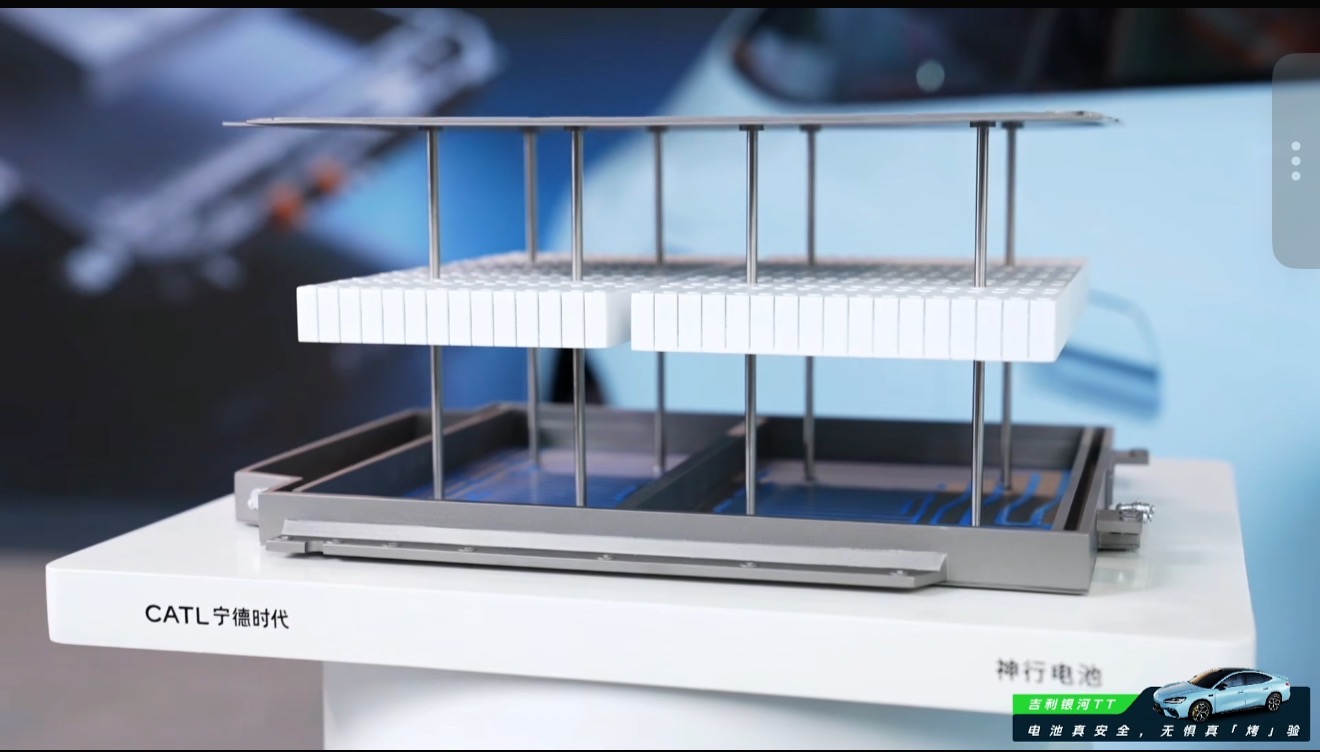




















Gasgoo Munich-Not long ago, Geely Galaxy TT teamed up with CATL and China Merchants Automotive Test Engineering to do something no one in the industry had done before:They had the chief battery engineer sit inside the passenger cabin. Under real-world conditions—with a live occupant inside a real vehicle—he witnessed the entire process of a single-cell thermal runaway.Test parameters pushed well beyond national standards: a 40°C high-temperature environment, a 96% state of charge (SOC), and thermal runaway triggered directly from within the cell.The result: no fire, no explosion, no smoke—and the occupant inside felt nothing.This is no isolated incident.A look at EV news over the past two years reveals an escalating arms race in thermal runaway testing: nail penetration, heating, gunfire, open flames, water immersion, high-altitude drops, and underbody impacts...Every automaker is hunting for ever more brutal, extreme testing methods to prove their batteries are safer.Why is this happening?At the 2026 World Power Battery Conference, Ouyang Minggao, an academician at the Chinese Academy of Sciences, offered a clear verdict: power battery safety is shifting from "single-point safety" to "full-process safety."As testing grows more extreme, the real question may not be whose test is tougher, but whose safety system is more comprehensive.Why Are Thermal Runaway Tests Getting So Extreme?Geely Galaxy TT’s recent test took "brutal" to the limit.In past thermal runaway tests—whether nail penetration or heating—technicians always observed from a safe distance.By having the chief engineer sit inside, Geely Galaxy TT effectively bet a human life on the test passing.More critical are the conditions: 40°C heat and a 96% charge. That is far harsher than the national standard’s requirement for normal temperatures and low SOC. The trigger method wasn't a theatrical fire under the chassis, either; it was direct internal heating to induce thermal runaway—closer to a real internal short-circuit scenario.The result: "No fire, no explosion, no smoke."Many models can manage the first two, but "no smoke" is a much higher bar. High-temperature toxic fumes from thermal runaway can fill a cabin in seconds, blinding and suffocating occupants. National standards only require no fire or explosion—smoke is often ignored. In many cars, the battery doesn't burn, but the passengers are trapped by smoke.Geely Galaxy TT isn't the first to push testing boundaries.Image Source: Geely GalaxyOver the past two years, battery safety testing has turned into an arms race: some drop battery packs from high altitudes, others shoot them at close range, roast them in open flames, or submerge entire vehicles.Chery’s Fengyun A9 even created a "six gates of hell" sequence—subjecting the battery pack to bottom penetration only after it had been thoroughly battered.The direct driver of this intense competition is the "strictest battery mandate ever," which takes effect on July 1, 2026: the mandatory national standard Safety Requirements for Power Batteries for Electric Vehicles (GB 38031-2025).The old standard required only an alarm signal within five minutes of thermal runaway to allow for escape. The new standard demands "no fire, no explosion" and that smoke not harm occupants. Trigger methods have expanded beyond external heating and nail penetration to include internal heating. Nail penetration speed has been tightened to 0.1–1mm/s, better simulating real short circuits.The new standard also introduces underbody impact testing for the first time: a 30mm steel ball striking the pack bottom with 150J of energy must result in no leakage, fire, or explosion. This addresses the real-world pain point of road debris causing spontaneous combustion. For fast-charging batteries, an external short-circuit test is required after 300 fast-charge cycles—still with no fire or explosion allowed.As "no fire, no explosion" shifts from corporate marketing to a mandatory baseline, automakers must prove they exceed national standards.Increasingly extreme testing methods are essentially a hunt for differentiated safety selling points above the new standard.And consumer anxiety over fire-related news makes "tougher tests" the most direct source of reassurance.One notable shift is that battery safety testing is moving from "corporate self-talk" to "third-party authoritative endorsement" as the new standard rolls out.Geely Galaxy TT’s test was executed by China Merchants Automotive Test Engineering. It passed the China Electric Vehicle Fire Safety Index Thermal Diffusion Protection Performance Test Evaluation Protocol 2026 Edition, earning a five-star rating. Involving a third party boosts credibility, signaling that self-directed "stunt tests" are being replaced by more standardized evaluation systems.Does Tougher Testing Mean Safer Batteries?A question worth asking: Does a more extreme test method actually represent a safer battery?The answer isn't simple."Violent tests" like gunfire, fire, and high-altitude drops have strong visual impact, but their relevance to real-world driving is dubious. The odds of a battery being hit by a bullet, engulfed in flames, or falling from the sky during daily driving are vanishingly low.These tests are largely marketing stunts to demonstrate confidence, not engineering validations of safety.True safety protection lies in multi-layer design from cell to system, not in "passing" a single extreme test.The nail penetration test recommended by national standards became an industry norm because it stably simulates internal short circuits—the most common trigger for thermal runaway. But it has limits: tiny variations in position, speed, and depth can alter the result.That is why the new standard added internal heating as a trigger—it is closer to real internal cell failure modes.Truly valuable "above-standard" tests are those that mirror real-world scenarios: bottom impact for road debris, short circuits after fast-charging cycles for aging risks, and thermal diffusion at high temperatures and full charge for extreme summer conditions.Geely Galaxy TT chose 40°C heat, 96% charge, and internal heating precisely because the combination of these three factors approximates the worst-case scenario a user might face.And "no smoke"—a detail often overlooked—holds the most practical significance.Smoke from thermal runaway contains toxic substances like hydrogen fluoride and carbon monoxide, which are the primary causes of casualties in real fires.Image Source: Fudi BatteryNational standards only demand "no fire, no explosion," with no quantitative requirement for smoke. By making "no smoke" a test target, Geely Galaxy TT actively raised the safety bar from "no burning" to "no harm."A deeper issue remains: passing a single test does not guarantee safety over a full lifecycle.A battery that passes a nail penetration test when new may not pass after three years of use or 300 fast charges.The new standard’s requirement for a short-circuit test after 300 fast-charge cycles targets this pain point. But what happens after 300? What about 500 or 1,000 cycles?Furthermore, transparency in test conditions varies widely.Some companies release full parameters—temperature, SOC, trigger method, duration. Others only release a polished video, omitting key data. Even under the same "nail penetration test," using a 3mm needle versus a 6mm one, or varying depth and temperature, can yield vastly different results.For consumers, understanding test conditions matters more than seeing the words "challenge succeeded." This is the limitation of such "eclectic" tests: they prove safety at "a specific moment and under specific conditions," whereas users need safety "throughout the entire usage cycle."From "Single-Point Testing" to "Full-Process Safety": The Next Frontier for Battery SafetyAt the 2026 World Power Battery Conference, Ouyang Minggao listed "full-process battery safety" as the top of three major trends in the power battery industry.His assessment: power battery safety is not just a single-cell issue. It must cover the entire usage process and extend further to materials and other levels.Specifically, "full-process safety" has three dimensions: full-chain prevention and control from trigger to occurrence to spread of thermal runaway; full-level protection from materials to cells to systems to whole vehicles; and full lifecycle management from design to manufacturing to usage.This means battery safety is shifting from single-point tests asking "can it survive a problem?" to systematic capabilities asking "can it prevent problems, control them if they occur, and stop them from spreading?"Image Source: CATLCATL’s NP3.0 thermal runaway protection technology exemplifies this systematic approach.It doesn't rely on a single layer of "black technology" but on multi-layer stacking: at the cell level, more stable materials and electrolyte formulas; at the module level, thermal insulation to block heat spread; at the system level, pressure relief channels to vent high-temperature gas; and at the vehicle level, BMS real-time monitoring of every cell’s voltage and temperature to warn before anomalies occur. Geely Galaxy TT achieved "no smoke" not through a single breakthrough, but through the synergy of this multi-layer protection system.It is not just CATL; battery makers and automakers alike are building their own safety systems.BYD’s Blade Battery enhances safety through structural innovation; GAC Aion’s Magazine Battery uses thermal insulation compartments; Great Wall Motor’s Dayu Battery focuses on guiding and controlling thermal runaway. Though technical routes differ, the core idea is the same: moving from single-point protection to multi-layer coordination.The second trend Ouyang mentioned, "AI empowerment across the entire industrial chain," is also converging with safety.By analyzing massive operational data, AI can predict cell health and potential risks, issuing warnings hundreds of hours before thermal runaway occurs—shifting from "passive protection" to "active prediction." Full-process safety also implies an upgrade in standards.Current national standards focus mainly on manufacturing and testing. Yet safety during usage—charging habits, aging and degradation, damage assessment after accidents—still lacks unified evaluation criteria.Ouyang emphasized that eliminating societal anxiety over lithium battery safety requires continuous effort across design, manufacturing, and usage. It is not just a technical issue, but one of standards and management.The direction is clear: future competition in battery safety will not be about whose tests are tougher or more eye-catching, but whose safety systems are more complete, predictable, and lifecycle-covering.When a full-process safety system is truly established, perhaps a chief engineer won't need to sit in a car to prove safety—because safety will have been designed into every link.Returning to Geely Galaxy TT’s live occupant test. The moment the chief engineer sat in the car, the signal was clear: regarding battery safety, enterprises must have the confidence to "put themselves on the line."But more important than confidence is translating that confidence into safety capabilities covering the entire process of design, manufacturing, and usage.Increasingly extreme testing is a sign of industry progress. But true safety isn't found in the thrill of test videos; it's found in the "imperceptibility" of every charge, every drive, and every hot summer day.As "no fire, no explosion" becomes the baseline, "no smoke, no alarms, no worry" is the next goal for battery safety.