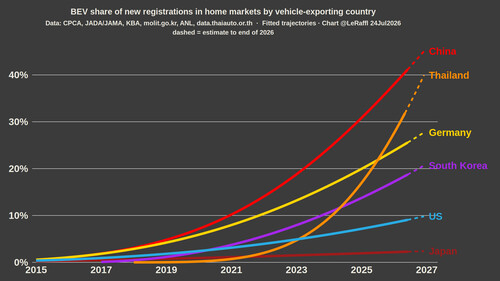
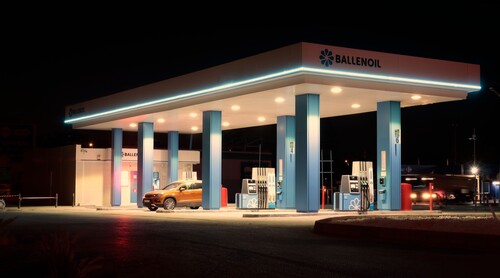
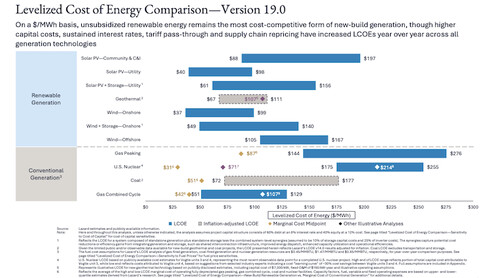
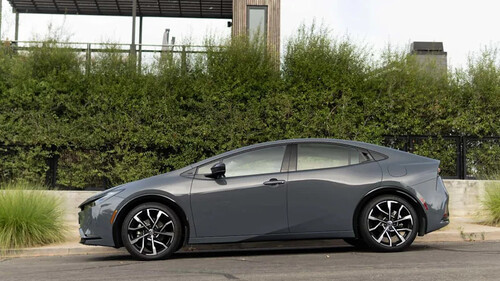
In 1943, psychologist Abraham Maslow came up with the idea that there is a hierarchy of needs which defines most human activity. It is far more important to be able to breathe, eat, drink, and sleep than it is to drive a Ferrari, for instance. To promote his idea, he used a triangle (pie charts had not yet been invented, apparently). The triangle was divided into five levels, each representing a subset of needs. Later, a sixth level was added — transcendence — a very Zen-like concept in which a person focuses on spirituality and altruism. The Financial Times conducted a global inventory of how a lack of access to fuel is affecting local economies. It concluded that, “High fuel prices and shortages force consumers to buy fewer goods. Businesses invest less and governments conserve scarce resources, causing economies to experience weaker growth. The enduring disruption of an energy shock can trigger the destruction of demand, driving economies towards stagnation and recession.” That is a snapshot of fuel shortages at the macro level. At the micro level, things are far worse. In Thailand, farmers report they can’t find diesel to keep the pumps that irrigate rice paddies running. The World Food Program has warned that food production costs in Myanmar could double compared with last year’s harvest as fertilizer prices soar. Bodies are piling up at temples in Thailand because there is not enough fuel to operate crematoriums. Sohel Sarker, a ride-sharing biker in Dhaka, said, “I used to do 15 trips a day. Now I spend hours just looking for a pump that’s open, and sometimes I go home empty. I don’t know from one day to the next whether I’ll find fuel.” No fuel means no income for him and his family. Teerayut Ruenrerng owns a mobile grocery truck. He said, “At about midday, I return home from my morning selling session. I’ll pass three gas stations on the way and stop at each one. Sometimes I can get fuel, sometimes I can’t. At lunchtime I take a break, and sleep for about an hour. I start work at midnight. If I’m able to fill up a full tank, I can relax because I know I don’t need to search for gas for at least three days and it’s guaranteed I can go out and sell. But if I can’t find any, I start to get stressed and panic about what I’ll do if I can’t get fuel.” A warehouse worker in Delhi said, “As I get ready for work, my eyes keep returning to the gas stove. I last ate yesterday afternoon, some lentils with chapatis. It has been more than a day. I am very hungry, but there is only enough gas left for four or five meals. I hold back, saving it for worse days. There are a couple of cucumbers and tomatoes. I will cut them, add salt, and eat that, and save one more day.” The Hierarchy Of Needs According to Wikipedia, Maslow defined the five levels of need as follows: Basic needs. These include things such as breathing, food, water, shelter, clothing, and sleep. Safety needs. This includes feeling physically and psychologically safe in our environment. Part of it involves emotional safety and well being. It includes employment and resources, as well as feeling healthy and knowing you have access to health services. It includes feeling that you have enough money and supplies to keep you alive and well. Social belonging. People need to feel love and they need to feel that they belong in society. Partners could include husbands, wives, girlfriends, boyfriends, or other spouses. It can also include co-workers joining a club or regular activity. It includes feeling a sense of belonging. Self-esteem. To have esteem, you need to be confident in yourself. Also, you feel like others think that you are important. It can also include feelings of self-respect, confidence, and feeling valued by others. Self-actualization. This level is about a person having the opportunity to use their talent, and a chance to go where those talents might lead. The sixth level Maslow called Transcendence, which involves giving to something beyond oneself. It includes the ideas of altruism and spirituality. What does any of this have to do with fossil fuels? So glad you asked. In his latest post on Substack, Bill McKibben highlighted the many ways the interruption in the supply of oil and LNG due to the closure of the Strait of Hormuz has has altered the way people view renewable energy. Previously, solar and wind, hydro and biomass were seen as nice to have — things that we could aspire to but live without if they were too costly or otherwise unavailable. Those sorts of things would be in the third or fourth tier of Maslow’s hierarchy. Fossil fuels were solidly in the second tier because they were considered essential to our basic security. That was before a crazed lunatic altered the calculus. Now renewables are the adults in the room, able to meet our energy needs reliably and economically, while fossil fuels are no longer considered reliable. Of course, readers of a certain age will realize we have been down this road before, beginning with the OPEC embargoes in the 1970s. How many times must we watch the same movie before we understand what the outcome will be? Solar Is Cost Competitive From The Start Credit: Ember The difference today is there are renewable energy options available that are reliable and cost competitive with fossil fuels — and significantly cheaper than nuclear. By contrast, fossil fuels are more expensive and have proven to no longer be reliable. We have previously highlighted the clean energy revolution in Pakistan, which has fully embraced inexpensive solar panels from China. McKibben quotes one Pakistani farmer who said that, thanks to solar panels, he can now irrigate his fields with clean, local generated electricity instead of a diesel-powered pump. “Now, I don’t care if the prices of diesel increase,” he says, proudly pointing to the sun above. “As long as there is this sun, I can grow my watermelons.” For that farmer, fossil fuels are no longer part of his hierarchy of needs. He can ignore them, at least as long as there is a sun in the sky. Now solar is in his hierarchy of needs and will likely stay there because of its low cost and reliability. Saving The Planet No Longer Just For Tree-Huggers Photo by Carolyn Fortuna/CleanTechnica For decades, renewables and electric cars were seen as virtue signaling, like Al Gore driving a Prius. Nobody really cared a flying fig leaf about exhaust emissions, but some did understand the difference between a car that gets 20 mpg and one that gets 40+ mpg. They felt it in the wallets, which is where Level Two needs are found in Maslow’s hierarchy. Because of the mental instability of one man — albeit a very powerful person — people’s perceptions have been altered, possibly permanently. Climate defenders have always had to justify their embrace of clean energy and EVs on the basis of “it’s good for the environment,” but if you are struggling to pay your bills, doing the right thing may simply not be an option. Now that oil and methane are no longer reliable and cost more than solar, the calculus has changed — hopefully permanently. Now we no longer need to focus on Level Four justifications for climate friendly policies. Everyone understands the allure of low prices. The self inflicted tragedy of the war on Iran is forcing people all around the globe to reassess their needs and many are finding renewable fill those needs quite nicely while fossil fuels do not. We stand on the brink of a major shift in thinking. The fossil fuel companies paid dearly to get the Jackass in Chief elected, thinking it would be good for business. Now the chickens have come home to roost and they find they may have planted the seeds of their own destruction. Their demise cannot come a moment too soon.