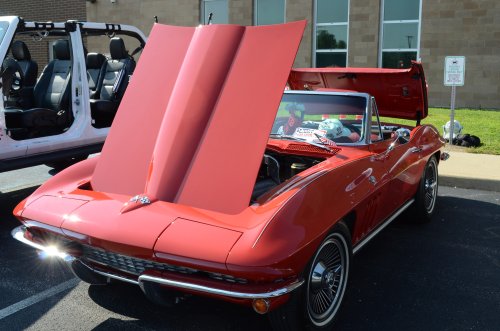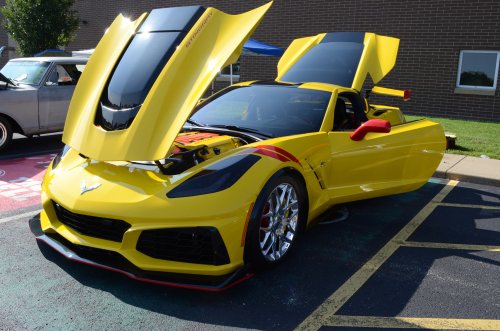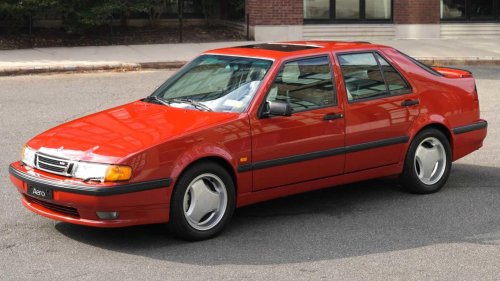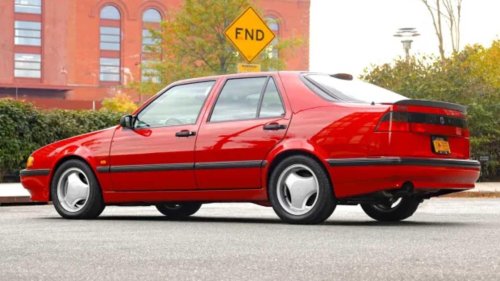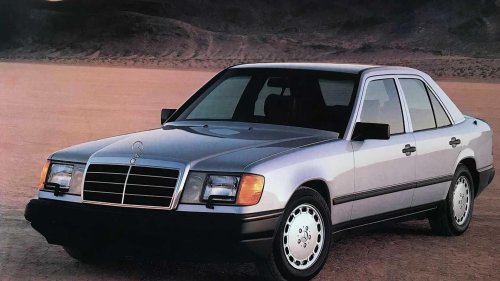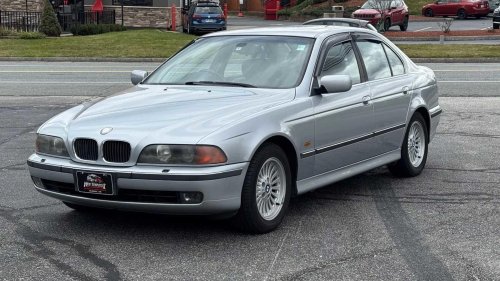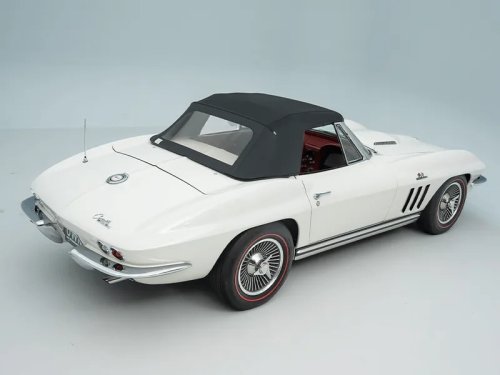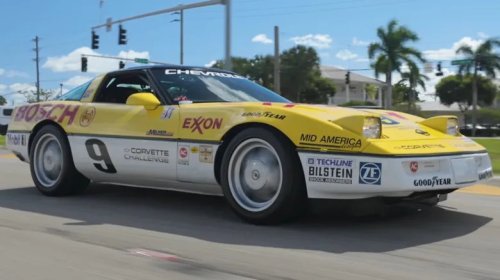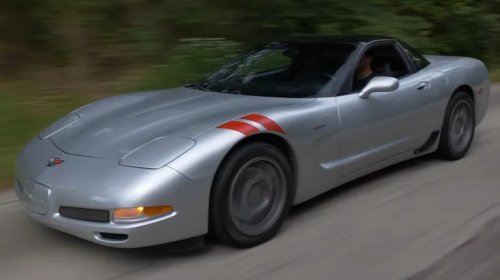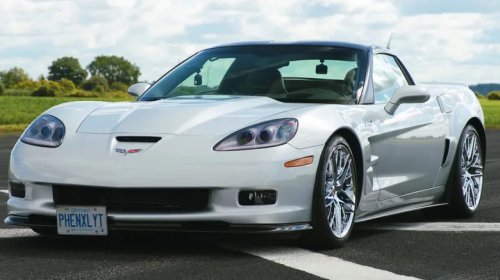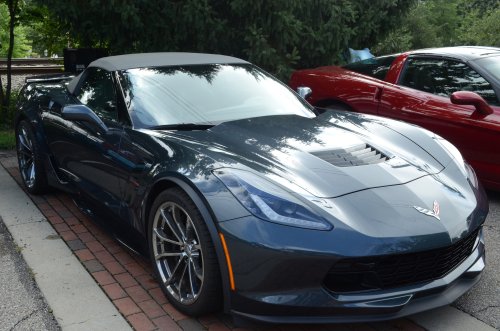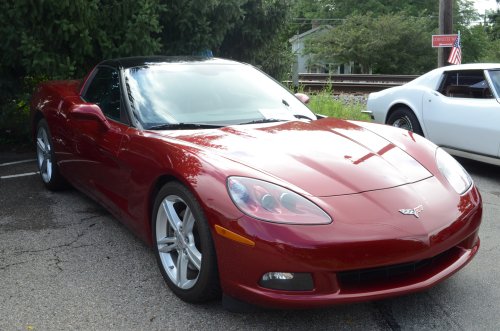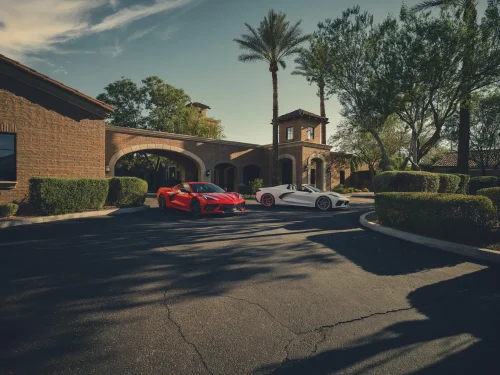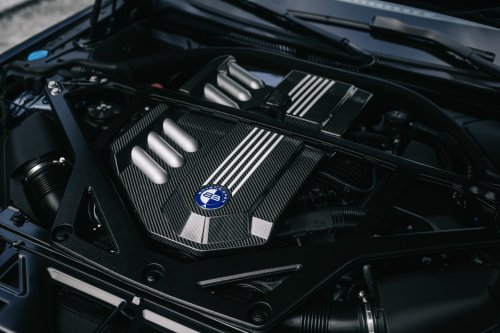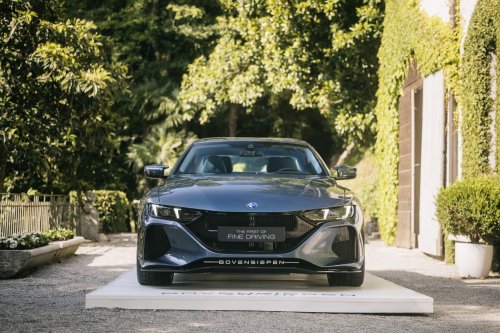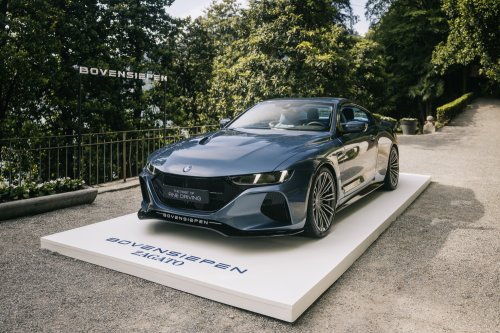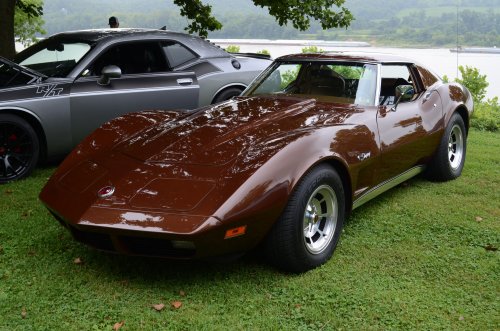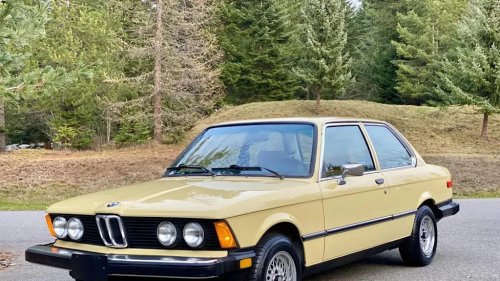
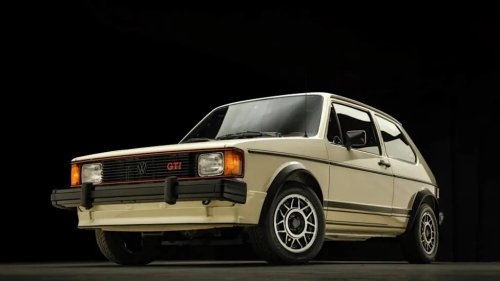
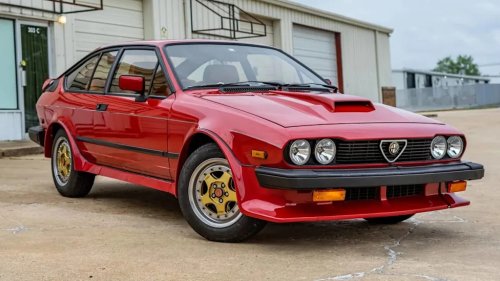
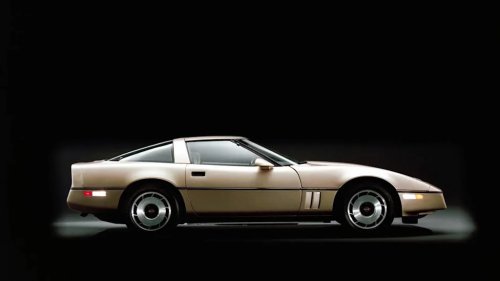
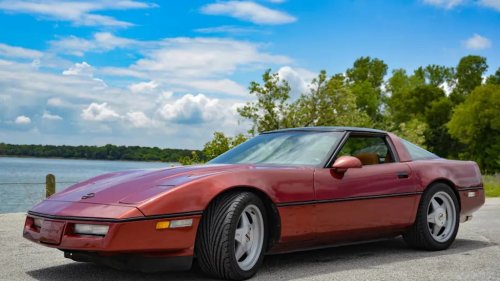
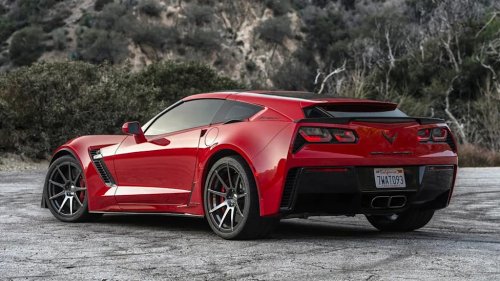


















Autoblog and Yahoo may earn commission from links in this article.The Stuff of Corvette Legend, Or Not.If you mention the name Callaway to most car enthusiasts, there is a huge chance that they would immediately think about a special Chevrolet Corvette. To be fair, the Callaway Corvette is the car that put them on the map, defined the brand in the popular imagination, and the reason the name still carries weight in performance car circles today. However, Callaway didn't start up making Corvettes from the get-go. Before it touched anything from GM, they were already a huge name in European car modification, specializing in turbocharger kits for BMWs, Volkswagens, Porsches, Mercedes-Benzes, and Alfa Romeo. At its origin, the story of Callaway Cars is a European one. Connecticut-based engineer Reeves Callaway initially began his namesake not by building American muscle, but extracting performance from the sophisticated, driver-focused European sports cars that were trickling into the United States in the 1970s and 80s, which deserved, by his assumption, way more power than they were getting.Bring a TrailerA BMW in a Driving SchoolThe origin story of Callaway Cars dates back to the 1970s, not in a workshop, but on a racetrack. Reeves Callaway had taken a job as a driving instructor at the Bob Bondurant racing school in California, one of the most respected performance driving programs in the country. At the time, the school had recently adopted the then-new E21-generation BMW 320i as its primary teaching vehicle. Callaway spent a significant amount of time behind the wheel of it, learning its habits and its limits, and concluded that the car had considerably more power potential than what it was delivering from the factory.AdvertisementAdvertisementAfter some convincing to higher-ups at BMW, he took one of the 320is home to his garage in Old Lyme, Connecticut, and got to work. The result was a prototype turbocharger system that transformed the modest four-cylinder 3-series into something considerably more entertaining. Reeves then offered automotive journalist Don Sherman the opportunity to drive it and gave it a glowing write-up in the October 1977 issue of Car and Driver. Despite not actually having the actual equipment to produce turbo kits at scale, Callaway recognized the commercial potential of such kits. "Don made it sound as if I could supply the world with BMW turbo kits. In fact, I didn't even own a drill press," he told Car and Driver in December 2013. "The car worked only because there was Sunoco 260 [high-octane fuel] at the pumps. Don's article launched Callaway Turbo Systems." In turn, the two-page article by Sherman served as an advertisement for Callaway. Later the same year, Callaway founded what would become Callaway Cars, Inc; the BMW turbo kit being the product that launched it..Bring a TrailerView the 2 images of this gallery on the original articleA European RepertoireOver the following years, Callaway developed turbocharger systems for a remarkably diverse portfolio of European performance cars; the kind of vehicles whose owners were, almost by definition, people who wanted more out of the mechanical experience of driving.AdvertisementAdvertisementVolkswagen was one of Callaway's biggest focuses. The late 1970s and early 80s saw the introduction of the Golf GTI and the Scirocco, which built a devoted following among enthusiast buyers not long after its introduction in the States. However, Callaway didn't stop there. He developed kits for other significant Euro marques, including Porsche (specifically the 944), Audi and Mercedes-Benz. Callaway's turbocharging portfolio was so diverse, that he even developed kits for cars that weren't exactly performance cars. When asked in 2013 which car proved to be a mistake with a Callaway turbo on, he mentioned the VW Vanagon; the spiritual successor to the hippie-mobile of the 60s. "Never turbocharge something that will be driven all day long at wide-open throttle," he added. But what unified all of this work was a consistent philosophy. He intended for his applications to use a level of engineering discipline to make it seem like the cars came with said turbos from the factory, rather than a bolted-on kid. In essence, Callaway was not building hot rods, or anything that would suggest that it was installed in a garage or driveway. However, like any good mechanic would say; "good work travels far," and word of Callaway's craft would land on a customer like no other. Bring a TrailerView the 2 images of this gallery on the original articleThe Alfa Romeo That Caught GM's AttentionIn the early 1980s, the American arm of the storied Italian performance marque Alfa Romeo approached Callaway with a commission that was different in nature from his previous work. Rather than developing an aftermarket kit for buyers to install after they bought their cars, Alfa wanted Callaway to create a twin-turbocharger system for the GTV6 that would be sold through Alfa's official American dealer network as a factory-sanctioned performance variant.AdvertisementAdvertisementThe result would be known internally as the Callaway C3, and would be built between 1984 and 1986 in a run of just 35 cars. Callaway's team took the stock 2.5-liter V6, which made 154 hp at 5600 rpm in U.S. spec, and went to town on increasing its power bubble. Callaway lowered its compression ratio using modified pistons, and fitted twin IHI turbos with a unique air-to-air intercooler, which was fed by an intercooler air hood scoop and a revised stainless-steel intake and exhaust system. With 10 psi of boost, the Callaway C3 made 230 horsepower, a substantial increase over the standard car's output.To ensure it lived up to its standards, each C3 GTV6 twin-turbo was subjected to an exhaustive durability testing program before Callaway signed off on it. The car was sold through Alfa dealers, carried Callaway's name on official documentation, and served as proof of concept that a small Connecticut-based engineering firm could deliver factory-quality results. However, Callaway didn't know at the time that General Motors was watching very closely.ChevroletThe First CorvetteIn 1984, General Motors introduced the C4-generation Chevrolet Corvette, which was the first model revision that it had in over 15 years. At the time, it was a significant step forward, as it featured cleaner styling, better aerodynamics and more modern components. But, it had a major achilles heel in the form of the 5.7-liter L98 V8, which made just 250 horsepower on a good day. These weren't the kind of performance numbers that the Corvette's reputation demanded. GM itself did some experiments turbocharging its V6 and V8s, though both single and twin-turbo setups proved to be a challenge. Meanwhile, someone at GM had acquired a Callaway GTV6 twin-turbo for evaluation. GM engineers examined it closely, were impressed by what they found, and Reeves Callaway's work got the attention of Dave McLellan, the Chief Engineer of the Corvette.AdvertisementAdvertisementMcLellan reached out, and what he found in Callaway was not someone who'd slap a turbo on the 'Vette and call it a day. To him, Callaway was an engineer whose body of work was a perfect fit for an integrated forced-induction solution that the Corvette deserved. View the 2 images of this gallery on the original articleRPO B2K: The Factory-Order SupercarThe arrangement that followed was unlike anything in GM's history. Rather than bringing Callaway in-house, McLellan and GM structured the partnership so that the Callaway twin-turbo Corvette would be available as a factory Regular Production Option, which would be known as RPO B2K, orderable directly through Chevrolet dealers. Customers who ticked the B2K box on their order form would have their car shipped from the Corvette assembly plant in Bowling Green, Kentucky, directly to Callaway's facility in Connecticut, where it would be fitted with the twin-turbo conversion before delivery.The first Callaway Twin Turbo Corvettes rolled out in 1987, and in Callaway's hands, the Vette's L98 produced 345 horsepower and 465 lb-ft of torque, enough to make the C4 Corvette one of the fastest production cars in the world at the time, with a top speed of 178 mph. For 1988, Callaway increased power to 382 horsepower and 562 lb-ft of torque. By the time the RPO B2K option was phased out at the conclusion of L98 production in 1991, Callaway was building a Corvette with 402 hp and 582 lb-ft of torque from the dealer. AdvertisementAdvertisementThe RPO B2K option was the only time GM allowed a factory-orderable non-GM performance enhancement on the Corvette, and was covered under GM's 12-month/12,000 mile warranty. It remained available through 1991, with 510 cars produced over that period. The B2K would be the basis of one of Callaway's greatest creations; the Sledgehammer, which at the time was one of the fastest street legal cars in the world. This one-off car, built for Reeves Callaway himself was a B2K car with a special body kit, as well as revised turbos and engine tuning to boost it up to 880 horsepower, 772 lb-ft of torque and a top speed of 254.76 miles per hour.Drew PhillipsThe Story Never ToldThe Callaway origin story is rarely told in full, partly because the Corvette chapter is so dramatic that it tends to crowd everything else out. But the European years were not just some lore to the real story; it was the story. The BMW 320i turbo wasn't a side project, it was the act of a self-taught engineer learning his craft on the most interesting available canvas. Callaway's VW, Porsche, and Mercedes work wasn't filler between more important projects; it was expertise and reputation that gave Callaway reputation. And the Alfa Romeo GTV6 twin-turbo wasn't just a favor or commission; it was something that changed the company's trajectory entirely.The 35 Callaway GTV6 twin-turbos that exist in the world are extraordinary cars in their own right; rare, beautifully built, and historically significant in a way that their small numbers suggest most people haven't fully processed. Each one is, in a very literal sense, the reason the Callaway Corvette exists. Without the Alfa, there is no phone call from Dave McLellan. Without the phone call from McLellan, there is no RPO B2K. Without RPO B2K, Reeves Callaway remains a respected but obscure Connecticut engineer making turbo kits for European sports cars. This story was originally published by Autoblog on Jun 8, 2026, where it first appeared in the Features section. Add Autoblog as a Preferred Source by clicking here.