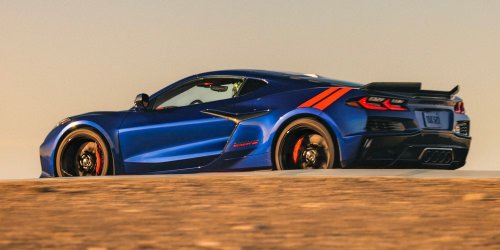
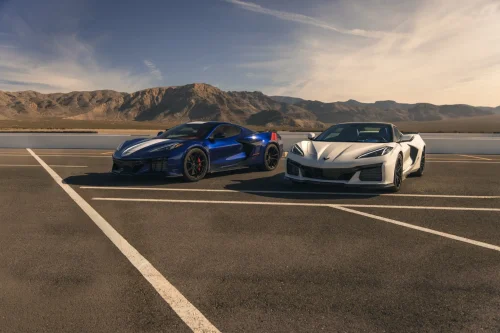
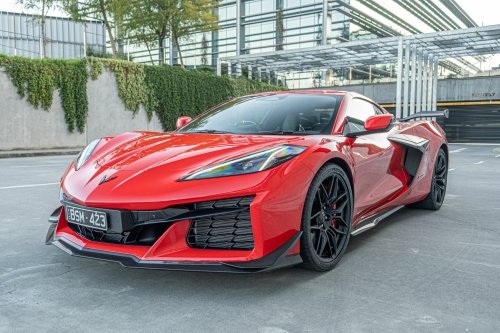
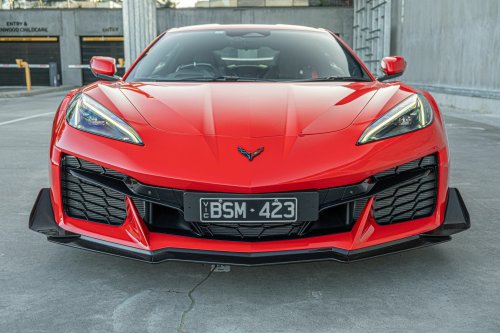
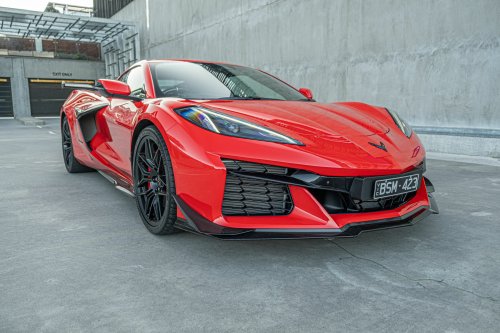
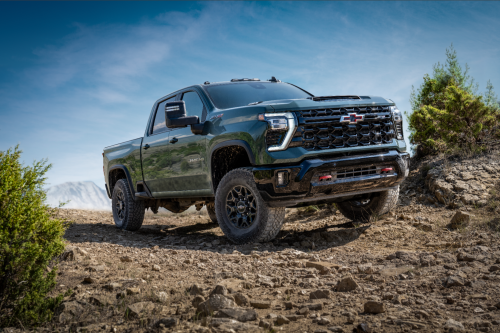
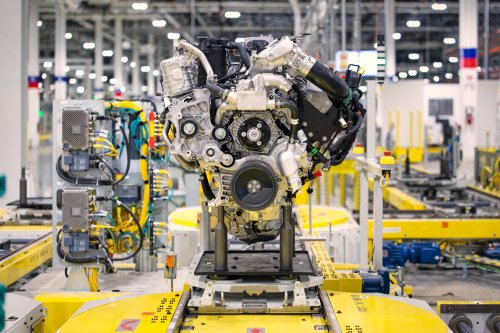
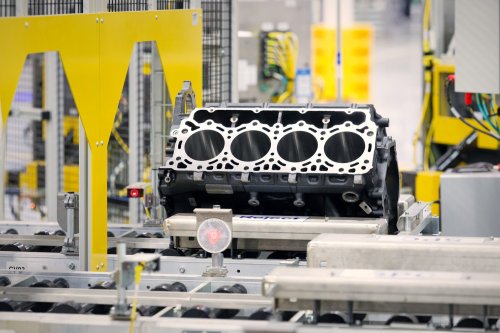
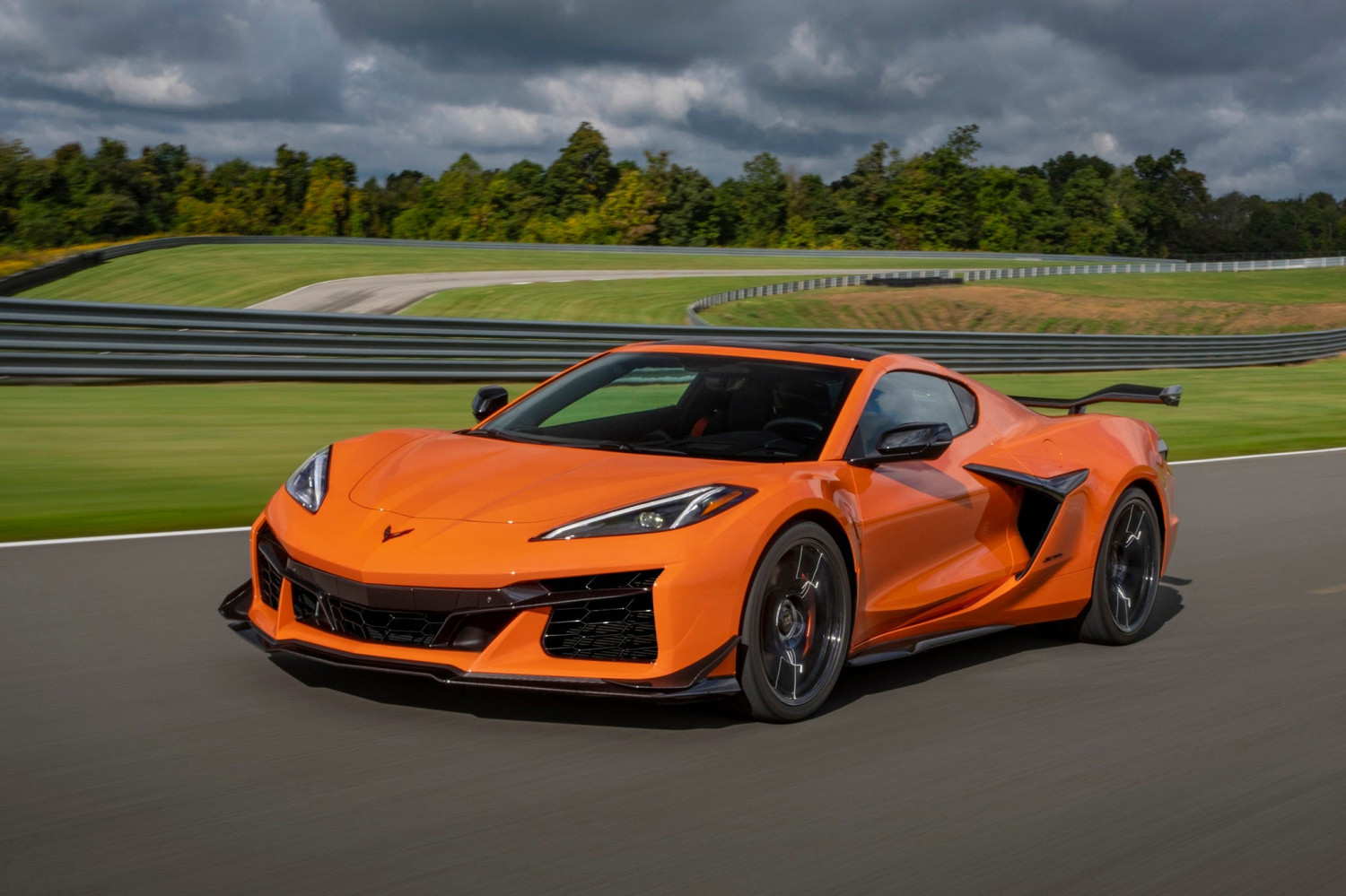
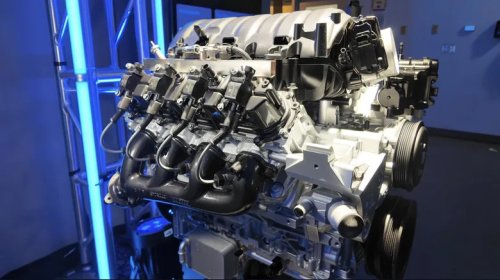
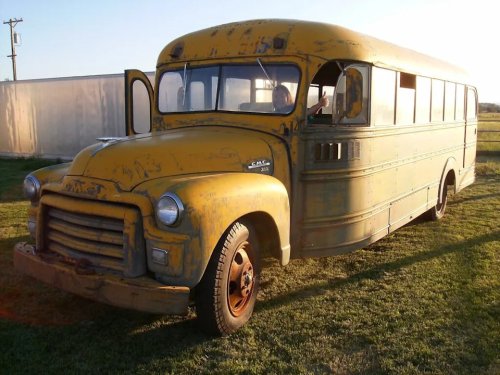
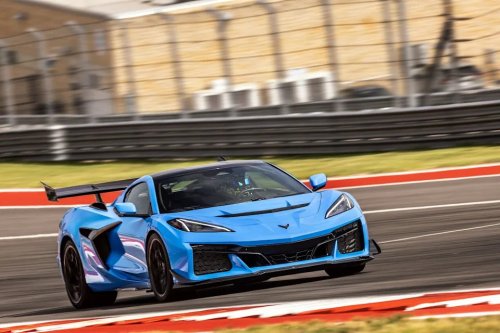
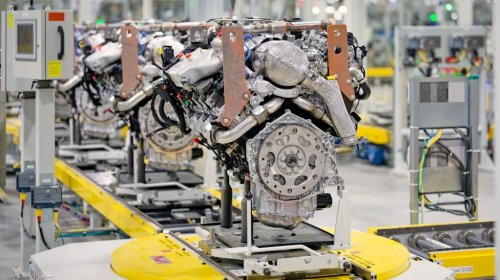
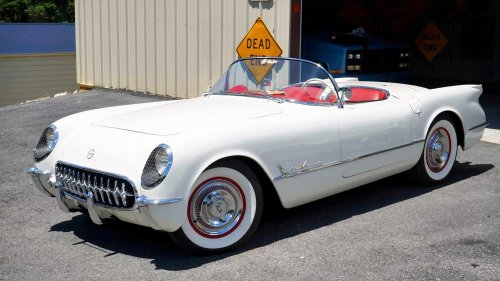
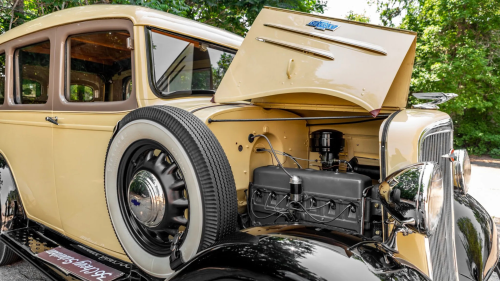
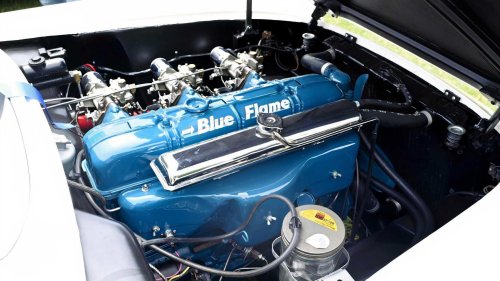
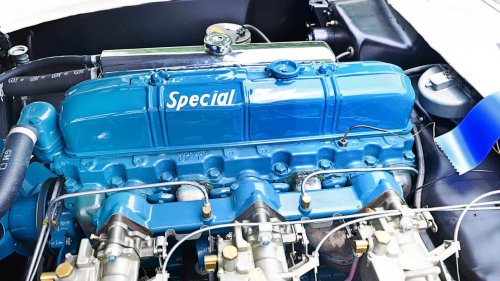
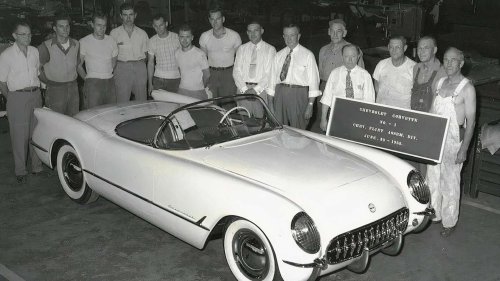
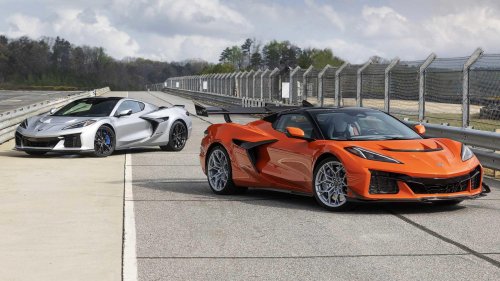
The Corvette is the archetypal V8 American sports car. To admire the Vette, you have to appreciate the iconic eight-cylinders under their hoods. More aptly, in recent years, they’re under the rear hatch. But it wasn't always like this; for one extremely pivotal model year, the Corvette and the V8 weren't joined at the hip like DNA. The reason why is complicated, but not entirely unfathomable. Not A V8 At The Start Bring a TrailerTo say the Chevy Corvette didn’t get the formula right on its first time out would be an understatement. At least, it’s easy to say that in hindsight. But the reason why is owed to the time in which the Vette was developed as much as anything else. In those days, the V8 precedent simply didn’t exist. Until roughly the 1950s, V-8 passenger cars were something of a novelty on American roads. Ironically, itwas GM’s Oldsmobile, a cohort of Chevrolet, that introduced the Rocket-series V8 in 1949.Only after the GIs of World War II had returned home for a few years would Americans be settled in and well-off enough to afford splurging for eight cylinders. Besides, it's not like global sports cars were clamoring to add more cylinders at the turn of the 1950s. In those days, English sports cars in particular were massively popular in the United States. MGs, Austin-Healeys, and even Jaguars and Aston Martins proved that driving dynamics, not cylinder counts, made a sports car worth buying.With this in mind, GM's engineering team for the Corvette, spearheaded by Harley Earl, weren't under anywhere near as much pressure to shoehorn a V-8 under the hood of a sports car. In the pre-muscle car era, it was one of many automotive norms that seem alien to modern sensibilities. Hence, when the Corvette made its debut at the 1953 GM Motorama in Detroit, you found six cylinders beneath the hood, not eight. The Straight-Six: Chevy’s Pre-V8 Sports Car Engine Bring a TrailerThe Corvette's modest dimensions and agile proportions theoretically lent extraordinarily well to a straight-six layout. On that front, GM was well-covered at the time. Its long-standing Stovebolt-series straight-six, in production since 1929, was a mainstay of Chevrolet’s entry-level vehicle fleet. For the price of just $10 in 1929, or just under $200 by modern money, you could upgrade to the 194-cubic-inch motor, a significant bump compared to the four-pot.By the time the Corvette was being developed, the Stovebolt platform had increased in size to 235.5 cubic inches, or 3.9 liters. Commonly paired to a hydraulically assisted two-speed Powerglide automatic gearbox or a three-speed manual, these Stovebolt sixes were ubiquitous across the Chevy lineup. At times, they even appeared in other automakers' vehicles, namely school buses and trucks.On the face of it, these truck motors weren’t the best application for a sports car. Its splash oiling system and bulky crankshaft tended to make high-rpm pulls perilous. But that didn’t stop GM from trying, mostly because of time constraints more than anything else. But with all the credit in the world, this former truck engine would kick off the Corvette era in earnest. From there, it was only a matter of time before superstardom arrived. The Blue Flame Straight Six: The Forgotten True First Corvette Motor Benny Kirk/Hot CarsWith little time left before the Corvette was to enter production, Harley Earl’s team set to work turning the standard Chevy Stovebolt 235 into something resembling a sports car engine. Compression ratios were altered, up to 8.0:1 compared to 7.5:1. A single down-draft carburetor was replaced with triple Carter YH side drafts to help the engine breathe more freely. Each carburetor fed a pair of cylinders, and to make the setup fit beneath the fiberglass hood, valve lifters were changed. Valve lifters, once hydraulic, were now solid, meaning they didn’t need to rely upon oil pressure to continue operating under hard acceleration. Blue Flame I-6 Specs Most importantly, primitive splash-style oiling was deleted. In its place was a full high-pressure wet-sump oiling system that ensured proper lubrication at a wide range of speeds and RPMs. Compared to the truck engine that Chevrolet started with, what they soon christened the Blue Flame 150 was a remarkably different beast. Without changing much of anything to the engine’s bottom-end architecture, save for a forged steel crankshaft, the Blue Flame maxed out at 150 horsepower.Benny Kirk/Hot Cars In a car that weighed south of 3,000 lbs, these early Corvettes were decently zippy. Though, not nearly in the same way that later C1s and early C2s were. Zero to 60 mph was handled in roughly 11 seconds, though some outlets rated it as high as 11.5 seconds. That's slightly slower than the equivalent Jaguar XK120, but on par with the Austin-Healey 100 and significantly faster than an MG TD. Without a direct American competitor of any great substance,these English equivalents are the best available comparison. A One-Time Experiment, And One That Failed Hard GM Media archivesIn total, only 300 C1 Corvettes were built in 1953. It was hardly enough to make a dent in the exploding domestic sports car scene. But by the early ‘50s, the American expectation of a V8 at every opportunity had finally started to take root. By the standards of the Rocket and Nailhead engines already in service with ‘Olds and Buick, the Blue Flame Corvette just wasn’t that impressive. In truth, it occupied an entirely different market segment than the V8 Corvettes soon to follow.With the Corvette’s design already set in stone, a further 3,640 Blue Flame-equipped Corvettes were built in 1954. All the while, Chevy was gearing up to debut the 265-cubic-inch, 4.3-liter small-block V-8 that developed into the 302 and 350 later on. After that, there really wasn’t a reason for the Blue Flame straight-six to exist anymore. The overarching Stovebolt truck architecture carried on until 1962 in the US, and into the late 1970s in South America.But as far as sports cars are concerned, Chevrolet tried more than once to recapture that peppy six-pot market. Once with the rear-engine turbo Corvair Monza, the 230-straight-six-powered Gen-I Camaro, and its modern Gen-V and VI descendents. But so far as the Corvette is concerned, it’s played a game of one-upmanship with its V8 powertrains for seven decades. Now, in 2026, the most powerful example jets over a thousand horsepower on its own, plus 1,250 to the tires with an electric motor in tow. Why The Corvette Will Never, Ever, Be A Six-Pot Again ChevroletSimply put, to divorce the Corvette from its V8 heritage nowadays would be like removing sunshine from Planet Earth. Rumors occasionally do swirl that Chevrolet might produce a tribute act of sorts for the old Blue Flame. Perhaps a twin-turbo variant of the High Feature V6 in the current Blazer. But nothing ever comes of these rumors, and any sane betting person would put a stack of chips that Chevy doesn’t risk touching that proverbial third rail.Suffice it to say, maintaining brand purity is more important than paying tribute to a powertrain that almost nobody liked even when it was brand new. In this way, the Blue Flame is more of a cautionary tale than a guiding light for the future. Most would argue, it should stay that way indefinitely.Source: Chevrolet, Hemmings


















 +3 others