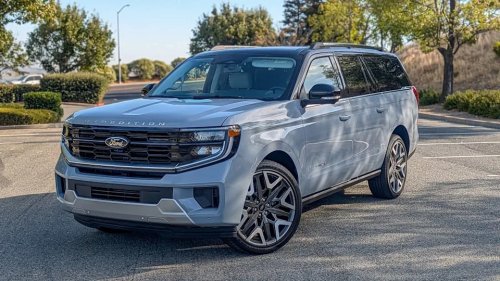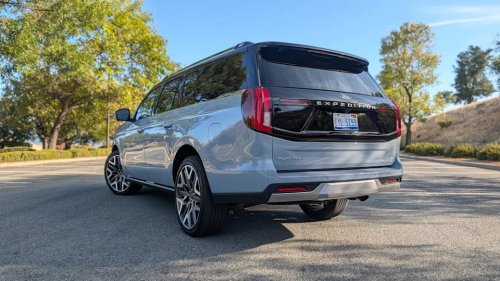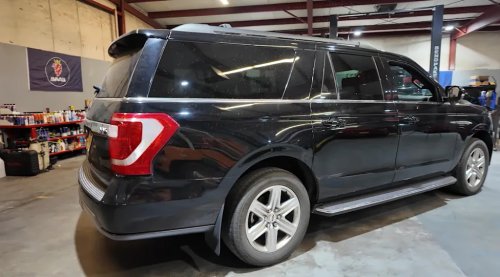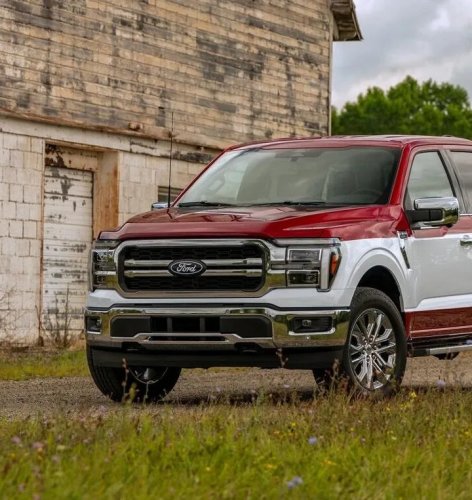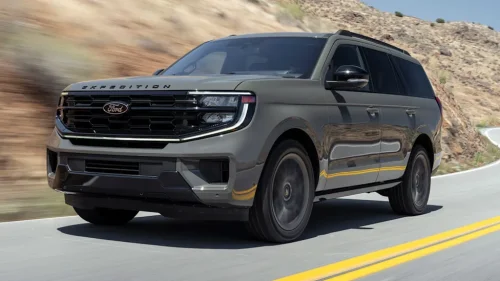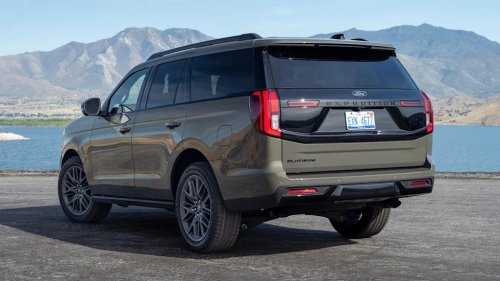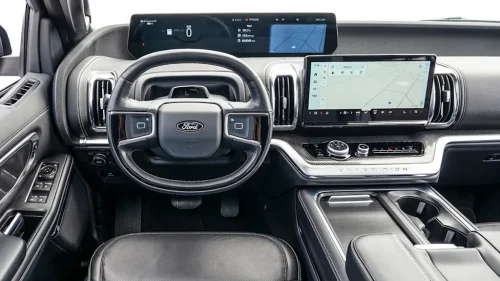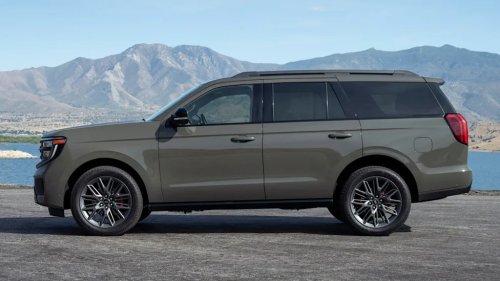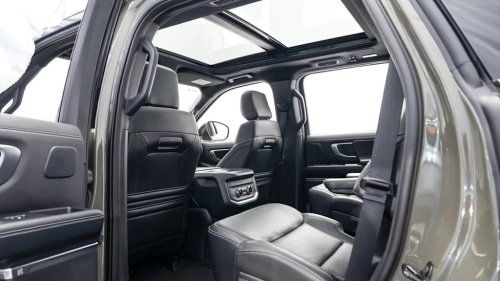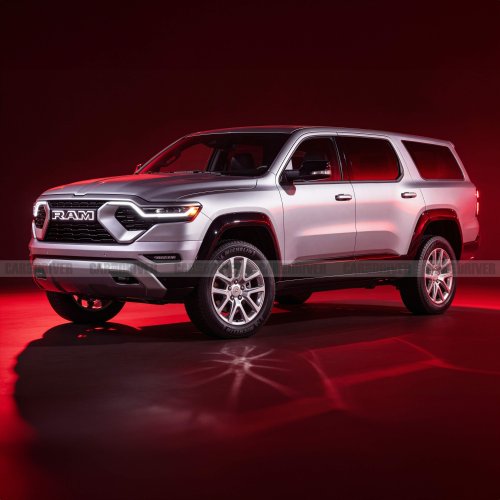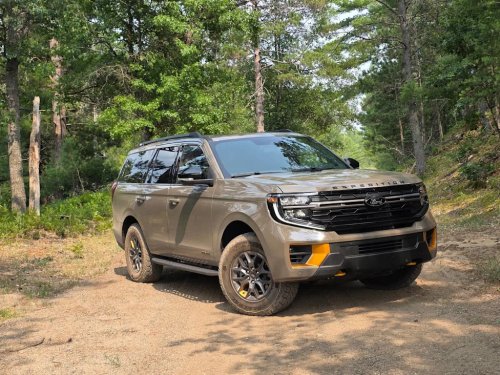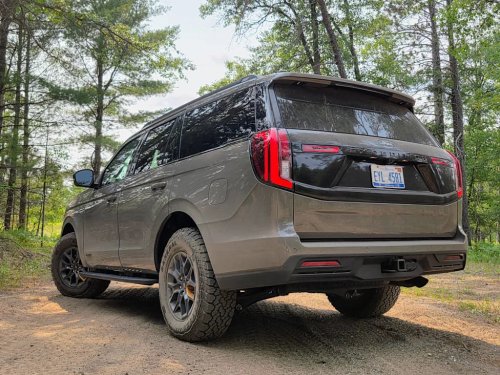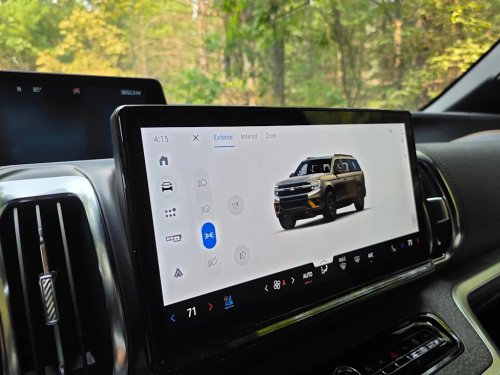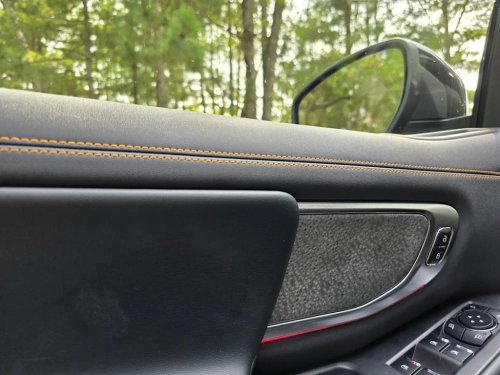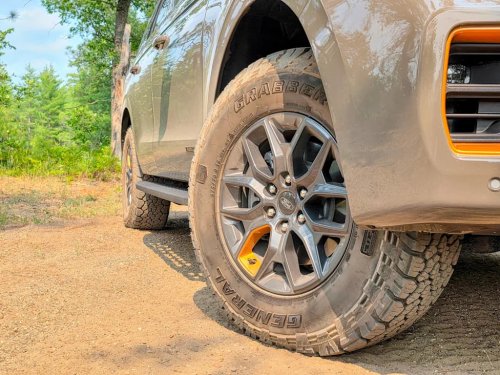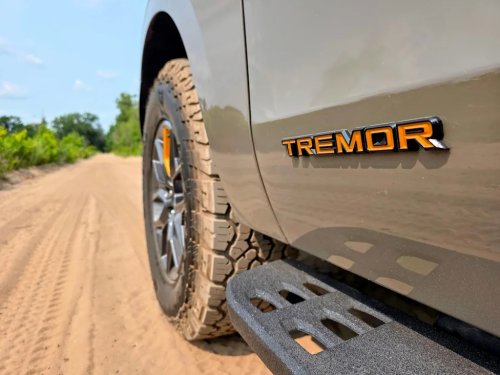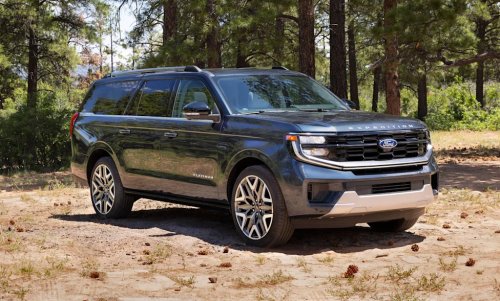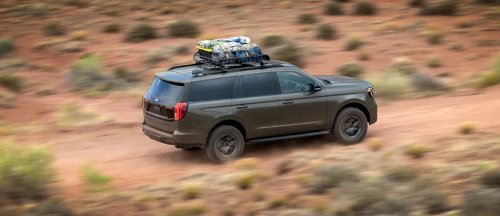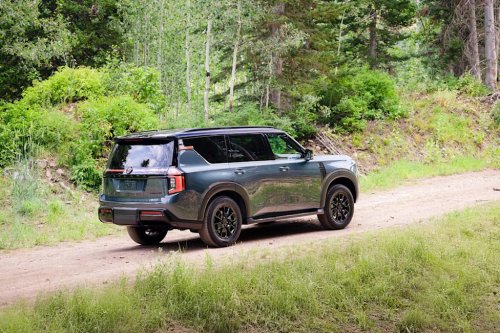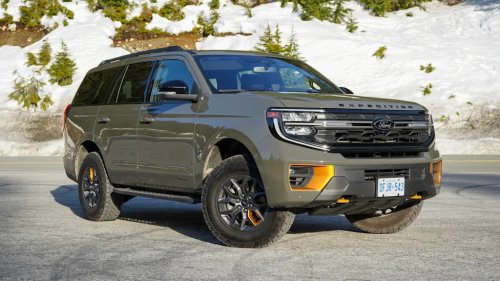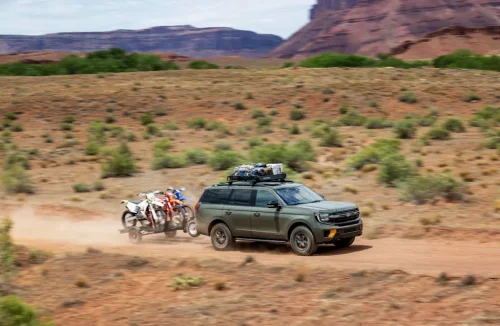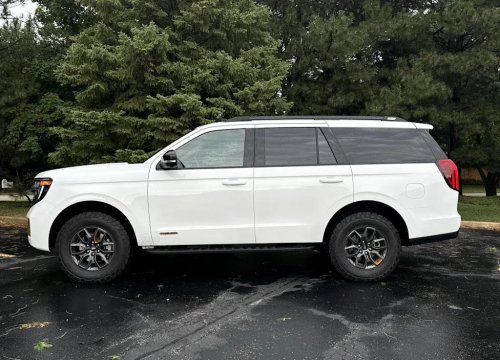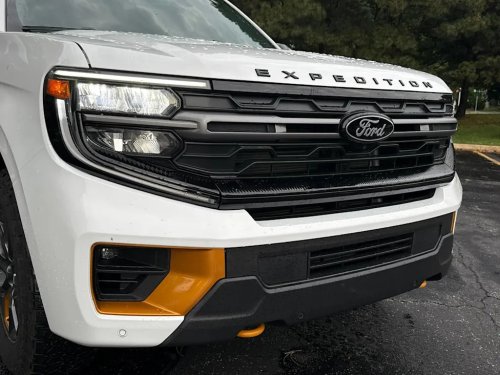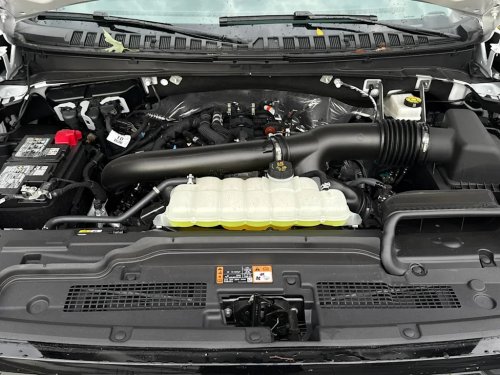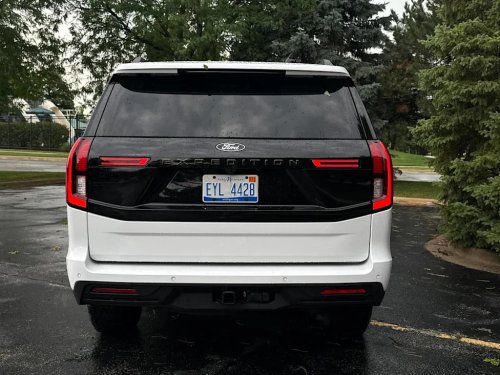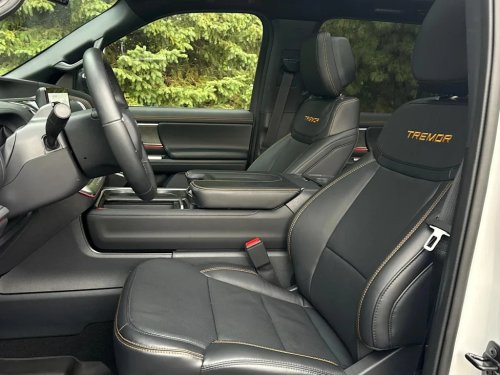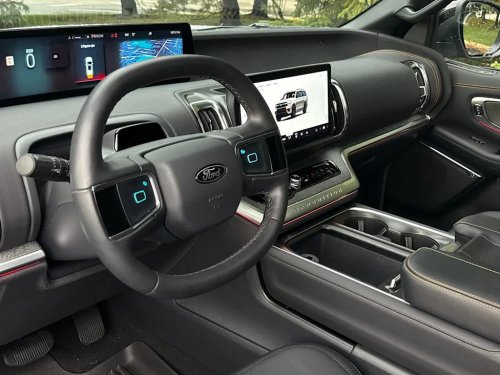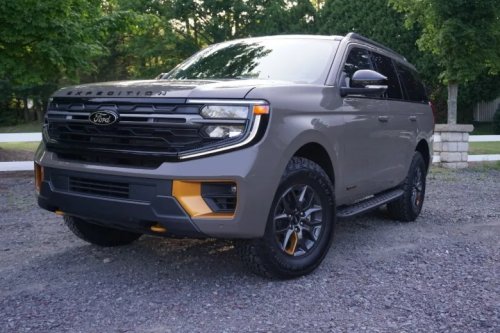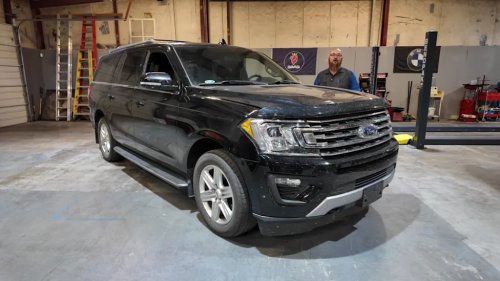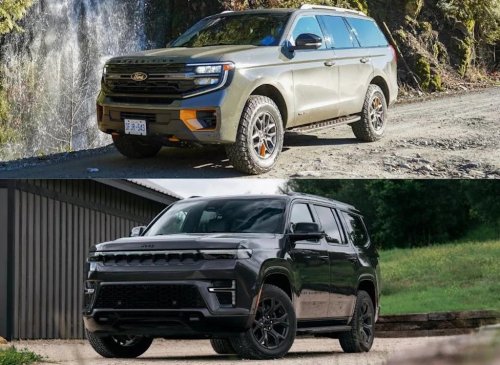
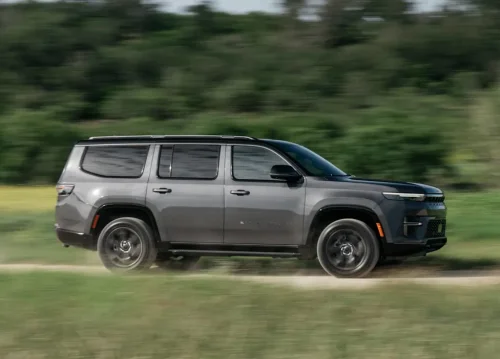
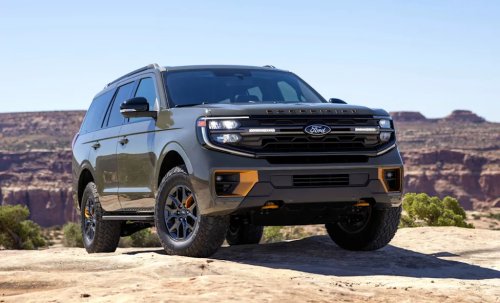
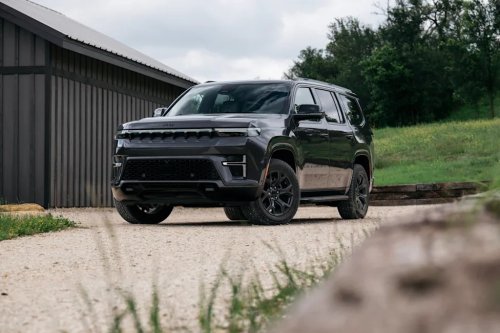
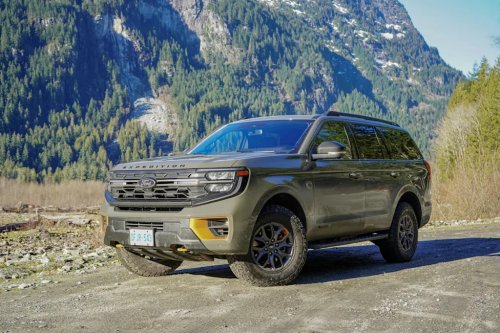
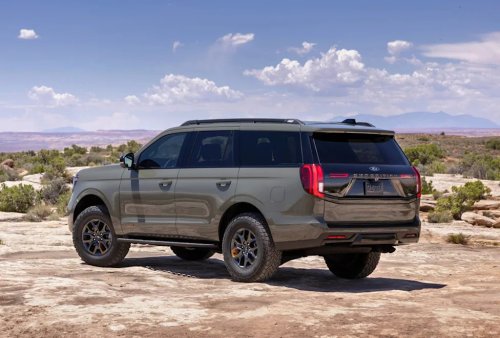
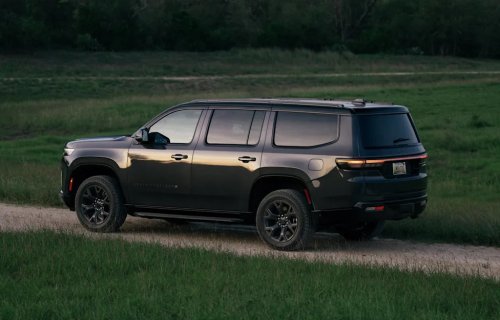

















Autoblog and Yahoo may earn commission from links in this article.Only a small percentage of SUV and crossover owners—roughly 10% to 20%—ever actually go off-road. While nearly 90% of owners say they would like to hit the trails, most of their vehicles spend their lives on pavement. For the overwhelming majority of buyers, rugged styling and the confidence of all-wheel drive matter far more than conquering challenging trails.That's where the Ford Expedition Tremor ($82,895 base MSRP) and Jeep Grand Wagoneer Upland ($73,060 base MSRP) live. They're sufficiently capable off-road, but they'll likely spend most (if not all) of their time on asphalt. However, it's nice to know that they're more than that when the going gets tough.FordWith the Expedition Tremor, Ford embraces its truck heritage, adding all-terrain tires, extra armor, and a locking rear differential. Jeep's Grand Wagoneer Upland, meanwhile, blends genuine off-road hardware with air-suspension sophistication and traction-smart 4x4 systems designed for comfort and a bit of ruggedness. Put them nose-to-nose on dirt, and which big SUV really has the better off-road chops?Hardware and Off-Road SetupThe Grand Wagoneer Upland layers Jeep-style traction systems and air suspension tuning on a more luxurious shell. This trim level is shod with 32‑inch all‑terrain rubber, along with steel skid plates, tow hooks, and the Quadra‑Lift air suspension system that can boost ground clearance to a maximum of 10 inches. Add in the Quadra‑Drive II 4x4 system with an electronic limited-slip differential and a low-range gear ratio, and the Wagoneer can shuffle power smartly when traction gets patchy.The Expedition Tremor orrows heavily from off-road F‑150 philosophy with aggressive AT tires, extra protection, and tuned suspension. The Tremor rolls on 33‑inch all‑terrain tires, backed by specialized off-road suspension and steering, front skid plate, and comprehensive underbody protection. It also includes off-road auxiliary lighting and an electronic locking rear differential, critical when you're trying to claw up loose climbs or escape deep ruts.FeatureExpedition TremorJeep Wagoneer UplandTire size33-inch all-terrain32-inch all-terrainSuspensionOff-road tuned, fixed heightQuadra-Lift air suspensionMax ground clearance10.6 inchesUp to 10 inchesRear diffElectronic locking diffElectronic limited-slipUnderbody protectionSkid plates, added armorSkid platesOff-road lightingFront auxiliary lightsN/APower, Control and On-Trail BehaviorAdvertisementAdvertisementThe Expedition Tremor is potent with its twin-turbocharged 3.5-liter V-6 and 10-speed automatic transmission that mates with rear- or four-wheel drive. The base engine makes 400 hp and 470 lb-ft. of torque, but you can opt for a more potent 440 horsepower and 510 pound‑feet of torque, giving it serious muscle when you're hauling up grades or pulling through sand. The Grand Wagoneer's 3.0-liter twin-turbocharged inline-six engine is good for 420 horsepower and 468 lb-ft of torque, mated with an 8-speed automatic transmission. It falls short of the Expedition Tremor's top engine output but is still capable for most needs.Cole AttishaThe Expedition Tremor's simpler coil‑spring setup and locking diff make it feel more old‑school truck when you're picking your way through obstacles. Jeep's air suspension and semi‑active damping, by contrast, enhance both comfort and control, letting you raise the body for obstacles, then drop back down for stability when speeds climb. Upland Quadra‑Drive II's ability to preemptively move torque where it's needed is an advantage on mixed surfaces like mud, snow, or wet rock where momentum and finesse matter more than brute force.Capability vs. ConfidenceLooking purely at hardware, the Expedition Tremor is the more overtly off-road‑centric variant of the two SUVs. Bigger tires, more aggressive underbody protection, and standard off-road lighting provide confidence when you're pushing deeper into trails that could get you stuck after dark. Its locking rear differential is a key differentiator; when one wheel is unloaded, the Tremor can still drive both wheels evenly, which matters in deep cross‑axle situations. Its off-road angles are 21.1" of approach, 19.3" breakover, and 23.5" of departure.Jeep's approach is more about combining traction logic and variable ride height to keep you moving in a controlled, comfortable way. With up to 10 inches of clearance and smart torque vectoring, the Grand Wagoneer Upland can clear obstacles, and it often does so with a smoother ride and better isolation for passengers. The flip side is that its more complex systems and focus on luxury can feel less "tool‑like" than the Tremor's straightforward off-road personality. Its off-road angles are 25.0" of approach, 23.9" breakover, and 22.1" of departure.VerdictIf your definition of "off‑road chops" is maximum toughness and truck-like capability, the Expedition Tremor edges out the Wagoneer. Its dedicated Tremor calibration, 33‑inch tires, locking rear diff, and added protection package make it feel like the more purpose-built rig. The Expedition Tremor offers the more capable factory off-road package, but the Jeep Grand Wagoneer Upland has sophisticated hardware that favors traction, comfort, and tech-rich trail support. The Grand Wagoneer Upland's approach and departure angles, however, best the Tremor's, but this might be a moot point given the fact that owners wouldn't seriously off-road either model.AdvertisementAdvertisementBut if you're balancing trail use with family duty, road trips, and a desire for smarter traction management and adjustable clearance, the Grand Wagoneer Upland's Jeep‑bred systems make a compelling case. On mixed‑surface adventures where you're threading gravel, snow, and mild rock, its blend of Quadra‑Lift and Quadra‑Drive II may actually help the average driver stay more composed and confident. In short: the Expedition Tremor is the better hardcore off-road package, while the Grand Wagoneer Upland is the more sophisticated all‑terrain family hauler that still earns off-road credibility.This story was originally published by Autoblog on Jul 7, 2026, where it first appeared in the Features section. Add Autoblog as a Preferred Source by clicking here.