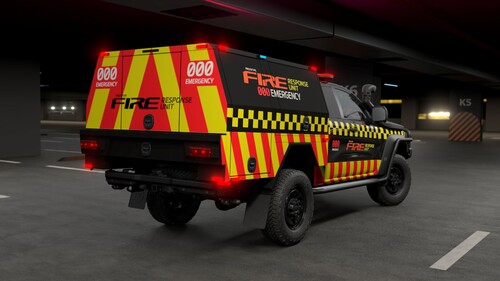
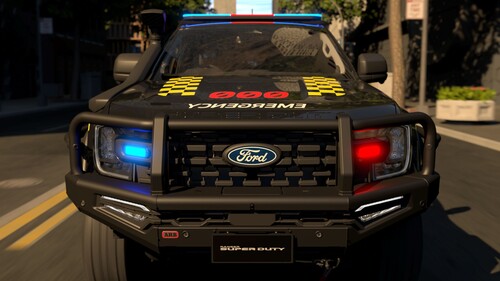
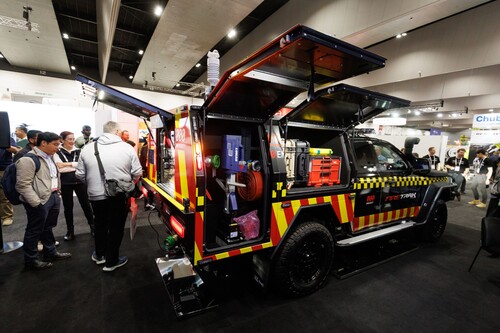
Olivia Lewis · 2 months ago@olivialewis21Ford Built A Fire-Fighting Ranger Super Duty With Solar-Powered Water Pumps Liked by+5 othersPost commentRelated PostsModern Turbo-Four Muscle Cars Are Still Better Than Old V6-Powered Base ModelsAva Bouchard · 13 days agoVW Built A Ranger-Based Sports Truck That Costs More Than The Ranger Raptor 48 · Connor Carter · 2 months agoOff-Road and Highway Driving in a 2026 Toyota Tacoma TRD Pro i-FORCE MAX Double Cab 24 · Nicole Macdonald · 26 days agoHenry Ford Killed The Patent That Claimed To Own The AutomobileThomas Wilson · 13 days agoToyota Hilux Takes Aim At Ford Ranger Super Duty With Cheaper Heavy-Duty Upgrade 14 · Jenna Girard · 5 months ago2002 Ford Ranger XLT For Sale With 21,100 Miles 20 · Amelia Pelletier · 26 days agoNo Actual Shelby GT500s Were Harmed To Become Eleanor In Gone In 60 SecondsJackson Wilson · 13 days agoFord’s Ranger Super Duty Forced Toyota’s Hand And The Hilux Answered. Sort Of 78 · Emma Fortin · 5 months agoFord Is Already Working On The Next-Generation Ranger 74 · Victoria Clark · 27 days agoSEMA-Built 1994 Ford F-350 on 54-Inch Tires Brings Its Own Dance Floor to Mecum Las VegasDaniel Lewis · 14 days agoToyota’s Toughest Truck Tempts with a Utilitarian Ranger Super Duty Rival 51 · Jacob Rogers · 5 months agoFord Ranger Recall Hits 11,405 Trucks Over Blank Screen Problem, But No Remedy Is Available Yet 65 · Caleb Nelson · 27 days agoFord Patents Beach Mode That Tracks The TideJacob Bouchard · 14 days agoFord could be preparing a heavy-duty Ranger for jobs most trucks struggle with 93 · Jacob Bouchard · 5 months agoI Love My Vintage Ford Ranger Pickup Truck. Would The 2026 Model Prove Just as Charming? 71 · Abigail Lee · 27 days ago1968 Ford Shelby Mustang GT350 Convertible for Sale With 26k Miles ShownKaitlyn Brown · 14 days agoNew Ford Ranger Super Duty could arrive to tackle the UK’s toughest jobs 75 · Oliver Turner · 6 months agoToyota Tacoma vs Ford Ranger 5-Year Depreciation: It's Not Even Close 90 · Oliver Lavoie · 28 days agoHonda Pilot 4WD vs. AWD: What the i-VTM4 System Really DoesMadeleine White · 14 days agoFord Ranger Super Duty in Bangkok – toughened work truck, 209 PS/600 Nm 3.0L TD V6; RM196k in Thailand 89 · Caleb Lavoie · 7 months ago




 +5 others