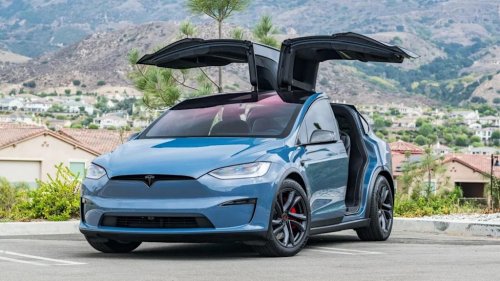



















Ford CEO says Tesla teardown forced major EV redesign at companyFord’s electric vehicle strategy is being rebuilt from the inside out after a brutal lesson in competitive reality. A detailed teardown of Tesla and Chinese electric cars convinced Ford’s leadership that its first generation of battery models carried too much cost, complexity, and weight to compete. The company is now reworking its products, factories, and even engineering culture in response. At the center of that shift is Ford CEO Jim Farley, who has publicly described the teardown findings as “shocking” and personally “humbling.” His account of what the team discovered inside rival cars has become a blueprint for a leaner, cheaper generation of Ford EVs aimed at buyers who have so far balked at high prices and limited range. Farley’s wake-up call from Tesla and Chinese rivals Farley has framed the company’s early electric efforts as a costly misstep that only became fully clear once engineers pulled apart a Tesla and several Chinese models. In multiple interviews, Jim Farley has said he realized Ford had been “doing EVs all wrong” after a deep study of a Tesla architecture that used far fewer parts and a very different approach to software. In a new conversation referenced on social media, he described the teardown of a Tesla as a “wake-up call” that reshaped how Ford thinks about building EVs and highlighted that Tesla treated the car as a tightly integrated computer on wheels rather than an electrified version of a traditional platform. The shock did not stop with Tesla. Farley has also said that taking apart Tesla and Chinese EVs was a wake-up call for Ford’s leadership, describing how the Chinese competitors in particular were cheaper to build yet packed with features that matter to buyers. On the “Office Hours: Business Edition” podcast, he recalled how the team dismantled a Chinese electric car and concluded that Ford’s Model e business would have to make what he called a “brutal” decision about costs and complexity. Farley told the same “Office Hours: Business Edition” conversation with Monica Langley that he was “very humbled” when Ford tore apart its first Model 3 and started dismantling Chinese EVs, a story also recounted when Ford CEO Jim discussed how that realization coincided with investor skepticism about Ford’s EV losses. Inside the teardown: cost, weight, and “shocking” simplicity The most jarring revelations from the teardown were about cost and weight. Farley has described how Ford’s early EVs carried hundreds of pounds of extra mass compared with a Tesla, which forced the company to buy larger battery packs just to match range. In one internal assessment, that extra weight cost $200 per car in battery costs because of the added mass, a figure that Ford and Farley cited as a symbol of how legacy design habits were silently eroding competitiveness. The phrase $200 per car became shorthand inside the company for every bracket and fastener that did not need to be there but still had to be hauled around for the life of the vehicle. When Ford engineers took apart Tesla and Chinese EVs, “it was shocking what we found,” Farley has said, linking that remark directly to the decision to rethink the Model e business. In his account of that process, he described how the Chinese cars used fewer stamped parts, more integrated castings, and simpler wiring layouts, all of which cut labor time and material cost. He also pointed to the way Tesla and Chinese manufacturers fused hardware and software, with centralized computing instead of multiple scattered control units. That experience, described in detail in an interview about when Farley spoke, convinced him that Ford needed to treat software, electronics, and manufacturing as one system rather than three separate departments. From shock to strategy: Ford’s EV redesign The teardown findings have already filtered into Ford’s product and engineering playbook. Earlier this year, Ford CEO Jim Farley acknowledged that Tesla had changed Ford’s EV strategy and that the company’s early electric vehicles had been overbuilt and under-optimized. He has described a shift from traditional cost-cutting to what one internal account called “bounties” on unnecessary parts, where engineers are rewarded for removing components rather than simply finding cheaper versions of them. A report on how Ford scrapped cost-cutting norms to create its planned $30,000 EV described how the automaker applied bounties, not bean-counting, down to smaller parts that collectively have a cascading effect on an EV’s efficiency and price, a method that grew directly from the teardown of Tesla and Chinese rivals. Ford executives have also said that the company is obsessing over mechanical friction and aero drag in a way that mirrors the discipline seen inside Tesla and Chinese EVs. One engineering leader, Merkt, said Ford scrutinized every bearing, seal, and joint in the vehicle to reduce mechanical friction by treating the driving system as a unified whole, while also adopting large structural castings and unicastings for the first time. That focus on holistic design is a direct response to what Farley called the “shocking” simplicity of the vehicles Ford took apart. In a separate account of the same experience, he told an interviewer that taking apart Tesla and Chinese EVs was a wake-up call for Ford’s CEO Jim Farley and that the company would no longer accept legacy complexity as a given, a message echoed in coverage of how Ford CEO admits. Reinventing factories and the next wave of Ford EVs Redesigning the cars is only half the story. Ford is also reworking how those vehicles are built, leaning heavily on lessons learned from Tesla’s highly automated plants and the manufacturing speed of Chinese companies. The company has outlined a new production system and platform that aims to reinvent vehicle assembly, including a future electric truck that it says will be as quick as a Mustang EcoBoost and will have more passenger volume than a 2025 Toyota RAV4, along with a truck bed. Ford has said that this new platform will support nearly 4,000 American jobs as the journey begins in Louisville, a sign that the teardown findings are shaping not just engineering decisions but also where and how the company invests in capacity, as described in detail in material on how Ford reinvents vehicles. More from Fast Lane Only Unboxing the WWII Jeep in a Crate 15 rare Chevys collectors are quietly buying 10 underrated V8s still worth hunting down Police notice this before you even roll window down