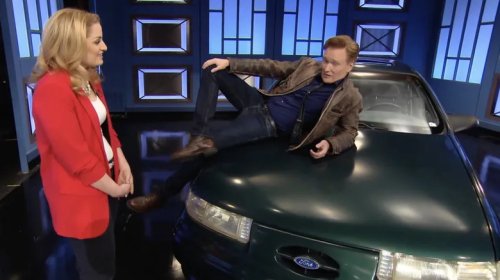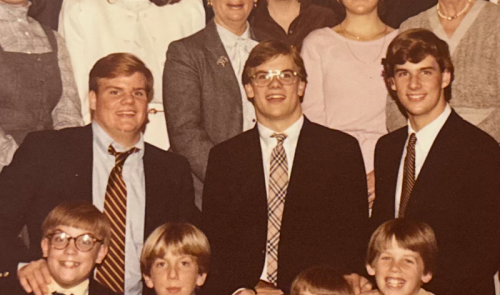
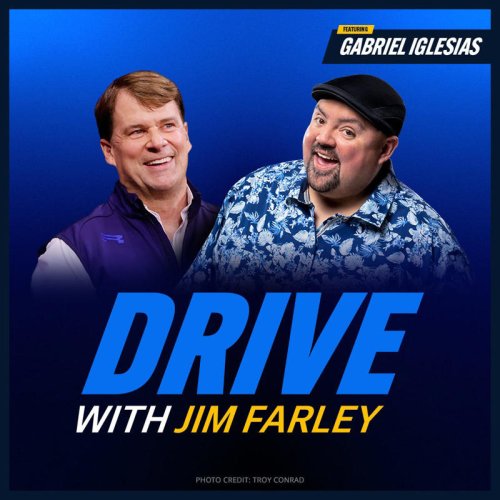
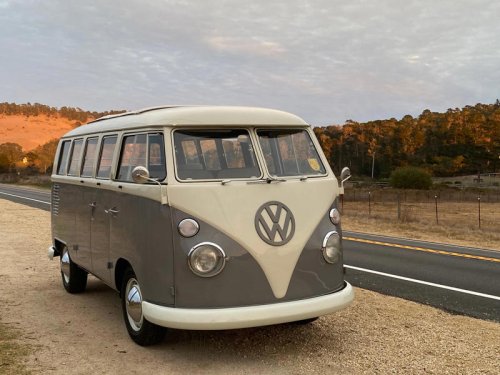
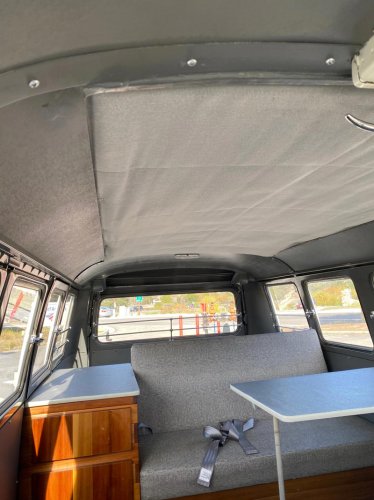
















Ford Motor CEO Jim Farley is back for a fourth season of his podcast "Drive." The podcast, available on platforms such as Apple, YouTube and Spotify, features Farley interviewing various celebrities about their lives and passions. The first two episodes dropped starting on March 25. A new episode comes out every Wednesday. Spoiler alert: If you haven't listened to the podcasts, this article contains some of the content discussed in the first two episodes. The "Drive" series has grown in popularity since Farley first introduced it in 2022. Content from Season 3 had more than 40 million views and became the No. 1 trending auto show in the United States and Canada on Apple Podcasts, Ford spokesman Dan Barbossa said. Here is Farley's guest lineup for this season: Gabriel Iglesias, comedian and actor (aired March 25).Mike Rowe, television host, narrator and author who is best known as the creator and host of Discovery Channel’s "Dirty Jobs." Rowe and Farley had an interesting conversation in October 2025 in Detroit about Farley's son working as a mechanic.Bryan Cranston, actor, best known for "Breaking Bad," director and producer. Cranston has deep ties to Ford, including voicing the automaker's commercials and working with its philanthropy.Christina Roki, Detroit-based automotive enthusiast and influencer who gained popularity by documenting her journey fixing her family’s cars.Daniel Ricciardo, Australian former Formula 1 driver considered one of F1’s most popular modern figures (aired April 1).Sir Chris Hoy, former racing driver and six-time Olympic gold winning track cyclist. While Farley is unlikely to sell more Ford cars by hosting the series, marketing experts told the Detroit Free Press in past interviews on the topic that doing alternative forms of media helps Ford connect with a broader audience than traditional marketing does. "Companies may like having a visible CEO to put a human face on the business," said Erik Gordon, area chair of entrepreneurial studies at the University of Michigan Ross School of Business. "Detractors who doubt that it is worthwhile for CEOs to spend time on podcasts, helping a ghost writer author the CEO's biography or do interviews with style magazines, think CEOs are paid a lot of money because their job is so difficult and time consuming." The podcast is also a way to try connect with a younger audience, Peter Berg, a professor of employment relations and director of the Michigan State University School of Human Resources and Labor Relations, told the Free Press in a March 2025 article about Farley's podcast. "It definitely seems like just another form of marketing," Berg said. "They are probably trying to reach an audience that doesn't consume traditional advertising." Part of the attraction is that Farley's conversations often touch on intimate realities of life beyond the superficial surface of the celebrity's accomplishment. The question that should have gone to Chris Farley For example, in Episode 1 of Season 4, Farley talked to stand-up comedian and actor Gabriel Igelsias, who is known for blending storytelling with character voices and using sound effects. His nickname is "Fluffy," which he told Farley his fans gave him after he told a joke about how he called himself fat to his mother and she corrected him and said, "You're not fat, you're fluffy." "You’re a superstar in my family and being a Farley, comedy is our indiginous sport," Farley said. A young Chris Farley (left), late-comedian, and his cousin Jim Farley (right), now Ford Motor CEO, in a family photo. Farley's cousin is the late comedian and actor Chris Farley, who Igelsias said he admired. Chris Farley died in 1997 at age 33 from a drug overdose. But Igelsias' admiration of Chris and that conversation prompted a revealing question from Farley. "I wanted to ask you a question that I wished I’d asked my cousin and I didn’t, and I really regret it: Has there been a moment or moments when you felt you truly made a difference in people’s lives with your comedy?" Igelsias pondered the question and then said, "I can’t just assume what I’m doing is life-changing in any way." But he said he has had audience members and other fans tell him that they were going through a difficult period when he performed and his comedy helped them through it. Ford Motor CEO interviews comedian Gabriel Igelsias about comedy and his car collection on episode 1 of season 4 of the podcast Drive. Farley also talked to Igelsias about how Igelsias reveals personal issues and talks openly about going to therapy for more than a year to address them. Igelsias said being able to admit “things aren’t going well” has made him stronger and forced him to address his problems. Farley told Igelsias he appreciated that answer because "as a business leader, people do not invest in vulnerability; but if you want to be a leader of people you have to learn from your mistakes. I admire and identify with your approach.” Farley's love of VW buses Besides talking comedy, Farley also asked Igelsias about the comic's collection of the classic "Type 1" Volkswagen buses, which are the first-generation vans made from 1950 to 1967 and known for the split front windshield, round bodies and stereotypically driven by hippies. Farley said those vehicles had the best paint colors in the auto industry. When Farley brings it up, Igelsias asked if Farley if he is allowed to speak about other automakers, given he's the CEO of Ford. Farley reminded him that he once worked in a restoration shop years ago so, "yes, people know who I am and they know I’m a car person. I don’t really care if they’re upset." Igelsias then joked, "We’d like to bring up something at your review ..." and Farley laughed, saying that has happened before. Then Farley spoke of the first generation VW bus he once owned, which he loved to drive because “when you’re in sync with it, it feels like it’s part of your body.” Ford Motor CEO Jim Farley's 1960 Type 1 Volkswagen bus. "I built cedar cabinets in it and it was a putty grey color with an off white accent," Farley said. "My kids loved it. But I couldn’t hang on to it. The zero-to-60 was 27 seconds so it was dangerous to get on a highway." Farley also said he once got caught in a windstorm while driving it and the wind pushed the vehicle over by several lanes. Igelsias said he almost flipped over in one and another one caught fire, adding that "every one of them have broken down and left me on the side of the road." Still, the two professed love for the bus and Igelsias said he owns close to 30 of them that he hopes to make into a museum one day. As for Ford products, Igelsias said his favorite was the Flex along with a 1994 red Mustang he owns. Igelsias said he owns a Ford Excursion that he wishes Farley would bring back and offer it with a hybrid powertrain. The interior of Ford Motor CEO Jim Farley's 1960 Type 1 Volkswagen bus and the cedar cabinet he built for it. He eventually sold it. "Everything gets out of your way when they see an Excursion in their rearview mirror," Igelsias said. "I really love that car." Race car conversations In the second episode, that dropped on April 1, Farley has a reflective conversation featuring former Formula One driver Daniel Ricciardo, who has won eight Formula 1 titles across 14 seasons. Farley, who is an amateur race car driver himself, connects with Ricciardo on the feeling of being one with a machine when behind the wheel in a race. The two also lament the flip side of racing, which is the disappointment after making a mistake, crashing or just losing the race which is often the case. Victory is elusive most of the time. Ricciardo reflects on his career and the feeling of knowing when something you love is coming to an end. But also the "superpower" feeling when he won, to know he was “the best in the world at one thing, for one day." When Farley asked Ricciardo about knowing when it's time to retire, the two discuss the importance of really showing up for your job and when that's gone, it's time to go. Farley's guests' advice on doing a better job Farley asked Ricciardo what advice he'd give the CEO of Ford. Ricciardo emphasized the importance of having fun, noting that only chasing after results can remove joy from even the most interesting jobs. Farley noted he sometimes gets too serious and must remind himself to stay curious and balanced in both leadership and life. When Farley asked the question to Igelsias, his advice was to keep an open door and open mind approach to leadership. "Be open to listening to everyone at Ford from the bottom, all the way to the top, especially people who've been working at Ford for a long time. Letting everyone know that everyone here matters. We are a team ...a nd if there's anything you think we can do better and improve, I am all ears," Igelsias said. “I’ve been surprised many times giving people who normally wouldn’t have a voice, a voice.” Farley appreciated the advice saying he was recently at Ford's factory in Kansas City and he asked an employee, who worked for Ford for 50 years at the same plant and who is a Vietnam veteran, what Ford can do better. “He said, 'Mr. Farley...if you just paint the bottom of the roof, because it will lighten up the plant up 20% or 30%, if you put white paint on the bottom of the roof and everyone will feel more pride in coming to work.' It was so helpful," Farley said. "So I love what you just said to me, it is such a great suggestion. We are attracted to those who speak the loudest, but we can learn the most from those who listen with both ears." Iglesis then added, "That, and please don't make electric muscle cars. There, I said it." Farley laughed and said Ford has some "good stuff coming" and if he does his job well as CEO, "I'm going to make it very tempting for you to trade in those 30 VWs for 30 Fords." Jamie L. LaReau is the senior autos writer for USA TODAY Co. who covers Ford Motor Co. for the Detroit Free Press. Contact Jamie at jlareau@freepress.com. Follow her on Twitter @jlareauan. To sign up for our autos newsletter. Become a subscriber.