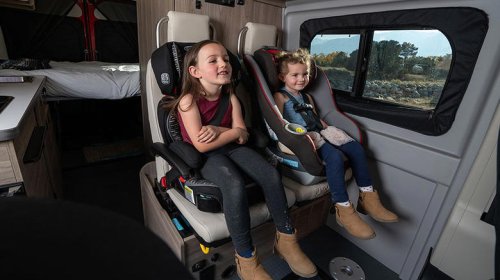



















Smooth Operator?Electric vehicles are typically associated with smoother operation compared to traditional combustion cars, a quality luxury automakers like Rolls-Royce have leaned into with their EV models. Much of that smoothness comes from reduced powertrain noise and vibration and the lack of shifts from a conventional multi-gear transmission. But apparently, some passengers feel quite the opposite, saying riding in an EV gives them motion sickness.BBC reported on several passengers feeling sick while riding in an EV, including Lola Baird from North London, who, because of motion sickness, even asked her boyfriend to change his car. There are also studies suggesting there may be a link, but according to Dr. Bill Yates, who has researched motion sickness at the University of Pittsburgh, the findings are "pretty sketchy at this point." So, what could be causing motion sickness? According to neurologist Dr. Nicholas Hac, quoted by the publication, it can be caused by "a mismatch in sensory cues," while Chinese EV maker Xpeng highlighted several characteristics of EVs that may contribute.Xpeng G7XpengLost in MotionPeople rely on three main sensory inputs to perceive movement, including sight, the inner ear's balance system, and proprioception. The sight part is not exclusive to EVs and can become a problem whenever passengers aren't seeing visual signs of movement outside the window. Meanwhile, the reduced engine noise and vibration in EVs can remove cues that normally help passengers anticipate that the vehicle is accelerating.Moving to more mechanical factors, the instant torque and rapid acceleration in EVs may be fun, as popularized by the now-discontinued Tesla Model S and its ability to beat fuel-fed supercars in straight-line races, but they can happen faster than passengers' senses can anticipate. That sudden acceleration can create a mismatch between what passengers feel and what their senses expect, increasing the chance of motion sickness.Another significant factor is regenerative braking, a common feature among electrified cars where the vehicle's forward momentum drives the electric motor as a generator when the accelerator pedal is released. It turns kinetic energy into electrical energy instead of wasting it as heat typically absorbed by the braking system. This feature causes electrified cars, including hybrids, to slow down when the accelerator is released, which, if paired with rapid acceleration, can make passengers feel like they are rocking back and forth.Jared Levenson/AutoblogMotion ManagementStudies have shared several tips for reducing motion sickness, including looking out the window instead of at a smartphone, sitting in the front passenger seat, keeping the body steady, opening the windows for fresh air, and staying hydrated.Meanwhile, drivers may not be as affected because their own inputs help them anticipate vehicle movement, but they also have some takeaways from this concern, including adopting smoother driving habits. Again, the research is still in its early stages, but the report noted that future findings could help automakers improve ride quality.Cole Attisha