European automakers are rewriting their China playbooks, as domestic rivals erode their sales, profits and once-commanding reputations for premium technology.
Mercedes-Benz, BMW, Volkswagen Group and Volvo are betting on local development, Chinese technology and lower-cost sourcing to compete in China, the world’s largest auto market.
“Our conclusion is that the old recipe for success in China is dead,” Volvo CEO Hakan Samuelsson told Automotive News Europe on Oct. 23.
The strategy shift may not be enough. China’s automakers have largely overtaken their European rivals in software and electric-vehicle technology, and Chinese buyers may question why they should pay more for a foreign vehicle using the same technology as that in a cheaper domestic one.
Another obstacle to recovery is that the Chinese market is shrinking. China’s passenger-car sales are forecast to fall 22 percent to 18.5 million vehicles in 2026, the steepest decline on record, according to the China Passenger Car Association. The group expects just a 2 percent recovery in 2027.
For decades, European brands developed premium vehicles at home, built them in China and charged more because buyers saw them as prestigious. That advantage has disappeared, Samuelsson said. China’s premium sector “is going electric and it’s going national,” he said.
VW Group’s Audi brand cited declining sales of internal-combustion cars in China on Oct. 30 when it issued a profit warning. VW Group, Mercedes and BMW have all issued profit warnings in recent months, partly linked to lower sales in China.
Pedro Pacheco, Gartner’s vice president of research, said Chinese automakers have surpassed their foreign rivals in key areas. “The [non-Chinese brands] are perceived by target consumers as old-fashioned and expensive,” Pacheco told Automotive News Europe.
Volvo bets on Geely’s technology
Samuelsson said Volvo’s existing European-developed models will not drive growth in China. “Our XC90, XC60, S90 and all of those cars [not built specifically for China] will not give any growth,” he said.
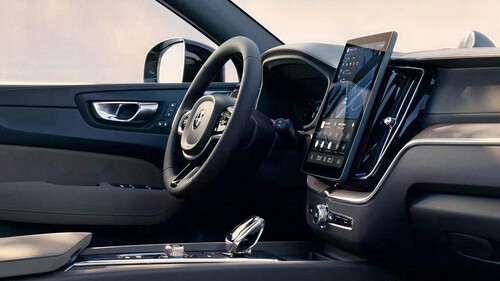
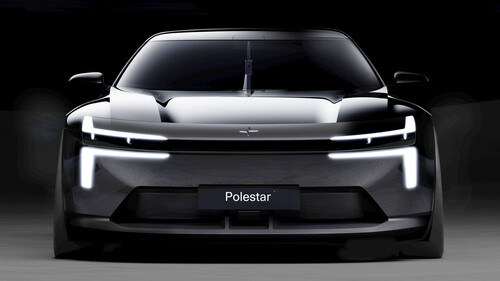
Volvo plans to launch 13 new vehicles by 2030, with separate lineups and technology architectures for China and Western markets. Volvo said six vehicles will be developed specifically for China on Geely’s electronic architecture, which supports software-defined vehicles, cloud integration and native artificial intelligence. They will use locally developed software and common supply chains rather than adapt European models.
Samuelsson believes Geely ownership gives Volvo an advantage over competitors that must negotiate technology partnerships with Chinese automakers.
Volvo expects to raise the percentage of components it shares with Geely globally to 30 percent by 2030 from 10 percent today, a shift it expects to cut material costs by as much as 5 percent, according to its strategy presentation on Sept. 17.
However, Gartner’s Pacheco questioned whether adopting Chinese platforms and software would justify European brands’ higher prices. “Using vehicle platforms from Chinese OEMs is also not the ‘silver bullet,’ ” he said.
Mercedes to reduce dependence on China profits
Mercedes aims to make its Chinese business more self-sufficient while relying less on the market for profit. “The plan is to be less dependent on profit pools from China,” CFO Harald Wilhelm told investors during the automaker’s third-quarter earnings call on Oct. 28.
Mercedes wants to raise local sourcing to almost 100 percent and cut imports from Europe, which account for about 20 percent of its China sales. A key test will be a new electric E-Class that will launch in 2027 using almost entirely China-sourced components to lower costs. CEO Ola Kallenius said Mercedes would price the model realistically but would not join the steep discounting pursued by some domestic rivals.
BMW plans to be more local
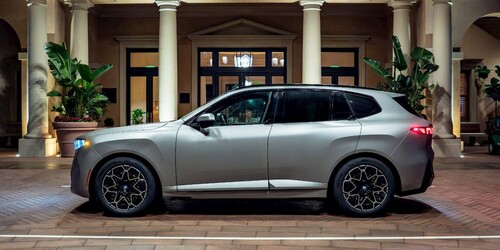
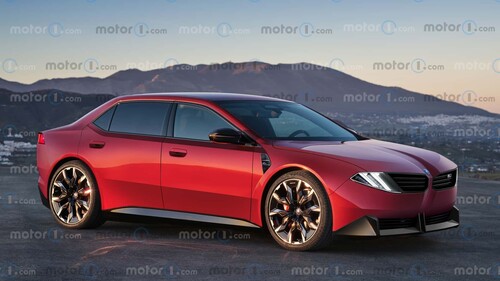
BMW is also resetting its China business, expanding local production of vehicles based on its Neue Klasse platform and limiting imports to models with the highest margins. The low-margin X1 and X2 compact cars will be dropped from its China lineup.
The aim is to increase the share of locally manufactured vehicles developed specifically to suit Chinese customer preferences to at least 95 percent by 2030 from 90 percent now, BMW said during the company’s Capital Markets Day on Sept. 30.
VW’s China-developed EV struggles
VW Group’s experience shows that Chinese technology partnerships do not guarantee success. VW turned to Xpeng in 2023 to speed development of EVs tailored to Chinese buyers.
But the first model from the partnership, the ID Unyx 08 electric SUV, has struggled since its launch. The EV averaged 267 sales a month through August, compared with an initial target of 3,622, according to a Reuters investigation citing ThinkerCar data and internal VW documents. The SUV faced similarly priced Chinese rivals with more advanced technology, including Xiaomi’s YU7 and Zeekr’s 7X, and VW sold it through a limited new dealer network rather than its established network of more than 3,000 dealerships.
China, which once contributed nearly half of VW Group’s profits, now accounts for about 10 percent, Reuters reported. The automaker’s Chinese joint ventures posted an operating loss of €113 million in the first nine months, compared with a €744 million profit a year earlier, the company said on Oct. 29.
VW Group is shifting away from its long-standing “In China, for China” strategy toward an approach it describes as “In China, beyond China.”
The automaker is turning to exports to help fill its underused China factories. VW Group and Turkish distributor Dogus Otomotiv have signed an agreement to assemble VW models developed in China in Turkey using the completely knocked-down process, according to Automobilwoche, a sister publication of Automotive News Europe.
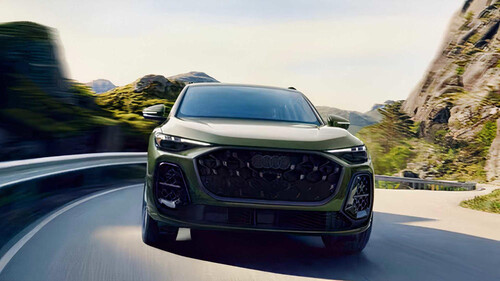
VW Group is also reorganizing Audi’s Chinese business. Under agreements announced Oct. 26, its joint venture with FAW will focus on vehicles with Audi’s traditional four-ring badge, while its SAIC joint venture will develop China-focused EVs under the AUDI name, without the rings. The AUDI brand has had a slow start. Through September it sold 7,500 E7X SUVs and 6,100 E5 Sportbacks, figures from market researcher Dataforce show.
Industry watchers question whether Europe can compete on China’s terms
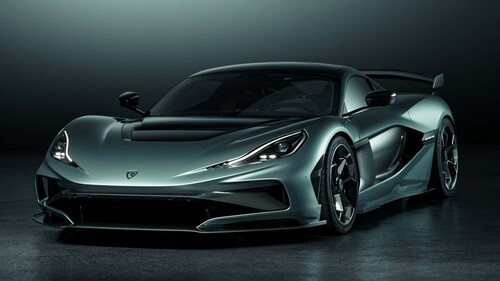
Mate Rimac, the Croatian entrepreneur who heads Bugatti Rimac, doubts European automakers can regain competitiveness by matching Chinese rivals on technology and costs. “Europe needs to find its niche because competing with China will not work. Period,” Rimac told Automotive News Europe.
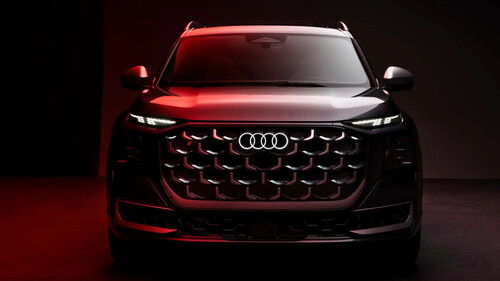
“If you try to do the same thing, such as illuminated grilles or electric powertrains, Chinese are better at it, and they will get better at it — and cheaper. You cannot win,” he said.
Rimac compared the challenge to a traditional Swiss watchmaker trying to compete with a technology company. “Imagine if Rolex tried to compete against Apple. That is what the Europeans are trying to do now,” he said.
Gartner’s Pacheco said European automakers must do more than imitate their Chinese competitors. “How can you overtake a leader if you just keep copying what they are doing and don’t come up with a brilliant idea or a truly cutting-edge technology?” he said.
Greater localization would help reduce costs but would not necessarily restore a competitive advantage, Pacheco said. “Best-case scenario, they could match Chinese on software/AI but matching is not enough to sustain a much higher price point,” he said.
Pacheco said moving development to China and filling cars with Chinese tech will not reverse the decline. Instead, European automakers need to transform their leadership and corporate cultures to become more technology-focused.
“The irony is that while several foreign OEMs are now experiencing financial woes due to their losses in China, the problem actually has its roots in the global headquarters,” Pacheco said.
He warned that some foreign automakers may ultimately be forced to leave China if their sales continue to deteriorate.