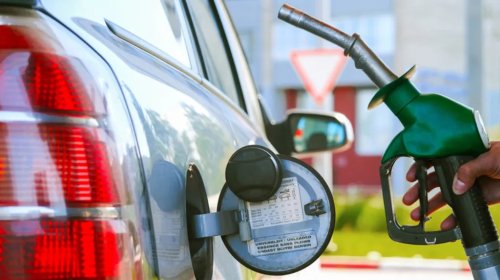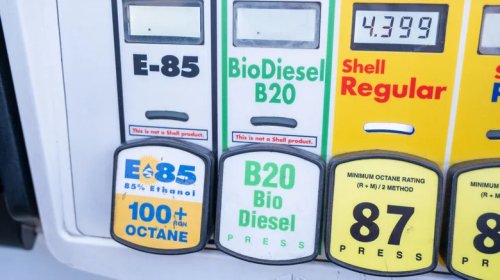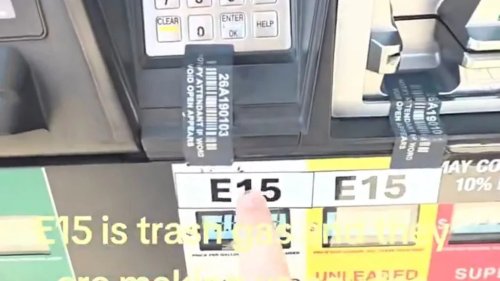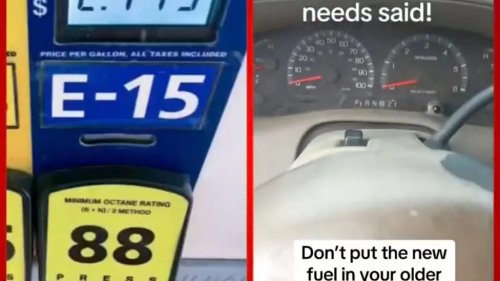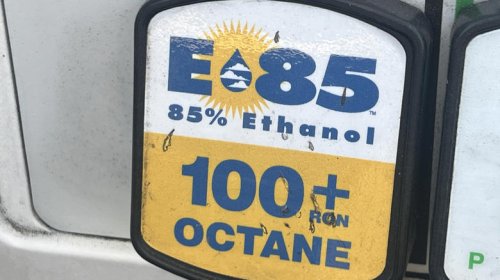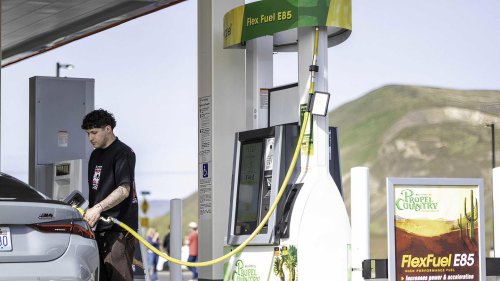
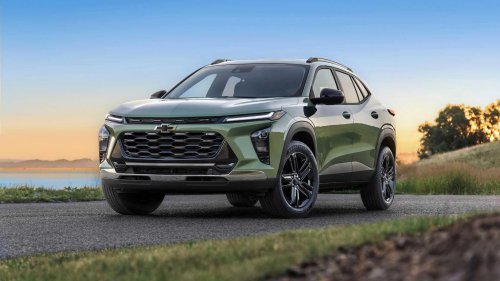
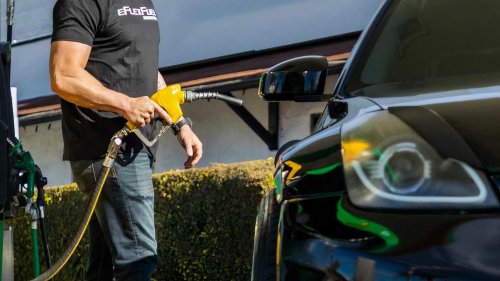



















Jump LinksAll About The BasicsHow Does E15 Gas Work?Is E15 Gas The Same As 87? What About E85?Overview And Current Examples2025 Chevrolet Trax2025 Chevrolet Silverado 1500Should You Start Using E15?Pros To Using E15:Cons To Using E15:There Are Some DifferencesFuel might be one of the most overlooked parts of modern car technology by the average person. It's nothing more than the stuff you put in a car to make it go, right? Well, there's a lot more to what makes your car move than an average driver might think. If you have a car, or even just your license to drive one, you should know about the different types of fuel; the main types include unleaded gasoline in various octanes, and diesel, which is available pretty much everywhere in the United States.However, some cars (including flex-fuel cars like versions of the Chevrolet Trax) can run on different types of fuel, like E85 gas, E15 gasoline, and some can even run on hydrogen (the Toyota Mirai, for example). In this article, we'll discuss the basics of E15 gas, how it differs from E85, and some pros and cons to weigh before you put it in your car.This is an overview explanation of E15 gasoline - it's not a recommendation for use. CarBuzz recommends using only the type of fuel and octane rating (where applicable) that your car's manufacturer recommends. This can be found in your car's manual, or online at your manufacturer's website. What Is E15 Gasoline? All About The Basics Green Car CongressWhile standard gasoline is made from petroleum, or oil that's drilled from various locations around the world, E15 consists of a blend of that standard gasoline and a substance called ethanol. Rather than being drilled and pumped out of the ground, ethanol is almost always distilled from corn. According to the US Department of Energy, E15 gasoline is a blend of fuels that contains between 10.5% and 15% ethanol, with the rest of the blend consisting of regular unleaded gas.The letters and numbers that differentiate the types of fuel available at the gas pump can get confusing, so here's a simple breakdown. E15 and E85 refer to the ethanol content in a gasoline blend; the standard fuels you're used to using, like 87, 89, 91, or 93 (depending on where in the country you live), refer to their octane ratings. We go into more detail about octane ratings in another article here. Essentially, different engines are rated for different octanes, and we recommend using whatever your car's manufacturer tells you to.Ethanol is usually produced by distilling corn, or sometimes sugarcane. We know what you might be thinking: ethanol is the alcohol produced by distilling spirits like moonshine. You're right - ethanol is a byproduct of a similar process. However, E15 and E85 are both blended with standard gasoline, so neither is safe for human consumption. How Does E15 Gas Work? We'll get more into which vehicles can use E15 later, but it's far more than just flex-fuel vehicles. As far as FFVs go - or FFVs/dual-fuel vehicles - they operate in essentially the same manner as any vehicle that uses standard gasoline or diesel. Many FFVs can take any combination of E15 and standard gas of its required octane, and have sensors to adjust spark timing and other functions depending on the level of ethanol present in the gas tank.The key takeaway from how E15 works is that it's not really any different from using standard gasoline as far as the user is concerned (as long as your car is designed to use it, anyway). Is E15 Gas The Same As 87? What About E85? Like we mentioned above, the numbers in E15 and regular 87 gas mean different things. Before we get into the next section about which cars can use E15, it's important to know that there is a difference. E15 uses a mixture of regular gasoline, like 87 octane fuel, with 10.5–15% of the blend consisting of ethanol alcohol. E85 is similar, but uses a higher concentration of ethanol that only flex-fuel cars are capable of consuming. So, to be completely clear, E15 is not the same as 87, since E15 is not pure gasoline. What Cars Use E15 Fuel? Overview And Current Examples The US Department of Energy's Alternative Fuels Data Center explains how conventional gas automobiles produced for the 2001 model year or newer are safe to use E15, as well as essentially every flex-fuel-capable vehicle regardless of production date. We still recommend using whatever gasoline your car's manufacturer says to use, but basically any car rated for regular 87-octane fuel after the 2001 model year is capable of using E15 safely. E15 may be the cheaper choice in most cases, too, since ethanol is usually cheaper to produce here in America, rather than drilling for oil and shipping it around the world.The federal government imposes some restrictions on using E15, though. Here's a list of vehicles prohibited from using E15 fuel: All motorcycles All vehicles with heavy-duty engines, such as school buses and delivery trucks All off-road vehicles, such as boats and snowmobiles All engines in off-road equipment, such as chain saws and gasoline lawn mowers All conventional vehicles older than model year 2001 Before you get up in arms about being told what to do by the government, this list mostly prohibits vehicles and engines from using E15 since the ethanol content can damage and degrade those engines' internals, which would destroy them from the inside out. It's less about the laws trying to restrict you, and more about trying to save you from destroying your engines with fuel that shouldn't be used in them. 2025 Chevrolet Trax ChevroletWhere research meets the right dealBrowse This ModelNot only is the 2025 Chevrolet Trax one of the cheapest SUVs you can buy new, but it's made better by offering flex-fuel capabilities. The compact SUV only has one powertrain for every available trim, which is equipped with sensors to determine the ethanol content of the fuel you choose to buy. That means you can use cheaper E15 in addition to any standard gasoline you might have left in the tank. To clarify, that does not mean you can use higher octane fuels; the Trax is rated for 87 octane fuel, but is capable of using higher ethanol-content blends - not higher octane fuels.As you can see in the chart above, the Trax is capable of using purely E85 gasoline. With that being said, ethanol burns more quickly than standard gasoline without ethanol. That means the car's fuel economy will suffer by using any blend of gas with ethanol. E15 should be a far smaller decrease, though, since it's still about 85% standard gas. 2025 Chevrolet Silverado 1500 ChevroletWhere research meets the right dealBrowse This ModelSince E15 is mostly regular gasoline, you should be able to use it in any configuration of the 2025 Chevrolet Silverado 1500 that uses standard 87-octane fuel. This truck was built after the 2001 model year (obviously), so it should be safe to use E15. E85, on the other hand, should only be used in a very specific configuration. According to a Chevy dealer, the US Department of Energy, and the EPA, the 2025 Silverado can be flex fuel if it's equipped with the 5.3-liter V8 engine in a 1WT crew cab configuration with four-wheel-drive. Even if your higher trim level Silverado uses a 5.3-liter engine, it might not be equipped with a flex fuel kit. Before you go out and buy one for its flex-fuel capability, be aware that GM just settled a lawsuit about the 5.3-liter engine, and that it might not be the most reliable V8. Pros And Cons Of E15 Gasoline Should You Start Using E15? eFlexFuelE15 offers many of the same pros and cons to using E85. It's not perfect, nor will it completely replace standard gasoline any time soon, but it could be worth switching to if you already drive a flex-fuel car. For those of you without flex-fuel kits, but use regular 87-octane gas, it might be worth trying one day if it's available at any local station. Here are some of the pros and cons to using E15 gas: Pros To Using E15: Using E15 benefits Americans. Since it's usually made from corn, American farmers play a big part in sourcing and manufacturing the fuel, thereby reducing our dependency on foreign petroleum. E15 is closer to being a renewable energy source than standard gasoline. Since it's partly made from corn or sugarcane, it's less damaging to the environment than drilling for oil. Cons To Using E15: We just mentioned that it's more renewable than gasoline, but it's not perfect. E15 still uses a blend of ethanol and gas, so its mixture is still 85% petroleum. E15 has a lower energy density than pure gasoline, so fuel economy suffers. Just how much your fuel economy will go down depends on the vehicle, but examples are shown in the previous section with MPG figures, for example. E15 is not available everywhere, so you probably shouldn't depend on it entirely. Since E15 has a high alcohol content, it dissolves and eats away at some parts. On one hand, it could be good to dissolve rust or other foreign material in your gas tank, but that could clog filters, and potentially degrade parts of the fuel system. Summary: Does E15 Even Make a Difference? There Are Some Differences E15 is not a perfect alternative fuel source since it's still primarily standard gasoline. It was only recently approved for distribution by retail consumers (beginning in 2012) to be used in flex-fuel cars and other cars built for the 2001 model year or newer. The blend uses ethanol, which is distilled from corn most of the time, so it technically helps keep money and work in America. With that being said, the blend is only up to 15% ethanol, so it's not a huge impact. The blend differs from E85, though, since E85 uses a much higher ratio of ethanol to gasoline. Flex fuel cars might benefit from the slightly cheaper fuel source occasionally, but other vehicles will probably just lose fuel economy in the long run.