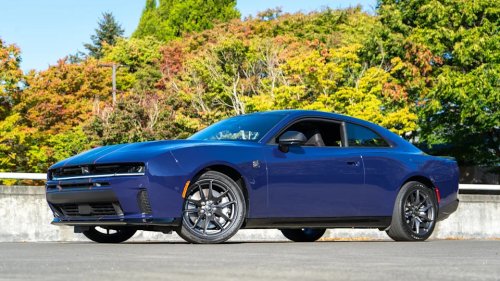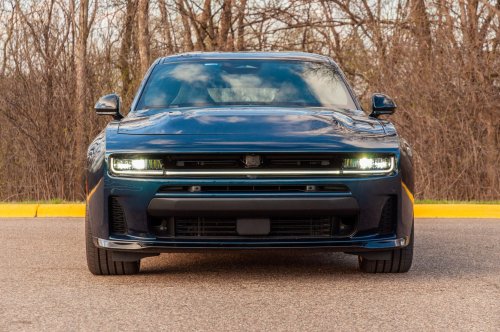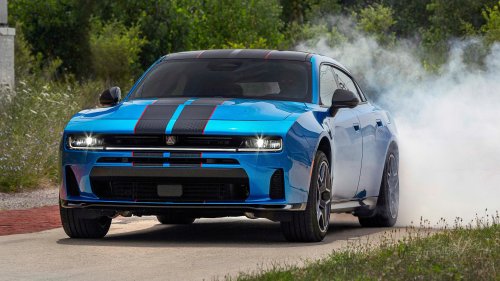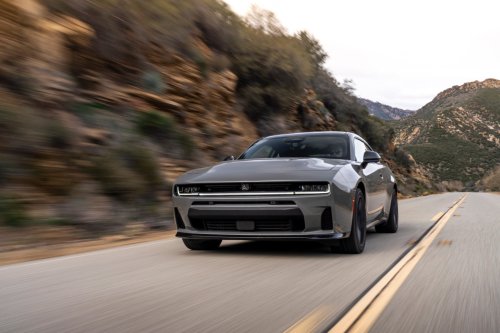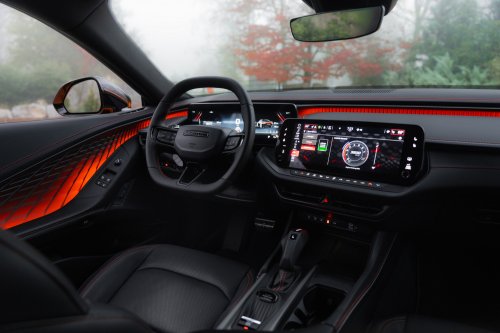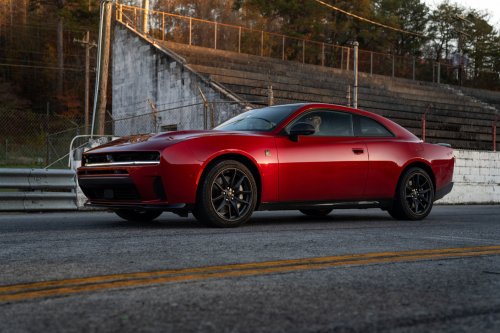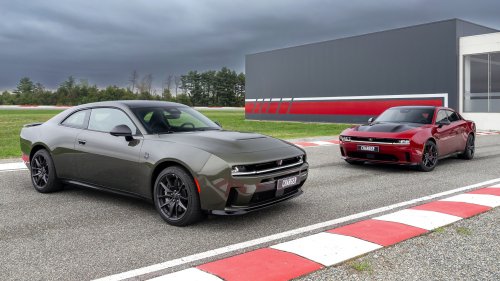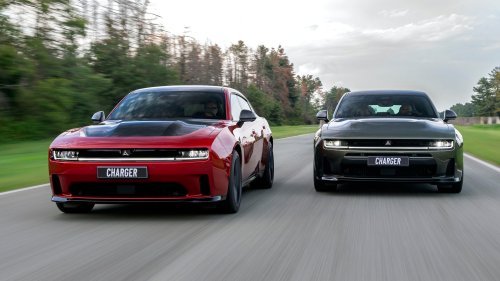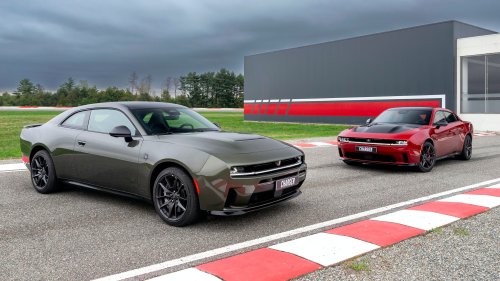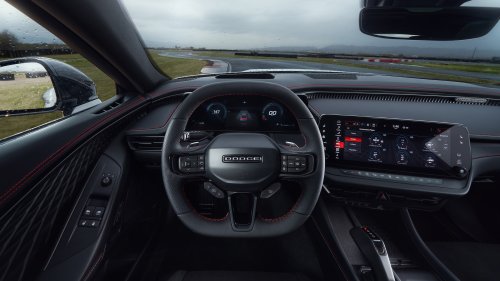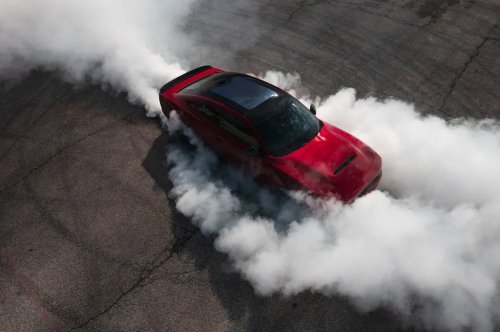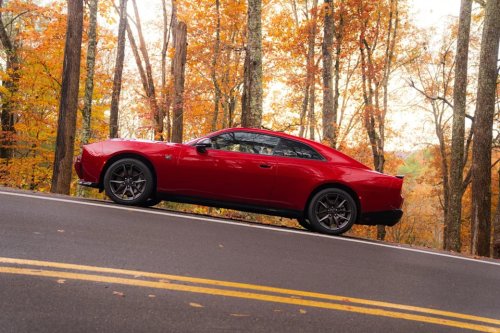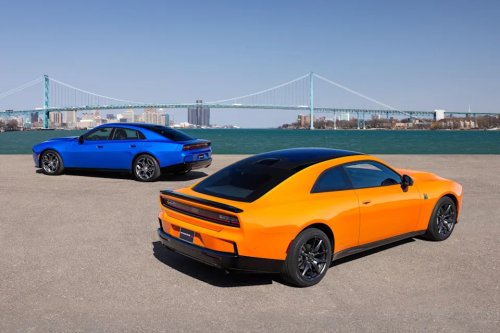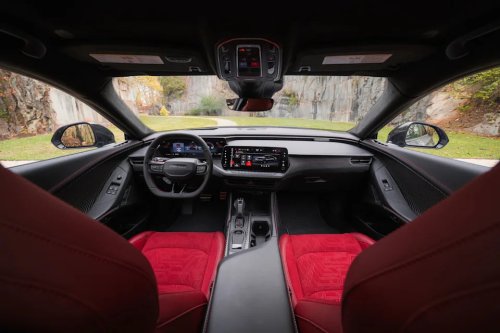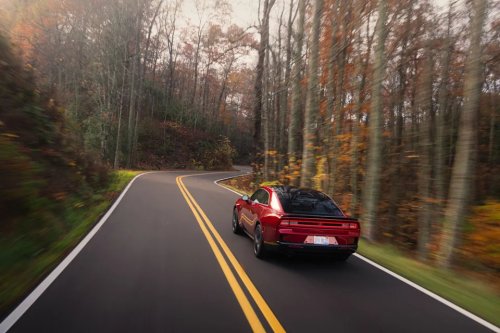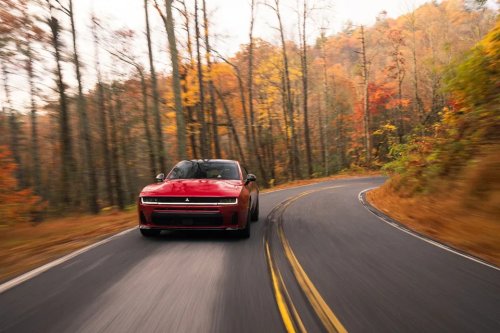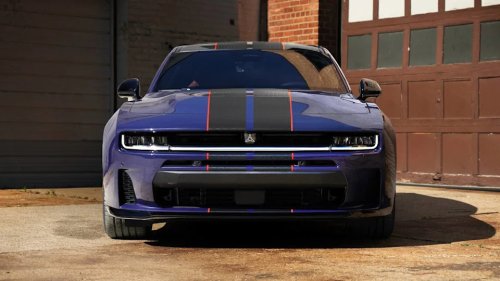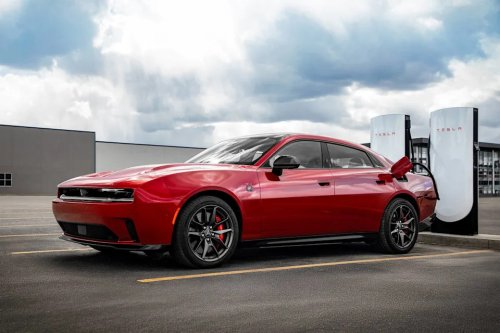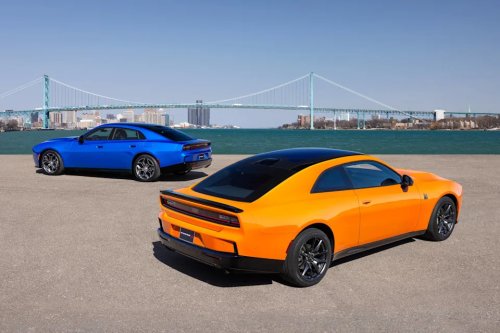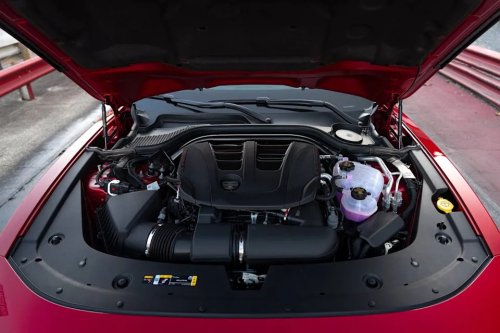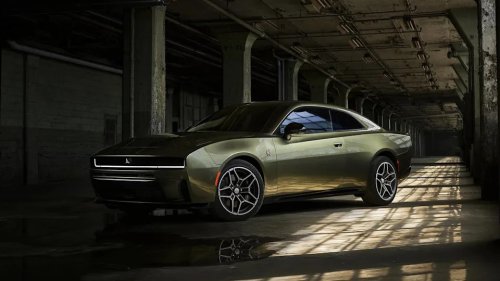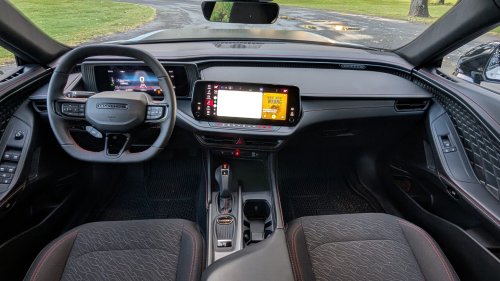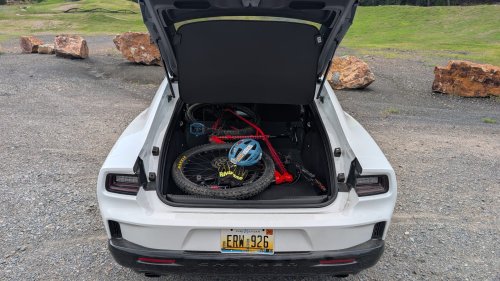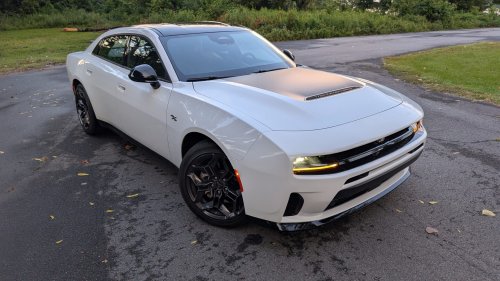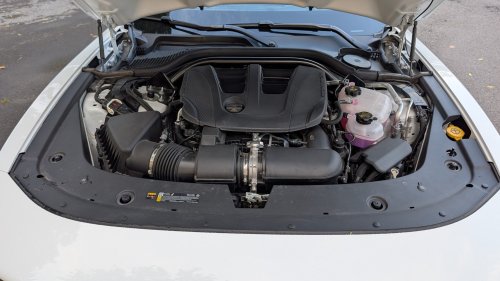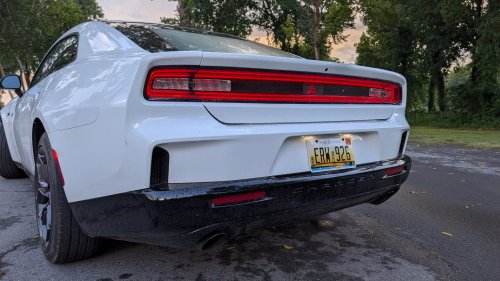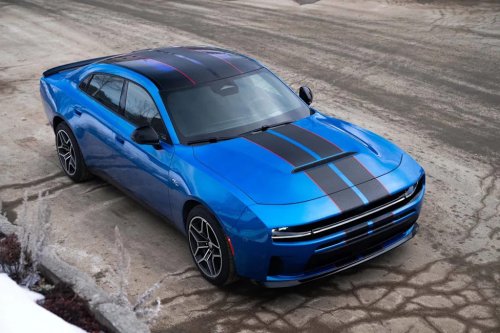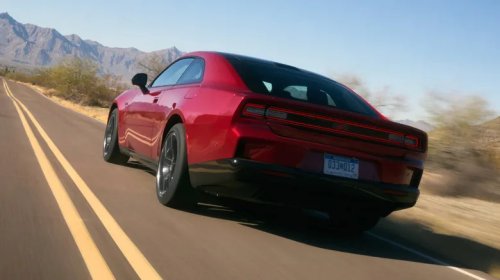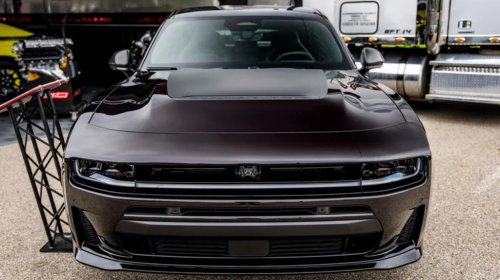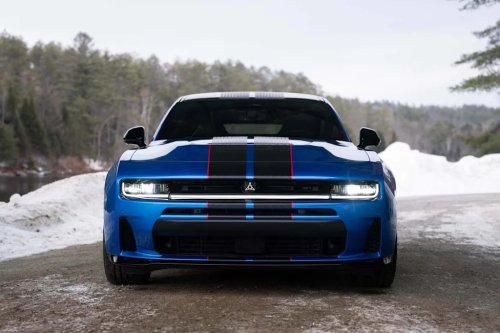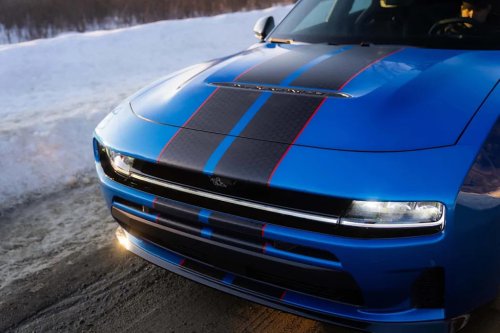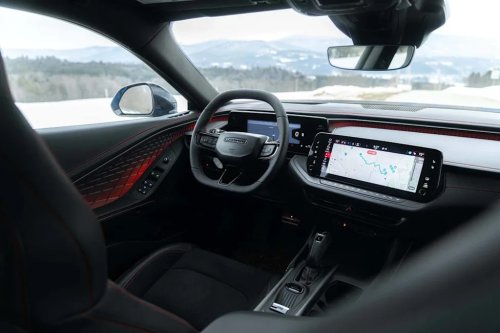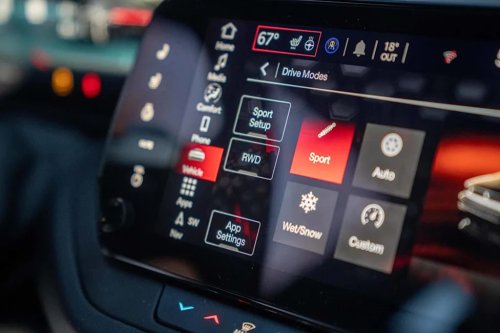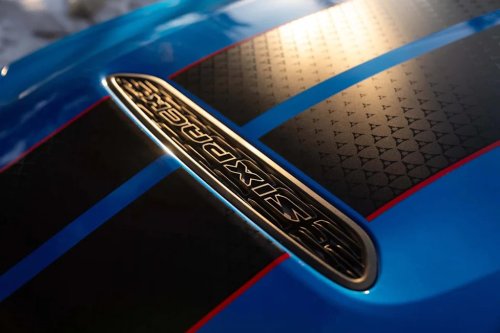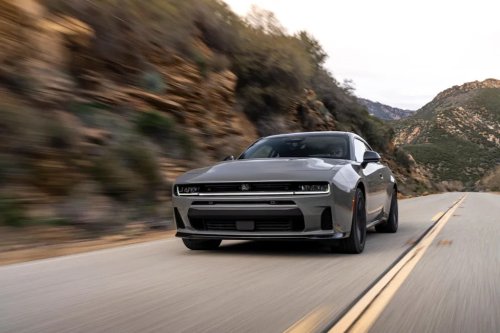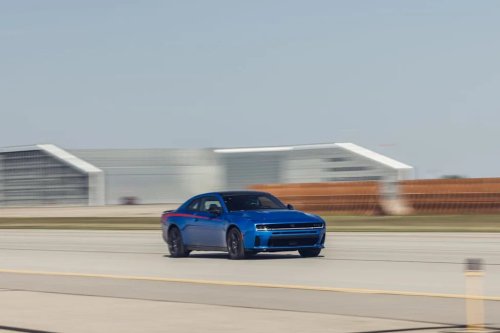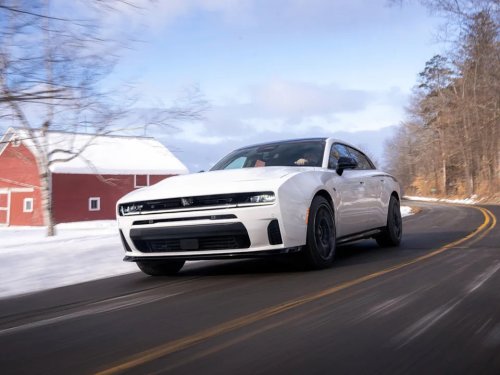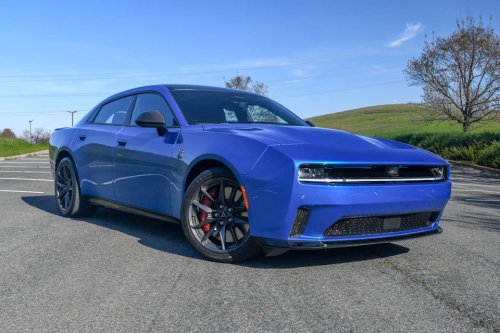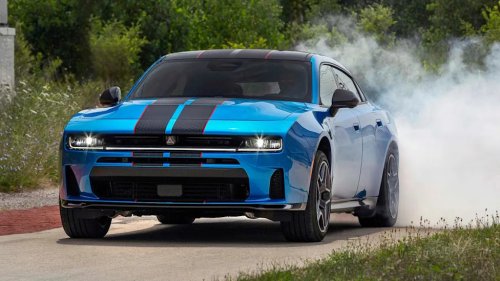
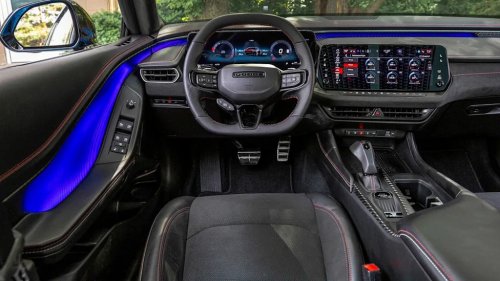
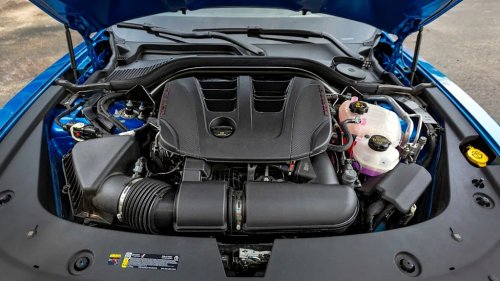
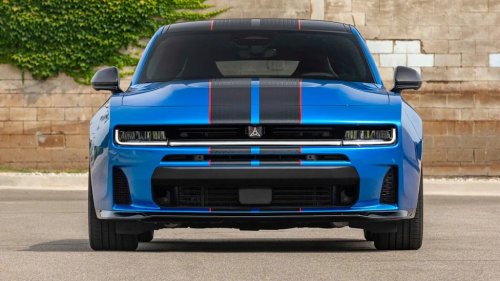
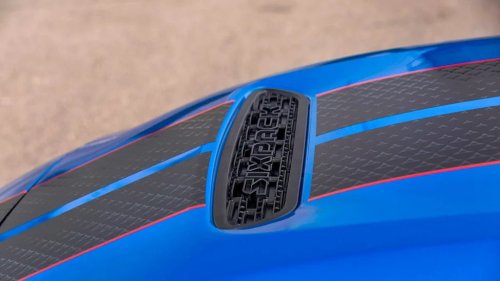
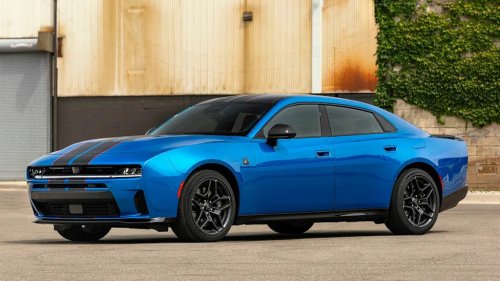
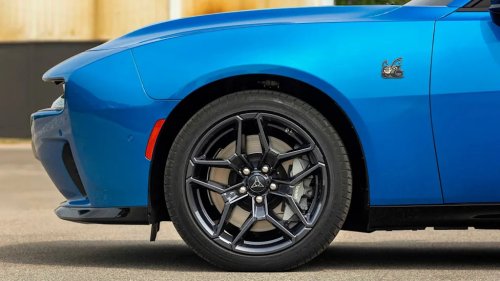
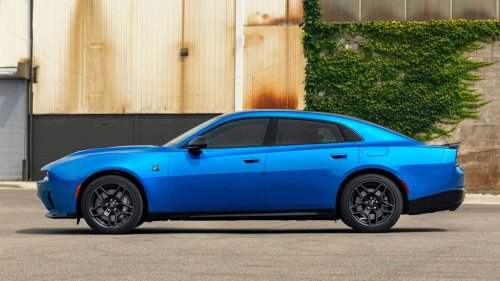
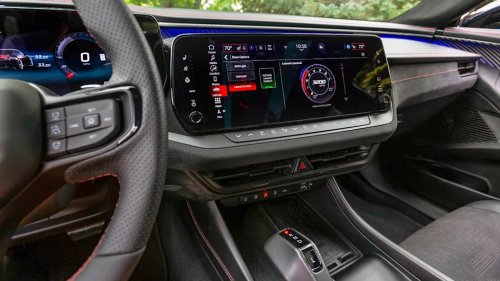
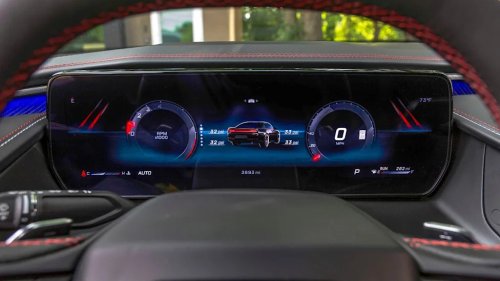
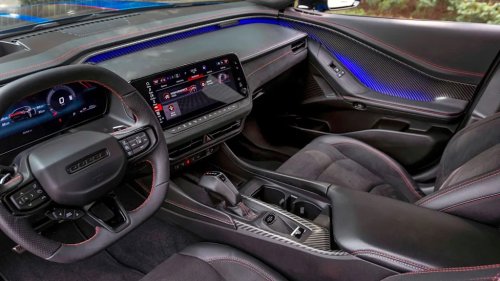
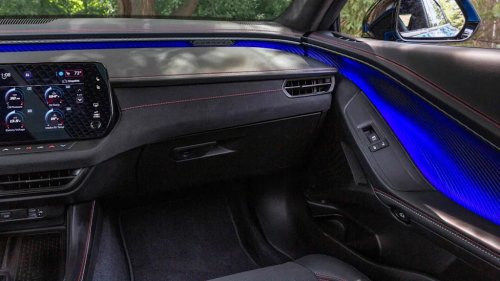
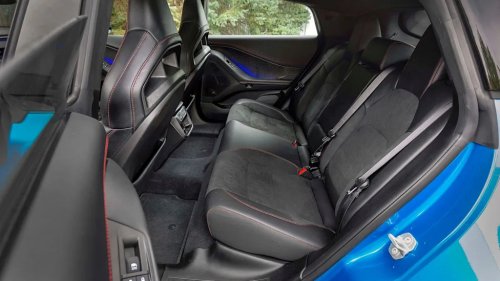
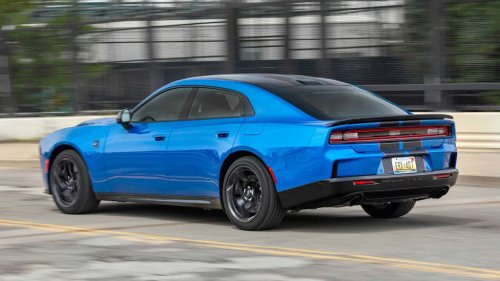
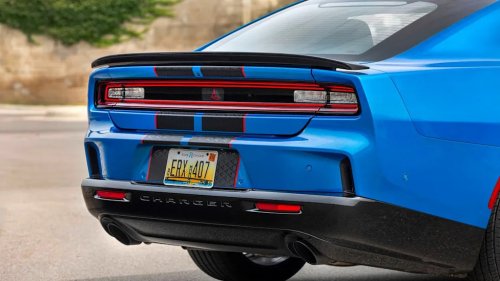
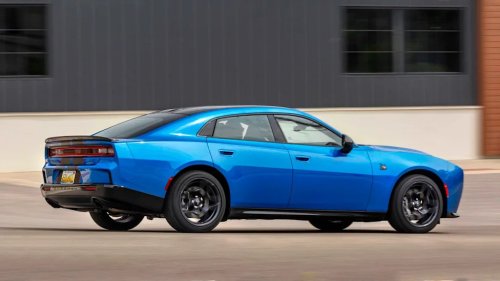
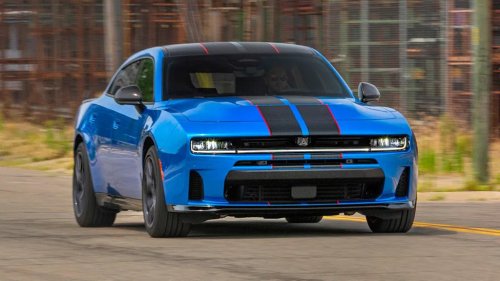
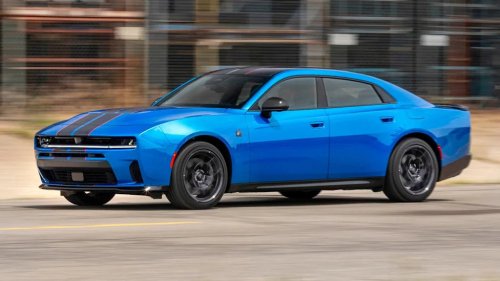
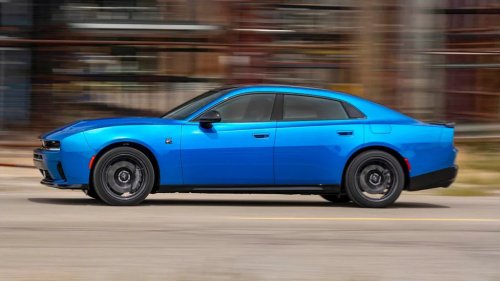
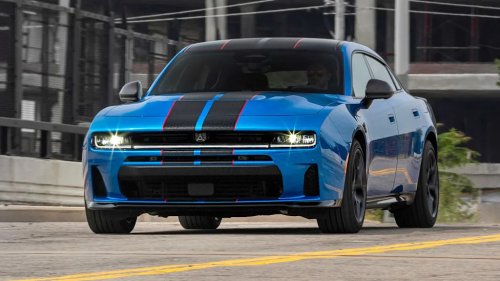
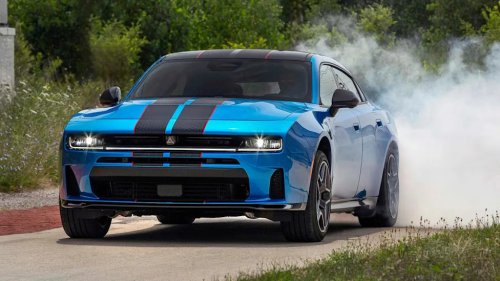
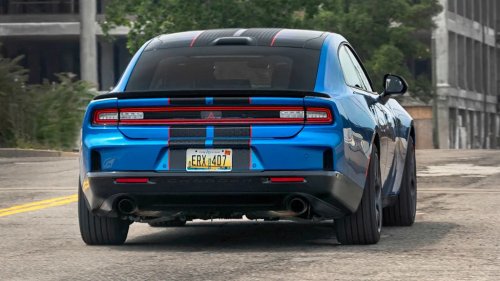



















2026 Dodge Charger Sixpack Scat Pack First TestJim Fets - MotorTrendHazzard-ous good looksFun performance pages, line lock, etc.Five cool chromatic color optionsTragically compromised packagingMass, turbo lag obscure 550 hpBull dimensions on china-shop streetsImagine, if you will, multinational companies as big families. Now envision the Roundel and Four-Ring families (Bavaria's Hatfields and McCoys) each send one of their best and brightest kids off to spend a year studying abroad in the wholesome American Midwest—you know, to broaden their horizons. The four-door hatchback 2026 Dodge Charger Scat Pack strikes us as what might become of a BMW M440i xDrive Gran Coupe or an Audi S5 after just such a Wanderjahre: They'd expand about 10 percent in most dimensions and put on about 800 pounds, but football practice wind sprints and hitting Gold's Gym means they'd still be able to run almost as quickly as they did in the Old Country.AdvertisementAdvertisementWe wonder if fully appreciating this big Dodge is a matter of fine-tuning one's perspective. Sure, it's essentially a muscle car, but nobody will cross-shop this gigantic four-door against its only muscle-competitor, the comparatively svelte Ford Mustang coupe. Instead, perhaps it should be considered America's hot take on an all-wheel-drive Euro Sportback or Gran Coupe hatchback (much like the mid-'80s Dodge Lancer was America's Saab 900). Viewed as such, it delivers even more dramatic proportions than Audi's senior hatch, the RS7—not to mention more passenger and cargo space—but the price and performance align more closely with the way smaller S5 and equivalent M440i xDrive Gran Coupe.Heightening the Euro comparison is this Sixpack Scat Pack's equivalent-displacement twin-turbo six-cylinder engine—a close competitor to BMW's single-turbo mill, except it churns out 164 more horses and 133 more lb-ft more torque, besting even the M4 Competition's twin-turbo six. (Dodge bests Audi's single-turbo V-6 by 188 hp and 125 lb-ft.) That's enough extra oomph to give our Charger fewer pounds to lug per horsepower than either of those Euro hatchbacks.Jim Fets - MotorTrendBy the Numbers: AccelerationLaunching the big Charger is a breeze. Engage Sport mode, stand on both pedals until the engine hits about 3,000 rpm, release the brake, and off you go. The Europeans both get out of the blocks quicker, but this Charger ends up outsprinting the S5 by 0.3 tick, while our most recent BMW ran a few tenths ahead of the Charger.Focusing back on American muscle, the Charger's 4.1-second 0–60 time and 12.5-second, 114.3-mph quarter-mile run handily outpace its predecessor (a Widebody packing a 485-hp/475-lb-ft V-8) by a tenth to 60 mph. The rear-drive V-8's diminished launch traction could explain its 60-mph deficit, but the old car's 12.7-second, 110.7-mph quarter-mile result clearly indicates it's outgunned by the high-output six. (Not surprisingly, the new car's figures are within a whisker of the two-door model, though its Daytona electric sibling is a half second and almost 5 mph quicker than both.)60–0-mph BrakingThe colossal Brembo front calipers and discs and the Goodyear Eagle Sport All Season tires have their work cut out for them, but they come through. The pedal feels somewhat springy, and the amount of travel doesn't inspire confidence, but they deliver stops from 60 mph in 112 feet (doing a little shimmy within the lane). Better yet, the brakes resisted fade during numerous stops and figure-eight laps. The previous-generation Widebody's bigger shoes and 468-pound weight advantage helped it stop 5 feet shorter, and the vastly lighter Euro hatches stop a couple feet shorter still.Jim Fets - MotorTrendCornering: More Euro, Less Muscle?Despite its 2.5-ton mass, all-season tires, and straight-line-hero reputation, this Charger posted some admirable handling results: 0.92 g limit cornering grip and a 25.1-second 0.79-average-g figure-eight lap are respectable. Both those grip figures match those of our most recent 3.0-liter BMW xDrive car, whose lap time was a scant 0.1 second quicker. The last Audi S5 we tested managed 0.95 g on the skidpad and a 24.7-second 0.80 g figure-eight lap.Reality BitesSadly, out in the real world the Charger Sixpack Scat Pack seems shy about demonstrating that performance. Sure, the Sport RWD mode and line-lock function are there to help you depart that cars-n-coffee in a reelzworthy haze of tire smoke, and if you can remember the Launch Control button and brake-torque your stoplight drag races, you'll feel the acceleration numbers quoted above.AdvertisementAdvertisementBut we called up the Performance Pages option where it will record 0–60 and other stats and did back-to-back runs, first using the above noted launch control and then simply flat-footing the go pedal. The computer recorded 4.0 and 4.8 seconds, respectively. That slower number better aligns with how the Charger feels driving around—about like a BMW X7 or Audi SQ5.Jim Fets - MotorTrendWe couldn't help thinking "this just doesn't feel like 550 horsepower." Sure enough, of all the coupes and sedans we've driven since 2020 rated between 525 and 575 hp—including five that weigh 5,000-ish pounds—only one other needed longer than 4.0 seconds to reach 60 mph: the relaxing Rolls-Royce Ghost (at a wafting 4.2 seconds).How's It Work as Transportation?Once you get used to maneuvering a low-sitting car that's as wide as an F-150, it's fine. Our high-spec model with the $2,095 Carbon and Suede package includes bucks-up trim, though rear-seat riders stare at front seat backs covered in a glossy pebble-grain plastic worthy of an econocar. Visibility is compromised by gun-slit windows and our test car's $1,695 Fratzog stripe package, which renders most of the $1,395 glass roof non-see-through. (There's three grand worth of compelling savings we can recommend.) We also wonder why we can't yet option the automaker's hands-free Active Drive Assist system, the digital display's graphics aren't sharper and clearer, and the touchscreen isn't more responsive.A Packaging CalamityWhile it's neat that the STLA Large platform underpinning the Charger can support both combustion and battery-electric powertrains, it's time to admit that its "BEV-native" origins impose significant packaging compromises on the combustion model. Relative to a Mercedes-Benz S-Class, the Charger is just 3 inches or so shorter, more than 4 inches wider, and about the same height. Yet despite the flagship-luxury-car footprint, its rear seat feels like an early Jaguar XJ—a knees-up seating position with insufficient thigh support. Even worse, your 5-foot-10 author's head can't touch the headrest, because it hits the headliner's bump-out to cover the hatchback hinges first. Pitiful.Jim Fets - MotorTrendEven the trunk disappoints, with a very high floor and a weird taper to the hatch lid that reduces height further at the very back. That 22.2-cubic-foot cargo volume sounds great on paper, but trust this former Chrysler interior packaging engineer: You're not getting many big suitcases back here. Had this same cargo bay been measured under the SAE sedan-trunk protocol rather than the hatchback protocol, we'd expect the published volume to dramatically undercut that of an S-Class or 7 Series. There's no spare tire, either. For some reason, a deep-well floor to fit one wasn't stamped for the combustion models—despite there being ample vacant space to do so.AdvertisementAdvertisementThe situation's similar under the high cabin floor. Exhaust pipes and resonators luxuriate in space designed for batteries, while the transmission and propeller shaft still require a tunnel. This packaging department alum is deeply disappointed in his successors' efforts here.Bottom LineThe very best thing about the new Dodge Charger is its design: It's drop-dead gorgeous from most angles. It looks great because nobody ever said "No! You can't make it that (wide/long/tall)!" It also seems increasingly likely that this gorgeous giant is destined to sell in niche numbers, meaning you won't see yourself coming and going as much as the prior-generation models. In the end, those may end up being the most compelling reasons to drive the new Charger.Photo credit: Jim Fets - MotorTrendPhoto credit: Jim Fets - MotorTrendPhoto credit: Jim Fets - MotorTrendPhoto credit: Jim Fets - MotorTrendAdvertisementAdvertisementPhoto credit: Jim Fets - MotorTrendPhoto credit: Jim Fets - MotorTrendPhoto credit: Jim Fets - MotorTrendPhoto credit: Jim Fets - MotorTrendAdvertisementAdvertisementPhoto credit: Jim Fets - MotorTrendPhoto credit: Jim Fets - MotorTrendPhoto credit: Jim Fets - MotorTrendPhoto credit: Jim Fets - MotorTrendAdvertisementAdvertisementPhoto credit: Jim Fets - MotorTrendPhoto credit: Jim Fets - MotorTrendPhoto credit: Jim Fets - MotorTrendPhoto credit: Jim Fets - MotorTrendAdvertisementAdvertisementPhoto credit: Jim Fets - MotorTrendPhoto credit: Jim Fets - MotorTrendPhoto credit: Jim Fets - MotorTrendPhoto credit: Jim Fets - MotorTrendAdvertisementAdvertisementPhoto credit: Jim Fets - MotorTrendPhoto credit: Jim Fets - MotorTrendPhoto credit: Jim Fets - MotorTrendPhoto credit: Jim Fets - MotorTrendAdvertisementAdvertisementPhoto credit: Jim Fets - MotorTrendPhoto credit: Jim Fets - MotorTrend