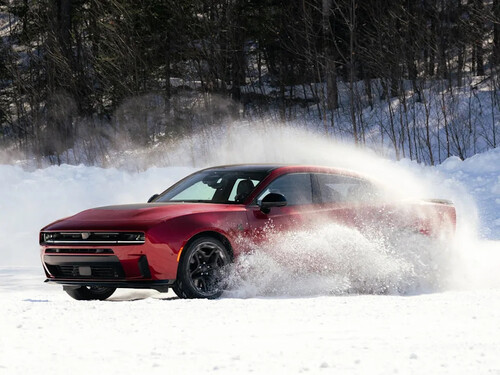
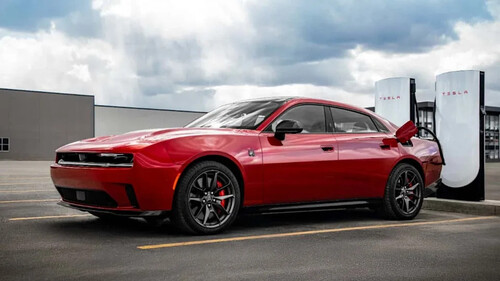
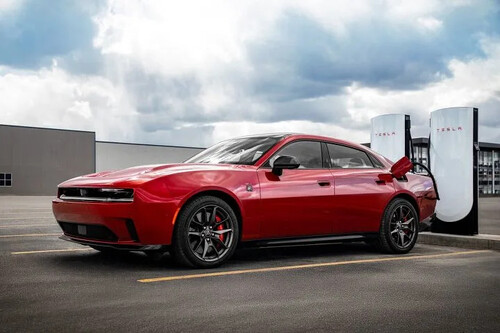
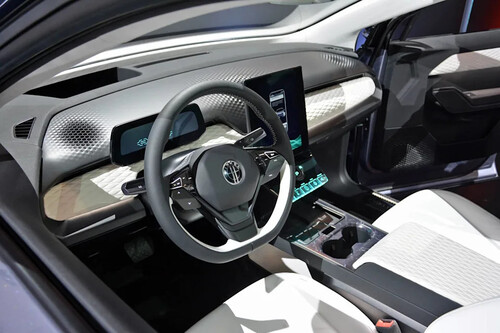
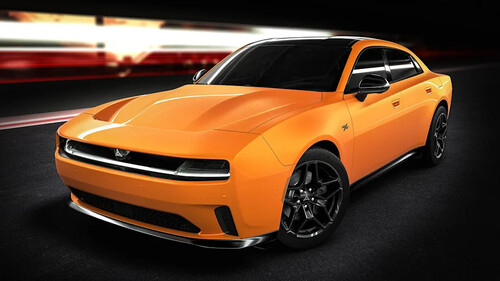
Autoblog and Yahoo may earn commission from links in this article.The HEMI is gone from the Charger, and the internet has spent the better part of two years grieving it. Set that aside for a moment, because the twin-turbocharged inline-six that replaced it is not the problem here. In standard-output form it makes 420 horsepower and 468 pound-feet, which is 50 horsepower and 73 pound-feet more than the 5.7-liter V8 it displaces, and it does the quarter mile six tenths quicker. On paper, the math is settled. Dodge won that argument.2026 Dodge Charger R/TDodgeWhat Dodge has not settled is everything that happens between the driver and the machinery. A week in a four-door R/T trim turned up a car with genuinely excellent bones: a shape that finally honors the badge, a cabin roomier and more comfortable than anything wearing this nameplate before it, and ride quality that shames most performance sedans on 20-inch wheels. It also turned up an infotainment system that froze repeatedly and a throttle calibration so jumpy and non-linear that it undermines the engine's whole case for existing.Dodge Finally Made a Charger That Looks Like One AgainWalk up to this thing and the first thing you notice is that somebody in Auburn Hills went back and studied the source material. The long hood, the fastback roofline, the way the rear haunches swell out over the widest body in the industry: it reads as a Charger in a way the outgoing car never quite managed. The previous generation had presence, sure, but it also had a decade and a half of sameness weighing it down. This one leans into the brand's own history without doing costume-party cosplay, and it looks dramatically better for it.2026 Dodge Charger R/TDodgeThe four-door version is the interesting one, because the hidden hatch means the rear glass and the decklid lift as a single piece. That gets you a genuine liftback opening without a wagon silhouette. Dodge still calls it the world's only four-door muscle car, which is marketing, but the shape backs up the claim better than the brochure copy does.The Cabin Is the Best Part of the CarInterior space is where the R/T trim quietly wins. It is extremely roomy by segment standards, with real width across the front seats and rear legroom that adults will not complain about on a three-hour drive. Comfort matches the space. The seats have enough support to stay pleasant deep into a long day, and nothing about the driving position feels compromised in the way sport sedans often do when they chase a low cowl.2026 Dodge Charger R/TDodgeLayout is smart, too. A 12.3-inch center screen sits above a genuinely nice dash architecture, the 10.25-inch cluster reads clearly, and the pistol-grip shifter lines up with the engine start button in a way that feels deliberate rather than retro for its own sake. The ambient lighting deserves its own callout. The 64-color Attitude Adjustment system, part of the Plus package, is one of the better executions of the idea at any price, and it makes the cabin feel expensive at night in a way the material quality alone would not. Cargo runs to 37.4 cubic feet with the rear seats folded flat, which is 127% more than the outgoing car managed.Uconnect Broke, RepeatedlyHere is the first real problem, and it is not a nitpick. Over a week with the car, the multimedia system froze more than once. It crashed. It lagged badly enough that basic inputs, changing a source, adjusting a setting, backing out of a menu, would hang for seconds at a time before catching up. That is not a quirk you learn to live with; that is a system you stop trusting, which means you stop using it, which means you are driving a modern car with a large dead screen in the middle of it.2026 Dodge Charger R/TDodgeAdvertisementAdvertisementScreen size and resolution are fine. The hardware looks right on paper. Whatever is going on is in the software, and it needs to be fixed before this system can be recommended, because at the moment it cannot be. If you are shopping one of these, spend real time in the infotainment during your test drive. Not thirty seconds. Ten minutes, poking at everything.The Throttle Is Fighting YouThe second problem is worse, because it affects every single drive. Dodge's own engineering materials make a lot of noise about the SIXPACK standard-output engine's twin 50mm low-inertia turbochargers, its counter-rotating turbine assemblies, the 22 psi of boost, the promise of full peak torque by 2,500 rpm and "near instant" response. The reality from the driver's seat does not match the press release. Turbo lag is very present. Ask for power and there is a beat of nothing, then everything arrives at once.2026 Dodge Charger R/TDodgeCompounding it is the throttle mapping, which is jumpy and rigid rather than progressive. Small pedal inputs produce disproportionate results, larger ones produce delay followed by a shove, and the two behaviors do not blend. Acceleration is neither smooth nor linear, which is a strange thing to write about a car quoted at 4.6 sec, est. to 60 mph and a 12.9-second quarter mile. The straight-line numbers are real. The way the car delivers them is the issue. Modulating it in traffic takes conscious effort, and rolling on the power mid-corner is an exercise in guessing what happens next.None of this is a hardware ceiling. The eight-speed torque converter automatic behaves itself, the all-wheel drive system does its job, and the rear-wheel drive mode that sends 100% of torque rearward at the push of a button is genuinely fun when you have space for it. This is a calibration problem, and calibration problems are fixable. It just needs to happen.The Ride Is the RedemptionGive credit where it is due: ride quality is excellent. The suspension absorbs broken pavement without the jitter that usually comes with a performance-tuned sedan on 20-inch wheels, and it stays composed over the kind of expansion joints and frost heaves that turn lesser cars into a percussion section. Highway manners are relaxed and quiet. If the powertrain calibration were as sorted as the damping, this would be an easy recommendation.2026 Dodge Charger R/TDodgeChassis hardware is there for the buyers who want more. The Performance Handling Group adds Line Lock, Launch Control, a Custom drive mode, performance suspension, Brembo six-piston fixed front calipers with floating rears, and 20-by-10-inch wheels on 275/40ZR20 tires. Standard drive modes cover Sport, Auto, Eco and Wet/Snow.What It Costs, and What It DrinksPricing for the four-door starts at $53,990, including Dodge's $1,995 destination charge, which reflects the $2,000 premium the sedan body carries over the two-door. For 420 horsepower and standard all-wheel drive, that is a strong number in isolation. Options move it: the Blacktop package, the fixed panoramic glass roof, the 18-speaker Alpine Pro audio system, Demonic Red seats, dual Fratzog stripes.AdvertisementAdvertisementFuel economy is better than the badge suggests. Environmental Protection Agency (EPA) figures for the four-door come in at 17 mpg city, 26 mpg highway and 20 mpg combined, and one independent road test averaged 20.4 mpg on regular unleaded, which lines up. Warranty coverage runs three years or 36,000 miles bumper to bumper, five years or 60,000 miles on the powertrain, and five years with unlimited mileage against corrosion perforation. Neither the National Highway Traffic Safety Administration (NHTSA) nor the Insurance Institute for Highway Safety (IIHS) has published crash-test results for this generation yet, so there is no independent crashworthiness data to weigh.MetricFigureEngine3.0L twin-turbocharged inline-sixOutput420 hp / 468 lb-ftTransmissionEight-speed torque converter automaticDrivetrainAll-wheel drive, selectable rear-wheel drive0 to 60 mph4.6 sec, est.EPA city / highway / combined17 / 26 / 20 mpgCargo (seats folded)37.4 cu ftPrice as tested configuration$53,990The CompetitionMoney is the R/T trim's best argument. The Cadillac CT5-V starts at $59,095 with destination and gives up 60 horsepower to the Dodge, though its twin-turbocharged 3.0-liter V6 is far better mannered off idle and its 10-speed automatic is smoother in traffic. Standard Super Cruise is a real advantage on the highway. The BMW M340i xDrive runs $65,475 with destination and makes only 386 horsepower, but the gap in throttle calibration and interior material quality is not close. You pay roughly $11,500 more for a car that does the fundamentals properly.Inside Dodge's own showroom, the Charger Scat Pack four-door at $58,990 with destination buys the high-output version of the same inline-six, good for 550 horsepower, plus an active dual-mode exhaust and standard performance hardware. That is $5,000 for 130 horsepower, which is the best value math in the lineup if you are already in the building. The honest summary: the R/T trim is the most affordable way into an all-wheel drive muscle car with this much output, and it is also the least refined car in this group. Whether that trade works depends entirely on how much time you spend in stop-and-go traffic.The VerdictYou will love how this thing looks in your driveway and how much room your passengers get. You will not love the drive. The throttle jumps, the boost arrives late, and the screen you rely on freezes often enough that you learn to ignore it. Buy this if styling and space top your list and you mostly cruise. Skip it if you commute in traffic or care about a powertrain that responds predictably. The bones underneath are legitimately good, which makes the rough edges more frustrating, not less. Test drive a long one before you sign.AdvertisementAdvertisementThis story was originally published by Autoblog on Aug 24, 2026, where it first appeared in the Reviews section. Add Autoblog as a Preferred Source by clicking here.