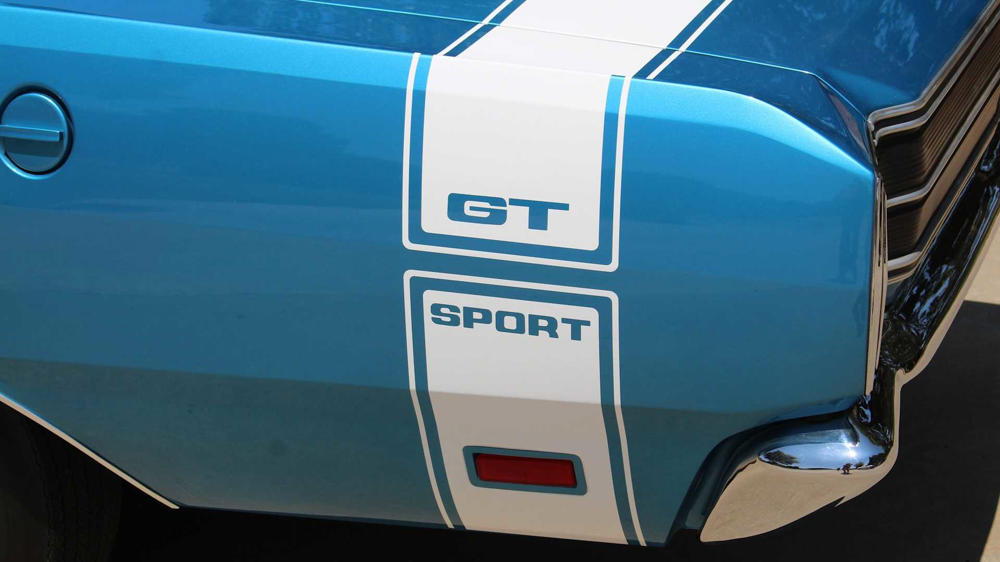
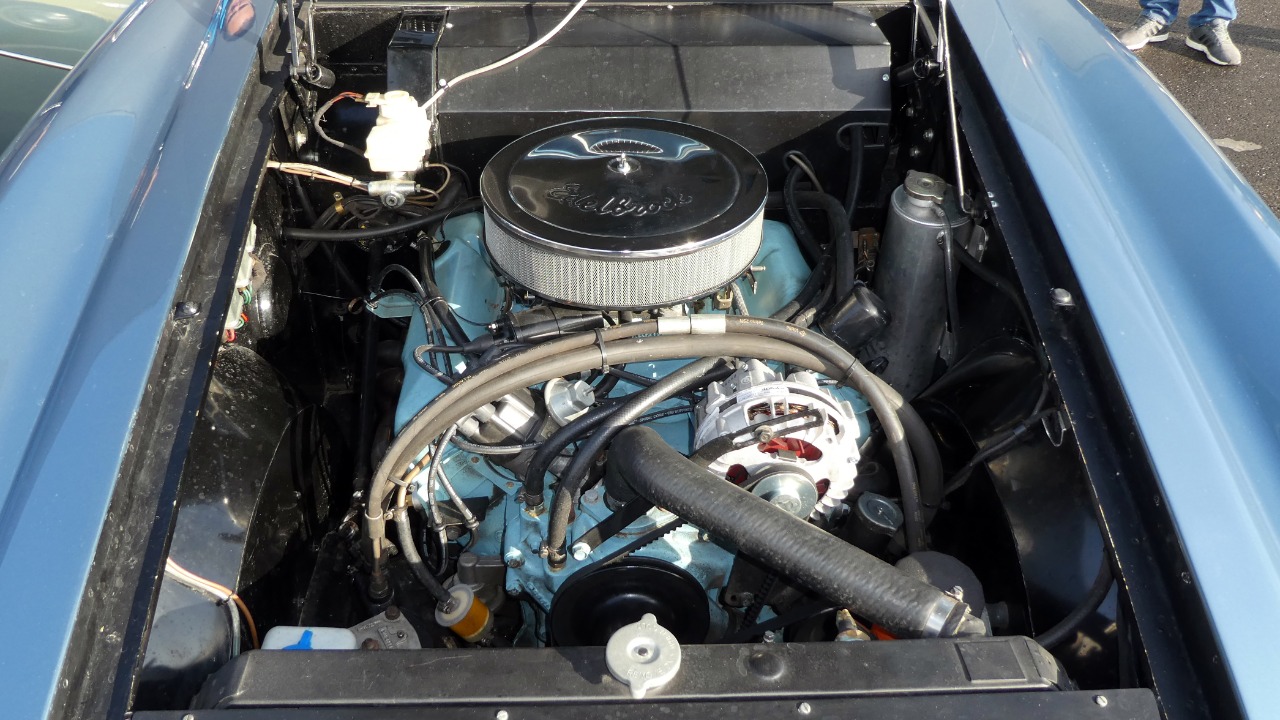
Imagine you're watching the races at a 1969 drag strip. A Dodge Dart rocks up. You assume the driver of the budget-friendly car is about to embarrass themselves, then you notice drag slicks. Next thing you know, they lay down a 1/4-mile time in the 12s. The wildest part of this story: this isn't some modified hot rod, but a Dodge Dart you could order through a Dodge dealership if you knew the right boxes to check. Dodge Had All The Ingredients Of The Ultimate Dart My first car was a beat-up survivor of a Dodge Dart. Everyone over 40 couldn’t help smiling when they saw it. Not because Dodge Darts have historically been drag-strip monsters. They rarely were. It was because the budget-friendly “sport compact” was once what used Honda Civics or Toyota Corollas are today. But by 1967, the redesigned Dart offered truly sporty trims. The GTS especially had stiff suspension and a powerful 383-cubic-inch V8. Since 1959, the 383 was a longtime favorite displacement of Chrysler’s B-series “big-block” engine family. The “raised-deck” version (RB series) also debuted in 1959 with the 413. It evolved into the 426 wedge and finally the 440 Magnum. While the 426 Hemi was rare and expensive, the 440 Magnum was many motorheads’ favorite Mopar. In 1968, Dodge rated it at 375 horsepower and 480 lb-ft of torque. The 1968 Dart GTS already offered a 383 rated at 300 horsepower and 400 lb-ft. The 440 was a raised-deck relative of the 383, and Dodge had already solved the basic problem of squeezing a Chrysler big-block into the GTS. But Dodge’s performance brochure dashed dreams: “not available on Dart GTS.” One Chicago Dealer Proved A 440 Dart Would Actually Sell A national Dodge brochure saying “no” did not mean much on Chicago’s West Side. Norm Kraus, better known as Mr. Norm, had turned Grand Spaulding Dodge into a high-performance destination by selling the kinds of cars young buyers actually wanted. So the 1968 “Grand Spaulding Sport” Dart (GSS) rolled out of his dealership with a 440 Magnum. Sure, Dodge had built some gnarly limited runs of big-block cars with lightweight bodies to terrorize NHRA drag racing classes. But the GSS was built for customers to actually drive on the street. The special-order run totaled 48 hardtops, each one pairing the 375-hp 440 with a 727 TorqueFlite automatic. This wasn’t mass production. But it was a strong showing for a single dealership. The GSS proved there was a market for 440-powered Darts. For 1969, Dodge Finally Put The 440 Dart Into Production For 1969, Dodge built 3,645 Dart GTS cars with a 340 V8, 1,912 with a 383, and 640 “M-code Dart GTS hardtops.” Those special editions weren’t listed in the Scat Pack brochure that dangled a 340 and optional 383 in front of buyers. But all 640 were genuine factory M-code cars with a 440-cubic-inch Magnum V8. The 1969 car was not simply another batch of Grand Spaulding GSS conversions with new badges. Each one carried an “M,” or M-code, in its VIN. Dodge handled these cars in seven special production batches at its Hamtramck factory. The paperwork reveals how quickly the program evolved. The GTS Registry says early cars still carried paperwork rooted in the 383 package, with Y39 “special order” identifying the 440 combination; A13 later became the dedicated 440 GTS package code. Dodge’s Factory 440 Dart Was Basically A Street-Legal Drag Car The M-code may have been a production car, but it was far from civilized. Dodge stuffed the 440 Magnum into an A-body with barely enough room for its exhaust plumbing. Factory output remained 375 horsepower and 480 lb-ft. Every 440 GTS used a console-shifted 727 TorqueFlite automatic transmission. The GTS Registry lists 3.23, 3.55, and 3.91 rear-axle ratios, with Sure-Grip available. Air conditioning and power brakes were not available with the 440 package, while E70-14 tires fought to put all that torque to the pavement. The GTS Registry documents factory M-code VIN LS23M9B2660**, built January 14, 1969, and sold through Saddleback Dodge. This car had a 440, 727, and 3.55 Sure-Grip rear. In a June 1969 Drag Racing Magazine test, it ran 12.7 seconds at 112 mph on seven-inch slicks. Said another way: Dodge built a factory Dart that could crack the 12s with little more than a pair of slicks you could haul to the strip in the trunk. Mopar Had Secretly Been Helping Build Mr. Norm’s 440 Darts All Along History remembers Mopar as the stodgy corporation that refused to drop a 440-cubic-inch V8 into its 1968 Dart while Mr. Norm did it himself and proved the market. But the truth is always more nuanced than the myth. Special Order 1.68-1703 called for 48 Dart GTS hardtops. Hamtramck was told to build them without engines, transmissions, carburetors, or air cleaners. Trenton Engineering assembled the special A13 440s, then Hamtramck dressed them with 383 oil pans and exhaust manifolds. Cars and powerplants traveled separately to Hurst-Campbell, where the drivetrains went in according to Dodge instructions. The paperwork reveals that Dodge had done engineering before OKing the combination, and Dodge personnel inspected the finished cars before they shipped to Illinois. In hindsight, the entire charade looks suspiciously like a trial run for the 1969 440-powered GTS. Mr. Norm deserves credit for pushing the obvious combination and proving customers would buy it. But Dodge did not simply copy a Chicago dealer’s trick one year later. And it looks like the connection was a two-way street. In fact, the first M-code 440 GTS produced, VIN LS23M9B2241**, was purchased at Mr. Norm’s Grand Spaulding Dodge and retains its numbers-matching 440. A surviving genuine 1969 M-code Dart photographed by Mecum also wears a Mr. Norm’s Grand Spaulding “Dyno Tuned” decal. Perhaps the GSS was so well known, Dodge used it for street cred when launching its 440-powered 1969 Dart. Sources: GTS Registry, Dodge, Mecum Auctions

 Liked by Lauren Rogers, Abigail Lewis










 Liked by Lauren Rogers, Abigail Lewis