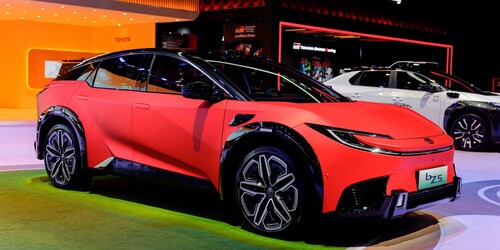
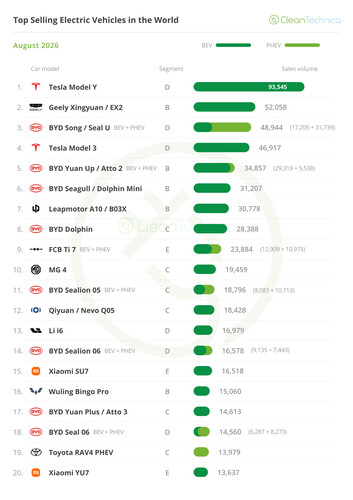
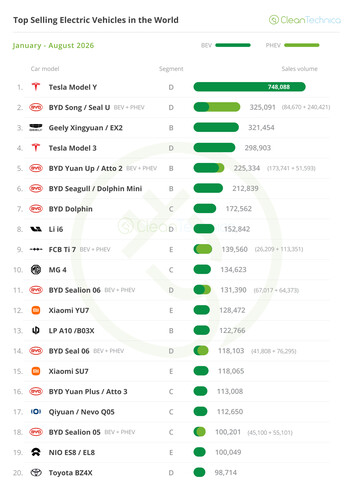
Olivia Johnson · 1 months ago@oliviajohnson40China is launching nearly 3 new EVs a day, CATL warns of batch battery failures Liked by+24 othersPost commentRelated PostsFAW Group, GAIG Automobile Form Alliance; China Unveils 2026-2030 Battery Plan; XPeng's Carbon Credit Revenue Tops RMB 1 Billion 14 · Mia Martin · 25 days agoGAC to replace FAW in the FAW Toyota joint venture to streamline operations 56 · Samuel Labelle · 26 days agoAISTALAND Graphic Logo Trademark Enters Substantive Examination 39 · Sarah Turner · 26 days agoHalf Of The World Car Of The Year Contenders Are Chinese 80 · Samuel Wright · 26 days agoGAC expands Morocco lineup with three new-energy vehicle models and Africa debut of GOVY AirCab 81 · Jackson Fortin · 26 days agoCan AION UT Turn UK Chinese EV Curiosity Into British Brand Loyalty? 96 · Emma Harris · 28 days agoUruguay EV Sales Report: Sales Soar in August as Market Share Reaches 56%! 29 · Sarah Turner · 1 months agoGAC Partners with CAS Dongguan Institute, Achieving World's First Mass Production of Amorphous Alloy E-Drive 78 · Charlotte Brown · 1 months agoLimited-time offer price from 229,900 yuan, AISTALAND GX7's prospects and uncertainties 73 · Abigail Johnson · 1 months agoTripob Bunyaman: Thailand advances new energy transition via "3030" policy, addressing supply chain and talent gaps | 2026 Teda Forum 73 · Adam Harris · 1 months agoGAC Yue 7 SUV entered China as BYD Ti 7 rival ahead of global rollout 61 · Nathan Nelson · 1 months agoToyota To Finally Adopt Range Extender Tech But There’s A Catch 23 · Kaitlyn Brown · 1 months agoToyota's $15,000 Chinese EV spotted overseas in RHD [Images] 80 · Matthew Lewis · 1 months agoJoint-Venture NEVs Are Gaining Momentum in China 29 · Jenna Girard · 1 months agoGAC's self-operated chargers exceed 30,000 units, superchargers account for nearly 70% 74 · Nicole Walker · 1 months agoGAC Cambodia KD Plant Begins Production; Zelos Gets Europe's 1st Y Test Plate for RoboVan; DENZA Z9GT Debuts in Thailand 81 · Mia Macdonald · 1 months agoToyota joins the extended-range EV race, but not as you'd expect 53 · Emma Clark · 1 months agoWhat Will Keep China's Auto Industry Moving Upward? | TEDA Forum 2026 71 · Lauren Rogers · 1 months agoGAC Group begins vehicle assembly in Cambodia with planned annual capacity of 10,000 units 76 · Audrey Clark · 1 months agoNearly Half of 2027 World Car of the Year Contenders Are Chinese 29 · Mia Rogers · 1 months ago


 +24 others+24 others
 +24 others
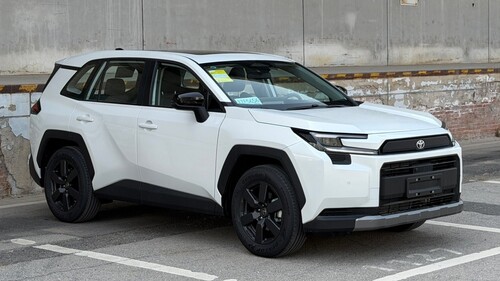











![Toyota's $15,000 Chinese EV spotted overseas in RHD [Images]](https://cdn.topcarnews.net/en/64756/thumb/id/aHR0cHM6Ly9pMC53cC5jb20vZWxlY3RyZWsuY28vd3AtY29udGVudC91cGxvYWRzL3NpdGVzLzMvMjAyNi8wOS9Ub3lvdGEtYlozWC1FVi1SSEQuanBlZz93PTE1MDAmYW1wO3F1YWxpdHk9ODImYW1wO3N0cmlwPWFsbCZhbXA7c3NsPTE/3fdd3b5d03bdc27308f0c99caa99667e.jpg)
![Toyota's $15,000 Chinese EV spotted overseas in RHD [Images]](https://cdn.topcarnews.net/en/64756/thumb/id/aHR0cHM6Ly9lbGVjdHJlay5jby93cC1jb250ZW50L3VwbG9hZHMvc2l0ZXMvMy8yMDI1LzEyL1RveW90YS0xNTAwMC1lbGVjdHJpYy1TVVYtMi5qcGVn/8219e8e9bd18568eaf6e5271753403d8.jpg)
![Toyota's $15,000 Chinese EV spotted overseas in RHD [Images]](https://cdn.topcarnews.net/en/64756/thumb/id/aHR0cHM6Ly9lbGVjdHJlay5jby93cC1jb250ZW50L3VwbG9hZHMvc2l0ZXMvMy8yMDI2LzAzL1RveW90YS1iWjNYLUVWLWludGVyaW9yLTcuanBnP3N0cmlwPWluZm8mYW1wO3c9MTkyMA/e40c0b720b4826f1bf2a5f18a1e13212.jpg)
![Toyota's $15,000 Chinese EV spotted overseas in RHD [Images]](https://cdn.topcarnews.net/en/64756/thumb/id/aHR0cHM6Ly9lbGVjdHJlay5jby93cC1jb250ZW50L3VwbG9hZHMvc2l0ZXMvMy8yMDI2LzAzL1RveW90YS1iWjNYLUVWLWludGVyaW9yLTUuanBnP3N0cmlwPWluZm8mYW1wO3c9MTkyMA/dc60262a877c7e2cef1e74da54ca75ab.jpg)
![Toyota's $15,000 Chinese EV spotted overseas in RHD [Images]](https://cdn.topcarnews.net/en/64756/thumb/id/aHR0cHM6Ly9lbGVjdHJlay5jby93cC1jb250ZW50L3VwbG9hZHMvc2l0ZXMvMy8yMDI2LzAzL1RveW90YS1iWjNYLUVWLWludGVyaW9yLTYuanBnP3N0cmlwPWluZm8mYW1wO3c9MTkyMA/ad5c9fdfd72ede2f92d0ae9b095b9e83.jpg)