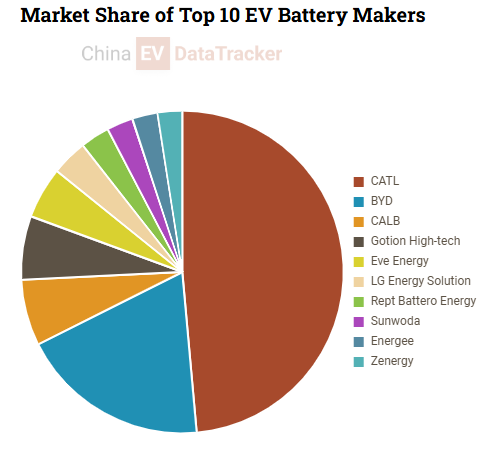
Chinese EV owners reported reduced range after OTA software updates. Credit: CCTV Understand China EV’s Market Real-time notifications when critical EV data is released All important data in one place 2,000,000+ data points Become a member NEV owners in China have claimed some EVs originally capable of around 500 km CLTC range were reduced to less than 300 km in real-world usage following remote OTA updates that modified battery management parameters. Chinese state broadcaster China Media Group has published a detailed report on so-called “battery locking” in new-energy vehicles, with some owners also reporting that DC fast-charging times increased from around 40 minutes to 70 minutes after software updates. The practice, commonly referred to in China as “locking the battery”, describes situations where automakers remotely adjust battery management system (BMS) parameters through OTA updates or dealer software flashing. Owners claim such updates can reduce usable battery capacity, limit charging power, or restrict discharge depth without clearly disclosing the impact beforehand. Industry researcher Zhang Xiang told the broadcaster that automakers can implement such restrictions by modifying charging and discharge thresholds inside the BMS. He said limiting charging currents and reducing the usable battery window can lower thermal runaway risks and slow battery degradation, though the trade-off may include shorter driving range and slower charging. One owner interviewed by the broadcaster said his vehicle could previously charge more than 100 kWh before an OTA update, but after the update, it accepted only around 80 kWh, despite the battery health indicator still showing 95%. The owner also claimed the real-world range fell from roughly 450–480 km to below 400 km after the update. OTA rules tightened China’s Ministry of Industry and Information Technology and State Administration for Market Regulation issued updated rules on EV OTA management in March. The regulation included what Chinese media referred to as the “OTA four prohibitions,” including bans on undisclosed “battery locking,” forced silent updates, and the use of OTA updates to avoid recalls. The report also referenced recent online rumours claiming eight automakers had been summoned by regulators over “battery locking” issues and three companies had been formally investigated. China Association of Automobile Manufacturers later denied the claims, stating the reports had “no official source” and were inconsistent with facts. Several automakers, including BYD, Tesla, and Zeekr, also rejected the online claims. We previously reported that BYD threatened legal action against accounts spreading related rumours. The debate has intensified alongside broader discussions around battery safety and charging stress in China’s EV sector. Earlier this month, we reported that a livestream test of BYD’s megawatt flash-charging system recorded battery temperatures reaching 76°C, triggering online discussion over heat management during ultra-fast charging. Legal and consumer rights concerns Zheng Fei said that remotely changing vehicle parameters without the owner’s consent could raise issues under property law, consumer protection law, and personal data regulations. The broadcaster noted that OTA parameter changes are typically stored on automaker cloud systems, making independent verification difficult for ordinary owners. Consumers who suspect unauthorised OTA changes were advised to disable automatic OTA installation, preserve charging and software-version records, and seek third-party inspections when possible. Chinese legal experts interviewed by the broadcaster also suggested complaints could be filed through China’s 12315 consumer protection platform or MIIT complaint channels. Market share of top EV battery makers in March 2026. Credit: China EV DataTracker Battery market context China’s EV battery sector remains heavily concentrated among a small number of suppliers. According to March data from China EV DataTracker, CATL led China’s EV battery market with 25.71 GWh installed capacity and a 46.2% market share, followed by BYD with 10.06 GWh and an 18.1% share. CALB, Gotion High-tech, and Eve Energy rounded out the top five suppliers.



















 +19 others