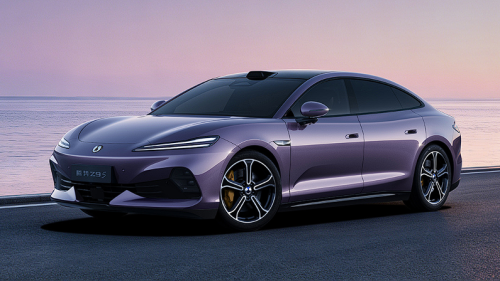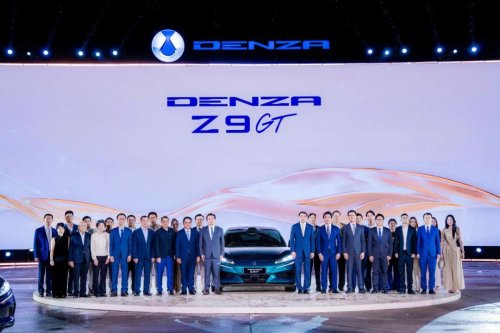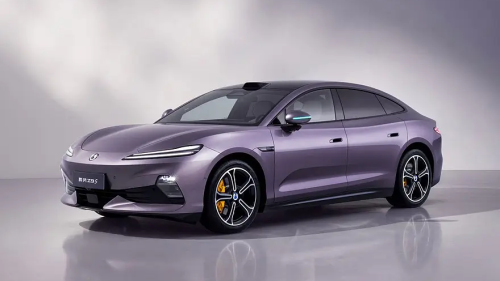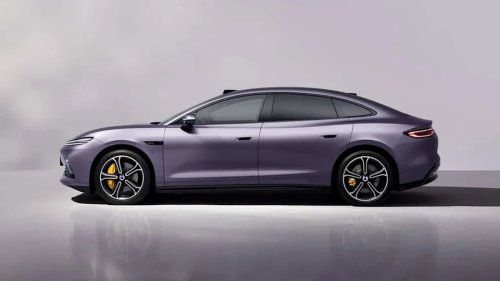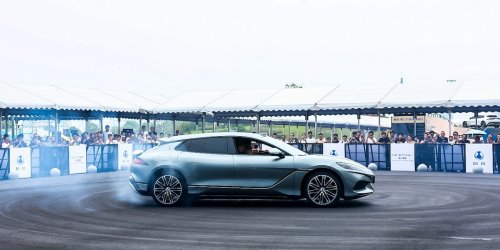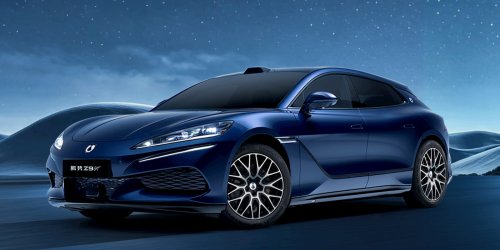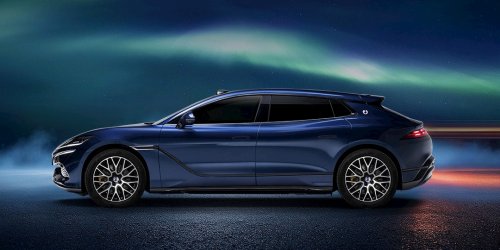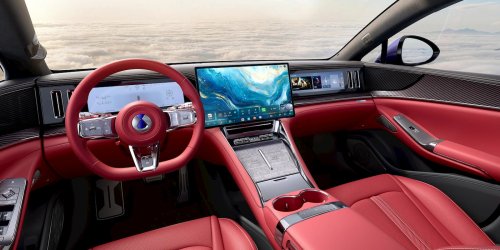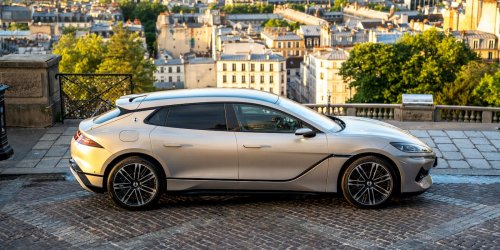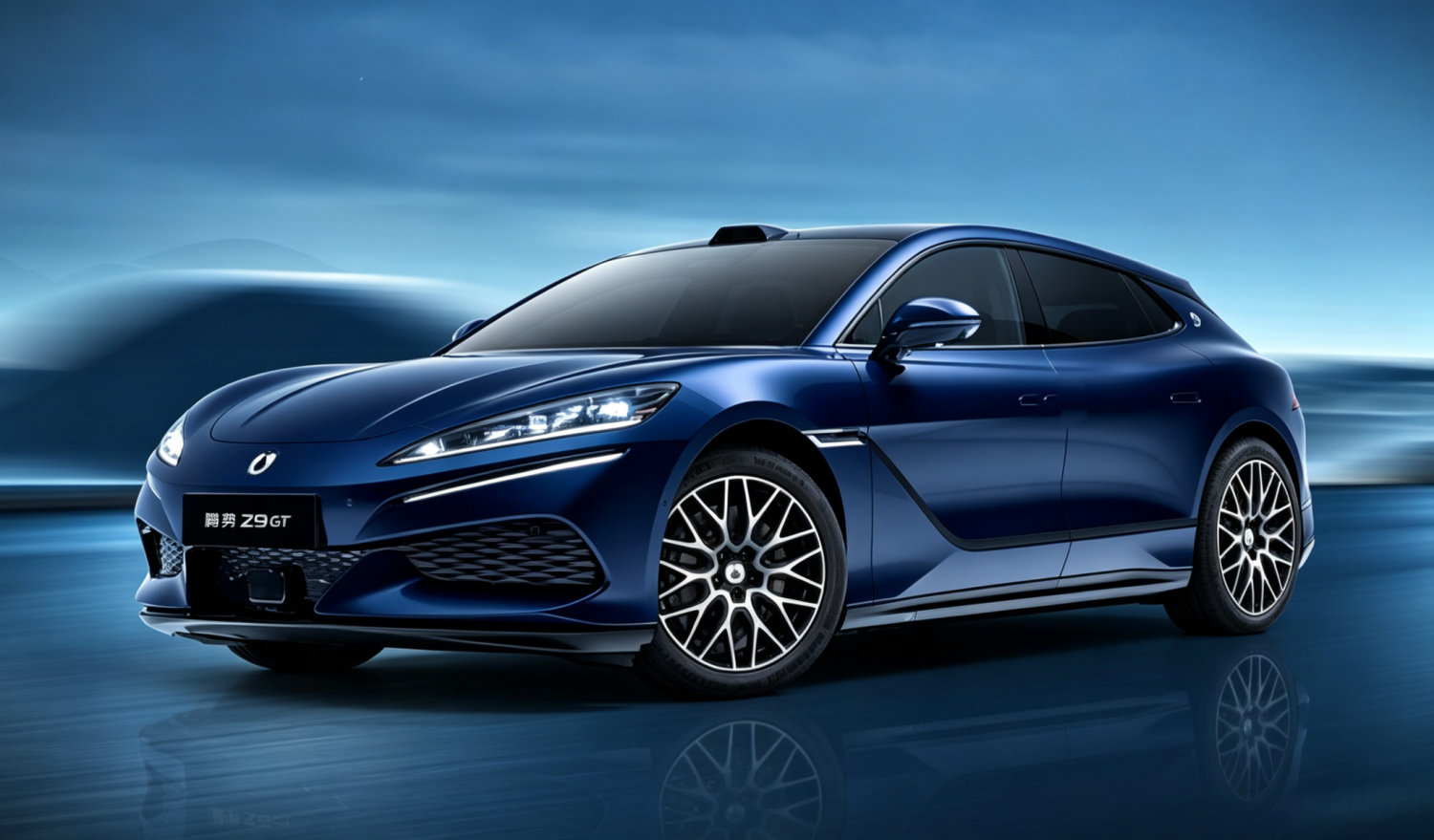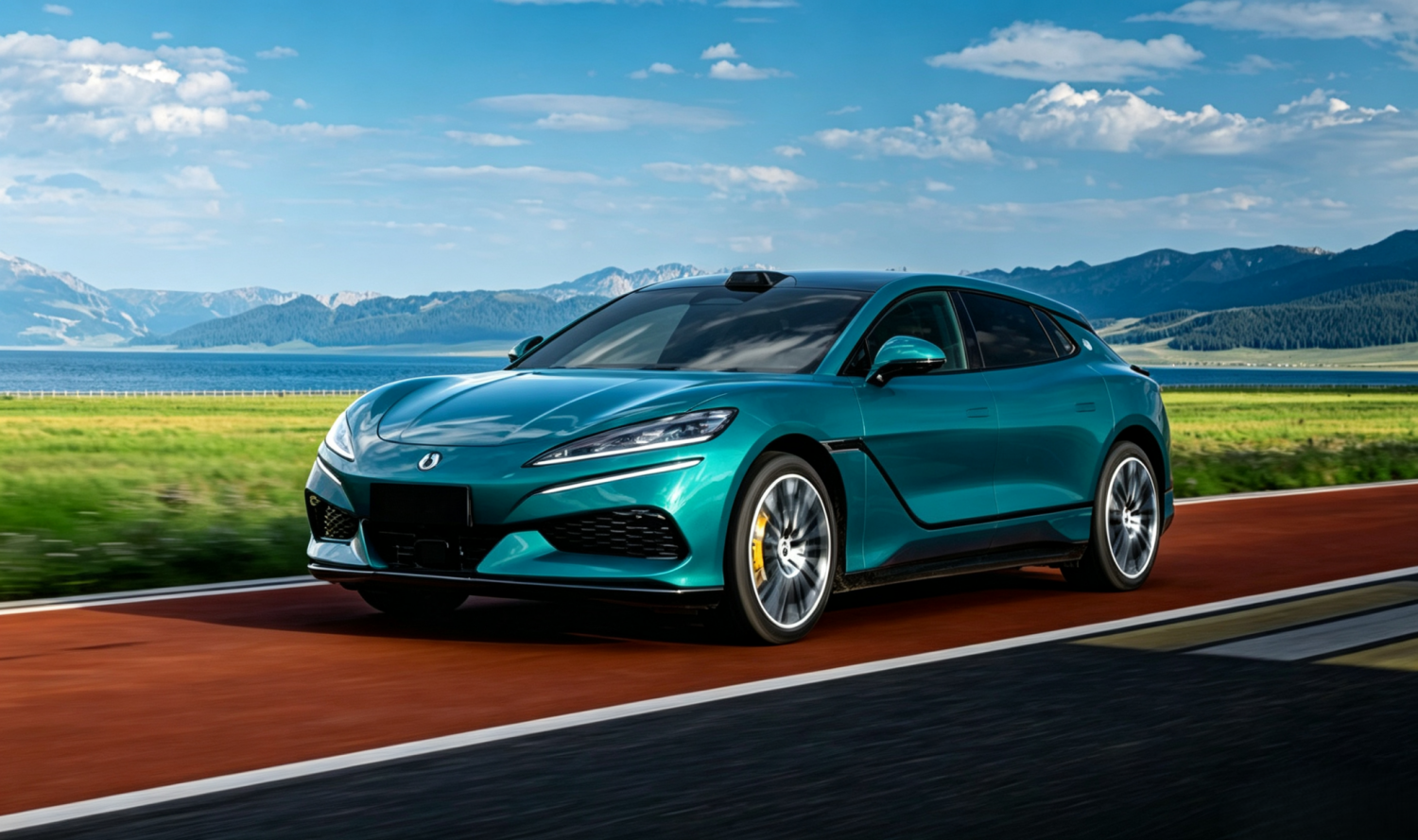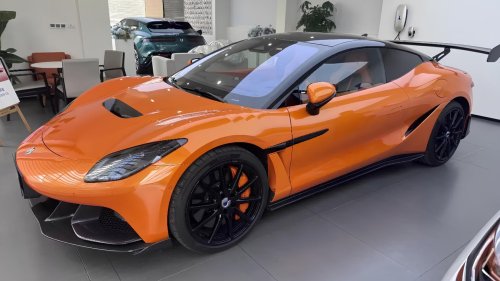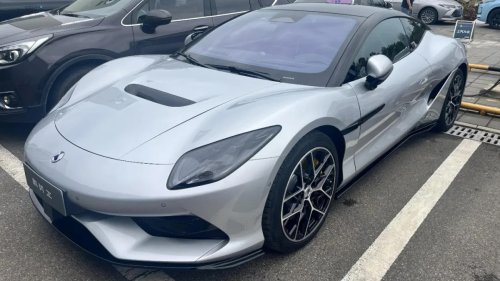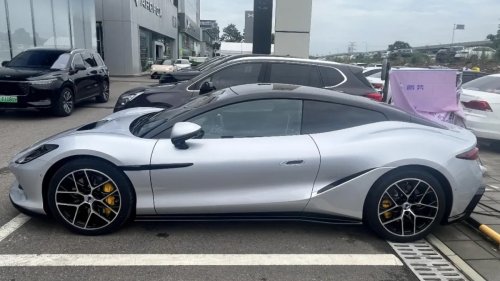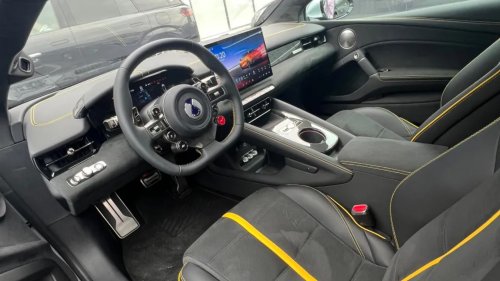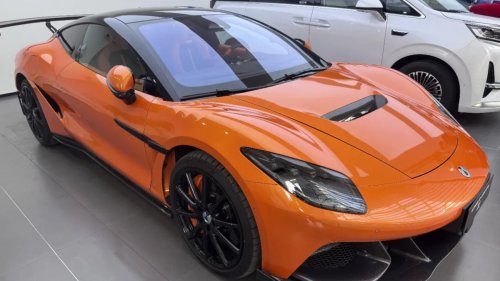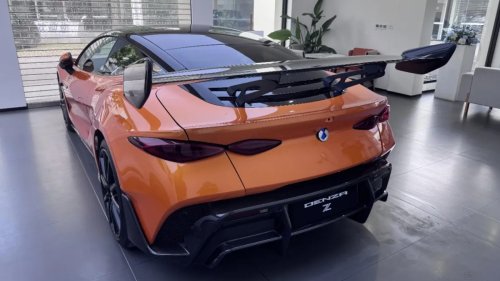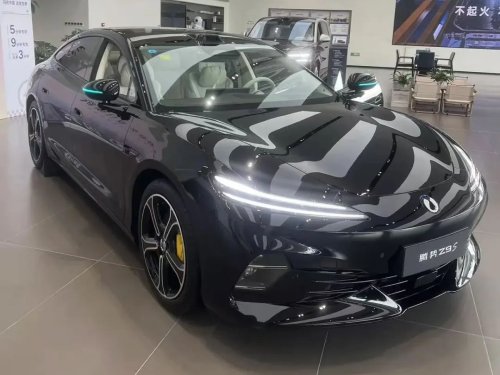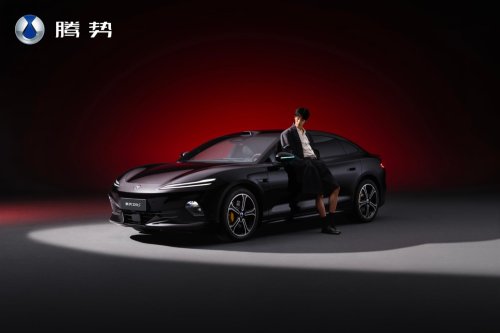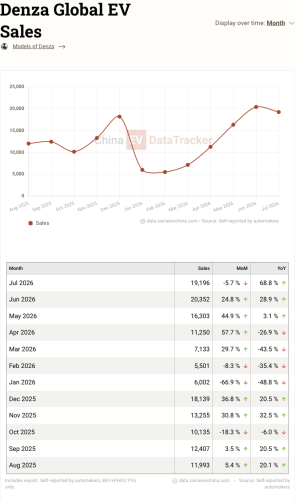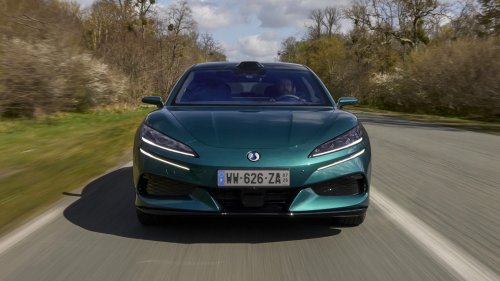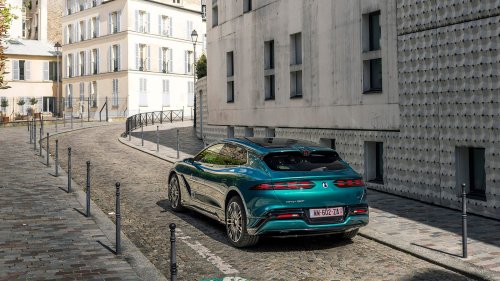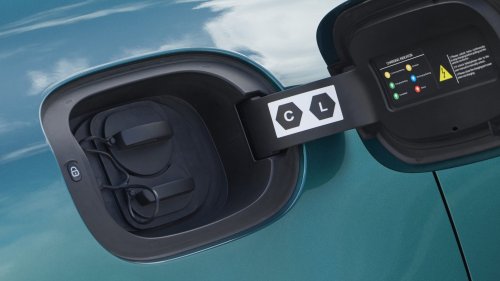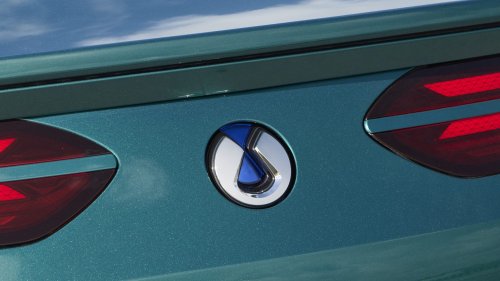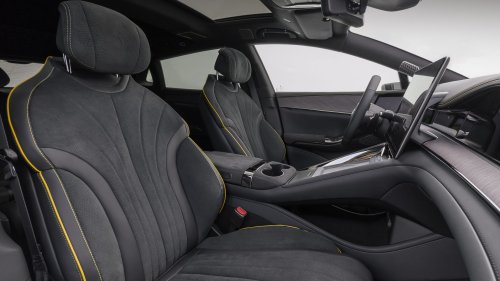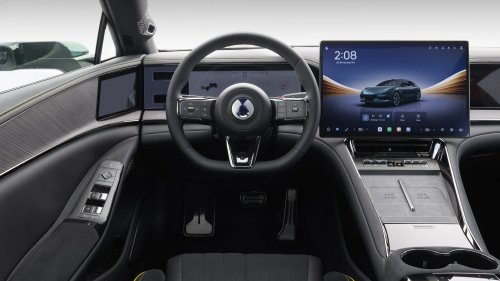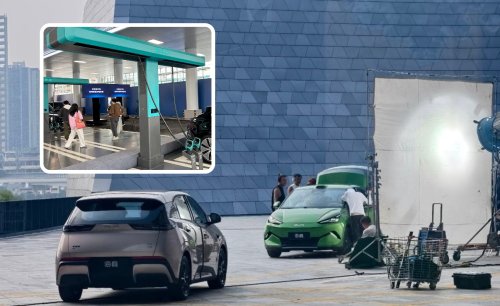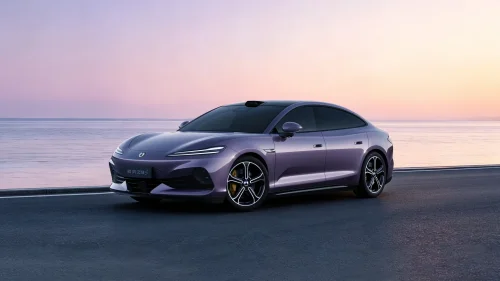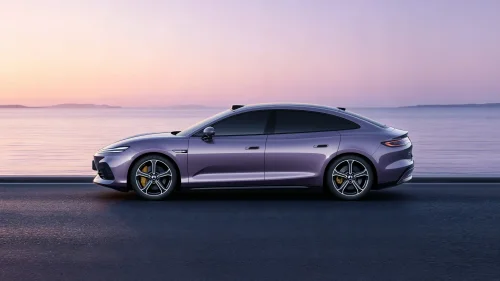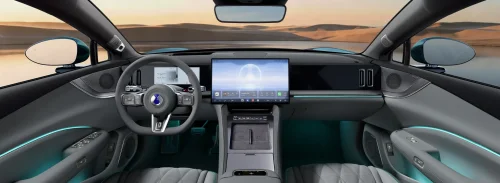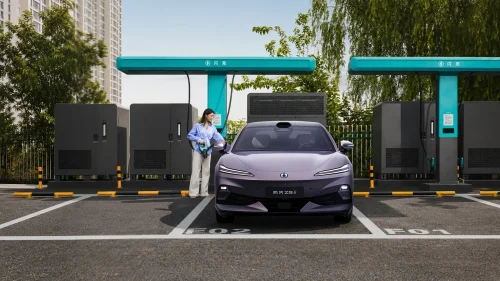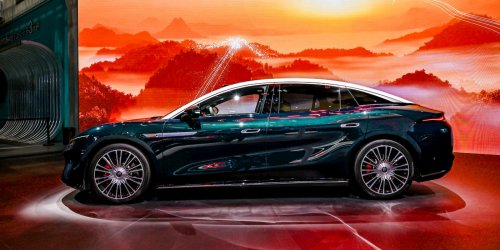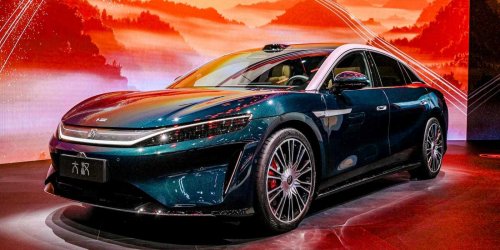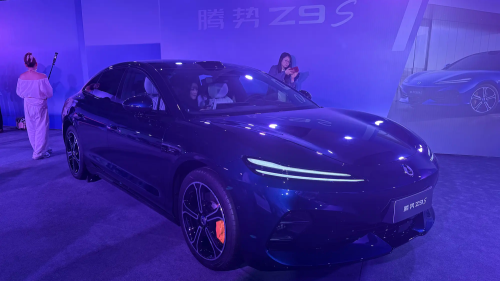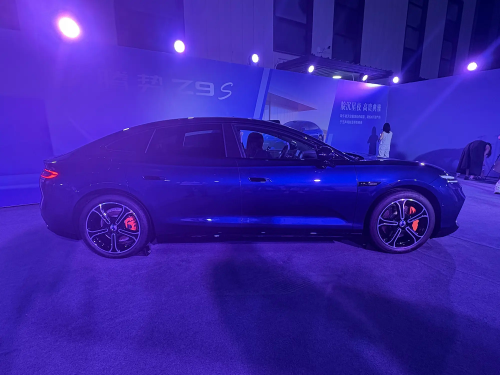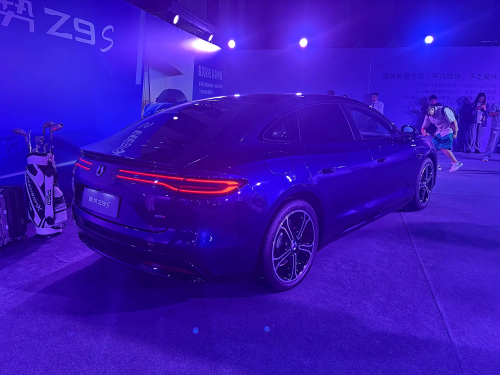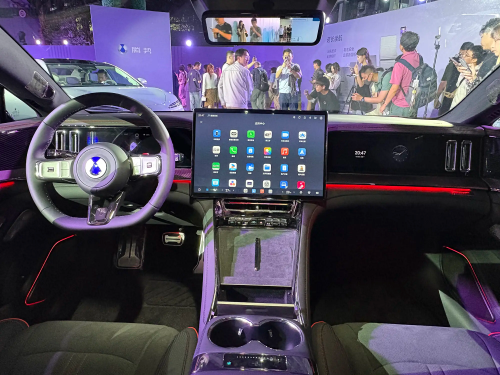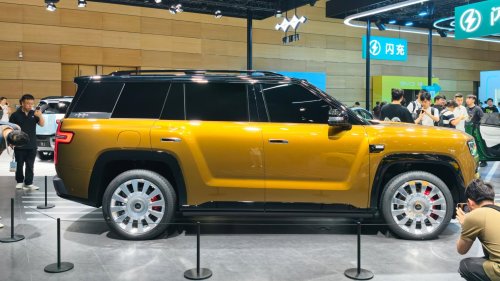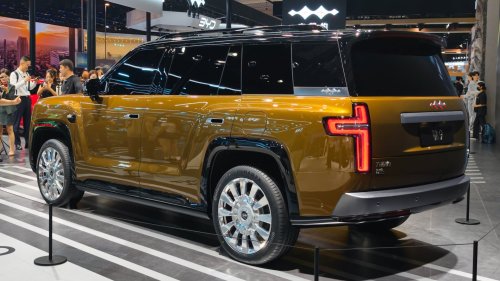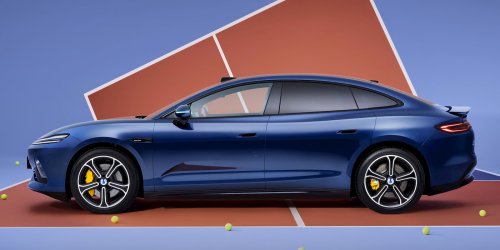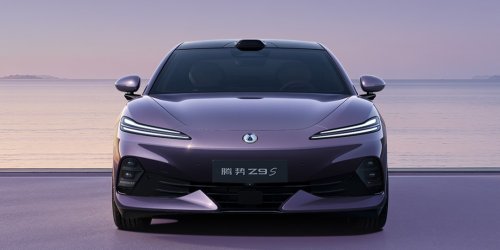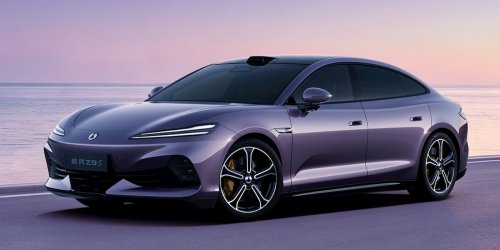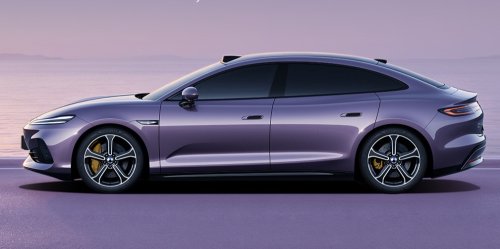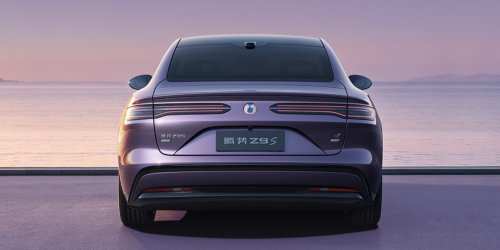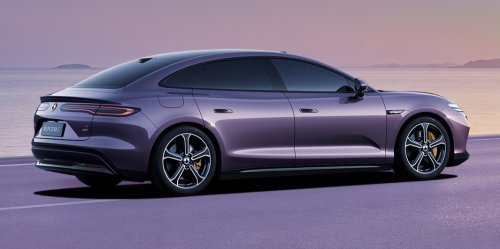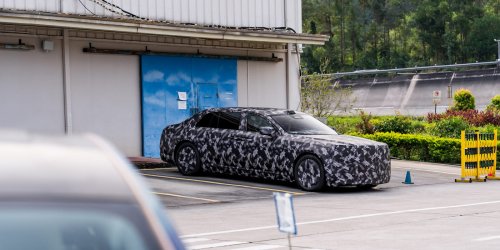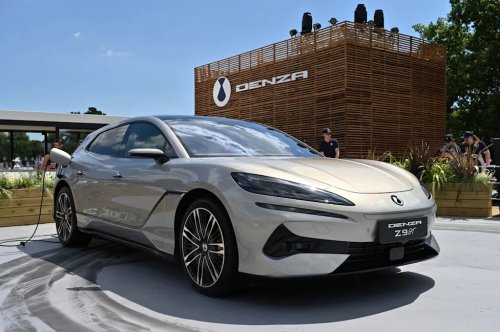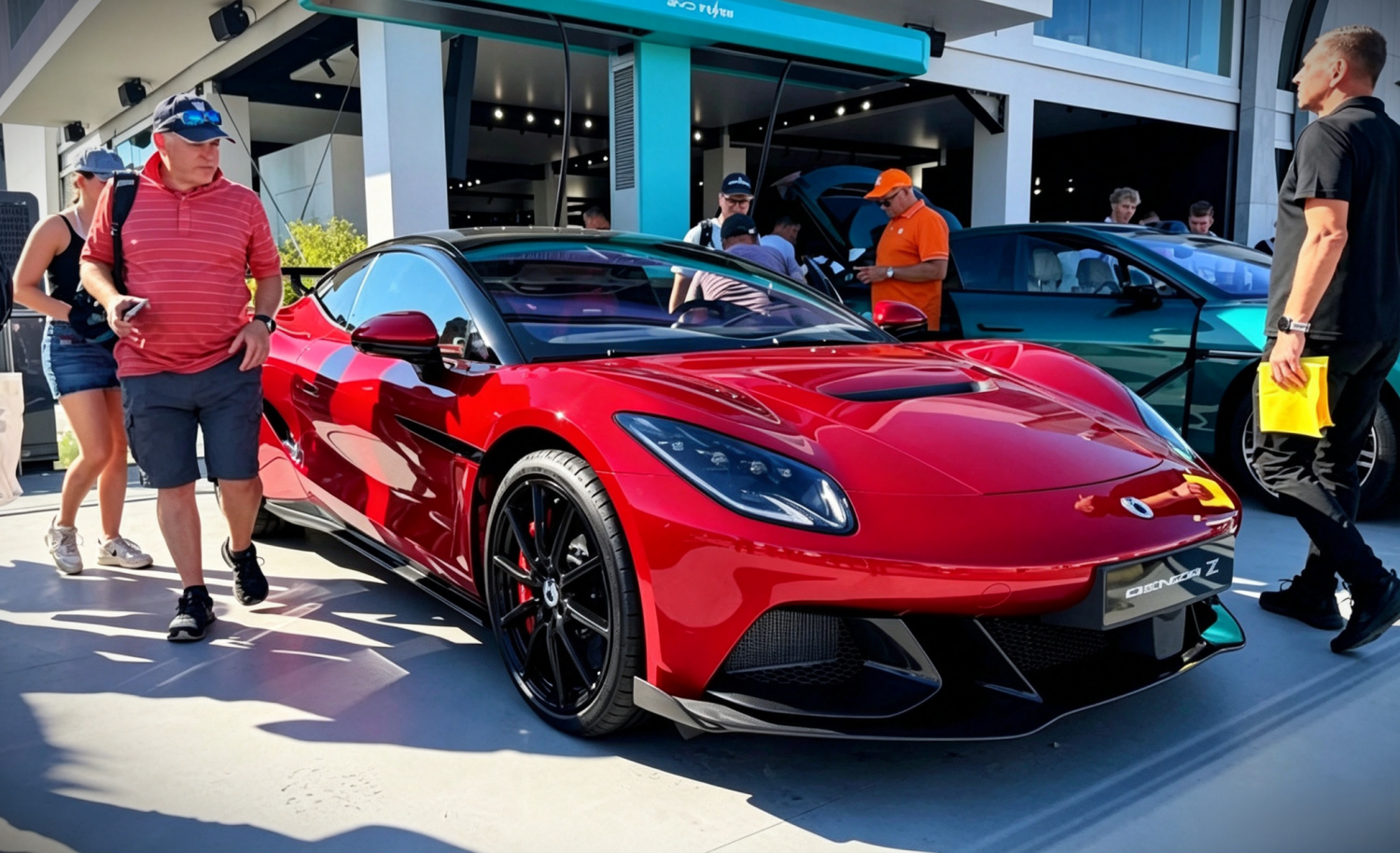



















Tri-motor Denza Z sports car featuring steer-by-wire tech and 350 kmh top speed. Credit: IThome Understand China EV’s Market Real-time notifications when critical EV data is released All important data in one place 2,000,000+ data points Become a member BYD showcased its global product expansion at the Goodwood Festival of Speed, officially debuting the Denza Z, a high-performance electric sports car. Denza Z will be available in coupe, spider, and racing track edition variants. The entry-level coupe trim begins its international commercial pre-sale rollout at 142,900 pounds (184,800 USD), prioritising hard performance metrics over traditional sports-luxury framing, according to IThome. The tri-motor flagship vehicle utilises the specialised e³ (Yi Sanfang) intelligent control platform, pairing a single front motor with dual independent rear drive units. The technical architecture completely replaces mechanical steering link hardware with an integrated steer-by-wire FinDreams chassis system developed by the Fudi chassis division. This setup enables extreme cornering force distribution while supporting simulated mechanical shifting configurations natively inside the driver cockpit. Powertrain and battery The integrated propulsion system generates a combined peak output of 1180 kW, translating to 1582 horsepower through three independent electric motors. The Denza Z Track Edition spotted testing variant completes the 0 to 100 km/h sprint in 1.96 seconds and achieves a certified top speed of 350 km/h. The standard Coupe variant has a curb weight of 2230 kg, while the reinforced Track Edition weighs 2250 kg. Energy storage relies on a second-generation flat-pack lithium-iron-phosphate Blade battery pack manufactured by FinDreams. While domestic regulatory catalogue disclosures show a gross capacity layout scaling up to 102 kWh, initial export specifications list a usable capacity baseline of 76 kWh. This hardware configuration delivers a WLTP-rated driving range of approximately 600 km, supported by an 800V high-voltage electrical architecture capable of multi-megawatt rapid charging. Chassis and dynamics The vehicle utilises a specialised rigid carbon fibre composite cell cage structure coupled with standard carbon-ceramic brake discs to control thermal fade during high-speed deceleration. Official technical specifications show the standard Coupe variant features dimensions of 4780 mm in length, 1990 mm in width, and 1350 mm in height, built upon a 2780 mm wheelbase. The track-focused Racing trim modifies these body dimensions by extending total length to 4870 mm through specialised aerodynamic bodywork. Ride control is managed via the DiSus-M magnetorheological suspension system, which dynamically modulates the shock absorber fluid density within milliseconds. The track edition discards the adaptive air bellows found on the Coupe and Spider trims and utilises mechanical racing coil springs instead. The digital chassis management layer includes an integrated over-boost mode that increases peak system torque by 30% for a continuous 20-second window. Sales and strategy The global sports car launch occurs as the overarching brand experiences a domestic market turnaround following localised retail updates. Brand registration data indicates that deliveries expanded to 15,620 units during May 2026, representing a 46.8% month-on-month volume acceleration, according to China Ev DataTracker. This operational recovery advanced the brand’s total domestic passenger vehicle market share baseline to 1.0%.