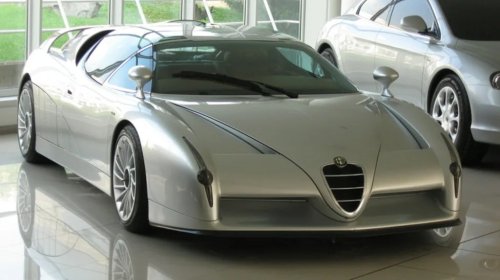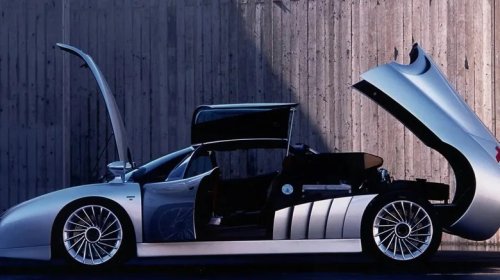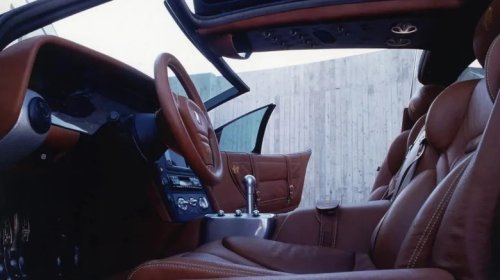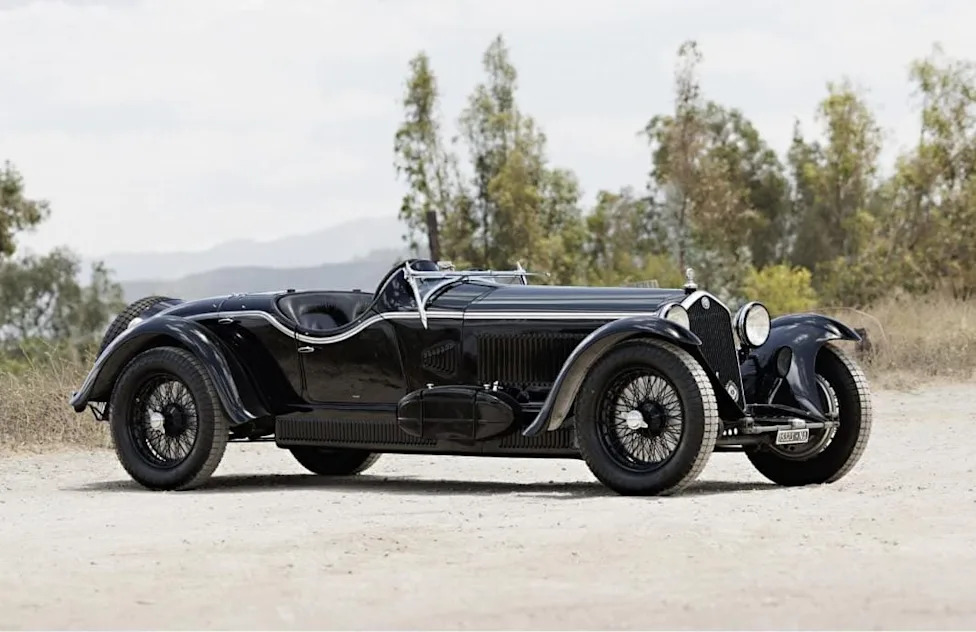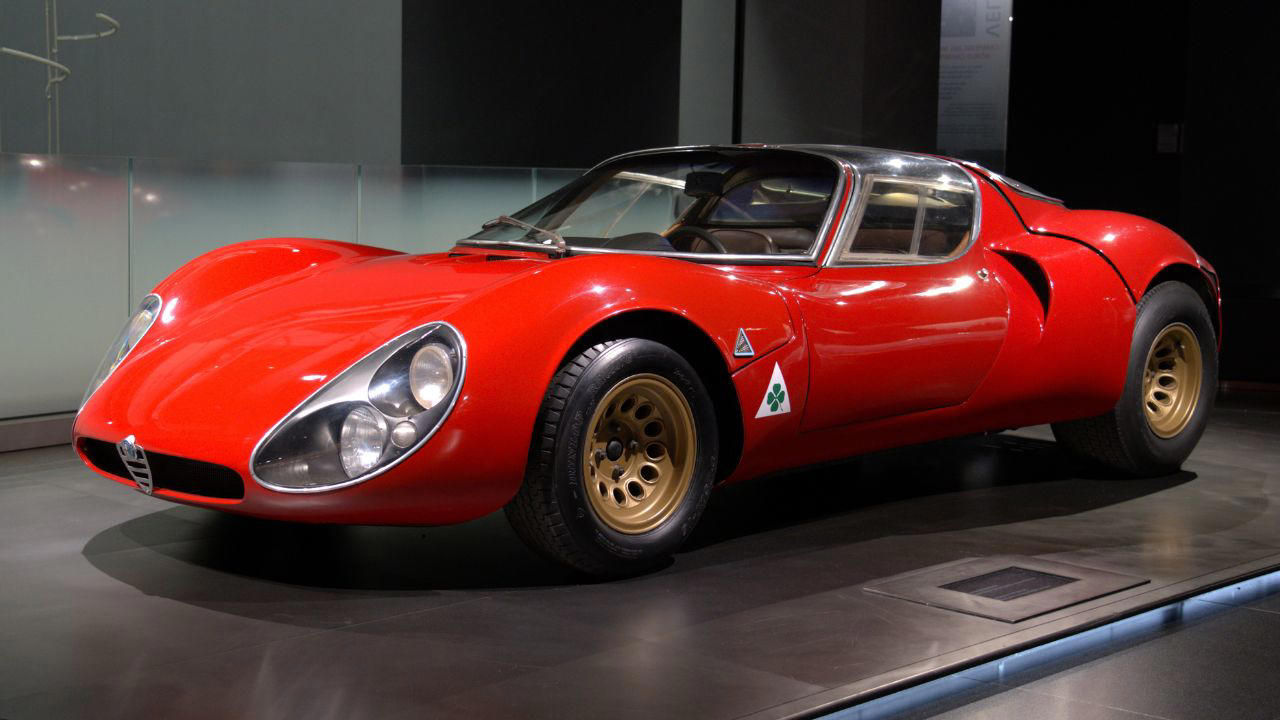
























Built with purpose the 1967 Alfa Romeo 33 Stradale became something specialPurpose built as a bridge between track and road, the 1967 Alfa Romeo 33 Stradale quickly became something more than a homologation special. Conceived from pure racing hardware, it evolved into a mobile sculpture that still shapes how designers and enthusiasts talk about beauty, performance and rarity. Six decades on, its influence stretches from concours lawns to a new generation of supercars that borrow its name and spirit. To understand why this Italian lightweight carries such weight, it helps to see how deliberately it was created. Every line, every vent and every millimeter of glass was drawn around a race-bred core, yet the result feels almost impossibly elegant rather than utilitarian. Born from the Tipo 33 and a racing obsession The story begins with Alfa Romeo’s determination to return to international sports car racing in the 1960s. The company developed the Alfa Romeo Tipo 33 prototype racer, a purpose built competition machine that would contest endurance events. From that car’s mid‑engine layout and lightweight chassis came the foundation for the road going 33 Stradale. The name itself signaled the intent: “stradale” is Italian for “road going,” a direct nod to its origin as a street version of the Tipo 33 competition car, as described in period recollections of Alfa Romeo 33. Alfa Romeo turned to Franco Scaglione, one of Italy’s most inventive stylists, to transform that raw racer into something that could be registered for the road. He had already proven his ability to blend aerodynamics and drama, and here he was given the Tipo 33 chassis as a starting point. Later accounts highlight how the car was Designed by Franco and directly inspired by the Tipo 33 race car, which explains the close visual and mechanical kinship between the two. The result was not a softened grand tourer but an uncompromising machine with number plates. Alfa Romeo engineers kept the racing layout, with a compact V8 mounted behind the seats and a tubular frame designed for competition. The Stradale simply wrapped that package in glass and aluminum, with just enough concessions to comfort to make it barely civilised for public roads. Shaped as “mobile art” rather than a mere supercar What separates the 33 Stradale from other mid‑engine exotics of its era is the way its bodywork seems to grow organically out of the mechanical package. Contemporary and modern commentators often describe The Alfa Romeo 33 Stradale Is a, and that phrase captures how its surfaces flow rather than simply cover components. The front fenders rise in delicate arches over the wheels, the waistline pinches tightly around the cockpit, and the rear haunches swell to house the engine and suspension. Scaglione’s work on this car is frequently cited as a high point of Italian sports car design. A detailed profile of Beauty Of The explains how the Stradale Is More Than Skin Deep, with proportions driven by aerodynamics and mechanical packaging rather than styling fashion. The low nose, expansive glazing and tightly wrapped tail were all tuned to reduce drag and improve stability at speed, yet the car never looks like a wind tunnel refugee. The design’s theatrical touches are just as memorable as its overall form. The butterfly doors cut deep into the roof, allowing easier access to a very low cabin and creating a dramatic opening gesture. Large curved side windows and a wraparound windshield give the driver a near panoramic view, rare for a mid‑engine car. Even today, enthusiasts and designers still treat the Tipo 33 Stradale as a reference point for how to combine sculpture and function. Race bred hardware under the sculpture Underneath the sensuous bodywork, the 33 Stradale remained very close to its racing sibling. Period specifications compiled for Alfa Romeo 33 describe a mid‑mounted V8 with racing origins, a lightweight chassis and dimensions that made it one of the most compact supercars of its time. Contemporary reports often emphasize that only 18 examples were built, a figure echoed in anniversary posts that describe how Only 18 cars left the factory between 1967 and 1969. That scarcity was not just a marketing decision. The complexity of the chassis and the hand formed bodywork limited production by necessity. Each car required extensive labor from specialist craftsmen, and the racing derived components were expensive to adapt for road use. As a result, the 33 Stradale was priced at a level that eclipsed many rivals, reinforcing its status as an object for a very small circle of clients. Driving impressions from later retrospectives underline how little compromise there was in the conversion from track to street. The car’s compact dimensions and low weight gave it immediate responses, while the V8 delivered a sharp, rising note that reflected its competition heritage. One analysis of the 1967 Alfa Romeo 33 Stradale argues that its Racing Pedigree and Via Portello Factory origins help explain why the Stradale Design Is Better Than Most Modern Supercars, especially in terms of purity and feedback. Built with purpose, remembered for beauty Although it was engineered first as a road going racer, the 33 Stradale’s reputation today rests heavily on its aesthetics. Enthusiast communities often single it out as a peak of Italian sports car styling, and some commentators argue that car design as a whole has rarely matched its balance of aggression and grace. A video essay from Aug that examines Alfa Romeo Tipo design choices describes how the car’s surfaces and proportions achieve drama without visual clutter, an effect many modern supercars struggle to replicate despite advanced tools. The car’s beauty is inseparable from its purpose built origins. The low cowl and extensive glazing were not aesthetic flourishes but solutions to visibility and aerodynamic requirements. The tight packaging around the engine and suspension dictated the muscular rear haunches. Even the dramatic doors answered a practical problem: how to get occupants in and out of a very low car without contorting themselves against high sills and a narrow roof opening. That functional logic gives the design a sense of inevitability. Nothing looks added for ornament’s sake. Even the vents and intakes appear exactly where the mechanical layout demands them. Over the decades, this honesty of form has appealed to designers who see in the Stradale a kind of three dimensional manifesto for performance driven styling. A limited run that seeded future concepts The tiny production run of the 33 Stradale had an unexpected side effect. Because Alfa Romeo built so few complete cars, several spare Tipo 33 chassis were later used as the basis for radical concept vehicles by Italian design houses. These one offs, including striking show cars from firms like Carrozzeria Bertone and Pininfarina, extended the influence of the original project far beyond its 18 road cars. Historical overviews of Alfa Romeo 33 production trace how these leftover frames underpinned experimental designs that explored wedge shapes and new packaging ideas in the late 1960s and early 1970s. In that sense, the Stradale acted as a seed for a whole generation of concept cars that tested the boundaries of what a mid‑engine layout could look like. Within Alfa Romeo itself, the project reinforced a culture of blending competition engineering with expressive design. The company’s later sports cars often referenced the Tipo 33 lineage, and its racing activities continued to influence styling and technology decisions. The Stradale became a touchstone within the brand, a reminder of what could be achieved when racing ambitions and creative freedom aligned. A legend that refuses to stay in the past Decades after the last original Stradale left the factory, Alfa Romeo decided to revisit the name and spirit for a new limited series supercar. Corporate communications around this modern project frame it as a way of daring to dream again, using contemporary engineering to pay homage to the 1967 car’s blend of racing technology and sculptural bodywork. The decision to revive the 33 badge underlines how deeply the original still resonates inside the company. Walkaround coverage of the new model shows how closely Alfa Romeo’s current designers studied the original proportions and details. A detailed video tour of the modern car from Oct, filmed among sketches and archival images of legendary Alfa Romeo models, highlights how the new 33 borrows cues like the low nose, dramatic side intakes and compact cabin. The presenter explains, while surrounded by some legendary Alfa Romeo drawings, that the new car consciously channels the spirit of the earlier Alfa Romeo 33 and interprets them through modern materials and regulations. The revival is not a simple retro exercise. Instead, it uses the original as a reference point for character and intent. Just as the 1967 car grew out of the Tipo 33 racer, the modern version is positioned as a halo project that connects Alfa Romeo’s current road cars to its motorsport history. The company’s messaging stresses continuity of values rather than nostalgia alone. Why the 33 Stradale still matters to enthusiasts Among collectors and fans, the 33 Stradale occupies a rarefied place. Its extreme scarcity, race bred hardware and design pedigree would be enough to guarantee interest. Yet the car’s appeal goes beyond numbers and names. It represents a moment when a manufacturer allowed its racing department and its design studio to pursue an almost uncompromised vision for a road car. Profiles of the 1967 Alfa Romeo 33 Stradale in enthusiast communities, such as posts celebrating the Alfa Romeo 33 as a legendary Italian sports car, emphasize how it blended race bred engineering with hand crafted elegance. The car’s Italian origins, its connection to high profile competition programs and its limited production run combine to create a mythology that few other models can match. Modern design commentators often use the Stradale as a benchmark when assessing contemporary supercars. When a new model debuts with complex surfaces and aggressive detailing, comparisons inevitably arise with the Tipo 33’s simpler, more coherent forms. That ongoing dialogue keeps the 1967 car in the public eye and influences how both designers and buyers think about proportion, restraint and purpose. Global fascination and documented legacy The 33 Stradale’s fame is not confined to Italy. Its story and specifications appear in multiple languages and platforms, reflecting a global fascination with the car. Reference entries in several editions of Alfa Romeo Stradale documentation, including Spanish, Arabic, Persian and Hebrew versions that were Discovered through the main Alfa Romeo Stradale entry, repeat key details such as the mid‑engine layout, limited production and close relationship to the Tipo 33 racer. These multilingual records help preserve not only technical data but also context about the car’s development and impact. They document how the Stradale was perceived in different markets, how its rarity affected values and how it influenced later projects. For historians and enthusiasts, this distributed archive underscores how a run of 18 cars managed to leave a footprint far beyond its small volume. More from Fast Lane Only Unboxing the WWII Jeep in a Crate 15 rare Chevys collectors are quietly buying 10 underrated V8s still worth hunting down Police notice this before you even roll window down