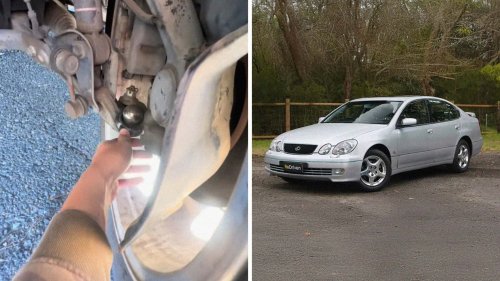
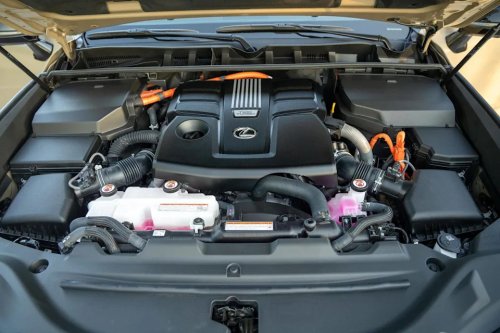
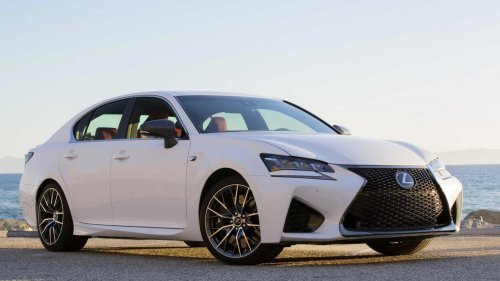
building a supercharged lexus gs 430 first driveWe wrap up a few small but important details on our supercharged 2001 Lexus GS430 before uploading a custom All4Swap tune to the factory ECU so we can experience for the first time what this Range Rover TVS1900 supercharger can really do on the stock 3UZ V8 engine.Speed Academy is a website and YouTube channel based on making things go fast and enjoying cars. Peter Tarach and Dave Pratte are the forces behind Speed Academy.The TTAC Creators Series tells stories and amplifies creators from all corners of the car world, including culture, dealerships, collections, modified builds and more.AdvertisementAdvertisementAn AI-produced summary of the transcript, edited by a staffer, is below.[Image: Speed Academy/YouTube Thumbnail]Become a TTAC insider. Get the latest news, features, TTAC takes, and everything else that gets to the truth about cars first by subscribing to our newsletter.SummaryThe transcript follows the final stages of a $6,000 2001 Lexus GS 430 build, which began life as a clean luxury sedan but has been transformed into a supercharged sleeper with a budget Range Rover supercharger, TRD-style body kit, upgraded suspension, custom headlights and other performance and cosmetic modifications. The goal is to resolve the remaining bugs, load a custom ECU tune and finally see how the car performs. AdvertisementAdvertisementFinalizing the engine bayThe first job is refinishing the supercharger intake tube. The large logo and chrome finish are replaced with a wrinkle-black VHT coating, giving the engine bay a cleaner, more understated appearance. The paint turns out well despite a small dent and scratch caused by dropping the tube.The team also addresses a check-engine light caused by the EVAP system. Because the modified intake/supercharger setup left an EVAP sensor improperly plumbed, they connect it to a vacuum source between the throttle body and supercharger. They also fix the intercooler heat-exchanger pump, which was receiving constant power from the fuse box even with the ignition off. The solution is to connect it to switched power from the headlight wiring. Headlight upgradeAdvertisementAdvertisementThe GS 430 has custom projector headlights using Q45-style projector lenses, but the existing setup wasn't producing enough light. The car actually had factory wiring for HID headlights, so the team installs an HID system.One bulb turns out to be broken and requires replacement, but once installed, the HIDs produce substantially better illumination. The custom headlights also receive a ceramic sealant to protect their appearance. Custom ECU and transmission tuningA major step is loading the All for Swaps custom tune supplied by Brandon at Quantum Auto. Rather than simply sending the ECU away for a one-time flash, the team invests in the necessary PCM Flash cable, dongle and software so the ECU can be modified again in the future if the car receives larger injectors or a higher-boost pulley.AdvertisementAdvertisementBoth the TCU and ECU maps are flashed, giving the GS 430 its first opportunity to run at full power. Chasing electrical gremlinsThe driver's door has several problems, including an inoperative power mirror and a key-fob locking issue. Inspection reveals no obvious broken wires in the door harness. Cleaning the mirror-switch contacts unexpectedly restores its operation, although the switch itself appears worn and only works reliably when pushed aggressively.The key-fob problem proves more difficult. The wiring is poorly soldered, so it is cleaned up, but that doesn't solve the issue. The team successfully puts the car into key-fob programming mode and establishes communication between the fob and car, yet the locks still don't respond. After roughly 20 attempts at reprogramming, the problem remains unresolved, possibly pointing to a module or another electrical fault. AdvertisementAdvertisementReplacing the TRD gauge clusterThe aftermarket TRD gauge cluster looks impressive, with a 320-km/h speedometer and 9,000-rpm tachometer, but it is badly calibrated for the GS 430's engine. At an actual 100 km/h, for example, it reads approximately 120 km/h.Because the cluster was originally designed for an Aristo and its calibration doesn't match the GS 430's UZ-series engine, there is no simple fix. The team therefore removes it and reinstalls the stock gauge cluster, sacrificing some visual flair for accurate readings. The big test driveWith the ECU/TCU tune installed and the remaining major mechanical work completed, the GS 430 finally gets its first full-power test drive.AdvertisementAdvertisementThe supercharged V8 delivers a noticeable increase in performance, with the larger supercharger providing stronger acceleration than the builder's previous LS 430 equipped with a smaller M12 blower. Power delivery is described as smooth, with crisp transmission shifts, although the transmission itself feels somewhat dated.The supercharger whine is audible without overwhelming the exhaust note, giving the car the desired sleeper character. The reviewers are particularly impressed with how quick the GS 430 feels after the tune. Suspension performanceThe car's Tein Flex Z coilovers with EDFC5 electronic damping control also receive a positive review. The system automatically adjusts damping based on road conditions and information from its accelerometers/G-force sensors and GPS.AdvertisementAdvertisementDespite costing roughly $1,000 for the coilovers and another $700–$800 for the EDFC system, the setup provides a surprisingly comfortable and sophisticated ride. The GS 430 is substantially less floaty than before, yet it remains smooth and planted. It handles normal bumps exceptionally well, although it can crash over particularly severe bumps at high speed.The combination of the suspension and Continental tires significantly improves the car's handling and reduces the body roll that previously made the GS 430 feel like a boat. Overall takeawayThe project is considered a major success. The supercharged GS 430 combines sleeper looks, substantial power, improved handling and a surprisingly comfortable ride, all while maintaining the character of an old luxury sedan.AdvertisementAdvertisementThe builder is especially pleased with the supercharger's sound and performance and considers the car essentially finished. However, the actual horsepower figures have not yet been revealed. A final episode will put the car on a dyno and compare it in a roll race against Pete's BMW M5. Bottom line: What started as a $6,000 2001 Lexus GS 430 has evolved into a genuinely quick, extensively modified sleeper. The build still has a few unresolved electrical quirks, but the important parts - the supercharged powertrain, tune, suspension and overall driving experience - have exceeded expectations.



















 +19 others