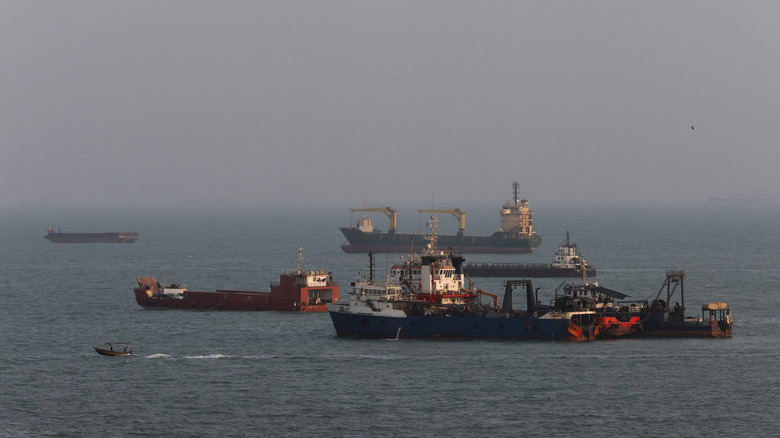
Getty Images/Getty Images Brent Crude and West Texas Intermediate prices are both up about 5% today, with Brent sitting just over $105 a barrel and WTI coming in close to $93. Or at least they were at the time of writing. Things could easily get worse, but they also aren't as bad as they would be if the international community hadn't been releasing their oil reserves to keep prices under control. Now, OilPrice reports there may be another factor at play here — Middle Eastern countries paying Iran for safe passage through the Strait of Hormuz. According to Kpler's ship-tracking data, September saw an average of 16.5 million barrels move through Hormuz each day, with a few days even exceeding the pre-war average of 18 million barrels a day. That's largely been possible due to exporters using alternative pipelines and ports, escorts provided by the U.S. Navy, ship-to-ship transfers, and even caravans of trucks driving oil across the desert. But Michelle Brohard, Kpler's head of policy and geopolitical risk, recently told energy analyst Rory Johnston she believes several Gulf countries have resorted to effectively bribing Iran to let their tankers through: "I suspect there is a toll that's being paid, which is giving these ships safe passage. I also suspect that these countries know that this is unsustainable from a perspective of [the] US escorting [ships], and also unsustainable from them paying Iran 10 percent of their cargo, or 20 percent of their cargo. So you're starting to see like what I would call like a race to get out as much as possible, as quickly as possible before the war restarts. Iran is the Ticketmaster of oil Win Mcnamee/Getty Images Iran charging exporters to move their ships through the Strait of Hormuz isn't exactly a new idea. Iran already declared itself the Ticketmaster of oil back in July, despite longstanding international agreements that require the seas to all be freely navigable. It doesn't sound like Brohard has hard evidence to support her claim, but she isn't the only analyst talking about it, either. Chris Beauchamp, chief market analyst at IG Group, recently told Al Jazeera something similar, saying, "Everything appears to be happening under the radar in the Middle East, from the US convoying ships to Iran quietly charging tolls." If it's true that Iran is charging tolls in Hormuz, that would violate the United Nations Convention on the Law of the Sea, an agreement that is much less exciting to read than the cool name would suggest. Technically, Iran signed onto the UNCLOS back in 1982, but the country also never ratified the agreement, and Iran's leaders long claimed they're allowed to make their own maritime laws. Still, you also have to wonder what incentive Iran would have to not collect tolls from exporters who are willing to pay them. After all, what's the international community going to do about it? Attack Iran? Start a war? Trump and his Republican cronies have already done that. Theoretically, more countries joining the fight would probably go pretty badly for Iran, but so far we haven't seen any takers. That said, it does look like the Republicans are preparing to escalate the conflict, with the Wall Street Journal reporting the U.S. has built up its forces in the region and is preparing to deploy as many as 10,000 troops. There's no way a ground invasion will go well, but why would Republicans let that stop them this time around?