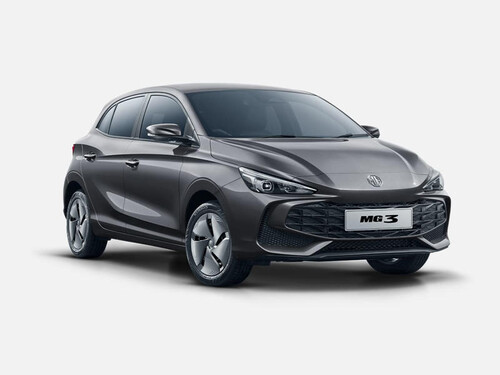
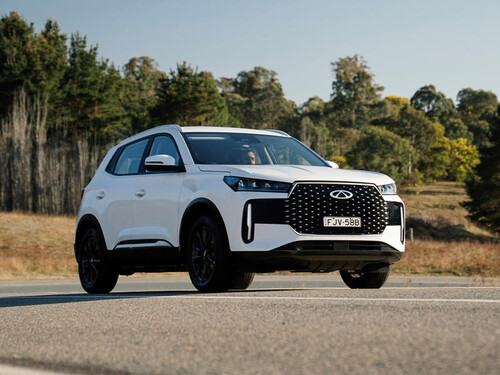
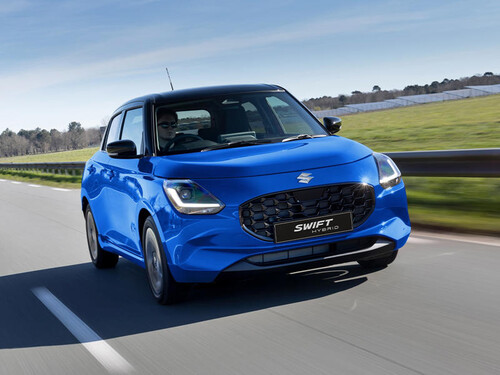
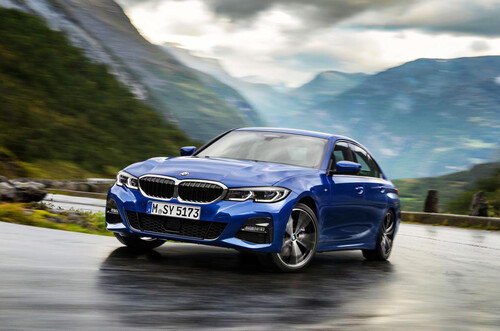
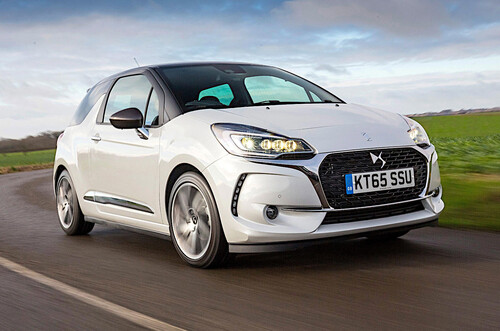
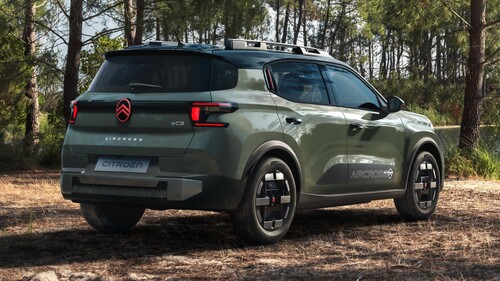
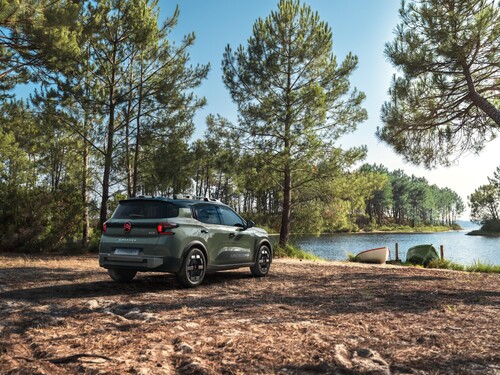
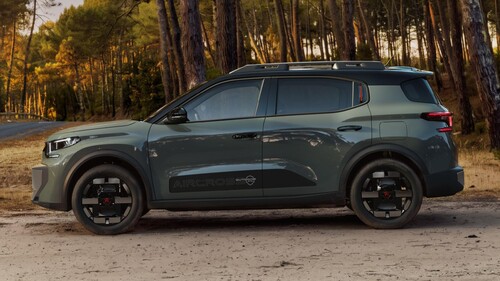
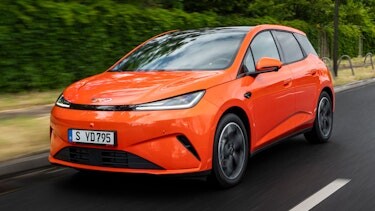
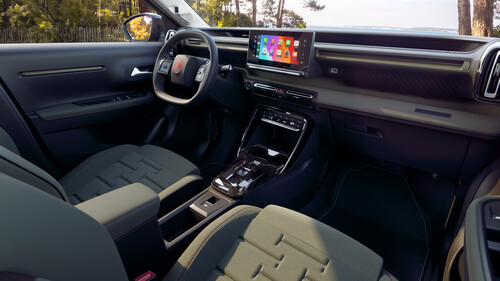
Alex Robbins suggests that our reader considers a Citroën C3, a versatile, compact SUV - Citroen/PADo you have a question? Contact carsadvice@telegraph.co.ukDear Alex,My wife wants to replace our Renault Captur with a smaller car. It needs to be petrol and automatic, with high-mounted seats, but we don’t want a hybrid. What do you suggest?– RSDear RS,You don’t mention a budget, nor whether you want to buy new or used, so I’ll assume the former.Full (known as self-charging) and plug-in hybrids are out of contention. But what about mild hybrids? These are essentially petrol cars with an extra battery and a beefed-up starter motor; the battery merely assists the petrol engine and is not capable of powering the car.AdvertisementAdvertisementHowever, most automatic small cars are either full or mild hybrids; pure petrol models are available, but they usually have a manual gearbox.One exception is the Seat Arona. This SUV-style hatchback fits your needs as it’s smaller than your Captur but has a raised seating position. It’s now quite an old design but that’s to your advantage because it means the Arona has older power trains which lack hybrid assistance.The entry-level petrol auto costs a little less than £25,000, and a lively 1.0-litre three-cylinder engine and nimble handling make it a pleasure to drive.Other options include the Hyundai Bayon and Kia Stonic. The Bayon range is entirely hybrid-free and prices start at about £25,000 in automatic form. A five-year warranty adds to its appeal.AdvertisementAdvertisementThe Stonic, by contrast, is a mild hybrid in higher-spec models, so you will have to choose the entry-level Pure specification, the automatic version of which costs just more than £23,000. That you also get a seven-year warranty makes this option look like good value.If you could accept a mild hybrid, however, I’d suggest the Citroën C3, a compact SUV that will represent the greatest step-change in size compared with your Captur.It is also the most affordable option, with the automatic version of the entry-level Plus trim starting at just more than £21,000 (even the top-spec Max is below £23,000).What’s more, like all modern Citroëns, you can keep the C3 in warranty until it’s eight years old if it’s serviced at a main dealer, giving this the longest potential warranty.AdvertisementAdvertisementDespite its hybrid assistance, a C3 makes the most sense. Otherwise, the Stonic will please your head, the Arona is a little more heart-oriented and the Bayon sits somewhere between them.Does super-diesel keep an engine cleaner?I read with interest your thoughts on super-unleaded petrol in your article of April 13. Could you offer similar advice on diesel fuels? I still use the best Esso diesel in my 2014 BMW X3 on the grounds that I hope it will provide greater engine longevity. Is this quest for “insurance” backed up by science?– DWAlex advises a reader on whether super-diesel is worth the extra cost compared to standard diesel - Peter Cade/GettyDear DW,The case for using super-diesel is slightly different from that of super-unleaded. You’ll note that the latter is marketed with a higher octane rating, or RON, than standard unleaded. Diesel fuel’s ignitability (sounds like it shouldn’t be a word, I know, but it is) is measured not with an octane rating but with a cetane rating.AdvertisementAdvertisementWhere a higher octane rating means ignition is delayed in a petrol engine, reducing pre-ignition and allowing the explosion to take place more precisely, a higher cetane rating speeds up ignition in a diesel engine.Increasing the cetane rating doesn’t have much effect once a diesel engine has started. The burn is marginally cleaner, but a diesel’s response to differing cetane values is usually much less noticeable than that of petrol with octane content. The resulting effect on fuel economy is often so slight as to be difficult to measure.Where you might notice a difference is during cold starts; a diesel fuel with a higher cetane rating is quicker to ignite cleanly. You’ll therefore have to spend less time cranking the engine and the car will emit less unburned fuel in the form of black smoke from the exhaust.The detergents in super-diesel are the strongest reason for using it. Diesel engines’ fuel systems are more prone to coking up, particularly if they’re used for shorter journeys or run at idle for long periods.AdvertisementAdvertisementSuper-diesel’s greater proportion of detergents and fuel-system cleaners means it does a better job of reducing carbon deposits.But should you always use super-diesel? Opinions vary. There’s no doubt that the cleanest engines will have been run exclusively on super-diesel. Yet there’s an argument that using regular diesel fuel then running a tank of super-diesel every 1,000 miles or so has the same effect on carbon deposits while being more cost-effective than using super-diesel all the time.This is what I used to do with my last diesel-engined car, although of course I’ve no conclusive way of telling whether it had any effect compared with using super-diesel all the time.You might also achieve the same effect by adding a bottle of diesel fuel-system cleaner to the fuel with similar frequency; at today’s fuel prices, this is likely to be even more cost-effective.AdvertisementAdvertisementSo yes, using super-diesel will keep your engine cleaner. The only question is the frequency of its use.Try full access to The Telegraph free today. Unlock their award-winning website and essential news app, plus useful tools and expert guides for your money, health and holidays.