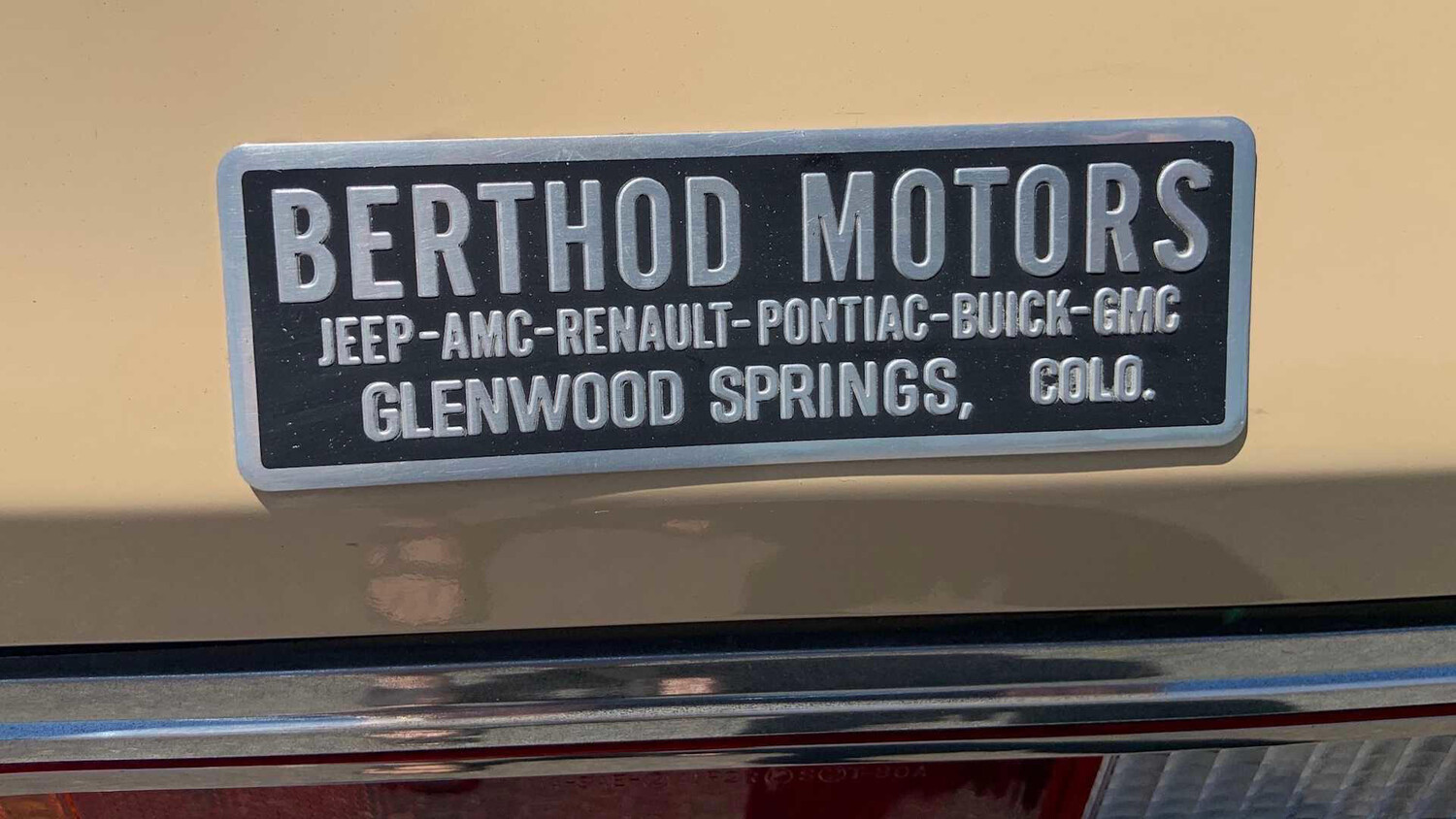
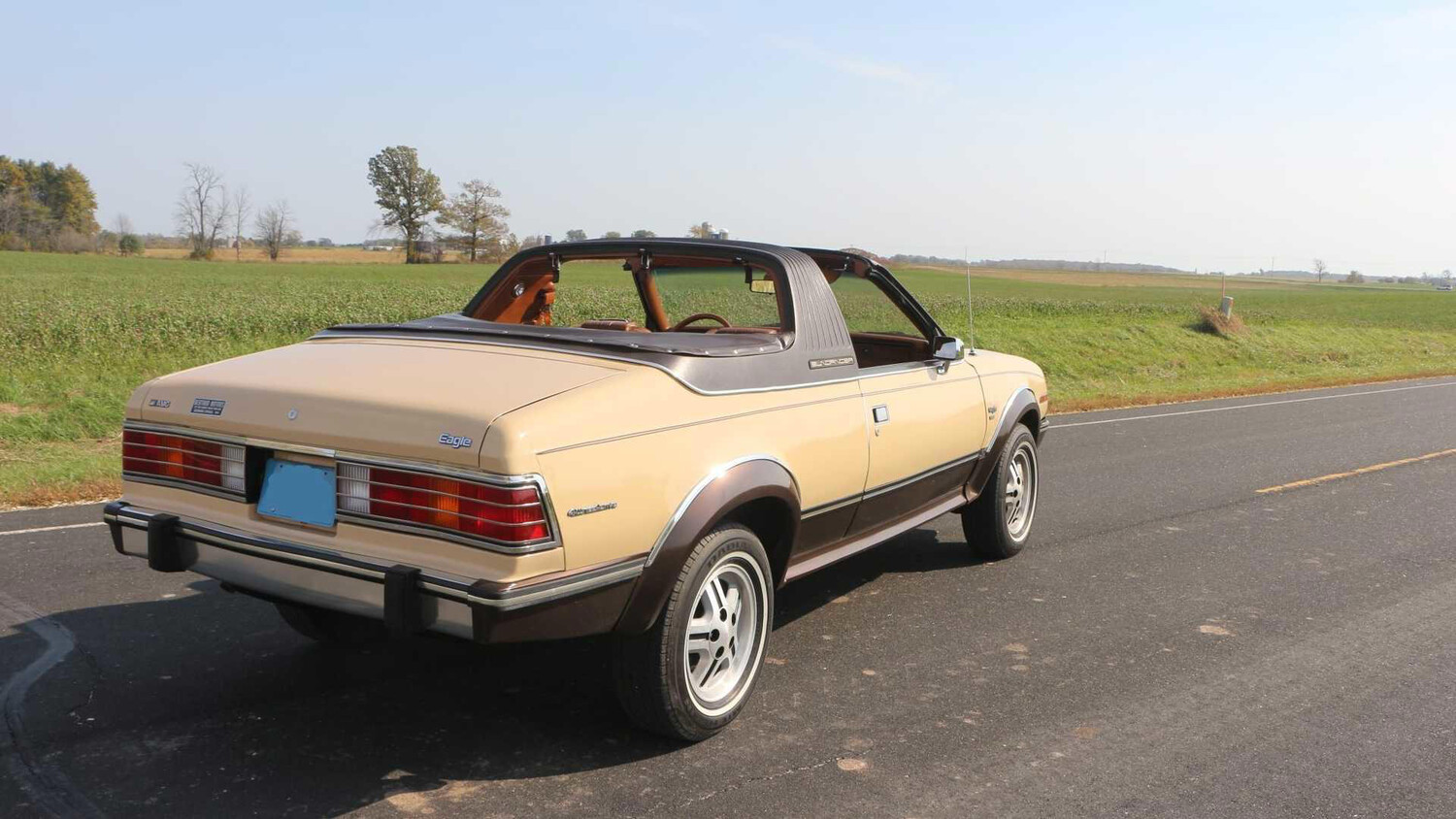
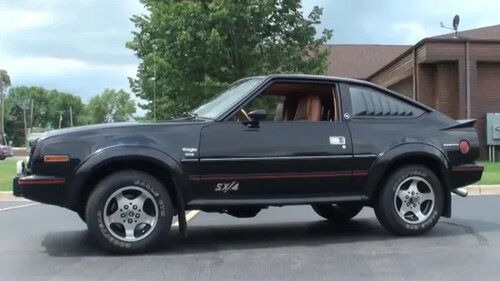
Imagine you’re walking by an AMC dealership in 1981. Buying a car from American Motors Corporation was never on your radar, but then you catch sight of something unexpected in the window. Is that a convertible?In one of the most bizarre chapters of automotive history, AMC shipped cars from Wisconsin to Florida, just to chop their roofs off. Read on to find out which models were available as ragtops, why AMC did this, how the little convertibles performed, why the drastic move wasn’t enough to save the company, and what these niche classic cars are worth today. The Tradition Of Shipping Cars Cross-Country To Cut Their Tops Off Bring a TrailerMany of the first mass-produced automobiles were convertibles. Through the 1950s and 1960s, convertibles continued to be big business and were thus available on almost every dealership lot. But by the 1970s, stricter crash protection standards made it very expensive to engineer factory-built convertibles. With high prices reducing convertible take rates, many automakers turned to aftermarket companies to modify hardtops for this niche market segment.Many companies have offered aftermarket convertible conversions over the years. The American Sunroof Corporation is the biggest name, having worked with all the Detroit Three, and even building the Fox Body Mustang convertible. The Griffith Company was famous for the Toyota Celica Sunchaser. Hess & Eisenhardt built both limousine and convertible customs for luxury brands. Coach Builders Limited is another company working with both domestic and foreign carmakers. Cars & Concepts built specialty editions, convertibles, and T-tops. Finally, Straman Coachworks was most famous for Ferrari convertible conversions.Bring a TrailerSome aftermarket convertible conversions built on imported cars include the 1979-1981 Toyota Celica Sunchaser (by Griffith), the 1999-2008 Toyota Camry Solara Convertible (by ASC), and the 1992-1994 Nissan 240SX convertible (by ASC). Some memorable aftermarket convertible conversions for Ford products include the 1983-1986 Ford Mustang Convertible (by ASC) and the 1984-1992 Lincoln Mark VII Convertible (by ASC). Chrysler also turned to outside specialists for open-air motoring, selling the 1982-1995 Chrysler LeBaron Convertible (primarily through ASC and other contractors), the 1987-1993 Dodge Daytona Convertible (by Cars & Concepts), and the 1989-1991 Chrysler TC by Maserati, a luxury roadster built through a partnership with Maserati and specialty coach builders.General Motors embraced coach built convertibles more than most automakers, offering models such as the 1982-1985 Buick Riviera Convertible (by ASC), the 1983-1987 Chevrolet Cavalier Convertible (by Cars & Concepts), the 1983-1994 Pontiac Sunbird Convertible (by Cars & Concepts), the 1985-1989 Buick Skyhawk Convertible (by Cars & Concepts), the 1983-1988 Oldsmobile Firenza Convertible (by Cars & Concepts), the 1987-1992 Chevrolet Camaro Convertible (by ASC), and the 1987-1992 Pontiac Firebird Convertible (by ASC). How AMC Tried To Get Its Groove Back Bring a TrailerAmerican Motors Corporation was formed in 1954 through the merger of Nash-Kelvinator and Hudson. For decades, it was America’s perennial fourth automaker, its sales lagging behind General Motors, Ford, and Chrysler.By 1980, AMC’s lineup ranged from compact Concord and Spirit passenger cars to the innovative new Eagle four-wheel-drive models. Its Jeep division battled Ford’s Bronco, Chevrolet’s Blazer, and International Harvester’s Scout for off-road buyers. But as the runt of the industry, AMC’s limited resources made it impossible to keep up with Detroit’s giants. Its passenger cars were aging, and it didn’t have money to engineer replacements. In 1980, AMC reported a record $197.52 million loss on revenues that had fallen 16.6%. It needed an attention-grabbing project to lure customers into showrooms.AMC hadn’t offered a convertible since the 1968 Rambler American, leaving it out of the segment for over a decade. The cash-strapped company needed a shortcut back into the drop-top business. So, it reached out to a Florida company already making waves with Toyota's Celica Sunchaser: Griffith. 1981-82 AMC Eagle And Concord Sundancer Convertible Bring a TrailerThe car Jack Griffith—founder of the Griffith Company—came up with was the 1981 AMC Eagle/Concord Sundancer. It was technically a “targa top” vehicle. Its “roof” was a single roll bar behind the driver and passenger. But unlike most targas, the Sundancer featured a soft rear window that owners could fold down for the full convertible feel.Customers could order a Sundancer package on a budget-friendly Concord coupe. They could also get a Sundancer Eagle coupe, AMC’s new 4WD car. That’s right, Griffith built 4WD convertibles.Bring a TrailerBuyers could also choose any other options available in a Concord or Eagle coupe Limited trim. So, you could get it with AMC’s 4.2-liter inline six cylinder, which made 100-110 horsepower—alongside a stick shift transmission. But you could also get a Sundancer with a 2.5-liter “GM Iron Duke” I4 that put out 87-90 horsepower with a three-speed automatic. The resulting car struggled to 60 mph over a heartbreaking 16.8 seconds.For Griffith’s convenience, every Sundancer had a dark brown fiberglass and vinyl roof structure, with a single interior color option to match: Nutmeg brown. It's hard to imagine a buyer eager for a sluggish 4WD convertible coupe. But the logistics behind the Sundancer are even more bizarre than the car itself. Shipping Cars From Wisconsin To Florida Just To Cut Their Roofs Off Bring a TrailerEvery AMC Sundancer was built as a regular hard top coupe. AMC completed final assembly in Kenosha, Wisconsin. Then the Eagle and Concord coupes were loaded up and shipped to Fort Lauderdale, Florida. When they arrived at Griffith, the complete roofs were chopped off, and convertible tops were attached instead. But that’s not all.Griffith also welded a complex, 14-piece structural frame into the car. The fiberglass overhead bar hid a heavy-gauge steel-tube understructure, welded to the steel door pillar. No wonder the heavy targa top cars took forever to hit 60 mph.Bring a TrailerOnce Griffith completed the conversion, AMC loaded all the cars up and shipped them back to Wisconsin, then distributed them to dealerships across the country. So, if you ordered a Sundancer from a Florida dealership, you’d get a car that had already crossed the country twice.The AMC Concord was a budget-friendly car with a 1981 MSRP of about $5,800. A top trim model might set you back $7,600. Griffith/AMC charged dealerships $3,000 for the convertible conversion. Dealerships, in turn, charged customers $3,750 extra for a 1981 Sundancer and bumped it up to $4,000 by the 1982 model year. The Sundancer Never Got A Chance To Shine Bring a TrailerYou may not be surprised to hear that few buyers actually wanted a heavy, slow budget car with an overpriced convertible conversion. AMC’s records show that fewer than 200 Sundancers were made. It's likely that dealerships — not buyers — ordered many of them, just to have something flashy in the showroom. AMC canceled the entire project before the 1983 model year.What was AMC’s goal here? Perhaps just to make a splash with a unique vehicle. A 4WD convertible coupe may sound ridiculous. But remember that the Jeep CJ/Wrangler has been a perennial strong seller for decades. The idea of moving from a coach-built/aftermarket convertible to a production factory-built convertible is not ridiculous. In fact, the Toyota Celica and Fox Body Mustang both made it work after enjoying strong sales numbers.But in the end, the Sundancer never got to shine. American Motors Corporation floundered for several years before Chrysler Corporation bought it in early 1987. Chrysler continued to build Jeeps, but canceled cars such as the Concord and Eagle that competed with its own lineup.Today, the Sundancer is a bizarre and almost-forgotten chapter in automotive history. But survivors are niche vehicles, prized by enthusiasts. When a 1981 Eagle-based Sundancer (pictured) surfaced on Bring a Trailer in 2022, it sold for $37,000.