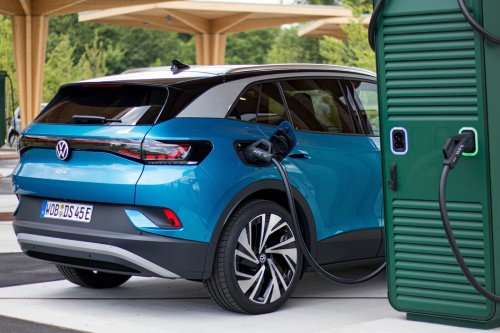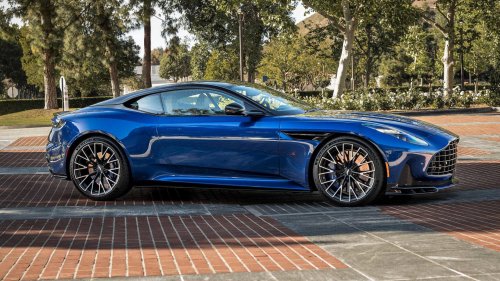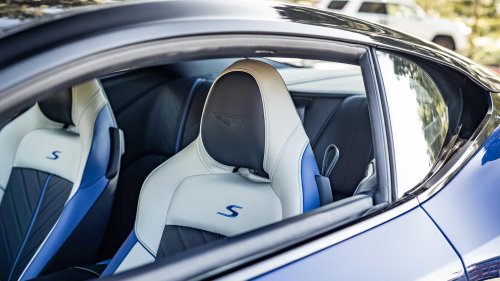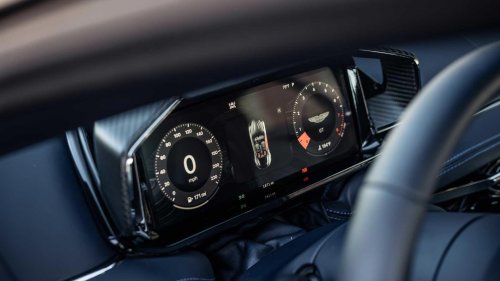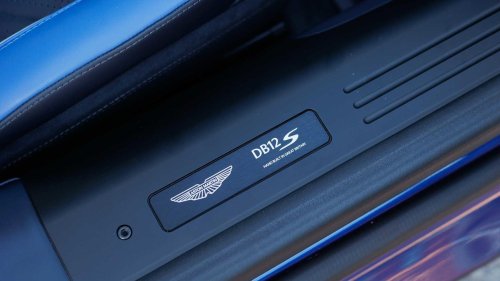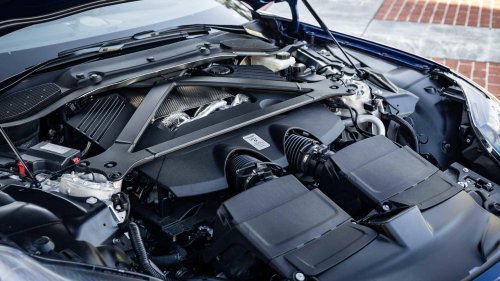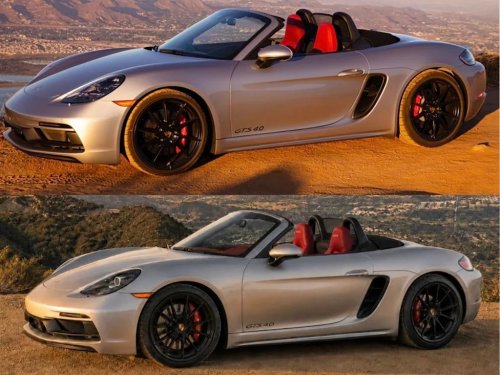
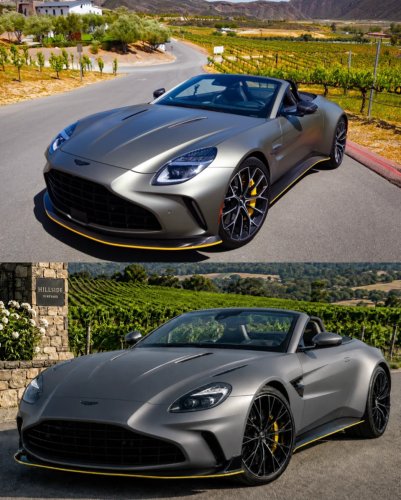
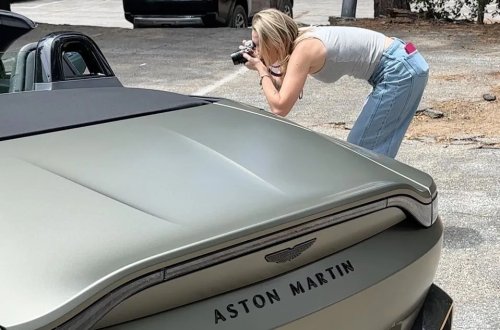

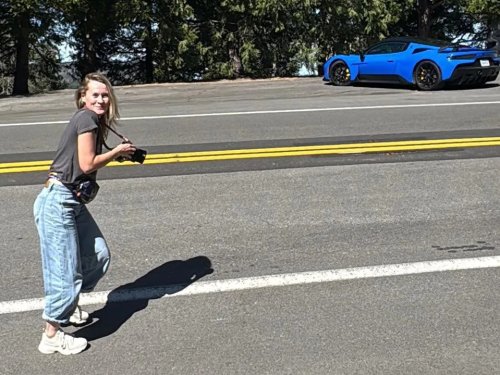
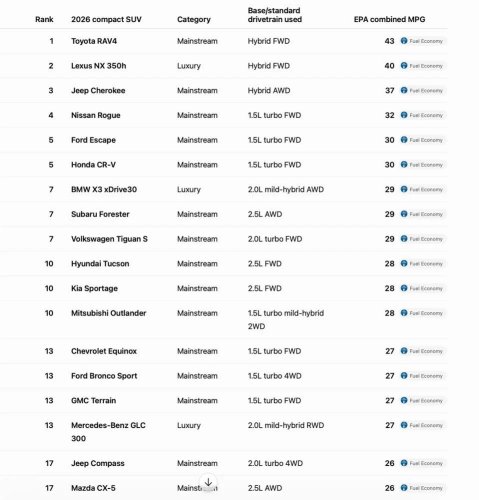
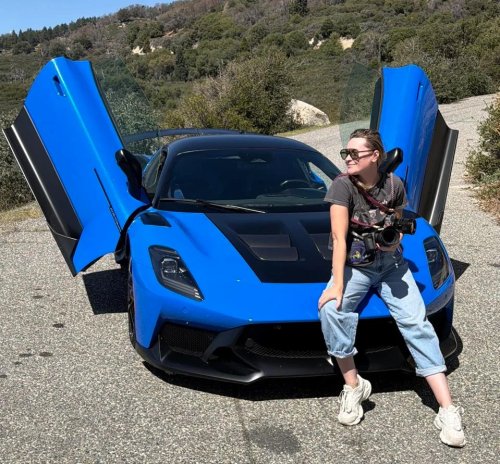















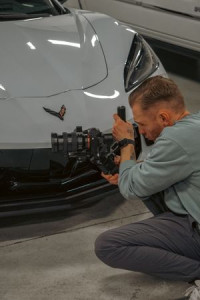


2025 Porsche 718 Boxster GTS photos from Olga Trehub (human) above, ChatGPT image belowOlga Trehub IG @oliphotopro and ChatGPTArtificial intelligence has already disrupted a wide spectrum of industries and occupations, and there's every indication this disruption will increase going forward. As an automotive journalist, I've seen AI's impact manifest as altered content creation, substantial headcount reduction, and the cancellation of entire publications.Several automotive publications have exited stage left over the past 18 months, and I suspect AI's increasing role in content creation was a major factor in their demise. Other publications, including Autoblog, Autoweek, Automotive News, and Motor Trend, have substantially reduced editorial headcount over the past two years, while Cox Automotive restructured the bulk of its content teams at KBB.com and Autotrader to reduce costs.The Vantage Roadster on top looks more three-dimensional, and simply real, versus the AI photo on the bottomThe result is fewer automotive publications and fewer, less-human-powered articles coming from the remaining publications. I won't pretend this evolution is unique to the car industry, but as a 30-plus-year veteran producing automotive stories, photos, and video, it's been interesting to see AI's impact on both the quantity and quality of editorial content.Olga Trehub captures interior shots of a 2026 Aston Martin Vantage RoadsterWhere AI Struggles at Automotive JournalismAI is capable of replacing many aspects of human-powered automotive journalism, and I'll discuss those aspects shortly. But let's start with the more interesting topic – where AI-powered automotive journalism falls short.AdvertisementAdvertisementAnalysis: AI has absolutely mastered the art of stringing words together, and if the topic it's writing about is fairly simple or one dimensional, it can even sound authoritative. But like most computer-based "thinking", nuance isn't its strong suit. When multiple factors are at play on a given automotive topic, AI struggles to both identify and assign the relative impact of those factors.I recently asked ChatGPT why electric vehicles failed to see the volume and market share growth that was widely predicted a few years ago. To the 'bot's credit, it did pull in most major contributing elements, but it didn't rank them properly. For instance, the loss of the EV incentive heightened the drop in EV volume and market share, but both were stagnating approximately a year before the incentive went away. ChatGPT put the EV incentive as the second-highest factor, and quoted the high EV market share in September of 2025, just before the incentive ended, as an example of how important it was. It did not mention the "pull-forward" effect of the incentive going away that month, nor the fall-off in EV growth already occurring a year earlier due to a saturation of consumer demand and EV market share.ChatGPT (bottom) struggled to recreate Maserati's stunning "Blue Infinito" color (top), on the GT2 StradaleImagery: While AI has mastered the art of basic writing, it has NOT mastered the art of image creation. And as complicated as writing is, representing the automotive industry through pictures is arguably far more complex. Remember, a picture is worth a thousand words, and when I look at AI automotive imagery I can usually spot…well, not necessarily a thousand mistakes, but many mistakes.Vehicle images actually consist of two key components. First, there's an accurate representation of the vehicle itself, which is pretty straightforward when photographing a car. Make sure the lighting, framing, and background are handled and the car's details will take care of themselves. Ask AI to produce a car image and the overall image will, probably, pass the glance test. But close scrutiny will reveal everything from made-up body details to the steering wheel on the wrong side of the cabin.Olga identifies the best background and angle to enhance the GT2 Stradale's body lines and colorAnd even if AI gets the details (mostly) right, its ability to frame the vehicle in an effective and/or creative environment rarely manifests. Between my 32 years of first-hand experience taking photos, along with working with professional photographers that specialize in the medium, it's clear to me that AI will likely never replace a human's ability to identify and engineer a "great shot" while photographing a vehicle, even if/when it gets all the vehicle details right.I've included several comparison shots of the same vehicle in this article. One created by AI, one created by Olga Trehub, a professional photographer I've worked with for years on multiple road tests to create accurate and appealing vehicle images for my stories and videos. Looking at her photos compared to AI's effort reflects Olga's ability to properly identify the best vehicle angles and lighting, along with incorporating an attractive background that enhances the vehicle's presentation before post-production tweaks.AdvertisementAdvertisementBy comparison, AI often struggles to recreate a specific color, even when you tell it the exact shade using the specific manufacturer's name for the shade. It also can't fully portray the "sweet light" color tone photographer's will wait all day to capture just before the sun sets.Researching and ranking vehicles based on straightforward specifications is where AI can save a lot of timeWhere AI Succeeds at Automotive JournalismDuring a recent conversation with a fellow automotive journalist, he told me, "I think of AI as an intern. I'll use it to get large volumes of low-to-medium priority work done, but I won't trust it with critical tasks requiring uncompromised execution." That description lines up with how I think of AI, and I'm assuming (and hoping…) it's how most automotive journalists treat it.Looking to rank compact SUVs by EPA fuel economy ratings? AI can likely handle it…though you have to be specific in your prompts about model year and drivetrain. For instance, "Rank all the 2026 Compact SUVs sold in the U.S. by mixed fuel economy rating according to the EPA, and use the MPG numbers for the base/standard drivetrain." And if you're just looking to see that ranking, that's sufficient. Looking to publish it, or reference the top three models in an article? Confirm the numbers, yourself, prior to publishing.When it comes to creating the best automotive images, humans still have the advantageWhat about writing a road test? Asking AI to evaluate a vehicle, identify the most important strengths and weaknesses, and then describe those in a consumer-friends, likely buyer way is asking too much. If you're an experienced automotive journalist you should know all those things yourself versus expecting an agent to either know them or find them by scouring the web. Of course it's AI, so it will happily act like it can do that. But trusting it to properly provide that level of expertise is like asking your intern, who has never driven any compact SUV, to write an authoritative story on the new all-new 2026 RAV4. And then attach your byline to it.AdvertisementAdvertisementWill AI keep getting better? Of course. Will it master the art of creating flawless text and images? It's getting pretty close…Will it attain the wisdom that comes from driving multiple competitive models in a given vehicle segment, or hundreds of models over the course of a decade or more? Will it aquire the visual and artistic sense of how to frame and light a car shot, then subtly tweak it in post production?I'm not holding my breath.This article was originally published on Forbes.com