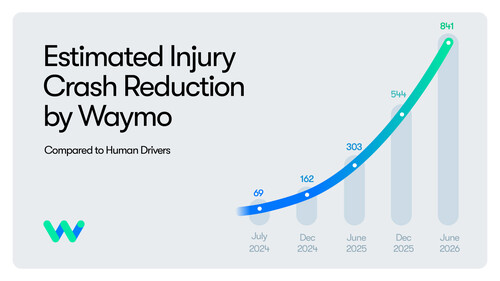
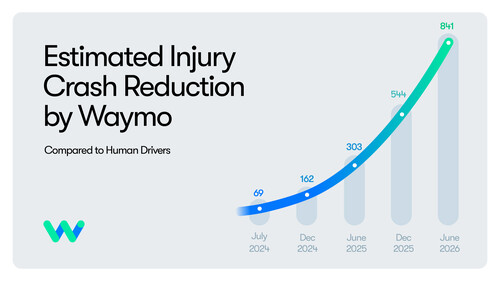
Isabelle Scott · 2 months ago@isabellescott83Waymo’s Driverless Cars Have a Better Crash Record Than Humans, IIHS Says Liked by+67 othersNewsPost commentRelated PostsWaymo is 2/3 safer than a human driver, says IIHS - with some caveats 61 · Lily Campbell · 2 months agoWoman Says Her Audi Loaner Came With An AI Camera That Records Her 32 · Parker Hill · 2 months agoWaymo Says More Than 800 People Have Avoided Injury Thanks to Its Self-Driving Tech 66 · Madeleine Macdonald · 22 days agoFord Jumps Back Into WRC, Says Your Next Car Will Be Better For ItKaitlyn Lewis · 15 days agoUh Oh, ChatGPT Can Drive a Car (And Grok Crashed Immediately)Sarah Pelletier · 10 days agoIIHS Study Claims Waymo Robotaxis Are Safer Than Human Drivers 54 · Samuel Scott · 2 months agoWaymo Says Its Cars Are Involved In 95% Fewer Serious Crashes Than Humans 77 · Isabelle Morgan · 22 days agoCar owner warned that expensive repair may still be better than gambling on another used carMia Walker · 15 days agoIn Scotland, a minor crash showed how some new cars may never reach a second ownerAiden Wilson · 15 days agoWaymo says it has stopped 841 injuries in 271 million autonomous miles 66 · Emma Gagnon · 22 days agoSingle-Plane Vs. Dual-Plane Intake Manifolds: Which Is Better For Your Classic Car? 69 · Ava Nelson · 15 days agoElon Musk's Car Collection: A Crashed McLaren, a Bond Submarine and a Roadster in Deep Space 13 · Charlotte White · 15 days agoEV Drivers Say Waymo Robotaxis Are Creating Long Lines at Las Vegas Chargers 64 · Caleb Nelson · 29 days agoCar Deal of the Day: Vauxhall Astra Sports Tourer is loads better at just £206 a month 58 · Benjamin Anderson · 17 days agoThe NHTSA investigates Comma’s self-driving kit after a string of crashes — 5 incidents that killed 3 people linked to 'hands-free' device for older cars 13 · Morgan Tremblay · 17 days agoElon Musk Says ‘Pretty Much’ After Meme Mocks Waymo’s Sensor-Packed Robotaxi, as Self-Driving Rivalry Heats Up 31 · Jacob Bouchard · 1 months agoFord Is Using a Japanese Management Trick to Design Better Cars 86 · Gabriel Johnson · 20 days ago3 Common Mistakes That Put Kids At Risk In Car Crashes According To IIHS 43 · Victoria Bouchard · 18 days agoExclusive: Waymo says there's no AI shortcut to self-driving 92 · Sophie White · 1 months agoHigh-Mileage EVs May Hold Up Better Than Gas Cars: Study 30 · Ella Leblanc · 23 days ago




 +67 others