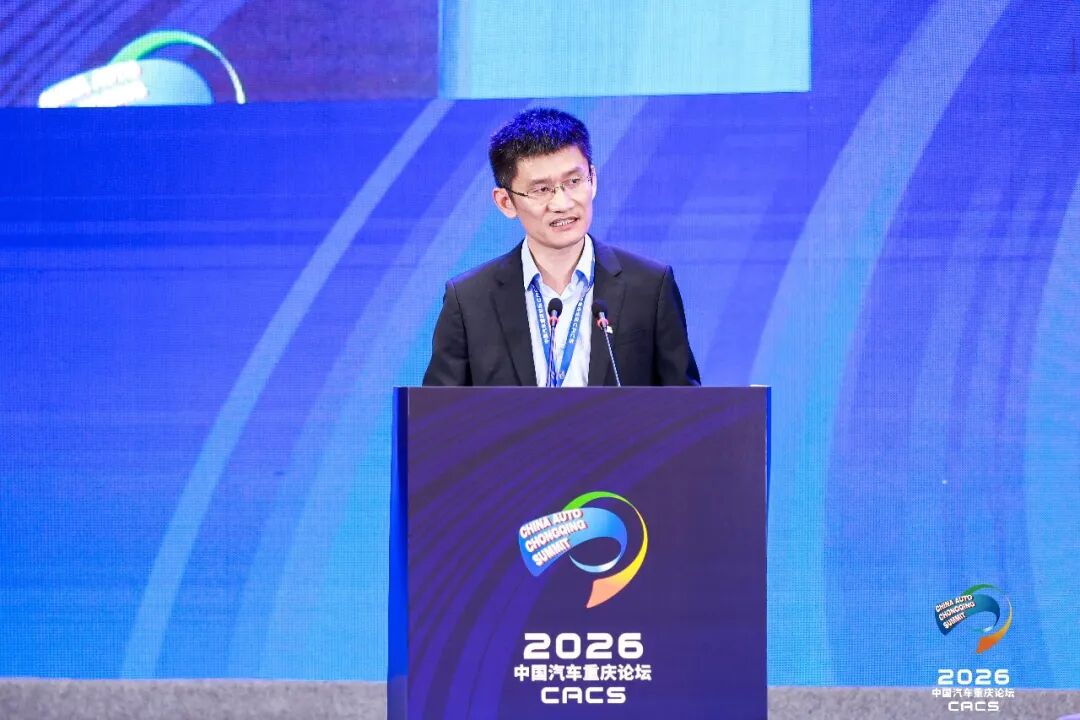
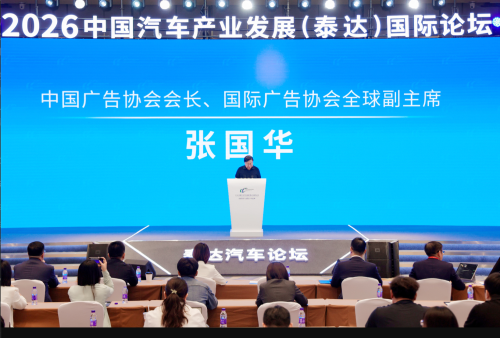
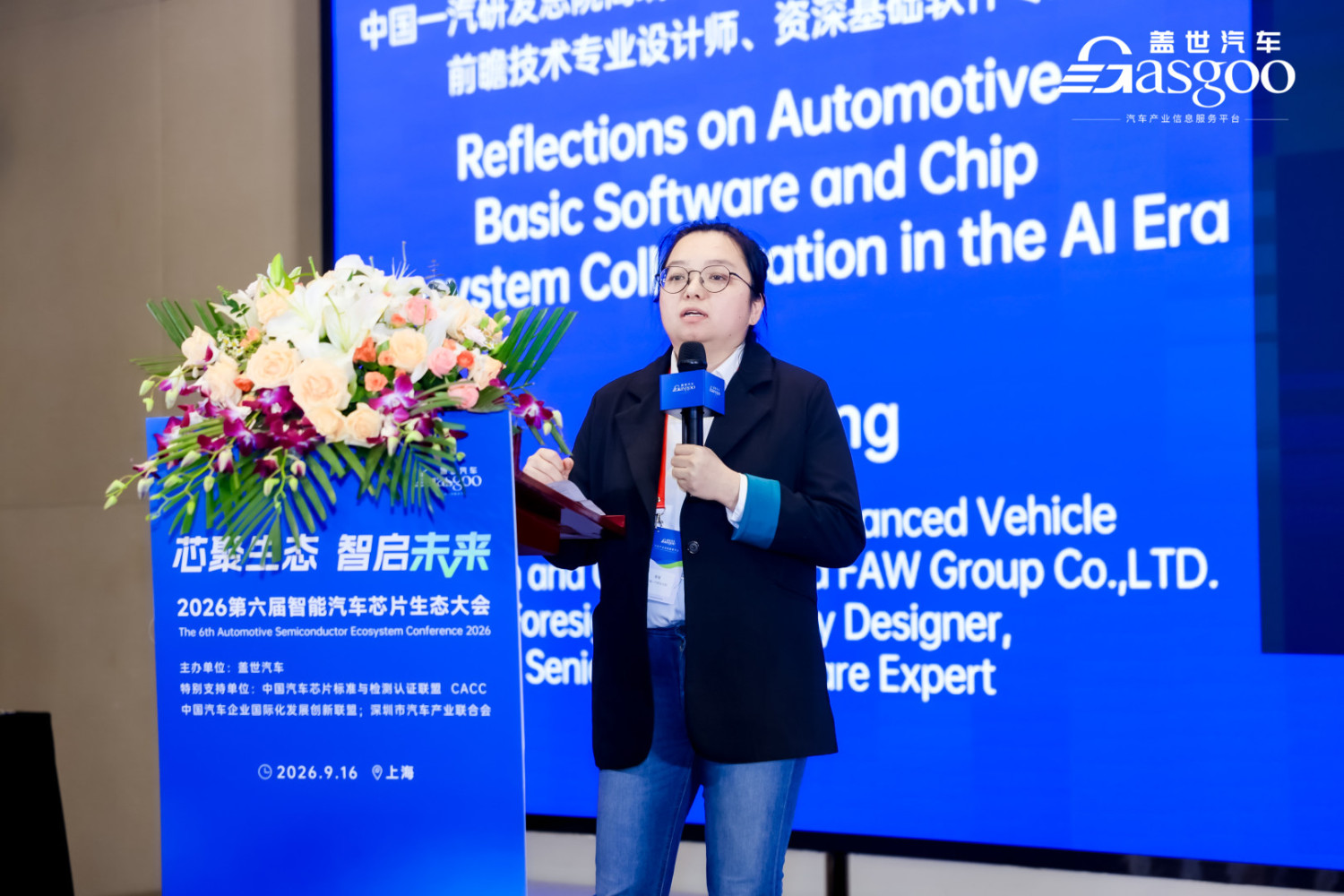
Gasgoo Munich- On September 16, at the 6th Automotive Semiconductor Ecosystem Conference hosted by Gasgoo, Jiang Shan — a senior basic software expert and prospective technology designer at the State Key Laboratory of High-end Automotive Integration and Control under FAW's R&D Institute — delivered a keynote address. She shared her insights on the evolving role of automotive basic software and the technical challenges facing the industry in the AI era.Jiang Shan | Senior Basic Software Expert and Prospective Technology Designer, State Key Laboratory of High-end Automotive Integration and Control, FAW R&D InstituteThe industry is moving rapidly from "software-defined vehicles" to "AI-defined vehicles," yet for OEMs, selecting the right hardware and software stack is becoming increasingly difficult, Jiang noted. "Choosing an MCU or SoC used to mean weighing tangible metrics: performance, functional safety, reliability, and cost." But in the AI era, a single chip can no longer sustain the user experience customers expect. Heterogeneous resources — CPUs, GPUs, NPUs, and MCUs — must operate as a cohesive system. Only by integrating compilers, runtime libraries, basic software, toolchains, and the model ecosystem can automakers deliver stable, effective computing power.This shift is driving a fundamental transformation in the role of basic software. Historically, the industry followed a classic model — best exemplified by AUTOSAR — where chips defined the architecture and basic software simply adapted, integrating standard middleware around a single MCU. But AI-era controllers host multiple heterogeneous computing kernels. "Basic software is no longer dealing with a single core, or the simple multi-core scheduling issues studied in past years," Jiang emphasized. It must evolve from a traditional adaptation layer into a resource management layer. "The goal isn't just to shield applications from hardware differences, but to efficiently organize the unique strengths of different hardware — that is true software synergy."In Jiang's view, an AIOS cannot simply be an operating system capable of running AI. As cockpit-driving fusion and central computing advance, QM-rated AI workloads and ASIL-D-rated control tasks may soon share the same chip. This introduces new challenges for basic software: prioritizing during resource conflicts, managing inference jitter in AI tasks, ensuring anomaly isolation, and maintaining functional safety amid frequent upgrades. "Level 3 autonomy also shifts more responsibility to the automaker, requiring AI to become a manageable, isolatable, verifiable, and evolvable component of automotive software."Extending safety verification across the entire lifecycle presents another major hurdle. AI is inherently a continuously evolving system, where edge model data constantly feeds back into cloud training. Consequently, the AI foundation cannot focus solely on edge execution; it must ensure a closed loop spanning model training, compilation, deployment, and on-vehicle operation. "For AI functions related to autonomous driving safety, a single release is never the end. We must observe, verify, and manage these systems continuously throughout their lifecycle."Jiang also believes the engineering frameworks accumulated by the automotive industry can establish effective boundaries for AI. "AI hallucinations are widely known, yet architectural constraints like AUTOSAR and ASPICE — along with their methodologies and quality systems — may provide the necessary guardrails," she said. The faster AI moves, the more it needs these defined boundaries.Finally, Jiang called for industry-wide collaboration. Synergy between chips and basic software is no longer just a matter for chipmakers and suppliers; it requires joint effort from OEMs, chip vendors, basic software firms, AI algorithm developers, toolchain providers, testing and certification bodies, research institutes, and open-source communities. "We must transform common industry problems into foundational capabilities — and that investment has to happen upfront."



















 +56 others