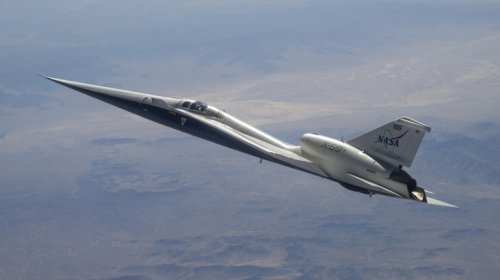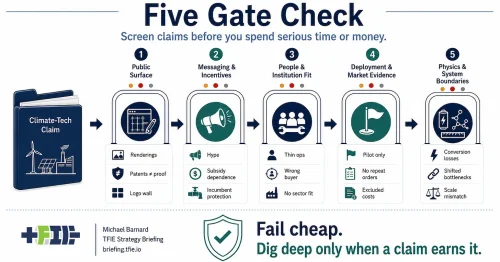



















Panthalassa raised $140 million this year to build autonomous ocean platforms that would generate electricity from waves and use it directly for AI inference computing at sea. The proposition removes one genuine problem for wave energy: instead of transmitting electricity back to shore through subsea cables and grid connections, put a valuable electrical load beside the generator. The company now has enough capital to complete a pilot manufacturing facility and start deploying its Ocean-3 systems. That does not remove the older problems of wave energy. Equipment still has to survive salt water, fatigue, storms, corrosion and offshore maintenance while producing electricity cheaply enough to justify the machinery. Adding AI compute moves high-value electronics, power conditioning and communications equipment into the same difficult environment. Avoiding a cable may help, but the relevant comparison is still against terrestrial compute supplied by grids, renewables and batteries rather than against a fictional land data center with no electricity or interconnection costs. AI is particularly good at giving old engineering propositions a new narrative because AI itself is real, valuable and attracting enormous capital. Terrestrial data centers have genuine constraints around electricity, land, cooling and grid connections. That makes almost any proposition that promises another source of power or another place to put compute sound newly relevant, including wave-powered ocean data centers and computing infrastructure in orbit. I have seen the same commercialization move under different names before. In 2023 I wrote about hydrogen supersonic passenger aircraft, solar-covered three-wheel cars, mine-shaft gravity storage acquiring a hydrogen-storage proposition, hydrogen eVTOLs and blockchain electricity markets. At the time, I treated much of the combination-making as comedy. Three and a half years of outcomes make it more useful as a diligence pattern. The interesting question is not whether AI, hydrogen, solar or nuclear are “real technologies.” They plainly are. The full TFIE Strategy Briefing analysis follows the original 2023 companies forward and draws a more useful distinction: when does adding another technology remove a material constraint, and when does it simply add another dependency before customer value can appear? Destinus provides one of the more revealing outcomes. The company’s original public narrative included liquid-hydrogen supersonic passenger aviation, combining an already difficult commercial aircraft proposition with cryogenic fuel storage, new propulsion, new fuel infrastructure and certification work. Destinus did not disappear. Instead, its commercial centre moved decisively toward defence, autonomy and missile systems, and in April 2026 it agreed to form a missile joint venture with Rheinmetall. That outcome does not validate hydrogen supersonic passenger aviation. It demonstrates that some of the underlying capabilities—propulsion, autonomy, high-speed flight, manufacturing and systems integration—can have paying markets when detached from the original stack of dependencies. Destinus found customers prepared to pay for range, payload, speed and scalable production in a different context. Aptera illustrates a different version of the pattern. Its body-integrated solar cells work, and under favourable conditions—think Arizona ranch house with big, unsheltered driveway where the only destinations are surface parking lots in malls, aka soul-deadening urban sprawl with a side of climate change-exacerbated heat prostration—they can contribute useful energy. The harder commercial denominator remains building and selling an unconventional automobile at scale. Aptera’s recent filings say the company still needs approximately $40–45 million to complete tooling and validation for low-volume production and a further $140–160 million to ramp its existing facility toward about 20,000 vehicles per year. This is, of course, after 20 decades of promising investors and early The solar roof does not have to be fraudulent or useless for the marketing story to outrun its commercial contribution. Cars spend substantial time in garages, parkades, under trees and beside buildings, while conventional electric vehicles keep improving their aerodynamics without giving up ordinary seating, cargo space and vehicle architecture. Solar contribution can be a feature while vehicle manufacturing, financing and broad consumer utility remain the determining questions. Aptera did not chase every fashion. It stayed focused on the solar-EV proposition, while adding a series of purported technology differentiators around it: AI-assisted generative design, additive manufacturing, in-wheel motors and advanced driver assistance. The since abandoned in-wheel motors should have been a clue to how unserious the firm is, as the issues with unsprung weight at highway speeds are incredibly widely understood, but they served the purpose, getting more press cycles for Aptera so that they could get more investors to give them more money which they burned without delivering anything. Customers were certainly not immune to the solar wrapping and other hype, however little it stands up to reality. Aptera accumulated roughly 50,000 vehicle reservations, with customers generally committing a refundable $100. The reservation programme has left about $4.1 million on the balance sheet as unearned reservation fees, not automotive revenue. Much larger sums came from equity investors, including programmes that offered priority delivery positions to people investing tens of thousands of dollars. Aptera’s long, long history of over promising, delivering nothing and not having any of the conditions for commercial success was one of the focal elements of a piece I published in 2022 looking at the junkyard of three-wheeled highway vehicles. As I look at Aptera four years later, I see that it’s in exactly the same position, over-promising, delivering nothing and having none of the conditions for commercial success. Despite this long and easily accessible history, Aptera has continued to generate remarkably favorable coverage for a company that has yet to sell a production vehicle after 20 years of claiming it was on the verge of manufacturing them. Over the past year it has been featured positively by credulous writers and editors at the Wall Street Journal, Washington Post, Electrek, PV Magazine and numerous EV and technology outlets, while a steady stream of company announcements has been amplified through financial-news wires. It’s all hype and investor bait, not delivery. (And yes, for Aptera fans, it’s done this under three different commercial models, with the original failing commercially, its intellectual capital being bought for pennies on the dollar from the three founders by a Chinese firm which also failed, then that intellectual capital being bought back for pennies on the dollar by the three founders who are on the third iteration of failing, with a fun lawsuit about intellectual capital thrown into the mix.) Gravitricity provides a cleaner ending. Its original mine-shaft gravity-storage idea at least had a straightforward physical architecture: suspend large masses in existing deep shafts and move them vertically. It later added H₂FlexiStore, an underground hydrogen-storage proposition drawing on some of the same subsurface expertise. But gravity storage and pressurized hydrogen storage still required different equipment, economics, customers and commercialization pathways, and the company entered creditors’ voluntary liquidation in October 2025. It would be wrong to say adding hydrogen caused the failure. The narrower observation is enough: adding hydrogen during its hype cycle did not produce one repeatable commercial business before the capital ran out. What sounded like diversification also meant pursuing two difficult development programmes with the same finite management attention and financing. The fashionable modifier changes while the incentive remains. Blockchain once gave electricity trading, renewable certificates and peer-to-peer markets a new technology layer even though meters, utilities, regulation and physical network calculations continued doing the essential work. Hydrogen later offered aircraft, gas networks, engines and industrial regions a route into a much larger imagined future. Small modular reactors have been attached to hydrogen production, extending the chain again from reactor commercialization to cheap electricity to hydrogen production to whatever final market is supposed to consume it. AI now performs the same narrative function unusually well. Putting compute beside offshore generation does address transmission in a literal sense, but wave energy’s historic problem has never been only transmission. Putting compute in orbit avoids terrestrial grid connections while adding launch costs, space-qualified electronics, radiation exposure, communications, replacement logistics and thermal rejection through radiators. Solar energy in orbit is real and launch prices can fall dramatically without making general-purpose computing for terrestrial customers cheaper after an entire space programme is inserted between the processor and the user. The key diligence distinction is therefore not between simple and complicated systems. Electricity grids are complicated. Renewable generation, transmission, batteries, power electronics and controls work together because the components perform identifiable complementary jobs. Heat pumps paired with thermal storage or electric vehicles paired with managed charging are also integrations, but each addition addresses a measurable constraint. Hype layering works differently. The original proposition remains difficult, then a second immature or expensive proposition is attached to it. The imagined market gets larger before the complete system becomes cheaper, simpler or easier to operate. Every new dependency creates another condition that must be satisfied at the same time: hydrogen aircraft need aircraft, fuel, airports and certification; offshore AI needs both the marine-energy system and high-availability computing to work; vehicle-integrated solar only contributes materially when sunlight and parking exposure cooperate. That distinction matters because startup risk is not the same as portfolio diversification. Investors can reduce risk by holding several independent assets whose outcomes are imperfectly correlated. An engineered product that requires several uncertain subsystems to succeed together does the opposite. The probabilities multiply, interfaces add failure modes, and customers only receive value after the entire chain functions. None of this requires cynical founders or fraudulent technologies, although certainly the former helps and the latter is far from precluded. Selection pressure is enough. Founders naturally emphasize versions of a company that attract meetings and capital, investors want exposure to large current themes, governments prefer projects attached to strategic industries, and journalists are more interested in an unusual combination than the fifteenth iteration of an old engineering problem. The extra layer can also postpone the uncomfortable comparison with a mundane alternative by adding another future condition that has not arrived yet. The pattern has survived blockchain, hydrogen and now AI because the narrative incentive is durable. The appropriate response is not to reject every technological combination. It is to return repeatedly to the original denominator: what constraint did the added technology remove, how much cost or operating burden disappeared, and is the complete system now more competitive than the simpler alternative? When those answers are measurable, the integration may be genuinely productive. When they are weak, the new layer may be doing much more work in the financing narrative than in the product. Read the full longitudinal analysis and climate-tech diligence framework in TFIE Strategy Briefing.